

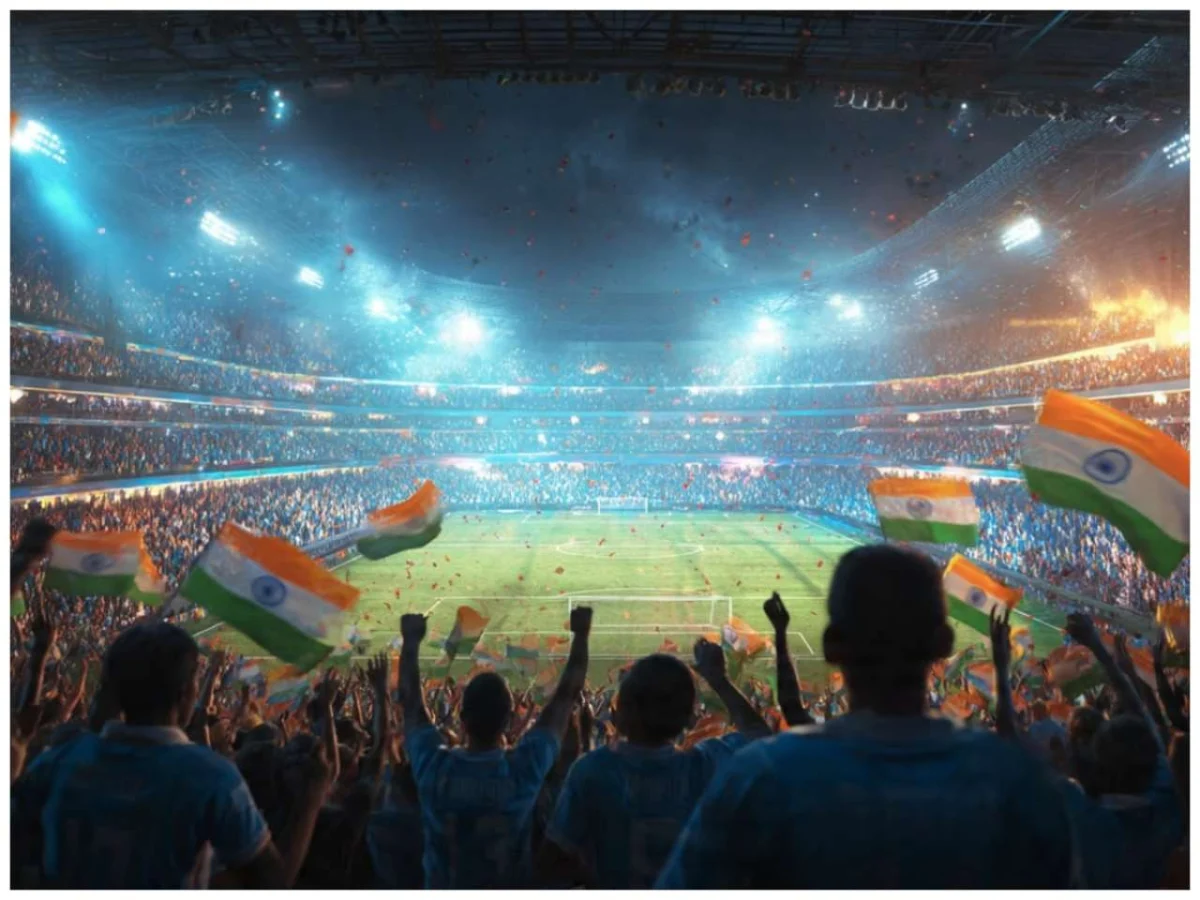
Zurich, Switzerland – The venerable FIFA World Cup, a quadrennial spectacle that captivates billions, stands on the cusp of another monumental transformation. Barely having assimilated the upcoming expansion to 48 teams for the 2026 edition, football’s global governing body, FIFA, is reportedly weighing an even more ambitious leap: a 64-team tournament. This radical proposal, confirmed by none other than FIFA President Gianni Infantino, has ignited fervent discussions across the footballing world, particularly in nations like India, which perpetually harbour the dream of gracing the sport’s grandest stage.
The prospect of 16 additional slots beyond the already expanded 48 has been met with a mix of excitement and apprehension. While proponents champion the vision of greater inclusivity and global participation, critics voice concerns over potential dilution of quality, logistical nightmares, and the ever-increasing demands on host nations and players alike. For countries on the periphery of elite football, such as India with its colossal population and burgeoning sporting aspirations, the rumour of a 64-team World Cup presents a tantalising, albeit distant, ray of hope.
The Unfolding Vision: Infantino’s Call for Global Inclusivity
FIFA President Gianni Infantino recently confirmed that internal discussions are underway regarding the possibility of expanding the World Cup to 64 teams from the next edition, following the 2026 tournament. Speaking to Swiss broadcaster Blue Sport, Infantino articulated a vision rooted in democratising access to the pinnacle of international football.
"This is certainly an issue that will be looked at and discussed in the relevant committees after this World Cup," Infantino stated, emphasising the global imperative behind such an expansion. "When you organise a World Cup, it is important that you organise it for the whole world. It is not just Europe and South America, but the entire world, effectively. Every nation should be able to dream of taking part in the World Cup."
)
Infantino’s rationale extends beyond mere geographical representation. He highlighted a perceived rise in the standard of football worldwide, suggesting that more nations are now capable of competing at a high level. "We can see that the quality of the teams is extremely high, and it is getting higher and higher everywhere in the world," he added. This sentiment underpins a core tenet of FIFA’s development philosophy: to provide an incentive for "smaller countries" to continue investing in and improving their footballing infrastructure. Without the ultimate dream of World Cup participation, the motivation for sustained growth might wane.
This philosophy aligns with FIFA’s broader mandate to grow the sport globally, leveraging the World Cup as its most potent vehicle. By offering more opportunities for nations from Asia, Africa, and CONCACAF, FIFA aims to deepen football’s roots, unlock new markets, and foster a more equitable global football landscape. The commercial implications, including increased broadcasting rights and sponsorship revenue from a more diverse set of participating nations and fan bases, are also undoubtedly a significant factor in these considerations.

A Tournament’s Evolving Identity: A Chronology of Expansion
The FIFA World Cup has never been static, constantly adapting to the changing dynamics of global football. Its history is a testament to its organic growth, driven by increasing participation and FIFA’s evolving vision.
- 1930 – The Genesis (13 Teams): The inaugural tournament in Uruguay featured a modest 13 teams, primarily invited participants, setting the stage for what would become the world’s greatest sporting event.
- 1934-1938 – Early Structure (16-Team Knockout): The subsequent editions quickly solidified into a 16-team knockout format, establishing a more competitive structure.
- 1950 – Post-War Fluctuations (Planned 16, Played 13): The first post-World War II tournament in Brazil aimed for 16 teams, but withdrawals left it with 13, highlighting the logistical challenges of the era.
- 1954-1978 – The Enduring 16 (Seven Editions): For nearly three decades, the 16-team format remained the standard, becoming synonymous with the golden era of many footballing legends.
- 1982 – The First Major Leap (24 Teams): Spain hosted the first expanded World Cup, increasing the participant pool to 24 teams. This expansion was a response to the growing number of FIFA member associations and the desire for broader representation, particularly from Africa and Asia.
- 1998 – Consolidating Growth (32 Teams): The tournament in France saw another significant expansion to 32 teams. This format, featuring eight groups of four, became the beloved standard for nearly three decades, widely regarded as a near-perfect balance of competitive integrity and global reach. It allowed for a robust group stage and a clear knockout bracket.
- 2026 – The Current Frontier (48 Teams): The next edition, co-hosted by the USA, Canada, and Mexico, marks the biggest expansion yet, jumping to 48 teams. This format will see 12 groups of four teams, followed by a Round of 32, leading to an unprecedented 104 matches. This change has already sparked considerable debate regarding the tournament’s length, travel demands, and potential for fatigue.
The proposed jump to 64 teams, coming so soon after the 48-team announcement, underscores FIFA’s accelerated strategy for expansion. Each expansion has historically been justified by the growth of football globally, increased membership, and the political will to offer more opportunities to emerging footballing nations. However, the rapidity of these recent expansions also raises questions about whether the sporting integrity and logistical feasibility can keep pace with FIFA’s ambitious vision.
)
Implications for Aspiring Nations: India’s Enduring Dream
The potential expansion to 64 teams reverberates most strongly in nations that have historically struggled to qualify for the World Cup. For a country like India, with its 1.4 billion people and an unyielding passion for football, the news is a source of immense speculation and renewed hope.
Currently, under the 48-team format for 2026, Asia is expected to receive eight direct qualification slots, plus an inter-confederation play-off spot. This is a substantial increase from the 4.5 slots previously allocated to the continent. If the tournament expands to 64 teams, the number of Asian slots could realistically increase further, potentially to 11, 12, or even 13 direct spots.
)
While this quantitative increase is undoubtedly positive, it’s crucial to temper expectations. More slots do not, by themselves, guarantee India’s qualification for the FIFA World Cup. India’s current FIFA ranking hovers around the 120-130 mark, placing it well outside the top tier of Asian football. Nations like Japan, South Korea, Iran, Saudi Arabia, Australia, and Qatar consistently occupy the top Asian spots. Below them, a competitive second tier includes countries such as Uzbekistan, UAE, Iraq, China, and Oman, all of whom possess stronger domestic leagues, better infrastructure, and more developed youth systems than India.
For India to genuinely capitalise on increased slots, a multi-faceted approach is imperative:
)
- Significant Improvement in FIFA Ranking: India needs to consistently perform well in international friendlies and competitive tournaments (like the AFC Asian Cup and World Cup Qualifiers) to climb into the top 15-20 in Asia.
- Consistent Performance in AFC Qualifiers: The Blue Tigers must navigate the arduous Asian qualification rounds with far greater consistency, progressing deeper into the stages. This requires beating teams that are currently ranked higher or are on par.
- Robust Grassroots Development: True progress hinges on a stronger foundation. This means investing heavily in youth academies, identifying talent early, and providing world-class coaching from a young age.
- Strengthening Domestic Leagues: The Indian Super League (ISL) and I-League must continue to evolve, offering competitive environments that nurture Indian talent. This includes improving the quality of coaching, refereeing, and infrastructure within the leagues.
- Professionalisation of Administration: The All India Football Federation (AIFF) plays a pivotal role in charting a long-term strategic vision, ensuring transparency, and implementing effective development programs.
Even with an expansion to 64 teams, India would still need to significantly bridge the gap in quality, consistency, and infrastructure with its Asian rivals. The additional slots would certainly increase the chances by reducing the intensity of competition for some spots, but they would not eliminate the need for fundamental footballing improvement. The dream remains distant, yet undeniably closer with each potential expansion.
Navigating the Challenges: Logistical, Sporting, and Financial Hurdles
While the allure of a 64-team World Cup is undeniable from an inclusivity perspective, the practical implications present an array of formidable challenges for FIFA, host nations, and the sport itself.
)
1. Logistical Demands on Host Nations:
A 64-team tournament would necessitate an unprecedented scale of infrastructure.
- Stadiums: A tournament of this magnitude would likely require 16-20 world-class stadiums, each with significant capacity and modern amenities.
- Training Facilities: Each of the 64 teams would need dedicated, high-quality training grounds.
- Accommodation & Transport: Housing for teams, officials, media, and hundreds of thousands, if not millions, of visiting fans would be a gargantuan task. Public transport infrastructure would need to be exceptionally robust.
- Multi-Nation Bids: The sheer scale might make single-nation hosting almost impossible, pushing multi-nation bids (like the 2026 USA-Canada-Mexico bid) to become the norm. This, in turn, introduces complex coordination and geopolitical challenges.
- Environmental Impact: The carbon footprint of transporting 64 teams and millions of fans across potentially vast geographical distances would be immense, raising significant environmental concerns.
2. Tournament Format and Player Welfare:
The 48-team format for 2026 is already set to feature 104 matches. A 64-team tournament, likely adopting a structure of 16 groups of four followed by a Round of 32, would push the number of matches well beyond 120.
)
- Extended Duration: This would inevitably extend the tournament’s length, potentially stretching to 40-45 days or more. This impacts domestic league schedules globally, further exacerbating the already contentious club vs. country debate.
- Player Fatigue and Injuries: Elite players already face gruelling club seasons. An extended, high-intensity World Cup places immense physical and mental strain on them, increasing the risk of injuries and burnout. Player welfare organisations have consistently voiced concerns over FIFA’s expanding calendar.
- Match Congestion: Finding suitable windows in an already packed international calendar will be a major headache.
3. Sporting Quality and Dilution:
This is perhaps the most significant concern for purists.
- Risk of One-Sided Matches: While Infantino suggests a rising quality globally, critics argue that the gap between the top-tier teams and the lowest-ranked qualifiers would become more pronounced, leading to more lopsided scores in the group stages. This could diminish the competitive excitement of early rounds.
- Maintaining Elite Status: The World Cup’s prestige stems from its exclusivity and the relentless quality of competition. Diluting the field too much could, paradoxically, reduce its appeal.
- Impact on Qualification Integrity: While more slots are beneficial for smaller nations, the process of qualification itself might become less rigorous in some confederations, potentially allowing less deserving teams to sneak in.
4. Financial Considerations:
While FIFA stands to gain substantial revenue from increased broadcasting and sponsorship deals, the financial burden on participating nations and host cities must be considered.
)
- Increased Costs for Federations: Travel, accommodation, and logistical costs for an extended stay at the World Cup would rise for all federations, particularly challenging for those with limited budgets.
- Prize Money Distribution: While overall prize money might increase, how it is distributed among a larger pool of teams needs careful consideration to ensure meaningful benefits for all.
Beyond Qualification: India’s Long Road to Competitiveness
Even if India were to qualify for a 64-team World Cup, the journey would not end there. Participation is one goal; competitiveness is another entirely. For India, merely making an appearance would be a monumental achievement, providing an unparalleled boost to the sport’s popularity and commercial viability within the country. However, to avoid being mere participants, a long-term strategy for sustained development is crucial.
- Youth Development Pathways: Establishing clear, professional pathways from grassroots to senior professional football is paramount. This includes U-15, U-17, and U-19 national leagues and academies.
- Coaching Standards: Investing in the training and certification of Indian coaches, and attracting high-quality foreign coaches at various levels, is essential to impart modern footballing philosophies.
- Sports Science and Medicine: Professional football demands cutting-edge sports science, nutrition, and medical support to optimise player performance and minimise injuries.
- Exposure and Experience: Indian players need more exposure to international competition, both at club and national team levels, through friendlies, tours, and participation in regional tournaments.
- Fan Engagement and Commercialisation: Leveraging the immense passion of Indian fans, improving match-day experiences, and attracting corporate investment are vital for financial sustainability and growth.
The psychological impact of World Cup qualification, even if India were to exit in the group stage, would be transformative. It could inspire a generation, attract unprecedented investment, and elevate football to rival cricket’s dominance in the national sporting consciousness. However, without the foundational improvements, that initial euphoria might fade, leaving a nation to wonder about what could have been.
)
Expert Opinions and the Future Outlook
The debate surrounding the 64-team World Cup is a microcosm of the broader tensions in modern football: the push for global expansion versus the preservation of sporting integrity and tradition.
Proponents, often aligned with FIFA’s stated goals, see it as a necessary evolution to reflect football’s global reach and to offer more nations a tangible dream. They argue that the quality gap is closing, and the benefits of inclusivity outweigh the risks of dilution. They also point to the immense commercial opportunities that come with a larger, more diverse tournament.
)
Critics, including many coaches, players, and traditionalists, voice strong reservations. They worry about the logistical strain, the physical toll on players, and the potential for a watered-down product. They argue that the World Cup’s magic lies in its difficulty to qualify for and its elite competitive nature. An expansion, they fear, could turn it into a bloated spectacle.
The decision on a 64-team World Cup will ultimately be a complex one, weighing commercial interests, political mandates, and sporting considerations. While the immediate focus remains on the 48-team format for 2026, the discussion around a 64-team tournament signals FIFA’s unwavering commitment to making the World Cup an ever more inclusive, albeit potentially unwieldy, global event. For nations like India, it means the dream inches closer, but the hard work required to seize that opportunity remains as challenging as ever. The ball, quite literally, is in their court.
