

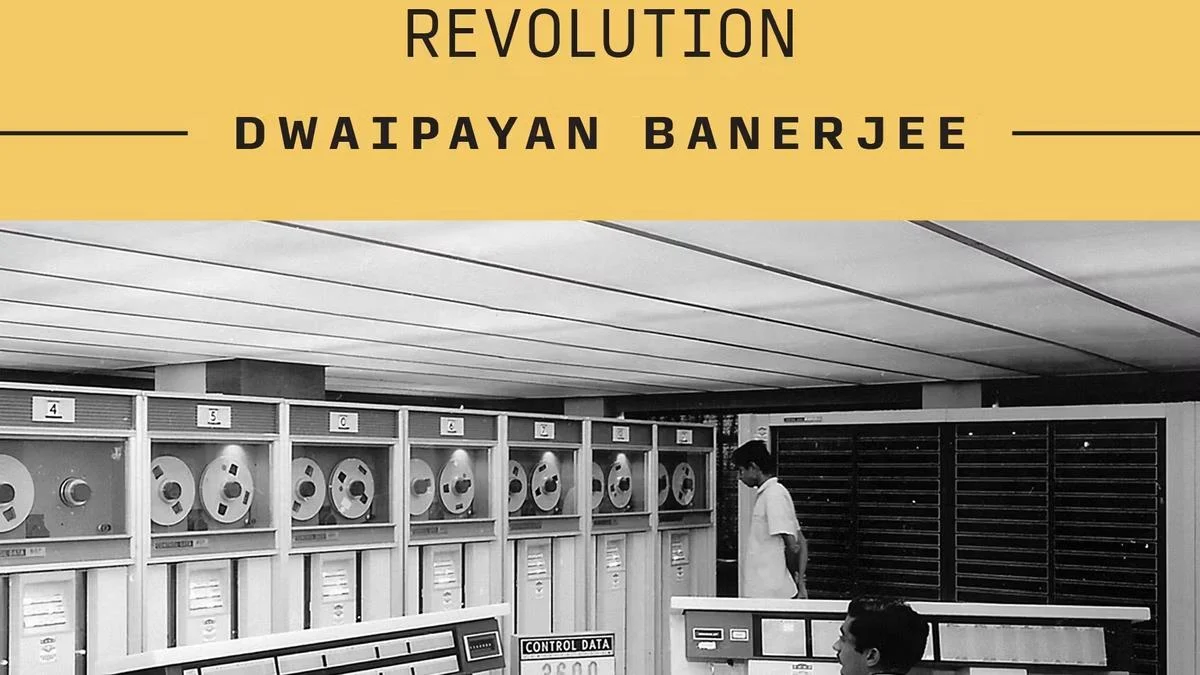
In a contemporary India aggressively pursuing technological sovereignty through initiatives like the "India Semiconductor Mission," the echoes of past ambitions resonate with a cautionary weight. A new book by MIT-based historian Dwaipayan Banerjee, "Computing in the Age of Decolonization," delves into the intricate and often overlooked history of India’s computing industry from the 1950s to the 1980s. Banerjee meticulously unpacks the myriad reasons why India’s earnest efforts to build self-reliance in this critical sector ultimately faltered, offering invaluable lessons for the nation’s current technological aspirations.
The book’s central thesis challenges the conventional narrative of post-colonial development, arguing that India’s failure to establish a robust indigenous computing hardware industry was not merely a technical or economic misstep, but a deeply rooted consequence of persistent colonial legacies and the strategic choices made by its technocratic elite. While the nation proudly established foundational institutions and even built its own computers, the dream of comprehensive technological independence remained largely unfulfilled, setting the stage for its later, albeit thriving, software services dominance. This historical analysis arrives at a particularly timely moment, as India once again grapples with the complexities of fostering a domestic high-tech ecosystem amidst global geopolitical shifts and intense competition.
A Vision Forged in Post-Colonial Ambition: Chronology of India’s Computing Journey
India’s journey into the world of computing began with a fervent nationalistic zeal, viewing technological prowess as an indispensable pillar of its newly gained independence and sovereignty. The narrative unfolds through a series of ambitious projects, fraught collaborations, and policy shifts, painting a vivid picture of a nation striving to carve its own path in a rapidly evolving technological landscape.
Early Indigenous Endeavors: TIFR and the Birth of TIFRAC
The story of India’s indigenous computing began in the hallowed halls of the Tata Institute of Fundamental Research (TIFR) in Mumbai. Founded in 1945 by Homi J. Bhabha, TIFR quickly became a beacon of scientific excellence, attracting some of the brightest minds in the nascent independent nation. Here, scientists recognized computing as not just a tool for scientific research, but as an integral component of national sovereignty and strategic autonomy. The vision was clear: India could not truly be independent if it relied entirely on foreign powers for such a crucial technology.
This conviction spurred the development of TIFRAC (Tata Institute of Fundamental Research Automatic Calculator), an indigenous computer completed around 1960. TIFRAC was a monumental achievement, a testament to Indian scientific ingenuity and the nation’s capacity for complex engineering. It was a flagship project, receiving the full backing of the postcolonial Indian state, which saw it as a symbol of its self-reliance ambitions. However, as Banerjee highlights, the support, while strong for the project itself, did not extend to cultivating a broader industrial ecosystem around it. The focus remained on the singular achievement, neglecting the crucial downstream elements: the development of a strong domestic electronics base and the diffusion of technical talent beyond a handful of elite institutions. This oversight would prove to be a foundational weakness, leaving the nascent industry vulnerable.
The IBM Hegemony and a Moment of Nationalist Assertiveness
While India was painstakingly building its own machines, the global computing giant IBM was swiftly establishing its foothold in the burgeoning Indian market. Rather than introducing cutting-edge technology, IBM shrewdly leased refurbished and often outdated machines, effectively creating a captive market. By the early 1970s, IBM’s dominance was almost absolute, accounting for roughly three-quarters of all computers operating in the country. This reliance on foreign, often second-hand, technology presented a stark contrast to India’s aspirations for self-sufficiency.
The turning point came in 1977, a moment etched in India’s economic history. The stringent equity dilution requirements of the Foreign Exchange Regulation Act (FERA) of 1973, coupled with the unwavering resolve of the then Industry Minister George Fernandes, famously pushed IBM out of India. FERA mandated that foreign companies reduce their equity stakes in Indian ventures to 40% or less, a move designed to protect domestic industries and conserve foreign exchange. IBM, unwilling to comply with these terms, chose to exit. Fernandes, a staunch socialist and vocal critic of multinational corporations, saw this as a crucial step towards economic independence. While celebrated as a victory for national pride and self-reliance, this expulsion was not without its complexities. The immediate void left by IBM’s departure highlighted the scarcity of viable domestic alternatives capable of providing the necessary hardware and services. Predictably, the narrative took another twist a few years later when IBM, in a strategic move, returned to India, albeit in a joint venture with the powerful Tata Group, demonstrating the enduring allure and necessity of foreign technological engagement.
International Collaborations and Cold War Obstacles
India’s quest for computing prowess was also intertwined with complex international dynamics, particularly during the Cold War era. Banerjee details TIFR’s attempts to develop indigenous capacity with assistance from UNESCO, an effort that regrettably faced obstruction from the United States. This resistance stemmed from broader geopolitical concerns and a cautious approach to technology transfer to non-aligned nations.
Later, TIFR explored collaboration with IBM’s formidable competitor, Control Data Corporation (CDC). However, this partnership, too, was short-lived. The pervasive anxieties of the Cold War and the U.S.’s strict export controls proved to be insurmountable barriers. Washington harbored concerns that high-performance computing technology could be diverted to India’s nascent nuclear weapons program, a fear that effectively stifled many potential collaborations. These instances underscore the immense geopolitical hurdles India faced in its pursuit of technological independence, demonstrating how external pressures could derail even the most promising domestic initiatives.
The Public Sector’s Push: ECIL and the TDC-12
Recognizing the strategic importance of indigenous capacity, the Indian state made concerted efforts to foster domestic computing through public sector undertakings. The Electronics Corporation of India, Ltd. (ECIL) was established in 1967 in Hyderabad with the mandate to build a self-reliant electronics industry. ECIL quickly became a pivotal player.
In 1968, ECIL made a significant advance by developing the Trombay Digital Computer (TDC-12), a landmark achievement as India’s first computer based on semiconductors. This was a crucial step away from the earlier vacuum tube-based designs and a clear indicator of India’s potential. In subsequent years, ECIL steadily enhanced its capacity, developing and producing more advanced machines, and importantly, also built up significant capabilities in software development. To complement ECIL’s manufacturing efforts, the Computer Maintenance Corporation (CMC) was established as a separate entity, tasked with providing essential service and support for the growing number of computers in the country.
However, despite these commendable strides, the state was acutely aware of ECIL’s inherent vulnerability: its dependence on imported components. The vision of self-reliance necessitated a complete ecosystem, not just assembly capabilities. In response, the Indian government, through the Department of Electronics, initiated various programs to promote the domestic manufacturing of components, including semiconductors. Yet, these ambitious plans often floundered. A confluence of factors—including internal political rivalries among Departments and Ministries, the ever-present hostile Cold War milieu, a persistent imbalance in international trade, and the fundamental lack of indigenous capacity in core electronics manufacturing—ultimately thwarted the grand vision of becoming truly self-sufficient in computers. The efforts, while pioneering, were insufficient to overcome these structural and systemic challenges.
Analyzing the Roots of Failure: Supporting Data and Banerjee’s Thesis
Dwaipayan Banerjee’s book offers a compelling, albeit critical, analysis of why India’s early computing ambitions did not achieve their desired outcome. He argues that the failure was not accidental but deeply embedded in a complex interplay of historical legacies, policy choices, and geopolitical realities.
The Interplay of Internal and External Pressures
Banerjee posits that real technological independence demands more than mere technical expertise; it necessitates a direct confrontation with the enduring political and social structures rooted in colonial legacies. These legacies, he suggests, shaped the institutional frameworks and decision-making processes in post-colonial India, inadvertently perpetuating forms of dependence even while ostensibly striving for autonomy.
The author points to several compounding factors that undermined the self-reliance vision. Internally, a fractured policy landscape characterized by internal politics and bureaucratic rivalries among various departments and ministries often led to disjointed strategies and inefficient resource allocation. Externally, the hostile Cold War environment consistently constrained India’s access to critical technologies and collaborations, particularly from Western blocs. Furthermore, a persistent imbalance in international trade meant that India struggled to generate the necessary foreign exchange to invest heavily in a capital-intensive industry. Crucially, the fundamental lack of a robust, indigenous manufacturing capacity in electronics, particularly for high-end components like semiconductors, meant that even domestically designed systems remained reliant on imported parts, undermining the very essence of self-sufficiency.
The Decoupling of Hardware and Software: A "Wrong Turn"
Perhaps Banerjee’s most persuasive argument centers on what he identifies as the "decisive wrong turn": the strategic choice to decouple software from hardware. According to the author, India’s technocratic elite mistook technical advancement for holistic development. In this framework, the country’s preference for profitable technical services based on exports, rather than costly, long-term investments in fundamental research and manufacturing of hardware, sealed its fate.
This choice had compounding consequences. By prioritizing software exports, India cultivated a niche that was globally competitive but structurally dependent on foreign hardware. The nation became a significant provider of services but remained a consumer of foundational technology. Banerjee argues that this framing rightly internationalizes the lesson of the dependency dynamic. He draws parallels to the contemporary global concentration of semiconductor fabrication and intellectual property in a few geographies like Taiwan and the U.S., and more recently, to the extractive renewable-energy supply chains across the Global South. In essence, India’s historical experience with computing hardware is presented as a microcosm of a larger global pattern of technological dependence that continues to shape economic power structures.
The Software Boom: A Divergent Path
While Banerjee’s analysis of the hardware-software split is central to his critique, it also invites a nuanced discussion about India’s eventual success in the software sector. The book, as some critics observe, might be seen as reductionist in its perspective on the Indian software exports industry, potentially not giving due credit to the long-term gains it undeniably brought.
Over the decades, the Indian software industry has acquired significant technological capacity, albeit primarily in software design and development, rather than hardware. The strategic push for software exports, though born partly out of the hardware manufacturing vacuum, did result in substantial benefits. It led to considerable foreign exchange earnings, created millions of jobs, and contributed significantly to productivity gains across various sectors. Furthermore, this focus spurred the boom of Global Capability Centres (GCCs) – units owned by multinational corporations that leverage India’s vast pool of skilled talent for high-end research, product development, and global business processes. While India might not "own" the entire product lifecycle in these cases, the expertise gained and the economic value generated are undeniable. The question then becomes: was the pivot to software a "wrong turn" or a pragmatic adaptation, a strategic maneuver that allowed India to find its competitive advantage in a complex global economy, even if it meant foregoing complete hardware self-reliance? Banerjee’s framework prompts a vital re-evaluation of this historical choice, acknowledging both its costs and its unexpected dividends.
Official Responses and Policy Trajectories: Historical Context and Modern Parallels
India’s post-independence economic philosophy was largely shaped by a commitment to self-reliance and import substitution, reflecting a broader distrust of global markets and a desire to protect nascent domestic industries. This ideology heavily influenced the state’s approach to computing, leading to a series of policies and interventions that continue to resonate today.
The State’s Evolving Role and Industrial Policy
From the robust state support for TIFRAC and the establishment of ECIL as a public sector champion, the government’s initial role was unequivocally interventionist. The FERA of 1973, which famously led to IBM’s expulsion, was a powerful manifestation of this state control, designed to assert national sovereignty over economic affairs and prevent foreign dominance. This period was characterized by a strong belief that the state must lead industrialization, particularly in strategic sectors.
However, this highly regulated environment also fostered inefficiencies and limited innovation due to lack of competition. The liberalization reforms initiated in 1991 marked a significant departure, opening the economy to global markets and private enterprise. This shift, while reducing the state’s direct control, paradoxically created fertile ground for the burgeoning software services industry, which thrived on global connectivity and market access.
Today, India finds itself in another phase of state-led intervention, albeit with a different strategy. The multi-crore "India Semiconductor Mission" represents a renewed, aggressive push by the government to attract global chipmakers, reduce dependence on imported silicon, and build a domestic semiconductor manufacturing ecosystem. This initiative reflects a recognition of the strategic imperative of semiconductor independence in the 21st century, akin to the earlier emphasis on indigenous computing, but with a more globally integrated approach.
The Perils of "Technosolutionism" and "Screwdriver Electronics"
Banerjee’s historical account serves as a timely warning against what he terms "technosolutionism"—the tendency to project technology-based solutions as a panacea without addressing deeper, underlying structural and systemic issues. The history of India’s computing industry is replete with instances where impressive technical achievements (like TIFRAC or TDC-12) failed to translate into a robust industrial capability due to the absence of a comprehensive ecosystem.
The author also cautions against the trap of "screwdriver electronics"—the mere assembly of imported components without indigenous research, design, and manufacturing capabilities. This historical pitfall is directly relevant to current policy debates. For the "India Semiconductor Mission" to succeed, it must move beyond simply attracting assembly plants. The goal must be to foster a deep-tech ecosystem where India not only fabricates chips but also owns the intellectual property, develops cutting-edge designs, and manufactures the sophisticated production equipment necessary for semiconductor fabrication. Without this comprehensive approach, flagship projects and catchy headlines, as Banerjee notes, may not translate into genuine industrial capability or actual manufacturing capacity.
Implications for India’s Future in a Geopolitically Complex World
The debates about technological sovereignty and strategic autonomy are not relics of the past; they are alive and kicking in India even today, more pertinent than ever in a geopolitically volatile world. Banerjee’s work offers crucial insights for navigating these contemporary challenges.
The Enduring Challenge of Technological Sovereignty
Banerjee’s history serves as a stark warning: while subsidy schemes and state-supported initiatives are undoubtedly necessary, they are not sufficient to achieve true technological sovereignty. The crucial missing link in past attempts to develop indigenous computers and an electronics sector was the failure to cultivate a larger, interconnected innovation ecosystem that effectively links fundamental research, advanced fabrication, and widespread deployment. This ecosystem encompasses everything from basic science education and R&D funding to skilled workforce development, intellectual property protection, venture capital, and market access. Without this holistic approach, even the most ambitious projects risk becoming isolated successes rather than catalysts for systemic industrial growth.
The rhetoric of sovereignty is fashionable and politically beneficial, but realizing it productively in practice demands a long-term vision and an industrial policy that is consistently aligned with the goals of technological autonomy. This means going far beyond the superficiality of "screwdriver electronics" to foster a deep-tech ecosystem where India owns not only the patents but also the sophisticated production equipment and the entire value chain.
Beyond State-Led Solutions: A Collaborative Imperative
While Banerjee’s thrust leans towards state-led solutions, reflecting the historical context of his study, India today is a vastly different nation from what it was until the 1980s. The current landscape is characterized by a more open economy, a vibrant private sector, and a deep integration into global supply chains. State-led solutions alone cannot adequately address the complexities of achieving technological sovereignty in an era where geopolitics and competition in high technologies are inextricably intertwined with global economic forces.
If anything, the book tells us that our ideas for the future need not be confined to replicating yet another ECIL. Instead, India needs to think more broadly and inclusively, envisioning solutions that bring together the strengths of the state, private capital, cutting-edge research institutions, and the vast pool of global Indian talent. This collaborative imperative, backed by a mature, long-term vision, is essential for navigating the intricate challenges of modern technological development.
Reclaiming Decolonization’s Promise: A Holistic Transformation
As Banerjee eloquently writes in his conclusion, "Any renewed struggle for technological sovereignty must begin by reclaiming the revolutionary promise of that first decolonial moment, while appreciating that genuine independence requires not just scientific expertise or state planning, but fundamental social and political transformation." This is a profound observation that cautions against the pitfalls of "technosolutionism," reminding us that technology, while powerful, is not a standalone solution.
However, while rhetorically powerful, this call for fundamental social and political transformation, as a pathway forward, remains at a high level of aspiration. The real challenge lies in fleshing out the alternative pathways, specifying the institutional frameworks, and devising the practical strategies that can translate these grand visions into concrete technological sovereignty. While Banerjee is perhaps right about what didn’t work, the path forward articulated in the book remains somewhat limited in its strategic specificity.
Ultimately, India’s quest for technological independence is an ongoing saga, a continuous balancing act between national ambition, global integration, and sustainable development. Dwaipayan Banerjee’s "Computing in the Age of Decolonization" offers a critical historical mirror, urging policymakers and citizens alike to learn from the past, understand the deep-seated challenges, and forge a truly self-reliant future that transcends mere technical prowess to embrace holistic societal transformation.
Krishna Ravi Srinivas is adjunct professor of law and director, Centre of Excellence in AI and Law, NALSAR University of Law, Hyderabad.
