

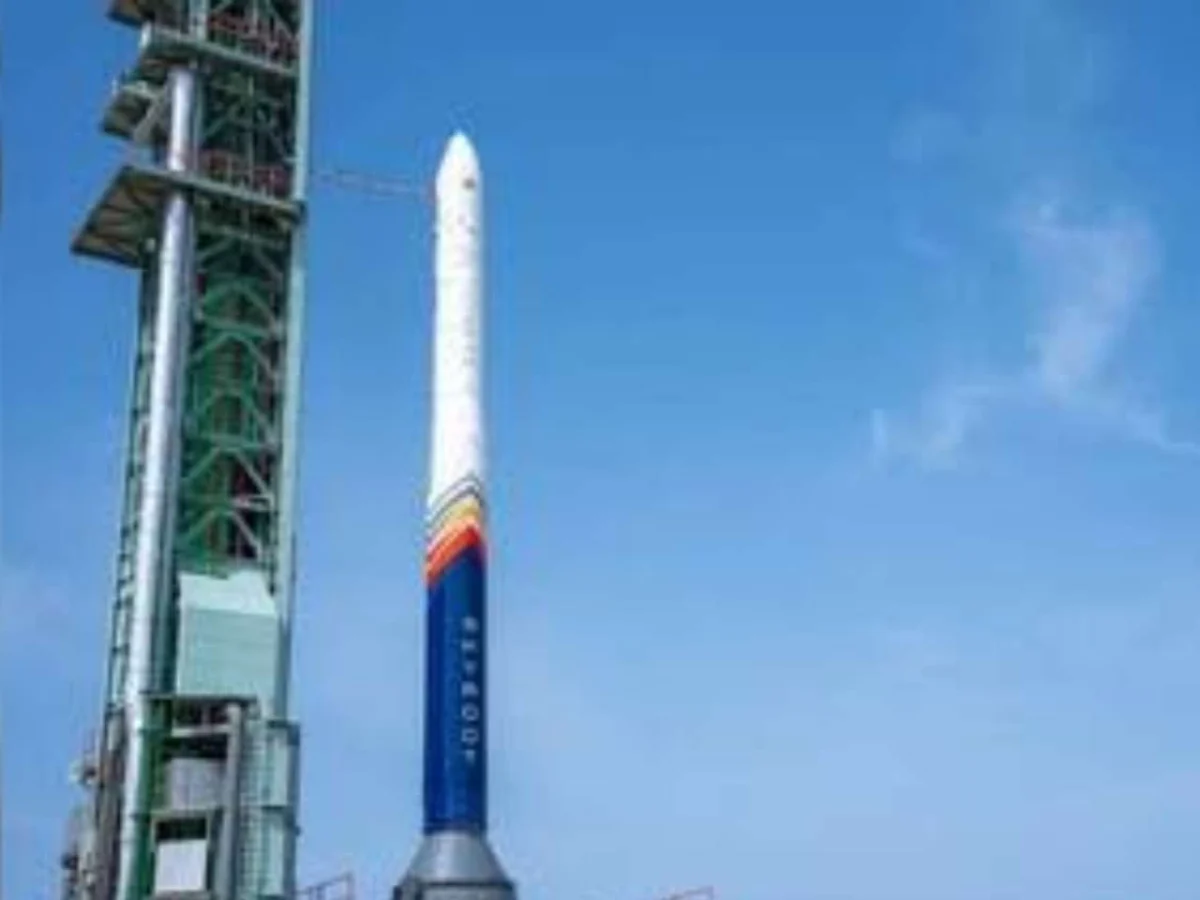
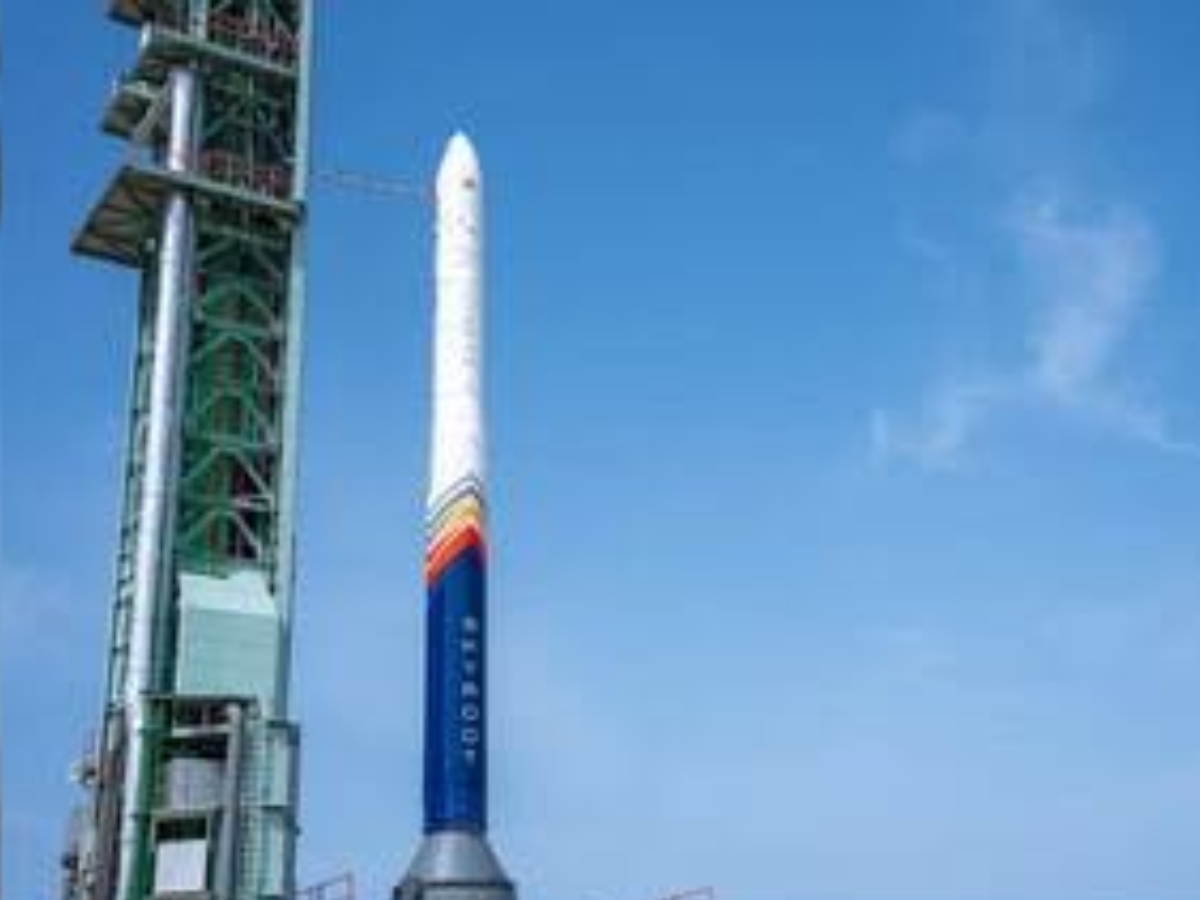
Hyderabad, India – India stands on the cusp of a new era in space exploration as Skyroot Aerospace, a pioneering private aerospace company, prepares for the inaugural orbital test flight of its Vikram-1 rocket. Scheduled for launch at 11:30 AM on July 18 from the First Launch Pad at the Satish Dhawan Space Centre in Sriharikota, this mission marks a monumental stride for the nation’s burgeoning private space sector and its ambitions on the global stage.
The Vikram-1, an indigenously developed, multi-stage launch vehicle, is poised to deploy small satellites into Low Earth Orbit (LEO), heralding a significant shift in India’s space capabilities. Pawan Kumar Chandana, co-founder and CEO of Skyroot Aerospace, encapsulated the sentiment surrounding this landmark event, stating, "After passing all tough tests, Vikram-1 is cleared to fly. This first launch is the start of our goal to open up space for everyone." His words underscore not just a technological achievement but a philosophical commitment to democratizing access to space.
Main Facts: A New Dawn for Indian Space Exploration
The upcoming launch of Vikram-1 is more than just a rocket taking flight; it represents a paradigm shift in India’s space narrative. For decades, the Indian Space Research Organisation (ISRO) has been the sole architect of the nation’s space ambitions, achieving remarkable feats from lunar missions to inter-planetary probes. However, with the government’s visionary reforms in 2020, which opened the space sector to private participation, companies like Skyroot Aerospace have emerged as crucial players, injecting innovation, agility, and commercial viability into the ecosystem.
Vikram-1, named in honor of Dr. Vikram Sarabhai, the father of India’s space program, embodies this new spirit of enterprise. Its mission objectives are multifaceted: to gather critical performance data on propulsion, stage separation, Guidance, Navigation, and Control (GNC) systems, and the overall vehicle dynamics. This data will be instrumental in validating Skyroot’s design principles and propulsion technologies, paving the way for future commercial launch operations.
The rocket’s maiden orbital flight will carry a diverse manifest of four technology demonstration payloads. These include Grahaa Space’s Solaras S3 satellite from Bengaluru, an incubated project at the Indian Institute of Space Science and Technology (IIST); Embrace, a cutting-edge space-debris removal robotic arm developed by Hyderabad-based startup Cosmoserve Space; Skyroot’s own Scope satellite for internal testing; and an orbital demonstration from the German firm DCUBED. This international and domestic payload mix highlights the collaborative and globally oriented nature of India’s private space industry.
Beyond its technical payloads, the Vikram-1 will also carry symbolic artifacts: 18-carat gold micro-sculptures of three titans of Indian science – Sir C.V. Raman, Dr. Vikram Sarabhai, and Dr. A.P.J. Abdul Kalam – along with Cosmos Diamonds’ artwork titled "Cosmic Bloom." These inclusions serve as a powerful tribute to India’s scientific heritage and its enduring pursuit of knowledge and innovation in the cosmos.
)
Chronology: From Concept to Launchpad – Skyroot’s Journey
The journey of Skyroot Aerospace and the development of Vikram-1 is a testament to perseverance, indigenous innovation, and a strategic vision aligned with India’s broader economic and technological goals.
The Genesis of Skyroot and the Vision for Private Space
Skyroot Aerospace was founded in 2018 by Pawan Kumar Chandana and Naga Bharath Daka, former ISRO scientists who shared a common dream: to revolutionize access to space from India. Their vision was to build cost-effective, reliable, and frequent launch solutions for the burgeoning small satellite market, leveraging cutting-edge technologies like 3D printing and advanced composite materials. From its inception, the company faced the dual challenge of pioneering a private space venture in a traditionally government-dominated sector and attracting significant investment. Early funding rounds and strategic partnerships, however, validated their business model and technical capabilities.
Paving the Way: The Vikram-S Precedent
Before the ambitious orbital flight of Vikram-1, Skyroot achieved a significant milestone with its sub-orbital demonstrator, Vikram-S. On November 18, 2022, Vikram-S successfully launched as part of the "Prarambh" (The Beginning) mission, making history as India’s first private rocket to reach space. This sub-orbital flight, though not reaching orbit, was crucial. It validated key technologies, propulsion systems, and flight dynamics in a real-world environment, providing invaluable data and confidence for the development of its larger, orbital-capable sibling. The success of Vikram-S demonstrated Skyroot’s capability to design, build, and launch rockets independently, garnering international attention and setting the stage for Vikram-1.

Developing Vikram-1: An Engineering Odyssey
The development of Vikram-1 has been an intensive engineering odyssey, spanning nearly 3,000 days of dedicated effort. The rocket’s design incorporates a multi-stage architecture, optimized for efficiency and payload delivery. A key innovation lies in its propulsion systems, which include both solid-fuel boosters and advanced liquid-fuel engines, some of which are entirely 3D-printed. This additive manufacturing approach allows for rapid prototyping, reduced part count, and enhanced design flexibility, significantly cutting down production time and costs.
The structure of Vikram-1 is predominantly an all-carbon composite body. This choice of material offers exceptional strength-to-weight ratio, which is critical for launch vehicles, enabling higher payload capacities and improved performance. The meticulous design, fabrication, and assembly processes were carried out at Skyroot’s state-of-the-art facilities, integrating components from over 400 suppliers across India, underscoring the ‘Make in India’ ethos.
Rigorous Testing and Integration
Every component and subsystem of Vikram-1 has undergone a battery of rigorous tests, simulating the extreme conditions of launch and space. These include static fire tests of engines, vibration tests, thermal vacuum tests, and extensive avionics checks. The entire rocket assembly process, from integrating the stages to mating the payload fairing, has been executed with precision. Chandana’s remark about "passing all tough tests" is a testament to the comprehensive verification and validation protocols employed by Skyroot, ensuring the reliability and safety of the mission.
)
Regulatory Clearance and Final Preparations
The regulatory landscape for private space activities in India is overseen by IN-SPACe (Indian National Space Promotion and Authorisation Centre), an autonomous nodal agency established by the government. IN-SPACe played a pivotal role in reviewing Skyroot’s launch readiness, safety protocols, and mission parameters, ultimately granting the necessary flight approval for Vikram-1. This regulatory clearance is a critical step, signifying that the mission meets all national and international standards for space launches.
In the days leading up to July 18, preparations at the Satish Dhawan Space Centre have been in full swing. All parts of Skyroot’s Vikram-1 have been meticulously put together and placed on the First Launch Pad. The company’s launch control centre has completed final checks on the rocket and established robust communication links with all telemetry ground stations and tracking radars. Furthermore, concerned authorities have issued the necessary airspace and maritime notices, formally designating the restricted zones along Vikram-1’s ascent and impact corridor for launch day. These measures ensure the safety of air and sea traffic during the launch window, highlighting the comprehensive planning involved in such complex operations.
Supporting Data: The Technology and The Payloads
Vikram-1 represents a confluence of advanced engineering, innovative manufacturing, and a strategic understanding of the evolving global space market.
)
Vikram-1: An Engineering Marvel
At approximately seven stories tall, Vikram-1 is a multi-stage launch vehicle designed specifically for the small satellite market. It boasts a payload capacity of up to 350 kg to Low Earth Orbit, making it a competitive option for universities, research institutions, and commercial entities looking to deploy nano- and micro-satellites. The rocket’s first mission aims for an altitude of 450 km at a 60-degree orbital inclination, a standard trajectory for many Earth observation and technology demonstration satellites.
Its advanced propulsion systems are a key differentiator. The rocket utilizes a combination of solid-fuel boosters for the initial stages, providing high thrust for liftoff, and liquid-fueled engines, including those from Skyroot’s indigenously developed Kalam series, for precise orbital insertion. The application of 3D printing in manufacturing these engines is a significant technological leap, enabling complex designs, lighter components, and faster production cycles compared to traditional methods.
The all-carbon composite body is another hallmark of Vikram-1’s advanced engineering. This material choice not only reduces the overall weight of the rocket, thereby increasing its payload capacity and fuel efficiency, but also offers superior structural integrity and thermal resistance during the intense phases of launch. The Guidance, Navigation, and Control (GNC) systems, critical for maintaining the rocket’s trajectory and orientation, are state-of-the-art, ensuring precise orbital placement.
)
The Trailblazing Payloads
The four tech-demo payloads onboard Vikram-1 underscore the mission’s focus on fostering innovation and collaboration:
-
Grahaa Space’s Solaras S3 Satellite: Hailing from Bengaluru and incubated at IIST, Solaras S3 is likely a technology demonstration satellite designed to test new systems or gather specific data in orbit. Such payloads often focus on areas like Earth observation, Internet of Things (IoT) connectivity, or advanced communication technologies, contributing to the development of future commercial applications. Its inclusion highlights the role of academic incubation in nurturing space startups.
-
Cosmoserve Space’s Embrace: This Hyderabad-based startup’s space-debris removal robotic arm addresses one of the most pressing challenges facing the space industry: orbital debris. As the number of satellites in orbit rapidly increases, the risk of collisions with defunct satellites or fragments rises, threatening operational spacecraft. Embrace aims to demonstrate technologies for actively removing or de-orbiting space junk, a critical step towards ensuring the long-term sustainability of space activities. Its successful demonstration could position India as a leader in space environmentalism.
)
-
Skyroot’s Scope Satellite: As an internal technology demonstration, Scope provides Skyroot with invaluable in-situ data on its own proprietary technologies. This could range from testing new sensor arrays, communication protocols, power systems, or even miniaturized propulsion units. Such internal payloads are crucial for rapid iteration and refinement of future rocket and satellite designs.
-
DCUBED’s Orbital Demonstration: The collaboration with German firm DCUBED signifies India’s growing appeal as a global launch destination for small satellites. While specific details of their demonstration are not public, DCUBED specializes in deployable structures and small satellite components. Their payload could involve testing a new deployment mechanism, a modular satellite platform, or advanced materials in the harsh space environment.
Symbolic Gestures in Orbit
The inclusion of gold micro-sculptures of Sir C.V. Raman (Nobel laureate in Physics), Dr. Vikram Sarabhai (pioneer of India’s space program), and Dr. A.P.J. Abdul Kalam (former President and renowned scientist) is a deeply symbolic gesture. It connects India’s past scientific brilliance with its current achievements and future aspirations. These figures represent the intellectual bedrock upon which modern India’s scientific and technological prowess is built. Similarly, Cosmos Diamonds’ "Cosmic Bloom" artwork adds an artistic and cultural dimension, celebrating the intersection of human creativity and cosmic exploration. These symbolic payloads are not merely decorative; they serve as a source of national pride and inspiration.
)
The Broader Ecosystem
The success of Vikram-1 is not solely attributable to Skyroot Aerospace but is the culmination of a vast collaborative effort. Naga Bharath Daka, co-founder and COO, highlighted this, stating, “The launch represents the hopes and hard work of around 1,000 people, the contributions of over 400 suppliers, and nearly 3,000 days of resolve to build a global offering from India.” This statement underscores the significant economic impact, job creation, and the nurturing of a robust aerospace supply chain within India, aligning perfectly with the ‘Make in India’ and ‘Atmanirbhar Bharat’ (self-reliant India) initiatives.
Official Responses: Voices from the Frontier and Beyond
The impending launch has generated immense excitement, with key stakeholders articulating their vision and expectations for India’s private space future.
Skyroot Leadership’s Vision
Pawan Kumar Chandana’s remarks about Vikram-1 being "cleared to fly" and signifying "the start of our goal to open up space for everyone" are central to Skyroot’s philosophy. It’s not just about building rockets; it’s about democratizing access to space, making it more frequent, affordable, and accessible to a wider array of users, from educational institutions to commercial ventures. His emphasis on gathering "valuable data" from this "first test flight" highlights the iterative nature of aerospace development and the company’s commitment to continuous learning and improvement to establish a consistent "launch cadence."
)
Naga Bharath Daka’s poignant statement about the "hopes and hard work" of a thousand people and the contributions of hundreds of suppliers paints a vivid picture of the collective endeavor behind Vikram-1. His commitment to "return to the shop floor to learn, improve, and build further" after analyzing the in-flight data demonstrates a pragmatic and engineering-driven approach, acknowledging that this mission is a foundational step in a longer journey.
Government’s Enabling Role
While not directly quoted in the original article, the government’s stance on private space enterprise is clear. The reforms introduced in 2020, championed by Prime Minister Narendra Modi, were designed to unlock the immense potential of India’s private sector in space. The establishment of IN-SPACe as an independent regulatory and promotional body was a critical move, providing a single-window system for private companies to navigate the complexities of space activities, from design approvals to launch authorizations. This shift from a state-monopoly to a more liberalized model is aimed at fostering innovation, attracting investment, and accelerating India’s global competitiveness in the space domain. ISRO, while continuing its ambitious scientific and strategic missions, is also evolving its role to become a facilitator and mentor for private players, sharing its vast expertise and infrastructure, including launch pads.
Industry and Expert Perspectives
The broader Indian space industry and experts view Vikram-1’s launch with considerable optimism. It validates the government’s reform agenda and demonstrates the capability of Indian startups to compete with established global players. Industry analysts predict a significant growth in India’s space economy, driven by such private initiatives. The success of Vikram-1 could attract further domestic and international investment into the sector, fostering a vibrant ecosystem of new startups, technology developers, and service providers. This also sets a precedent for other private entities eyeing orbital launches, potentially creating a healthy competitive environment that drives down costs and increases launch frequency.
)
Implications: Shaping India’s Space Future and Global Aspirations
The Vikram-1 mission carries profound implications for India’s space sector, its economy, and its standing on the global stage.
Democratization of Space Access
Perhaps the most significant implication is the democratization of space access. Historically, launching a satellite was a costly and time-consuming endeavor, primarily reserved for national space agencies and large corporations. Private players like Skyroot, with their focus on cost-effective, agile, and frequent launches, are making space accessible to a broader range of customers. This includes universities for scientific research, smaller companies for Earth observation or communication services, and even individuals for unique space experiences. This accessibility is crucial for accelerating innovation and expanding the benefits of space technology to various sectors.
Economic Impetus and Job Creation
The emergence of a vibrant private space sector is a powerful economic engine. Skyroot Aerospace, with its nearly 1,000-strong team and a network of over 400 suppliers, exemplifies this. The sector is poised for significant growth, attracting domestic and foreign investment, creating high-skilled jobs in engineering, manufacturing, and research, and fostering a robust supply chain. This aligns with India’s broader economic goals of becoming a $5 trillion economy and a global manufacturing hub, particularly in high-tech domains. The space economy, encompassing manufacturing, launch services, satellite operations, and downstream applications, is projected to grow substantially, with India aiming to capture a significant share.
)
Technological Sovereignty and Innovation
Vikram-1’s design, featuring an all-carbon composite body, 3D-printed engines, and indigenous propulsion systems, underscores India’s commitment to technological sovereignty. By developing these capabilities domestically, India reduces its reliance on foreign technologies and enhances its strategic independence in space. Moreover, the competitive environment fostered by private players drives rapid innovation, pushing the boundaries of what is possible in rocketry and satellite technology. This continuous cycle of innovation will benefit both the commercial sector and national strategic interests.
India’s Standing in the Global Space Market
With the successful orbital launch of Vikram-1, India will solidify its position as a major player in the global commercial launch market, particularly in the burgeoning small satellite segment. The demand for small satellite launches is skyrocketing, driven by constellations for broadband internet, Earth imaging, and IoT services. India, with its cost-effective solutions and proven track record of reliability (through ISRO), is well-positioned to capture a significant share of this market. Skyroot’s ability to attract international clients like DCUBED further validates this potential, opening doors for increased foreign exchange earnings and global partnerships.
Challenges and the Road Ahead
While the future looks bright, challenges remain. The global launch market is highly competitive, with established players and new entrants vying for market share. Reliability, cost-effectiveness, and launch frequency will be critical determinants of success. Skyroot will need to consistently demonstrate its capabilities, scale up its operations, and secure sustained funding to maintain its momentum. The regulatory framework, though supportive, will also need to evolve to keep pace with rapid technological advancements and market dynamics.
)
Inspiring the Next Generation
Beyond the commercial and strategic implications, the sight of an Indian-made private rocket soaring into orbit serves as a powerful inspiration. It ignites curiosity, encourages scientific inquiry, and motivates young minds to pursue careers in STEM fields. The symbolic payloads, honoring India’s scientific legends, reinforce this message, connecting past achievements with future aspirations and fostering a sense of national pride and technological ambition.
In conclusion, the launch of Skyroot’s Vikram-1 is not merely a technical feat; it is a profound declaration of India’s readiness to embrace the private sector as a driving force in its space journey. It signifies a future where space is not just a frontier for government agencies but an accessible domain for innovation, enterprise, and the collective dreams of a nation. As the countdown to July 18 continues, the world watches eagerly to witness this pivotal moment in India’s ascent to global space leadership.
