

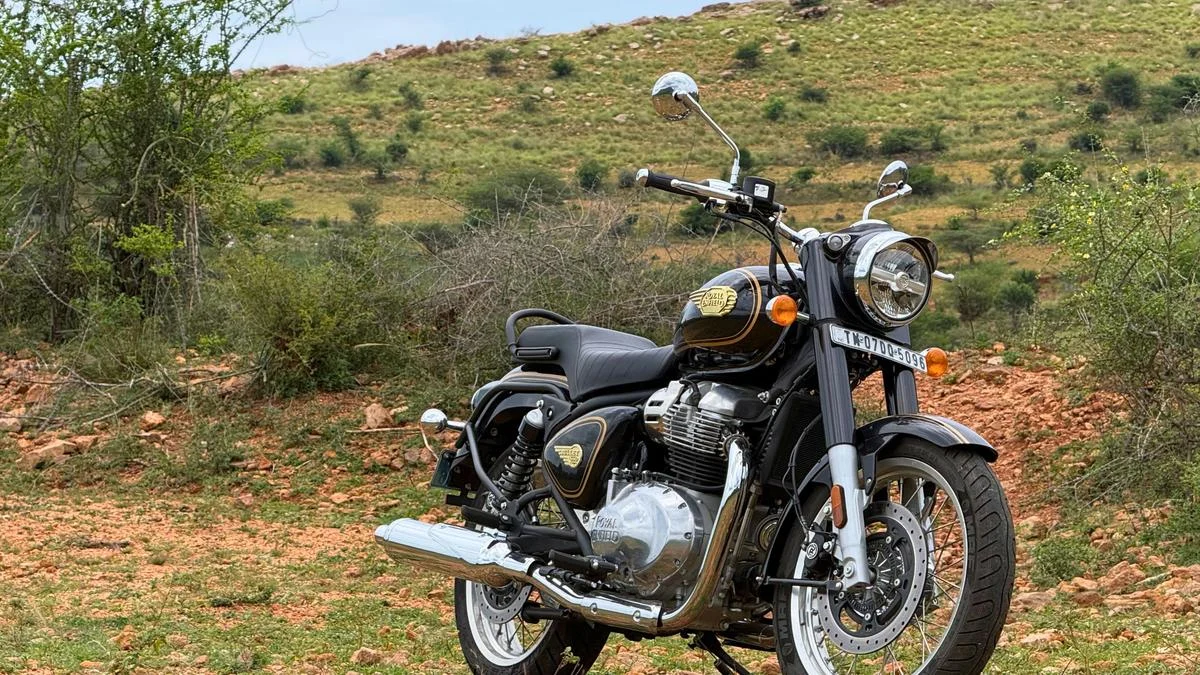
The "Bullet" moniker is not merely a model name in the world of motorcycling; it is a cultural phenomenon that has spanned nearly a century. In a move that enthusiasts have anticipated since the debut of the 648cc parallel-twin platform in 2018, Royal Enfield has officially launched the Bullet 650. Priced at ₹3.64 lakh (ex-showroom), this motorcycle represents the most significant leap in the model’s history, transitioning from the traditional long-stroke single-cylinder architecture to a sophisticated, multi-cylinder powerhouse.
The arrival of the Bullet 650 marks the completion of a strategic circle for Royal Enfield. Having successfully integrated the 650cc engine into the Interceptor, Continental GT, Super Meteor, Shotgun, and most recently, the Classic 650, the company has finally bestowed its most prestigious badge upon this award-winning powertrain. The result is a machine that bridges the gap between mid-20th-century aesthetics and 21st-century performance.
I. Main Facts: The Technical and Commercial Foundation
The Royal Enfield Bullet 650 enters the market as a premium middleweight cruiser, designed to offer a more relaxed and authoritative riding experience than its 350cc sibling. At its core is the 648cc, air-and-oil-cooled, parallel-twin engine, which has become the benchmark for refinement in the global mid-capacity segment.
Key Specifications at a Glance:
- Engine: 648cc parallel-twin, SOHC, 4 valves per cylinder.
- Power Output: 47 PS @ 7,250 rpm.
- Peak Torque: 52.3 Nm @ 5,650 rpm.
- Transmission: 6-speed constant mesh with a slipper and assist clutch.
- Chassis: Steel tubular spine frame.
- Weight: 243 kg (kerb weight).
- Price: ₹3.64 lakh (ex-showroom).
The Bullet 650 distinguishes itself from its stablemates through a specific "heritage" geometry. It features a 1,480mm wheelbase and an overall length of 2,260mm, making it one of the most substantial motorcycles in Royal Enfield’s current portfolio. Despite the modernization, the motorcycle retains the hallmark traits that have defined the Bullet since 1932: the teardrop fuel tank, the hand-painted gold pinstripes (Madras Stripes), and the signature "casquette" headlamp housing flanked by "tiger eye" pilot lamps.

II. Chronology: From the Trenches to the Twin-Cylinder
To understand the significance of the Bullet 650, one must look at the timeline of the world’s longest-running motorcycle model in continuous production.
- The Origins (1932–1948): The Bullet was introduced as a high-performance sports bike of its era, featuring a sloper engine and a four-valve head. It gained fame for its durability in military use during World War II.
- The Indian Connection (1955): The Indian government ordered 350cc Bullets for border patrol, leading to the establishment of Enfield India in Madras (now Chennai). This secured the Bullet’s future even as the British parent company faced decline.
- The Cast Iron Era (1955–2010): For decades, the Bullet remained virtually unchanged, characterized by its heavy flywheel, right-side gear shift, and the iconic "thump."
- The UCE Transition (2010–2023): Royal Enfield moved to the Unit Construction Engine (UCE), integrating the engine, gearbox, and clutch. This period also saw the introduction of the 500cc fuel-injected variants.
- The J-Series and the Twin Era (2023–Present): While the Bullet 350 moved to the refined J-series platform in 2023, the 2024-2025 window marks the ultimate evolution: the Bullet 650. This marks the first time a factory-production Bullet has featured a parallel-twin engine, fundamentally changing the bike’s performance envelope.
III. Supporting Data: Performance, Engineering, and Ergonomics
The transition to a 650cc platform is not merely an engine swap; it is a complete re-engineering of the riding experience.
Engine Dynamics and Refinement
The 648cc engine utilizes a 270-degree crankshaft, which provides a characterful exhaust note that balances smoothness with a tactile "pulse." While purists may lament the loss of the traditional slow-speed single-cylinder "thump," the twin-cylinder unit offers a "throaty roar" that is more suited to modern highway speeds.
Testing data reveals that the engine is remarkably unstressed at cruising speeds. Between 80 km/h and 100 km/h, vibrations are virtually non-existent at the handlebars and footpegs, a stark contrast to the high-frequency "buzz" associated with older 500cc singles.

Chassis and Suspension
The Bullet 650 utilizes a steel tubular spine frame that has been reinforced to handle the 243 kg kerb weight.
- Front Suspension: 43mm telescopic forks with 120mm of travel. These are beefier than those found on the 350cc models, providing better front-end stability under heavy braking.
- Rear Suspension: Twin shock absorbers with 90mm of travel. The damping has been tuned for a "plush" ride, prioritizing comfort over aggressive cornering.
- Braking: Safety is managed by a 320mm front disc and a 300mm rear disc, supported by a dual-channel ABS system from Bosch.
Real-World Efficiency
While Royal Enfield claims a fuel efficiency figure exceeding 25 kmpl under ideal conditions, real-world testing in mixed environments—including urban stop-and-go traffic and spirited hill climbs—shows a return of approximately 18 kmpl. For a 650cc twin, this is considered acceptable, though it suggests a touring range of roughly 230–250 km per tank, depending on the rider’s wrist.
IV. Official Responses and Market Positioning
Royal Enfield’s design philosophy for the Bullet 650 was "evolution without alienation." Official communications emphasize that the design team was tasked with ensuring that a rider from the 1960s would immediately recognize the machine, even if they didn’t recognize the engine.
Bullet 650 vs. Classic 650: The Strategic Distinction
A common point of inquiry from the market involves the overlap between the Bullet 650 and the Classic 650. While they share the same mechanical "bones," Royal Enfield has positioned them for different psychological profiles:

- The Classic 650: Aimed at the "post-war" retro enthusiast. It features more chrome, a distinct "loop" rear mudguard, and a slightly more ornate aesthetic.
- The Bullet 650: Positioned as the "purest" expression of the brand. It features the squared-off rear mudguard, simpler colorways, and the iconic gold pinstriping that is synonymous with the Bullet’s working-class hero legacy.
Management at Royal Enfield suggests that the Bullet 650 is intended for the "long-distance traditionalist"—the rider who wants the prestige of the Bullet name but needs the mechanical reliability to cross continents without a toolkit in their panniers.
V. Implications: The Future of the Middleweight Cruiser Segment
The introduction of the Bullet 650 has several far-reaching implications for the motorcycling industry and the Royal Enfield brand.
1. The Democratization of the "Big Bike" Experience
At ₹3.64 lakh, the Bullet 650 is positioned as an accessible "big bike." It offers the presence and performance of a 600cc+ motorcycle at a fraction of the cost of European or Japanese competitors. This is likely to draw in a demographic of older riders who are "upgrading" from 350cc machines but find modern sport-tourers too intimidating or ergonomically aggressive.
2. The End of the "Compromised" Retro
For decades, buying a "retro" bike meant accepting outdated technology—vibrations, oil leaks, and poor braking. The Bullet 650 proves that heritage styling can coexist with modern safety standards (ABS), reliability (slipper clutch), and performance. This puts pressure on competitors like BSA and Triumph to ensure their "modern classics" offer similar levels of daily-driver usability.

3. Ergonomic Challenges for the Mass Market
One significant implication of the Bullet 650’s design is its accessibility to the average Indian rider. With a kerb weight of 243 kg and an 800mm seat height, the motorcycle is physically demanding. Manoeuvring the bike in tight urban parking or managing it at a standstill on an incline requires significant physical strength. This may limit its appeal to taller or more experienced riders, potentially leaving a gap for lighter, 400cc-class competitors to fill.
4. Global Brand Elevation
The Bullet 650 is not just for the Indian market; it is a global product. By putting the Bullet name on its most refined engine, Royal Enfield is signaling to the international market that its heritage is not a relic of the past, but a platform for the future. The bike is expected to see significant interest in markets like the UK, Europe, and North America, where the "modern classic" segment is booming.
VI. Final Verdict
The Royal Enfield Bullet 650 is a masterclass in brand preservation. It successfully navigates the "Ship of Theseus" paradox: if you replace the engine, the frame, the brakes, and the electronics, is it still a Bullet?
The answer, based on initial reception and technical analysis, is a resounding yes. By maintaining the visual "soul" of the motorcycle—the pinstripes, the stance, and the casquette—Royal Enfield has allowed the Bullet to grow up. It has traded its idiosyncratic "thump" for a sophisticated "roar," and its bone-shaking vibrations for highway-eating refinement. For the rider who values authenticity but demands 21st-century capability, the Bullet 650 is no longer a compromise; it is a destination.

This report was prepared by Motorscribes, in association with The Hindu. For further updates on the automotive sector, follow @motorscribes on Instagram.
