

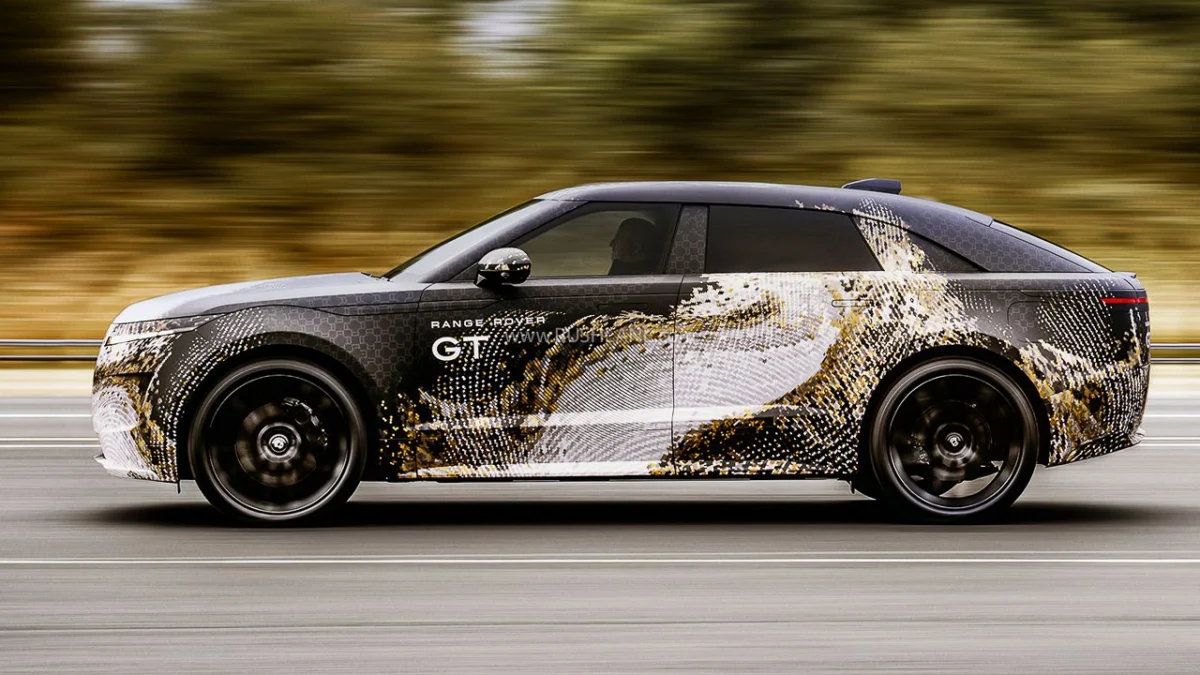
GAYDON, UK — In a move that signals the most significant evolution of its brand identity in nearly a decade, Range Rover has officially previewed the "Range Rover GT." This all-new model is set to become the fifth pillar of the prestigious Range Rover family, joining the flagship Range Rover, the Range Rover Sport, the Velar, and the Evoque. Positioned as a low-slung, high-performance grand tourer, the GT marks the first time since the 2017 debut of the Velar that the marque has introduced an entirely new nameplate to its global portfolio.
The Range Rover GT represents a bold departure from the traditional upright, boxy silhouettes that have defined the brand for over half a century. Instead, it embraces a sleeker, more aerodynamic profile designed to bridge the gap between a luxury limousine and a capable off-road SUV. Built upon Jaguar Land Rover’s (JLR) cutting-edge Electrified Modular Architecture (EMA), the GT will lead with a fully electric powertrain, underscoring the company’s "Reimagine" strategy and its commitment to a zero-tailpipe-emission future.

1. Main Facts: Redefining the "Range Rover" Aesthetic
The Range Rover GT is not merely a stylistic exercise; it is a fundamental reimagining of what a luxury all-terrain vehicle can be. While the brand has spent decades perfecting the "command driving position," the GT lowers the center of gravity and the seating position to provide a more "car-like" and engaging driving experience.
Key Specifications and Features:
- Segment: Luxury Electric Grand Tourer (GT).
- Platform: JLR’s new EMA (Electrified Modular Architecture).
- Powertrain: Initial launch as a Battery Electric Vehicle (BEV), with a Hybrid Electric Vehicle (HEV) variant to follow.
- Production Hub: To be manufactured at JLR’s Halewood plant in the UK, following a massive investment to transition the facility for EV production.
- Design Philosophy: "Reductive Design," focusing on clean lines, hidden technology, and sustainable luxury materials.
- Market Positioning: Aimed at long-distance touring with a focus on "acoustic luxury" and class-leading rear-cabin comfort.
Despite its road-biased proportions, Range Rover engineers insist that the GT will not sacrifice the brand’s legendary "go-anywhere" capability. It will feature sophisticated all-wheel-drive systems and air suspension capable of adjusting ride height for off-road excursions, ensuring it remains "unmistakably a Range Rover."

2. Chronology: The Journey to the Fifth Nameplate
The development of the Range Rover GT is the culmination of years of strategic planning and engineering transitions within JLR.
- 2017: Range Rover launches the Velar, filling the "white space" between the Evoque and the Sport. This was the last time a new nameplate was added to the lineup.
- 2021: JLR announces the "Reimagine" strategy under CEO Adrian Mardell, pivoting the brand toward a "House of Brands" approach (Range Rover, Defender, Discovery, and Jaguar) with a heavy focus on electrification.
- 2023 – Early 2024: Development of the EMA platform reaches maturity. The platform is designed specifically to maximize interior space and battery efficiency for mid-sized luxury vehicles.
- Mid-2024: Prototype testing moves to public roads. Range Rover releases teaser images of the GT draped in a unique camouflage pattern inspired by the topography surrounding the Gaydon design center.
- Late 2024 (Projected): Full global reveal of technical specifications, including range, battery capacity, and performance figures.
- 2025/2026: Start of production at the Halewood facility and global market rollout.
3. Supporting Data: The EMA Platform and Design Innovation
The transition to the EMA platform is perhaps the most critical technical aspect of the Range Rover GT. Unlike the MLA (Flexible Modular Longitudinal Architecture) used for the full-sized Range Rover—which accommodates ICE, Mild-Hybrid, and EV—the EMA is an "EV-first" architecture.

Engineering a Grand Tourer
The EMA platform allows for a flat-floor design, which Range Rover has utilized to provide "class-leading second-row legroom." By moving the wheels to the extreme corners of the chassis, designers have achieved a long wheelbase that benefits both high-speed stability and interior volume.
The exterior design focuses on aerodynamic efficiency, a crucial factor for maximizing the range of an electric vehicle. The GT features a steeply raked windshield, a tapering roofline, and flush-fitting door handles. The prototypes suggest a "waistline" that is lower than the Velar, giving the vehicle a planted, muscular stance.

The Minimalist Interior
The interior of the GT serves as a showcase for the brand’s "reductive" philosophy. Supporting data from the preview indicates:
- Integrated Displays: A single-screen infotainment setup dominates the center, but it is integrated into the dash rather than "floating."
- Concealed Technology: Air vents are hidden behind a full-width dashboard slit.
- Acoustic Textiles: In a move toward sustainability, the cabin utilizes woven textiles that not only replace traditional leathers but also serve a functional purpose by concealing high-fidelity speakers within the door and dash panels.
- Driver Focus: A slim, digital driver display replaces the bulky instrument binnacles of the past, emphasizing the lower dashboard height and improved forward visibility.
4. Official Responses: The Vision of Leadership
The Range Rover GT is being positioned not just as a new car, but as a new kind of car for the brand. Martin Limpert, Managing Director of Range Rover, has been vocal about the vehicle’s unique identity.

"Range Rover GT will be our most car-like, yet unmistakably capable model yet," Limpert stated during the preview. "It is designed for those who value the effortless performance of a grand tourer but refuse to compromise on the command and security that only a Range Rover can provide."
Limpert also emphasized the "acoustic sanctuary" of the GT, noting that the absence of a combustion engine allowed engineers to focus on a new level of "silent luxury." This involves active noise cancellation technology that uses sensors on each wheel to generate a signal through the speakers to cancel out road noise before it reaches the occupants’ ears.

JLR’s Chief Creative Officer, Gerry McGovern, has also hinted that the GT is a "masterclass in proportion," suggesting that the vehicle’s design was driven by a desire to create a "purity of form" that distinguishes it from the more rugged silhouettes of the Defender or the verticality of the flagship Range Rover.
5. Implications: What the GT Means for the Industry and the Brand
The introduction of the Range Rover GT has far-reaching implications for the luxury automotive market and JLR’s future.

Market Positioning and Competition
The GT enters a highly competitive and growing segment of luxury "crossover GTs." Its primary rivals will likely include the Porsche Taycan Cross Turismo, the Audi e-tron GT, and upcoming electric offerings from Bentley and Aston Martin. By offering a "low-slung" alternative to the SUV, Range Rover is attempting to capture traditional luxury sedan buyers who are looking for more versatility without the "bulk" of a full-sized SUV.
The Electrification Milestone
As the first Range Rover to be built on the EMA platform, the GT is the "canary in the coal mine" for JLR’s electric future. Its success will validate the company’s multi-billion dollar investment in the Halewood facility and the EMA architecture. The decision to launch as a BEV first—rather than a hybrid—signals a confidence in the electric luxury market that was previously more cautious.

Brand Dilution or Evolution?
There is always a risk when a brand known for "off-roaders" moves closer to a "car-like" profile. However, industry analysts suggest that the Range Rover name has become so synonymous with luxury that it can now transcend its utilitarian roots. The GT allows the brand to compete in the "lifestyle" and "performance" sectors more effectively than the taller Sport or Velar models could.
Manufacturing and Economic Impact
The production of the GT at Halewood is a significant boost for the UK automotive industry. The plant, which has historically produced the Evoque and Discovery Sport, is being transformed into a high-tech EV hub. This ensures thousands of jobs and cements the UK’s role in the global EV supply chain.

Conclusion: A New Era of Sophistication
The Range Rover GT is a bold testament to the brand’s ability to innovate while staying true to its heritage of luxury and capability. By combining the sleek proportions of a grand tourer with the rugged DNA of an all-terrain vehicle, Range Rover is creating a unique niche in the electric era.
While specific performance figures—such as its 0-60 mph time or its maximum WLTP range—remain under wraps for now, the visual and philosophical foundations of the GT suggest a vehicle that is ready to redefine the "Gold Standard" of luxury travel. As more details emerge later this year, the automotive world will be watching closely to see if this fifth member of the family can truly deliver on the promise of being the "most car-like, yet unmistakably capable" Range Rover ever built.
