

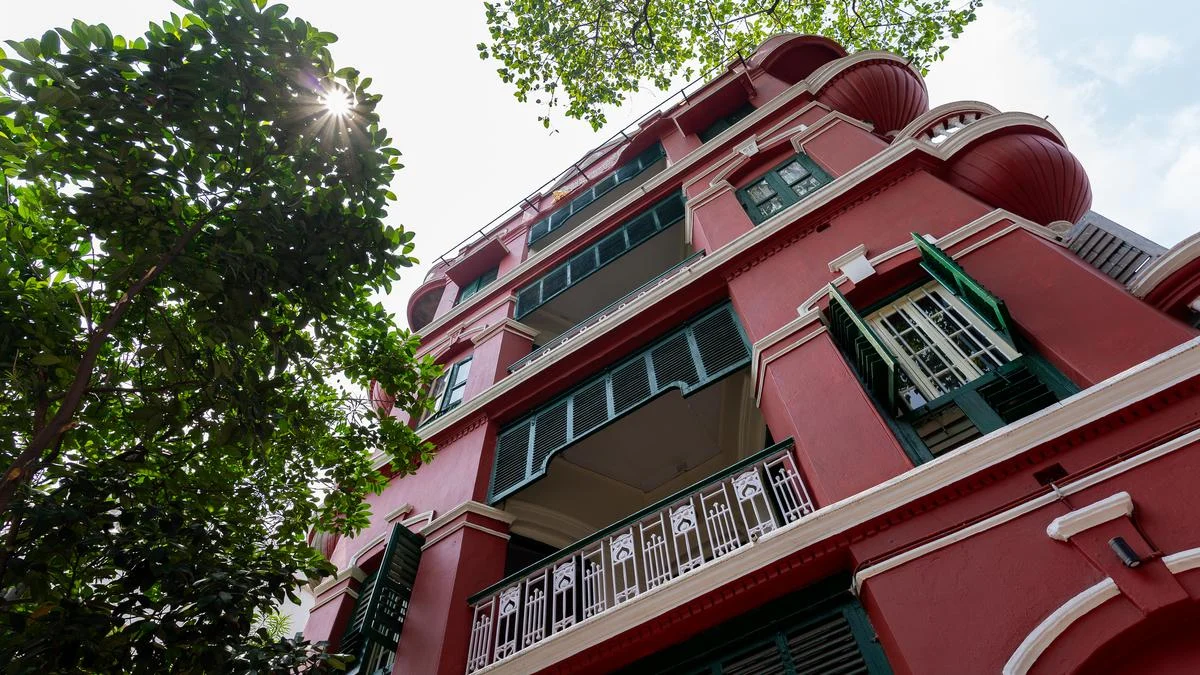
The old heritage buildings of Kolkata rise against the city’s skyline like the sturdy chords of an ancient chamber organ. The rise and fall of these architectural reeds lend the city its own unique music: a composition of memory, loss, and renewal. For decades, these structures—ranging from the grand colonial edifices of Dalhousie Square to the intimate, red-shuttered mansions of North Kolkata—were viewed as crumbling liabilities, relics of a bygone era destined for the wrecking ball.
However, a new movement is stirring within the city’s thick, damp-stained walls. A collective of entrepreneurs, conservationists, and artists are moving beyond mere preservation, embracing a philosophy of "adaptive reuse." By transforming stagnant historical sites into vibrant cultural hubs, jazz bars, and experiential tourism venues, they are proving that Kolkata’s heritage is not a museum piece to be dusted, but a living stage for the 21st century.

Main Facts: The Performance of Preservation
The centerpiece of this revival is "Kolkata Unforgettable," an experiential tourism initiative led by Shailaja Mundra and her daughter Vasudha Pachisia. Their mission is to bridge the gap between architectural appreciation and economic viability. The realization was simple: while the city is rich in history, heritage owners often lack the financial incentive or the imagination to maintain aging properties.
On March 27, this vision materialized at the 109-year-old Royal Insurance Building in Dalhousie Square. Facing the stately General Post Office (GPO), this building is a masterclass in early 20th-century colonial commercial architecture, blending Edwardian scale with Classical ornamentation. For decades, it was a silent participant in the city’s bureaucratic routine. That changed when neon pink and blue lights washed over its creaking stairwells, and flamenco dancers in high heels gathered on its steps.

The organizers utilized the building as a "pre-made backdrop," turning a weekend-dead business district into a thriving cultural theater. This is the core of their strategy: fortnightly curated immersive performances that generate public interest and, crucially, revenue for upkeep.
Key Highlights of the Initiative:
- The Hero of the Show: The venue itself is the protagonist. Events are designed to highlight specific architectural features, such as the rare pipe organ at St. John’s Church or the sweeping staircases of the Royal Insurance Building.
- Narrative Blending: Instead of dry history lessons, the team employs "art walkers" like Navpreet Arora to weave storytelling into music and dance performances.
- Sustainability Model: A portion of the ticket revenue is channeled directly back into the maintenance of the host buildings, creating a self-sustaining cycle of conservation.
Chronology: From Bureaucratic Decay to Cultural Rebirth
The timeline of Kolkata’s heritage revival is marked by individual leaps of faith and institutional shifts over the last decade.

- The Colonial Era (1910s–1940s): Most of the structures currently under restoration, including the Royal Insurance Building (109 years old) and Munir Mohanty’s Manoharpukur property, were constructed during the height of British commercial influence or the rise of the Bengali elite.
- The Period of Neglect (1970s–2010s): Economic stagnation and complex tenancy laws led to the decay of thousands of heritage structures. Many were "folded into the city’s bureaucratic routine," used as warehouses or low-rent offices.
- 2017–2019: The Jazz Catalyst: Munir Mohanty returned to Kolkata from the United States with a vision to create a space for vinyl and jazz. In 2019, he acquired a 109-year-old late colonial building on Manoharpukur Road, initiating a year-long, intensive restoration process that would eventually house "Skinny Mo’s" and "Nutcase."
- 2022: The Residential Renaissance: In October 2022, Avantika Jalan and John Grams acquired "The Red Bari" from barrister Pareshnath Banerjee. This 90-year-old traditional Bengali urban mansion in Kalighat became a testing ground for how a residential heritage property could be converted into a commercial venue without losing its "home vibe."
- 2024–Present: The Experiential Surge: The launch of "Kolkata Unforgettable" marked a shift toward high-concept, temporary activations of heritage spaces, expanding the reach of conservation to audiences who might not typically visit a museum.
Supporting Data: The Mechanics of Restoration
Restoring a century-old building in a tropical, high-humidity environment like Kolkata is a feat of engineering as much as it is an act of love. The data from these projects reveals the staggering technical challenges involved in adaptive reuse.
Technical Hurdles and Solutions:
- Structural Integrity: Munir Mohanty’s restoration of the Manoharpukur building required stripping the structure down to its "brick shell." Every inch of plaster, every sewage pipe, and all electrical wiring had to be replaced to combat decades of deep-seated damp.
- Material Sourcing: To maintain authenticity while ensuring durability, restorers are looking beyond local hardware stores. Mohanty sourced specialized tiles from Bikaner—a region that still produces materials for Rajasthani palaces—to match the building’s aesthetic.
- Acoustics and Modernization: For Skinny Mo’s jazz bar, soundproofing was essential. The team avoided modern glass, opting for aluminum windows that provided insulation while respecting the building’s silhouette. Red oxide flooring, a staple of Kolkata heritage, was meticulously retained or restored.
- Compliance vs. Conservation: At The Red Bari, owners had to install fire escapes and elevators to meet safety standards. To avoid compromising the structural "bones" (thick load-bearing walls), they designed these additions as external structures that do not put weight on the original 90-year-old masonry.
The "Jugaadopolis" Initiative:
To assist owners who lack the resources of major developers, architect Aishwarya Tipnis and Hinna Devi Singh created "Jugaadopolis." This is an open-source restoration toolbox based on the principles of the circular economy. It empowers citizens to find local craftsmen and sustainable materials, proving that heritage conservation is increasingly a grassroots movement rather than a top-down mandate.

Official Responses and the Legal Battleground
While individual success stories are rising, the institutional landscape remains fraught with tension. GM Kapur, a General Council Member and Convenor of INTACH (Indian National Trust for Art and Cultural Heritage) West Bengal, highlights the systemic pressures facing the city.
The INTACH Perspective:
INTACH is currently working on a "Matchmaking Platform" for heritage properties. The goal is to connect heritage owners (sellers) with buyers who are committed to restoration rather than demolition. "Instead of flattening the building, we are creating a platform where requirements can align," Kapur explains.

Legal Challenges:
The push for adaptive reuse is a response to what conservationists call a "weakening" of heritage protections. INTACH recently filed a petition before the Calcutta High Court, citing several alarming trends:
- The Loss of Icons: The demolition of filmmaker Pramathesh Barua’s residence served as a wake-up call for the city.
- Vulnerable Landmarks: Questions remain over the fate of the Roxy Cinema and landmark institutional buildings like the Alipore and Presidency jails.
- Redevelopment Pressure: Conservationists argue that neglect is often used as a tool to justify the removal of "protected" status, allowing developers to build modern high-rises in high-value areas like Dalhousie and Kalighat.
Implications: Continuity Over Nostalgia
The shift toward adaptive reuse in Kolkata has profound implications for the city’s identity and its economic future.

Economic Viability
The primary implication is that heritage can—and must—pay for itself. By housing high-end boutiques like "Bombaim" (located in a 100-year-old bungalow) or popular cafes like "The Red Bari," these buildings transition from being "tax burdens" to "revenue generators." This model provides a blueprint for other Indian cities like Mumbai and Ahmedabad, where heritage is often sacrificed for density.
Cultural Continuity
Restoration is often dismissed as a nostalgic exercise for the elite. However, the owners of these new spaces—many of whom studied or worked abroad—view it as "continuity." They are not trying to recreate the British Raj or the Zamindari era; they are using those aesthetics to host modern "baithaks" (gatherings), Halloween parties, and alternative dance performances.

Urban Reimagination
The success of projects like "Kolkata Unforgettable" suggests that the city’s downtown, long considered "dead" on weekends, has the potential to become a 24/7 cultural district. By reimagining every staircase as a stage and every courtyard as a concert hall, Kolkata is finding a way to grow without erasing its soul.
In the end, the truest restoration occurring in Kolkata today is not of brick and lime, but of the city’s memory. As long as these old walls find new rhythms—whether through the wail of a saxophone in a South Kolkata jazz bar or the stomp of a flamenco dancer in Dalhousie—the "ancient chamber organ" of the city will continue to play.
