

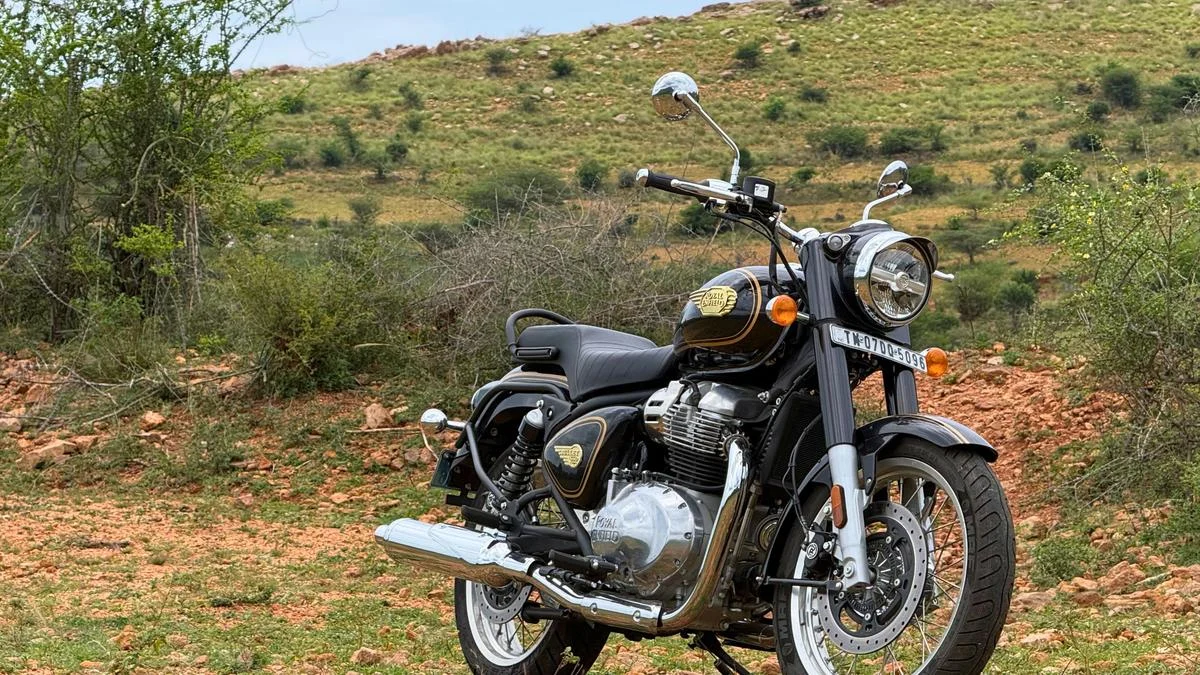
The motorcycling world has long anticipated the marriage of Royal Enfield’s most storied nameplate with its most successful modern engine platform. The launch of the Royal Enfield Bullet 650 marks a pivotal moment in the company’s history, representing a bridge between a century of heritage and the demands of the 21st-century rider. Priced at ₹3.64 lakh (ex-showroom), the Bullet 650 is not merely a new model; it is a statement of intent from a brand that has successfully transitioned from a regional icon to a global middleweight powerhouse.
Main Facts: The Intersection of Heritage and Modernity
The Royal Enfield Bullet 650 enters the market as the flagship of the "Bullet" lineage, a nameplate that has been in continuous production since 1932. While previous iterations relied on the signature long-stroke single-cylinder engines known for their rhythmic "thump," the new 650 variant adopts the 648cc parallel-twin engine that has redefined the brand’s global reputation.
Key Specifications at a Glance:
- Engine: 648cc, air-oil cooled, parallel-twin, SOHC.
- Performance: 47 PS at 7,250 rpm and 52.3 Nm of torque at 5,650 rpm.
- Transmission: 6-speed gearbox with a slip-and-assist clutch.
- Chassis: Steel tubular spine frame.
- Weight: 243 kg (kerb weight).
- Price: ₹3.64 lakh (ex-showroom).
The motorcycle retains the iconic visual cues that define a Bullet: the teardrop-shaped fuel tank, hand-painted gold pinstripes (a hallmark of the Chennai factory), and the squared-off rear mudguard. However, beneath this nostalgic skin lies a chassis and powertrain capable of sustained high-speed cruising, a feat that distinguishes it from its 350cc siblings.
Chronology: The Journey of the 650cc Twin Platform
To understand the significance of the Bullet 650, one must look at the timeline of Royal Enfield’s 650cc parallel-twin platform, which has become the bedrock of the company’s international expansion.

- 2018 – The Genesis: Royal Enfield launched the Interceptor 650 and Continental GT 650. These bikes introduced the 270-degree crank parallel-twin engine, praised globally for its smoothness and character.
- 2023 – Diversification: The platform expanded with the Super Meteor 650, a dedicated cruiser, followed by the Shotgun 650, a factory-custom bobber. These models proved the chassis’s versatility.
- 2024 – The Heritage Phase: Royal Enfield turned its attention to its most traditional silhouettes. After the recent unveiling of the Classic 650, the arrival of the Bullet 650 completes the "Twin" family by bringing the most senior brand name into the modern performance bracket.
This chronological progression shows a deliberate strategy: first establishing performance credentials with "new" styles (Interceptor), then moving toward the heritage-heavy models (Classic and Bullet) once the engine’s reliability was undisputed.
Supporting Data: Engineering, Ergonomics, and Performance
The Bullet 650 is a study in "over-engineering" for the sake of character. It does not aim to be the lightest or the fastest in its segment; instead, it aims to be the most "substantial."
The Powertrain Experience
The 648cc engine is widely regarded as one of the most refined twin-cylinder units in the sub-800cc category. In the Bullet 650, the engine’s tuning emphasizes mid-range torque. While the 47 PS peak power is sufficient for a top speed exceeding 160 km/h, the bike’s "sweet spot" lies between 80 km/h and 120 km/h.
A significant data point for purists is the change in acoustic profile. The traditional single-cylinder "thump" has been replaced by a "throaty roar." The dual peashooter exhausts are tuned to provide a deep, rhythmic hum that becomes a mechanical growl under hard acceleration. While some may miss the old cadence, the reduction in vibrations—a byproduct of the 270-degree firing order—allows for fatigue-free riding over hundreds of kilometers.

Chassis and Suspension Geometry
The Bullet 650 utilizes a steel tubular spine frame, designed to handle the increased weight and power of the twin-cylinder motor.
- Front Suspension: 43mm telescopic forks with 120mm of travel.
- Rear Suspension: Twin shock absorbers with 90mm of travel, adjustable for preload.
- Braking: A 320mm disc at the front and a 300mm disc at the rear, managed by a dual-channel ABS system provided by ByBre (Brembo’s Indian subsidiary).
With a wheelbase of 1,480mm and a total length of 2,260mm, the Bullet 650 is a physically imposing machine. Its kerb weight of 243 kg makes it one of the heaviest bikes in its class. Data from test rides suggests that while the weight is noticeable when pushing the bike manually, the low center of gravity ensures stability at high speeds and a planted feel during cornering.
Fuel Efficiency and Range
In real-world conditions, the Bullet 650 exhibits a varied efficiency profile. While the official claims hover above 25 kmpl, testing in mixed environments (including urban congestion and mountain passes) shows a return of approximately 18-22 kmpl. For a 650cc machine, these figures are competitive, though the 243 kg mass does penalize fuel economy during stop-and-go city riding.
Official Perspectives: Positioning and Market Competition
Royal Enfield’s internal positioning of the Bullet 650 is clear: it is the "purest" expression of their DNA. During the development phase, the design team reportedly focused on "authentic evolution." The goal was to ensure that a Bullet owner from the 1970s would immediately recognize the 2024 model, despite the massive leap in technology.

Bullet 650 vs. Classic 650
A common point of discussion among industry experts is the overlap between the Bullet 650 and the Classic 650. Both share the same engine and frame architecture. However, the distinction lies in the "aesthetic intent":
- The Classic 650 is more ornate, featuring more chrome, a different seat arrangement, and a "loop" style rear mudguard. It is positioned as a premium lifestyle product.
- The Bullet 650 is more stoic and traditional. It features the signature single-piece stepped seat and the "Tiger Eye" pilot lamps integrated into the headlamp casquette—features that have remained constant for decades.
Official responses from the brand suggest that the Bullet is intended for the rider who views the motorcycle as an heirloom, whereas the Classic is for the rider who views it as a style icon.
Implications: The Future of the Heavyweight Retro Segment
The introduction of the Bullet 650 has several long-term implications for the Indian and global motorcycling markets.
1. The "Big Bike" Democratization
By pricing the Bullet 650 at ₹3.64 lakh, Royal Enfield is making twin-cylinder motorcycling accessible to a demographic that previously only had access to high-strung, single-cylinder machines. It lowers the barrier to entry for "big bike" ownership, providing a platform that is forgiving enough for novices but powerful enough for veteran tourers.

2. The End of the "Vibration" Era
For decades, Royal Enfield was synonymous with mechanical vibrations. The 650 platform effectively kills that stereotype. This transition allows the brand to compete with Japanese and European manufacturers on the grounds of refinement, not just "soul" or "heritage."
3. Global Export Potential
The Bullet 650 is a global product. In markets like the UK, USA, and Australia, there is a burgeoning "modern classic" movement. The Bullet 650 is uniquely positioned to capture this market because it doesn’t just look old—it has a genuine, unbroken lineage that competitors like Triumph or BSA often have to "reboot" or "reimagine."
4. Challenges for Shorter Riders
A practical implication of the bike’s design is its accessibility. With an 800mm seat height and a 243kg weight, it is not an "all-rider" bike. Shorter riders (below 5’7") may find the bike’s width and heft intimidating in heavy traffic or tight parking spots. This may limit its appeal as a primary urban commuter for a segment of the population.
Verdict: The Legend Refined
The Royal Enfield Bullet 650 is a rare example of a manufacturer successfully modernizing an icon without stripping away its identity. It solves the primary grievances of previous Bullet owners—lack of top-end power, excessive vibrations, and inconsistent braking—while retaining the "heavy metal" feel that fans of the brand crave.

It is a motorcycle designed for the "slow-fast" life. It doesn’t demand that you ride at the limit, but it provides the confidence that you could if you wanted to. For those who value the rhythmic journey over the destination, and for those who believe that a motorcycle should feel like it was forged rather than assembled, the Bullet 650 stands as the definitive choice in the modern classic segment.
As Royal Enfield continues to expand its 650cc portfolio, the Bullet 650 will likely remain the spiritual anchor of the range—a reminder that while technology changes, the silhouette of a legend remains timeless.
This report was compiled in association with Motorscribes and The Hindu. For further automotive updates and deep-dive reviews, follow @motorscribes on social media platforms.
