

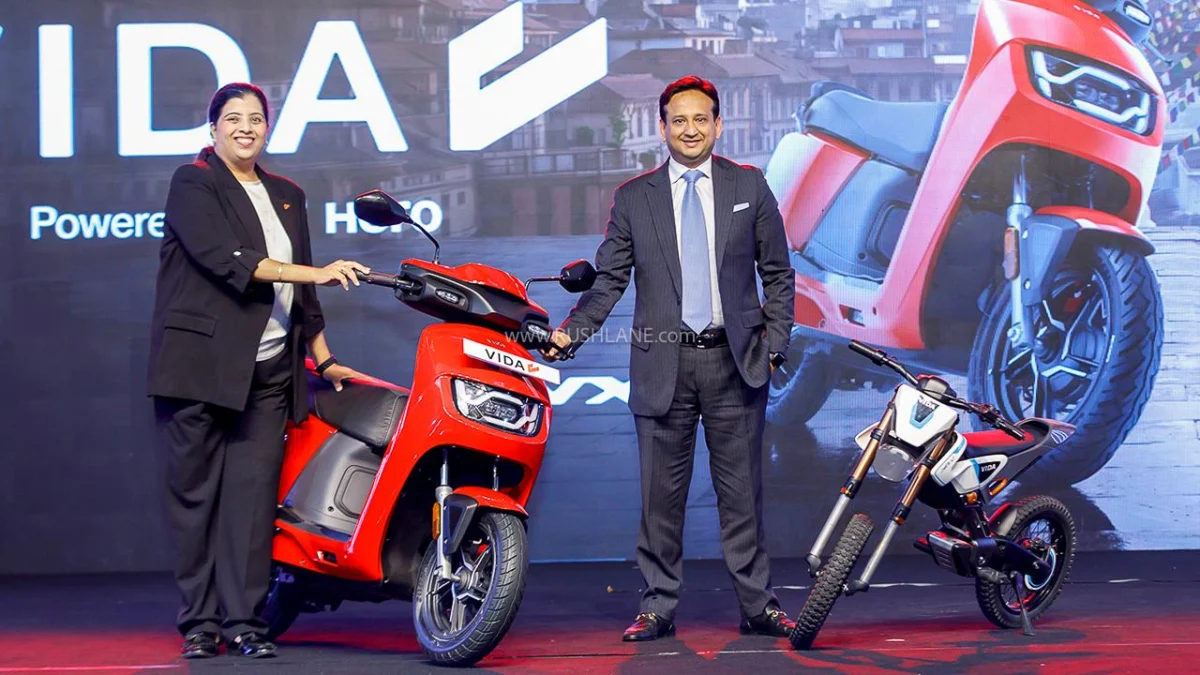
In a landmark move for the Indian electric vehicle (EV) sector, Hero MotoCorp has officially commenced the international journey of its dedicated electric mobility brand, Vida. Choosing Nepal as its first overseas destination, the Indian two-wheeler giant is signaling a major shift in its corporate strategy, transitioning from a domestic EV player to a global contender. This expansion is not merely a geographic move but a calculated response to shifting market dynamics, intensifying domestic competition, and the need to bolster a relatively modest export portfolio compared to its peers.
The launch in Nepal, executed in collaboration with the prestigious Chaudhary Group (CG Motors), introduces a multi-product lineup designed to cater to both urban commuters and the younger, adventure-seeking demographic. This international debut coincides with a significant internal milestone: Vida’s Indian sales have officially surpassed the 100,000-unit mark in the first half of 2026, providing the brand with the necessary momentum to test foreign waters.
1. Main Facts: The Nepal Launch and Product Portfolio
The entry into the Nepalese market is a comprehensive one, featuring three distinct models under the Vida umbrella. By partnering with CG Motors, Hero MotoCorp leverages one of Nepal’s most robust distribution networks, ensuring that the brand has the necessary infrastructure for sales, service, and spare parts from day one.
The Product Lineup
Hero has introduced two variants of its flagship electric scooter, the Vida VX2 EVOOTER, alongside a specialized electric off-roader, the DIRT.E K3.
- Vida VX2 Plus: The high-performance variant equipped with a dual-battery setup. It features two removable 2.2 kWh batteries, totaling a 4.4 kWh capacity. It boasts a real-world range of 140 km and a top speed of 90 km/h. Its acceleration is competitive, hitting 0-40 km/h in just 3.1 seconds.
- Vida VX2 Go: Designed for more conservative urban use, this variant utilizes a single 2.2 kWh removable battery. It offers a 75 km range and a top speed of 70 km/h, making it an ideal choice for short-distance city commutes.
- DIRT.E K3: This model targets the youth segment. It is an electric off-roader powered by a 350W motor and a 360Wh removable battery. It offers up to three hours of ride time and includes sophisticated app-based parental controls to manage speed and safety.
Technology and Connectivity
All Vida models launched in Nepal come equipped with a suite of "connected" features. These include turn-by-turn navigation, geo-fencing for security, call alerts, and Over-the-Air (OTA) updates. The focus on removable batteries is a strategic choice, addressing the infrastructure limitations often found in developing urban centers by allowing users to charge batteries at their homes or offices using a standard 5A socket.
2. Chronology: Vida’s Journey from Inception to International Expansion
To understand the significance of the Nepal launch, one must look at the timeline of Vida’s growth within the Hero MotoCorp ecosystem.
- October 2022: Hero MotoCorp officially launches the Vida brand in India, entering the premium electric scooter segment to compete with Ather Energy, Ola Electric, and TVS.
- 2023 – 2025: The brand focuses on scaling production and expanding its charging infrastructure (Vida Cloud) across major Indian metros. Initial hurdles regarding pricing and distribution are addressed through a series of tactical price corrections and the opening of "Experience Centers."
- January 2026: Vida begins the year with steady growth, recording 13,830 units in monthly sales in India.
- May 2026: For the first time, monthly volumes breach the 20,000-unit mark, totaling 20,130 units.
- June 2026: Domestic sales hit a new peak of 20,416 units, bringing the H1 (January to June) total to 1,02,097 units.
- July 2026: Leveraging the success of the 1-lakh milestone, Hero MotoCorp announces the official launch of Vida in Nepal, marking the start of its global operations.
3. Supporting Data: Market Performance and Pricing Disparity
The data underlying this expansion reveals two critical stories: the rapid adoption of Vida in India and the premium positioning of the brand in international markets.
India Sales Analysis (H1 2026)
Vida’s growth in 2026 has been characterized by consistent month-on-month gains. The 1,02,097 units sold in the first half of the year represent a significant portion of the organized high-speed electric two-wheeler market in India.
| Month (2026) | Units Sold (India) |
|---|---|
| January | 13,830 |
| February | 14,950 (Est.) |
| March | 16,200 (Est.) |
| April | 16,571 (Est.) |
| May | 20,130 |
| June | 20,416 |
| Total H1 | 1,02,097 |
The Price Gap: Nepal vs. India
Entering Nepal comes with a steep price tag for consumers. Due to import duties, local taxes, and logistics costs, Vida products are priced significantly higher in Nepal than in their home market.
| Model | Nepal Price (NPR) | Approx. India Equivalent (INR) | India Price (INR) |
|---|---|---|---|
| DIRT.E K3 | 1,99,900 | ₹1.24 Lakh | ₹69,990 |
| VX2 Go (2.2 kWh) | 2,99,900 | ₹1.86 Lakh | ₹99,490 |
| VX2 Plus (4.4 kWh) | 3,99,900 | ₹2.48 Lakh | ₹1,44,000 |
This pricing structure places Vida in the "premium luxury" segment of the Nepalese two-wheeler market. While EVs in Nepal often enjoy some tax concessions compared to internal combustion engine (ICE) vehicles, the sheer cost of importing fully assembled or semi-knocked-down units remains a barrier to mass-market pricing.
4. Official Strategy and Corporate Response
While Hero MotoCorp has long dominated the Indian landscape as the largest manufacturer of two-wheelers by volume, its international presence has historically lagged behind rivals like Bajaj Auto and TVS Motor Company. The Vida launch in Nepal is a cornerstone of the company’s "Global Business 2.0" strategy.
The Partnership with CG Motors
By aligning with the Chaudhary Group, Hero is not just picking a distributor; it is picking a partner with deep political and economic roots in Nepal. CG Motors has been aggressive in promoting green mobility, and the addition of Vida to its portfolio allows it to offer a premium Indian EV brand alongside its existing Chinese EV partnerships.
Addressing the Export Deficit
A look at the June 2026 export figures highlights why this expansion is necessary:
- Bajaj Auto: 2,22,439 units exported.
- TVS Motor: 1,54,403 units exported.
- Hero MotoCorp: 38,269 units exported.
Hero’s export volumes are currently less than 20% of Bajaj’s. By leading its next wave of exports with electric vehicles, Hero hopes to bypass traditional ICE market saturations and establish itself as a technology leader in emerging markets.
5. Implications: What This Means for the Future
The entry of Vida into Nepal is more than just a regional launch; it has several long-term implications for the industry and the brand.
Testing Ground for Global Markets
Nepal serves as an ideal "sandbox" for Hero. The terrain is challenging, the charging infrastructure is still in its infancy, and the consumer base is value-conscious yet aspirational. Success in Nepal will provide Hero with the data needed to launch Vida in Southeast Asia, Latin America, and eventually Europe.
Intensifying Competition with Honda and TVS
In India, the gap between Hero and Honda is narrowing. In June 2026, Hero sold 5,02,890 units domestically, while Honda was close behind with 4,68,956 units. Meanwhile, TVS is growing rapidly on the back of its EV success with the iQube. By taking Vida global, Hero is attempting to open a new "front" in the war for market share. If Hero can capture the EV export market before Honda launches its global electric offensive, it could reclaim its status as an undisputed leader.
The Rise of the "Removable Battery" Standard
Vida’s reliance on removable batteries could become a significant competitive advantage in SAARC nations. Unlike fixed-battery scooters that require dedicated garage charging points, Vida’s batteries can be carried into apartments or offices. In cities like Kathmandu, where urban density is high and dedicated parking with power outlets is rare, this feature could be the deciding factor for consumers.
Conclusion
Hero MotoCorp’s Vida has successfully navigated its "growing pains" in the Indian market, as evidenced by the 1-lakh sales milestone in the first half of 2026. The move into Nepal marks the transition of Vida from a startup-like project within Hero to a mature brand ready for global scrutiny. While the high pricing in Nepal may limit initial volumes, the strategic importance of this move cannot be overstated. It is the first step in Hero’s quest to balance its domestic dominance with a robust, EV-led international presence. As the world pivots toward sustainable transport, Hero MotoCorp is ensuring it isn’t just part of the conversation—it’s leading it.
