

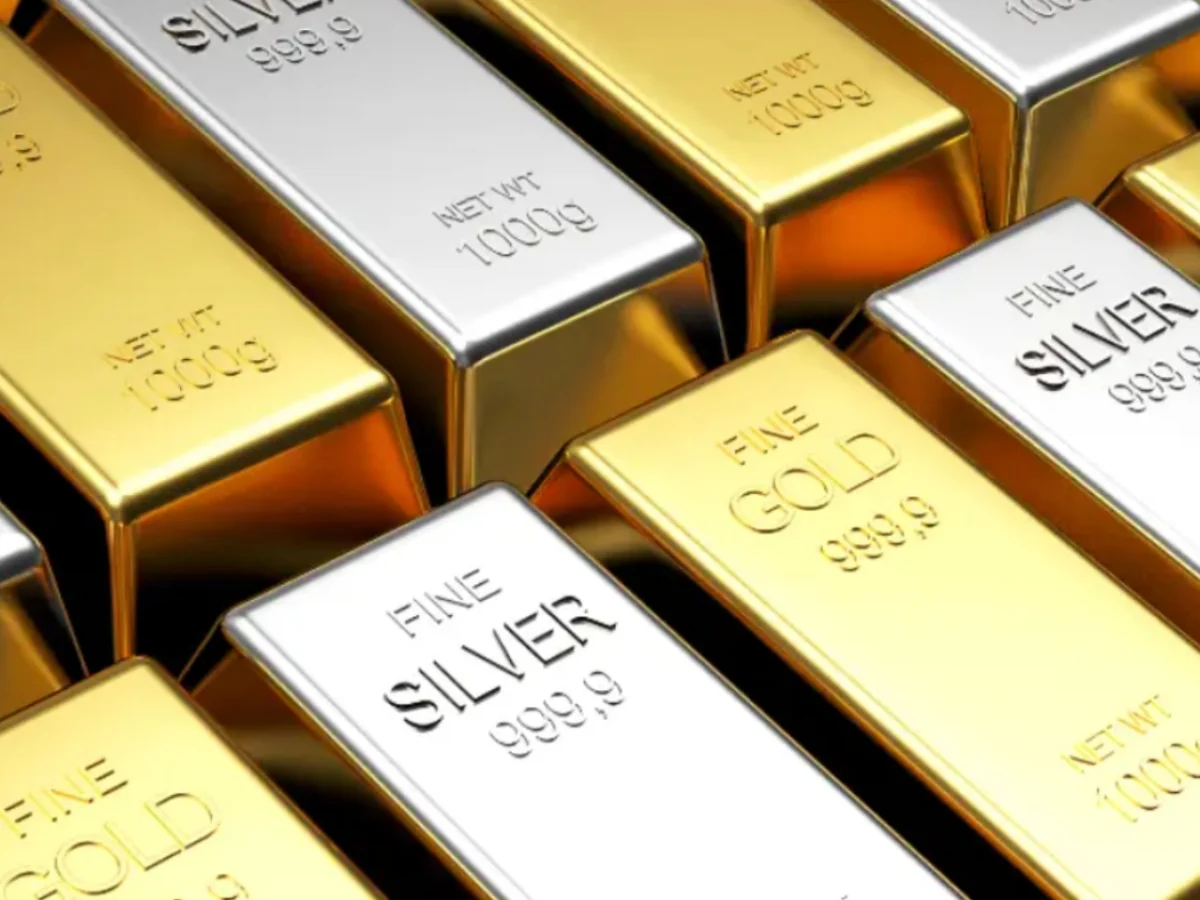
NEW DELHI, India – July 30, 2026 – India’s vibrant precious metals market continues to exhibit a dynamic interplay of global economic forces, domestic demand patterns, and evolving currency valuations. As of July 30, 2026, both gold and silver prices have registered movements that underscore their enduring significance in the Indian financial landscape, influencing everything from household savings to industrial growth. Today’s rates reflect a slight uptick, primarily driven by persistent inflationary concerns globally and a robust domestic appetite ahead of anticipated festive seasons.
The price of 24-carat gold (999 purity) is pegged at an average of Rs 14,350 per gram, while 22-carat gold, a staple for jewellery, is trading at approximately Rs 13,154 per gram. Silver, often seen as gold’s more volatile counterpart, is commanding a price of Rs 2,34,900 per kilogram for 999 purity, with sterling silver (925 purity) at Rs 2,34,000 per kilogram. These figures, while seemingly straightforward, are the culmination of intricate global supply-demand dynamics, central bank policies, and local market sentiment.
The Enduring Allure: Precious Metals in India’s Economic Fabric
For centuries, gold and silver have held an unparalleled position in Indian culture and economy. Beyond their intrinsic value as commodities, they represent a profound cultural heritage, a traditional store of wealth, and a crucial component of financial planning for millions of households. From elaborate wedding ceremonies to religious rituals and a hedge against economic uncertainties, the demand for these metals in India is deeply entrenched and multifaceted. This inherent cultural significance, combined with India’s role as one of the world’s largest consumers of gold, ensures that price fluctuations are closely monitored by a diverse spectrum of stakeholders, from individual savers to large-scale investors and the vast jewellery industry.
A Snapshot of Today: Gold Prices on July 30, 2026
As of July 30, 2026, gold prices in India have experienced a discernible upward trend. This slight increase is largely attributable to a combination of sustained global demand, as investors seek safe-haven assets amidst lingering economic uncertainties, and ongoing inflationary pressures that enhance gold’s appeal as a hedge against currency devaluation. The purity of gold plays a crucial role in its pricing, with 24K gold representing the purest form and 22K gold being the preferred choice for artisans due to its ductility and durability.
The national average for 24K gold (999 pure gold) is currently Rs 14,350 per gram. For those looking to purchase jewellery, 22K gold (containing 91.67% pure gold) is priced at Rs 13,154 per gram. These figures are subject to minor variations across different cities, reflecting local taxes, transportation costs, and specific market dynamics.
City-Wise Gold Rates: A Detailed Breakdown
The prices of gold, while largely harmonised by global trends, exhibit minor variations across India’s major metropolitan centres. These differences often stem from local taxes, transportation logistics, and the specific demand-supply equations within regional markets. According to data compiled from leading financial aggregators, here’s a city-wise breakdown:
)
-
Gold Prices in Delhi:
- The current price of 24K gold in Delhi is Rs 14,365 per gram.
- The current price of 22K gold in Delhi is Rs 13,169 per gram.
Delhi, as a major commercial and political hub, often sees slightly varied rates influenced by its diverse consumer base and proximity to import channels.
-
Gold Prices in Mumbai:
- The current price of 24K gold in Mumbai is Rs 14,350 per gram.
- The current price of 22K gold in Mumbai is Rs 13,154 per gram.
Mumbai, the financial capital of India, often serves as a benchmark for national gold prices, reflecting the broader market sentiment with minimal regional premiums.
-
Gold Prices in Kolkata:

- The current price of 24K gold in Kolkata is Rs 14,350 per gram.
- The current price of 22K gold in Kolkata is Rs 13,154 per gram.
Kolkata, with its rich cultural heritage and significant demand for traditional jewellery, mirrors Mumbai’s pricing, indicating a consistent national average for pure gold.
-
Gold Prices in Chennai:
- The current price of 24K gold in Chennai is Rs 14,340 per gram.
- The current price of 22K gold in Chennai is Rs 13,154 per gram.
Chennai, a prominent market in South India where gold holds immense cultural and investment value, shows a marginal difference, reflecting regional supply chains and consumer preferences.
The Silver Lining: Current Rates on July 30, 2026
Silver, often overshadowed by gold, plays an equally vital role in India’s precious metals market, not only as an investment vehicle and a component of jewellery but also as a critical industrial commodity. As of today, July 30, 2026, the price of silver in India stands at approximately Rs 2,34,900 per kilogram for 999 purity. Sterling silver (925 purity), commonly used in ornaments and tableware, is priced at Rs 2,34,000 per kilogram.
While generally less expensive and more volatile than gold, silver’s dual utility as both a precious metal and an industrial metal subjects its prices to a unique set of influences. Global industrial demand, particularly from sectors like electronics, solar energy, and electric vehicles, significantly impacts price fluctuations, alongside traditional investment and jewellery demand. In many parts of India, especially rural areas, silver ornaments are more prevalent than gold, making its price movements particularly relevant to a broad consumer base.
)
City-Wise Silver Rates: A Detailed Breakdown
Similar to gold, silver prices also exhibit minor regional variations across India. These differences are influenced by local taxes, logistical costs, and regional demand dynamics, particularly for industrial applications.
-
Silver Price in Delhi Today:
- The current price of Silver 999 in Delhi is Rs 2349 per 10 grams.
Delhi’s diverse economy, including a significant industrial base, contributes to its silver demand profile.
- The current price of Silver 999 in Delhi is Rs 2349 per 10 grams.
-
Silver Price in Mumbai Today:
)
- The current price of Silver 999 in Mumbai is Rs 2349 per 10 grams.
Mumbai, as a primary trading hub, reflects the national average for silver, driven by both investment and industrial consumption.
- The current price of Silver 999 in Mumbai is Rs 2349 per 10 grams.
-
Silver Price in Kolkata Today:
- The current price of Silver 999 in Kolkata is Rs 2348 per 10 grams.
Kolkata’s slightly lower rate might be attributed to specific regional supply logistics or local market dynamics.
- The current price of Silver 999 in Kolkata is Rs 2348 per 10 grams.
-
Silver Price in Chennai Today:
- The current price of Silver 999 in Chennai is Rs 2349 per 10 grams.
Chennai’s rates align with other major cities, showcasing a consistent market for silver across the country.
- The current price of Silver 999 in Chennai is Rs 2349 per 10 grams.
Unpacking the Dynamics: Key Factors Influencing Precious Metal Prices
The prices of gold and silver are not static but are rather a complex interplay of various domestic and international factors. Understanding these drivers is crucial for both consumers planning purchases and investors making strategic decisions.
)
Global Economic Currents
International gold and silver prices are the primary determinants of their rates in India. Global market trends are influenced by a myriad of factors including:
- Geopolitical Tensions: Conflicts, political instability, and trade wars often lead investors to seek safe-haven assets like gold, driving up its price.
- Monetary Policies of Major Central Banks: Decisions by central banks, particularly the U.S. Federal Reserve, on interest rates and quantitative easing/tightening, significantly impact the appeal of non-yielding assets like gold. Higher interest rates typically make gold less attractive compared to interest-bearing instruments.
- Global Economic Outlook: During periods of economic uncertainty or recessionary fears, gold tends to perform well as a store of value. Conversely, a strong global economy with high investor confidence might divert funds towards riskier, higher-yield assets.
- Commodity Market Sentiment: Broader trends in the commodity markets, including energy prices and industrial metals, can also spill over into precious metals.
The Dollar’s Dominance and Currency Exchange
The exchange rate between the Indian Rupee (INR) and the US Dollar (USD) is a critical factor. Gold is primarily priced in US dollars in international markets. Therefore, when the USD strengthens against the INR, importing gold becomes more expensive for Indian buyers, leading to higher local prices, even if the international dollar price of gold remains constant. Conversely, a weaker dollar against the rupee can make gold cheaper in India. The stability of the Rupee is thus a significant factor for domestic price stability.
Domestic Demand and Cultural Significance
India’s unique cultural landscape ensures a consistent and often overwhelming domestic demand for precious metals.
)
- Festive Season: Festivals like Diwali, Akshaya Tritiya, and Dussehra are traditionally auspicious times for purchasing gold and silver, leading to significant spikes in demand and often prices.
- Wedding Season: Indian weddings are elaborate affairs where gold jewellery is an indispensable part of the trousseau and gifting rituals, creating sustained demand throughout the year.
- Investment Avenue: For many Indian households, particularly in rural areas, gold and silver are not just adornments but primary forms of savings and investment, acting as a financial safety net due to their liquidity and perceived stability.
Inflationary Pressures and Safe-Haven Appeal
Gold has historically been considered an excellent hedge against inflation. When the purchasing power of fiat currencies erodes due to inflation, investors often turn to gold to preserve wealth. The current global economic environment, marked by elevated inflation rates in many major economies, continues to bolster gold’s appeal as a safe-haven asset, contributing to its upward price trajectory. Silver also benefits from this sentiment, albeit to a lesser extent, given its industrial utility.
Industrial Demand: Silver’s Unique Position
Unlike gold, which is predominantly a store of value and an adornment, silver boasts significant industrial applications.
- Electronics: Silver is an excellent conductor of electricity and is used extensively in switches, contacts, and various electronic components.
- Solar Energy: It is a crucial component in photovoltaic cells, making the solar industry a major consumer of silver.
- Automotive Industry: The growing electric vehicle (EV) market relies on silver for numerous electrical connections and components.
- Medical Applications: Silver’s antimicrobial properties make it valuable in medical devices and instruments.
Fluctuations in these industrial sectors, driven by technological advancements and economic growth, directly impact silver’s demand and price.
A Look Back: Recent Trends and Market Chronology
The period leading up to July 30, 2026, has been characterized by considerable volatility in the precious metals market, a reflection of the global economic flux. Over the past quarter, gold has demonstrated resilience, consolidating its gains after an initial surge driven by renewed geopolitical tensions in late 2025 and early 2026. This period saw central banks globally grappling with persistent inflation, leading to a cautious stance on monetary policy tightening. The uncertainty around interest rate hikes in major economies, particularly the US, created a favourable environment for gold as investors sought refuge from potential market instability.
)
Silver, on the other hand, experienced a more pronounced two-way movement. While benefiting from the general safe-haven appeal, its industrial demand component introduced additional layers of complexity. An initial slowdown in global manufacturing earlier in the year exerted downward pressure, but a subsequent rebound in the tech and green energy sectors, coupled with renewed investment interest, helped it recover significantly in the latter half of Q2 2026. This dynamic performance underscores silver’s dual nature as both a precious metal and an industrial commodity.
Official Responses: Expert Perspectives and Market Analysts Weigh In
The current market conditions and price trajectories have drawn varied responses from market experts and economists, offering valuable insights into the future outlook for precious metals.
Insights on Gold’s Trajectory
"The current gold prices reflect a market that is still deeply concerned about long-term inflation and global economic stability," observes Dr. Anya Sharma, Head of Commodity Research at InvestRight Financials. "While central banks have been actively managing inflation, the underlying structural issues, coupled with ongoing geopolitical friction, continue to fuel demand for gold as a portfolio diversifier and a hedge against currency debasement. We anticipate this trend to persist, especially with the festive season approaching in India, which will provide a robust floor for domestic prices."
)
Sharma further elaborated, "The slight increase we’re seeing today isn’t a sudden spike but rather a continuation of a gradual upward trend that began in early 2026. This indicates sustained investor confidence in gold’s ability to preserve capital amidst a challenging global macroeconomic environment. For Indian consumers, this means higher purchasing costs, but it also reinforces gold’s status as a reliable long-term investment."
Silver’s Dual Narrative
Regarding silver, Mr. Rajeev Kapoor, Senior Metals Analyst at Global Market Insights, highlighted its unique position. "Silver’s price action today, and indeed over the past few months, tells a story of conflicting forces. On one hand, it benefits from the same safe-haven sentiment driving gold. On the other, its substantial industrial demand makes it highly susceptible to shifts in manufacturing output and technological advancements. The robust growth in renewable energy and electric vehicles is providing a strong structural tailwind for silver demand, which should mitigate some of the downside risks from potential economic slowdowns."
Kapoor added, "Investors looking at silver need to consider both its precious metal characteristics and its industrial utility. The current price of Rs 2,34,900 per kilogram indicates a healthy balance, suggesting that industrial demand remains strong while investment interest continues to provide support. We could see silver outperforming gold if the global industrial recovery gains further momentum in the coming months."
)
Implications and Future Outlook
The current prices and underlying market dynamics for gold and silver carry significant implications for various stakeholders within the Indian economy.
For the Indian Consumer
For the average Indian consumer, the sustained high prices of gold and silver translate to increased expenditure for traditional purchases, be it for weddings, festivals, or as personal savings. While the cultural significance of these metals ensures continued demand, consumers may opt for lighter jewellery or smaller quantities. However, for those who purchased gold or silver at lower prices, the current rates offer a substantial appreciation on their investments, reinforcing the perception of precious metals as a secure asset.
For Investors: Strategic Considerations
For investors, gold and silver continue to serve as crucial components of a diversified portfolio. Gold’s role as a safe haven becomes particularly pertinent during times of economic uncertainty and inflationary pressures. Silver offers a unique blend of investment and industrial exposure, making it an attractive option for those looking for potentially higher volatility and growth, tied to technological advancements. Long-term investors may view the current prices as a continuation of a broader upward trend, while short-term traders will be closely watching global economic indicators and central bank pronouncements for opportunities.
)
Economic Ripples
At a macro-economic level, the high prices of gold and silver can have several implications for India. Increased gold imports to meet domestic demand can strain the country’s current account deficit, although government policies and duties aim to manage this. Conversely, the significant domestic holdings of gold represent a substantial store of private wealth that can be monetized during economic downturns, providing a safety net for households. The thriving jewellery industry, a major employer, also benefits from consistent demand, even at elevated prices, contributing to economic activity.
Navigating the Horizon: What Lies Ahead
Looking forward, the trajectory of gold and silver prices in India will likely remain influenced by the same fundamental factors. Global geopolitical stability, the pace of inflation, central bank interest rate decisions, and the strength of the US dollar will continue to be critical international drivers. Domestically, the onset of the major festive and wedding seasons later in the year is expected to provide robust support for demand, potentially leading to further price firming.
Moreover, advancements in green technologies and the burgeoning electric vehicle market will continue to underpin industrial demand for silver, giving it a unique position in the commodities market. Investors and consumers alike will need to stay vigilant, closely monitoring these intricate global and local dynamics to make informed decisions regarding their precious metal holdings. The market for gold and silver in India, steeped in tradition yet responsive to modern economics, promises to remain a focal point of financial news and personal finance for the foreseeable future.
)
Conclusion
As of July 30, 2026, the Indian precious metals market stands at a critical juncture, reflecting a delicate balance between global economic anxieties and strong domestic fundamentals. Gold, with its age-old appeal as a safe haven, continues its upward climb, while silver, benefiting from both investment and industrial demand, showcases its dual potential. The city-wise variations, though minor, underscore the complex interplay of local taxes and regional market forces. For millions across India, these daily price movements are not just abstract numbers but directly impact their cultural practices, investment strategies, and financial well-being. The future of gold and silver prices will undoubtedly continue to be a compelling narrative, shaped by the ever-evolving landscape of global finance and India’s unique relationship with these timeless treasures.
