

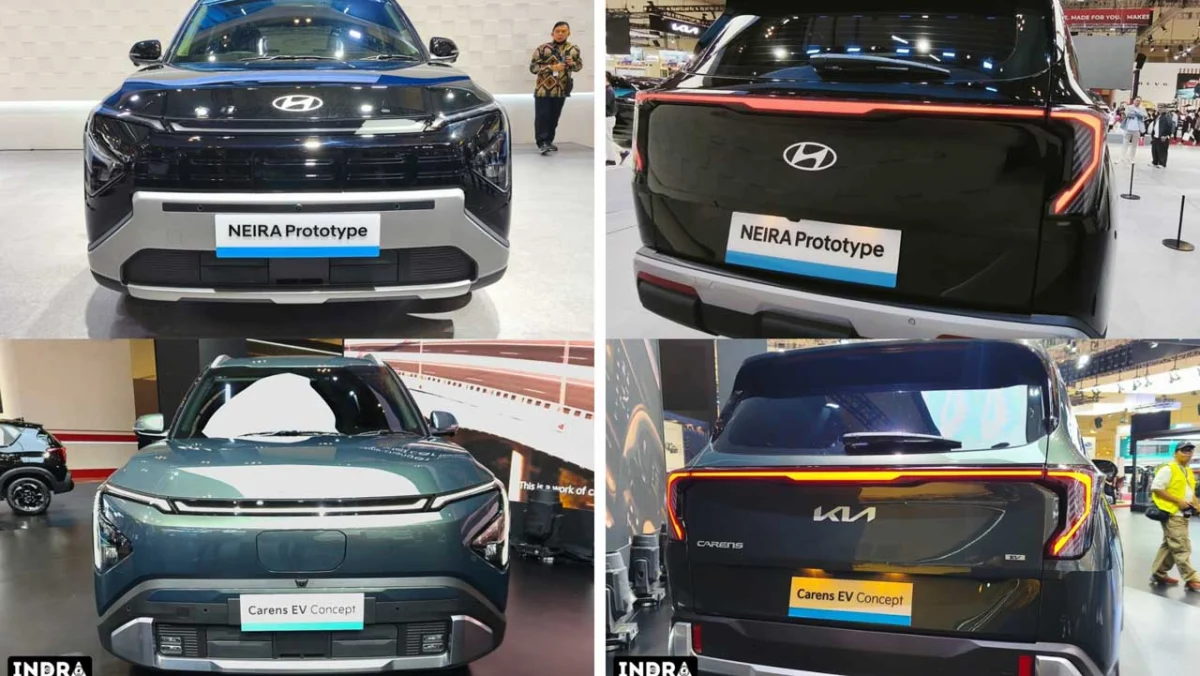
The global automotive landscape is witnessing a profound shift in manufacturing philosophy as the transition to electrification accelerates. At the 2026 Gaikindo Indonesia International Auto Show (GIIAS), a significant milestone in this evolution was reached with the simultaneous unveiling of the Hyundai Neira and the Kia Carens Clavis EV. While the partnership between Hyundai and Kia is decades old, the debut of these two electric multi-purpose vehicles (MPVs) represents a departure from their traditional "platform-sharing" approach toward a more direct form of "badge-engineering."
This report provides an in-depth analysis of the Hyundai Neira, its relationship with the Kia Carens Clavis EV, the technical specifications defining this new generation of electric mobility, and the strategic implications for the Southeast Asian and Indian markets.

I. Main Facts: A New Chapter in the Hyundai-Kia Alliance
The headline of the 2026 GIIAS event was undoubtedly the Hyundai Neira. Positioned as a versatile, family-oriented electric MPV, the Neira is the latest fruit of the Hyundai Motor Group’s integrated development strategy. However, unlike previous collaborations where Hyundai and Kia versions of the same car featured entirely unique sheet metal and interior layouts—such as the Hyundai Creta and Kia Seltos—the Neira and the Carens Clavis EV share a much higher percentage of visible components.
Key Highlights:
- The Model: Hyundai Neira (Prototype).
- The Counterpart: Kia Carens Clavis EV.
- Platform: A dedicated/derived EV architecture optimized for three-row seating.
- Market Focus: Initially unveiled for Indonesia, with strong indications of a future launch in India and other emerging markets.
- Core Strategy: Badge-engineering with specific aesthetic "brand-DNA" adjustments to differentiate the two products without escalating manufacturing costs.
The Hyundai Neira enters a segment that is becoming increasingly crowded but remains vital for markets with large families. By leveraging the existing success of the Kia Carens silhouette, Hyundai aims to capture the MPV market share with a product that emphasizes premium aesthetics and sustainable performance.

II. Chronology: From Concept to the GIIAS Stage
The journey to the 2026 GIIAS reveal has been marked by several years of intense research and development within the Hyundai Motor Group’s Namyang R&D Center.
- 2023–2024: The Strategic Shift: Following the global success of the E-GMP platform (used for the IONIQ 5 and EV6), leadership at Hyundai and Kia identified a need for more affordable, mass-market electric vehicles for developing regions. The decision was made to adapt the versatile Carens platform for electrification.
- Early 2025: Testing Phases: Camouflaged test mules of a three-row electric vehicle were spotted across South Korea and India. Industry analysts initially believed these were separate projects, but the similarities in proportions suggested a shared foundation.
- July 2026: The Indonesian Unveil: At the GIIAS event, Kia first showcased the Carens Clavis EV, a production-ready version of their popular MPV.
- Concurrent Debut: Within the same event cycle, Hyundai surprised the industry by pulling the wraps off the Neira. It was immediately identified as a sibling to the Kia model, albeit with the signature "Sensuous Sportiness" design language of Hyundai.
- Current Status: The Neira remains in the prototype stage for the Indonesian market, while Kia’s version is closer to commercial availability. Both brands are currently evaluating the infrastructure readiness of the Indian market before confirming a definitive launch date for the subcontinent.
III. Supporting Data: A Granular Comparison
To understand the distinction between the Hyundai Neira and the Kia Carens Clavis EV, one must look at the specific design choices made by each brand. While they are "identical underneath," the visual and tactile differences are designed to appeal to different consumer demographics.

Exterior Design and Aesthetics
The most striking differences are found at the front fascia. Hyundai has opted for a more sophisticated, "urban-premium" look, while Kia maintains its "Opposites United" philosophy with a sportier edge.
- The Fascia: The Neira features a completely redesigned front bumper. It incorporates a unique grille with horizontal slots, a design cue that draws a direct lineage to the Hyundai Alcazar.
- The "Bull-Bar" Element: Hyundai has added a prominent silver element at the base of the front bumper, mimicking a bull-bar. This gives the Neira a more rugged, SUV-adjacent stance compared to the cleaner lines of the Kia.
- Lighting: Both vehicles utilize connected LED strips. However, the Kia Carens Clavis EV includes dedicated fog lights, a feature notably absent from the Hyundai Neira prototype showcased at GIIAS.
- Side Profile and Wheels: The silhouette remains identical, but the Neira features brand-specific alloy wheel designs. The silver accents on the side body claddings also differ slightly in shape and texture.
- Rear View: At the back, the differences are minimal. Both use connected LED tail lamps, but the lower bumper of the Neira features distinct silver garnishes to separate it from the Kia’s rear diffuser-style treatment.
Interior Layout and Technology
Inside, the badge-engineering is most apparent. The "hard points" of the interior—the dashboard structure, the floating center console, and the seating frames—are identical.

- Color Themes: Kia opted for a lighter, dual-tone interior for the Clavis EV to emphasize a sense of space. Conversely, the Hyundai Neira features an all-black or dark-grey theme, aiming for a more executive and sporty feel.
- Branding Details: The steering wheel is the primary touchpoint of difference. Where Kia features its traditional logo, Hyundai has implemented its modern "quad-dot" Morse code logo (representing the letter ‘H’).
- Features: Both models come equipped with a dual-screen setup (infotainment and digital cluster), a specialized climate control panel, and "manual boss mode" for the rear seats, allowing passengers to adjust the front passenger seat for extra legroom.
Powertrain and Performance
While official specifications for the Indonesian production models are pending, technical data leaked during the event suggests two battery configurations:
- Standard Range: A 42 kWh battery pack.
- Extended Range: A 51.4 kWh battery pack.
- Range Estimates: The higher-capacity variant is expected to deliver up to 490 km on a single charge (based on regional testing cycles).
- Charging: Both vehicles are expected to support DC fast charging, capable of replenishing the battery from 10% to 80% in approximately 35–40 minutes.
IV. Official Responses and Market Positioning
The response from Hyundai and Kia officials at GIIAS 2026 was one of calculated optimism. Hyundai Indonesia representatives emphasized that the Neira is a response to the growing demand for "sustainable family mobility" in the ASEAN region. They noted that the prototype stage allows the company to gather consumer feedback on the aesthetic differences before finalizing the production specifications.

Regarding the Indian market, a Hyundai spokesperson stated, "We are continuously evaluating the EV landscape in India. While the Neira represents our global vision for electric MPVs, any announcement regarding the Indian market will be made at the appropriate time, considering local infrastructure and consumer preferences."
Industry experts suggest that Hyundai’s silence on India is a strategic move to avoid cannibalizing the upcoming Creta EV launch. However, given the success of the Kia Carens in India, it is widely believed that the Neira will eventually serve as Hyundai’s three-row electric flagship in the country.

V. Implications: The "Toyota-Suzuki" Effect and the Future of EVs
The move toward badge-engineering between Hyundai and Kia carries significant implications for the global automotive industry.
1. Cost Efficiency in the EV Era
Developing electric vehicles is exponentially more expensive than traditional internal combustion engine (ICE) vehicles due to R&D for batteries and software. By sharing almost all components between the Neira and the Clavis EV, Hyundai Motor Group significantly reduces its per-unit cost. This allows them to price these vehicles more competitively against Chinese EV manufacturers who currently dominate the affordable electric segment.

2. The End of Brand Separation?
For years, Hyundai and Kia worked hard to maintain separate identities. The Neira-Clavis relationship suggests a shift toward the "Toyota-Maruti Suzuki" model seen in India (e.g., the Baleno and Glanza). While this risks brand dilution, it ensures that the Group as a whole captures the maximum possible market share by offering two slightly different "flavors" of the same reliable machine.
3. Impact on the MPV Segment
The MPV segment has traditionally been slow to electrify due to the weight of three-row seating and the aerodynamic challenges of a boxy shape. The Neira and Clavis EV prove that with modern battery density and efficient motor placement, the electric MPV is not only viable but can offer superior interior packaging compared to its ICE counterparts.

4. Strategic Dominance in Emerging Markets
By launching these models in Indonesia first, Hyundai and Kia are planting a flag in a region that is a critical battleground for EV adoption. Indonesia’s rich nickel reserves (essential for battery production) make it a logical hub for EV manufacturing. The Neira could be the catalyst that shifts the Indonesian middle class away from gasoline-powered Avanzas and Innovas toward electric alternatives.
Conclusion
The Hyundai Neira is more than just a new car; it is a testament to the pragmatic future of the automotive industry. Through the Kia Carens Clavis EV-based badge-engineering, Hyundai is demonstrating that speed-to-market and cost-efficiency are now just as important as unique design.

As the Neira moves from prototype to production, it will likely become a benchmark for how global conglomerates manage their portfolios in a post-carbon world. For the consumer, it means more choice, better technology, and the accessibility of electric family travel. Whether in the bustling streets of Jakarta or the highways of India, the Neira and its Kia sibling are poised to lead the charge into a new era of electrified utility.
