

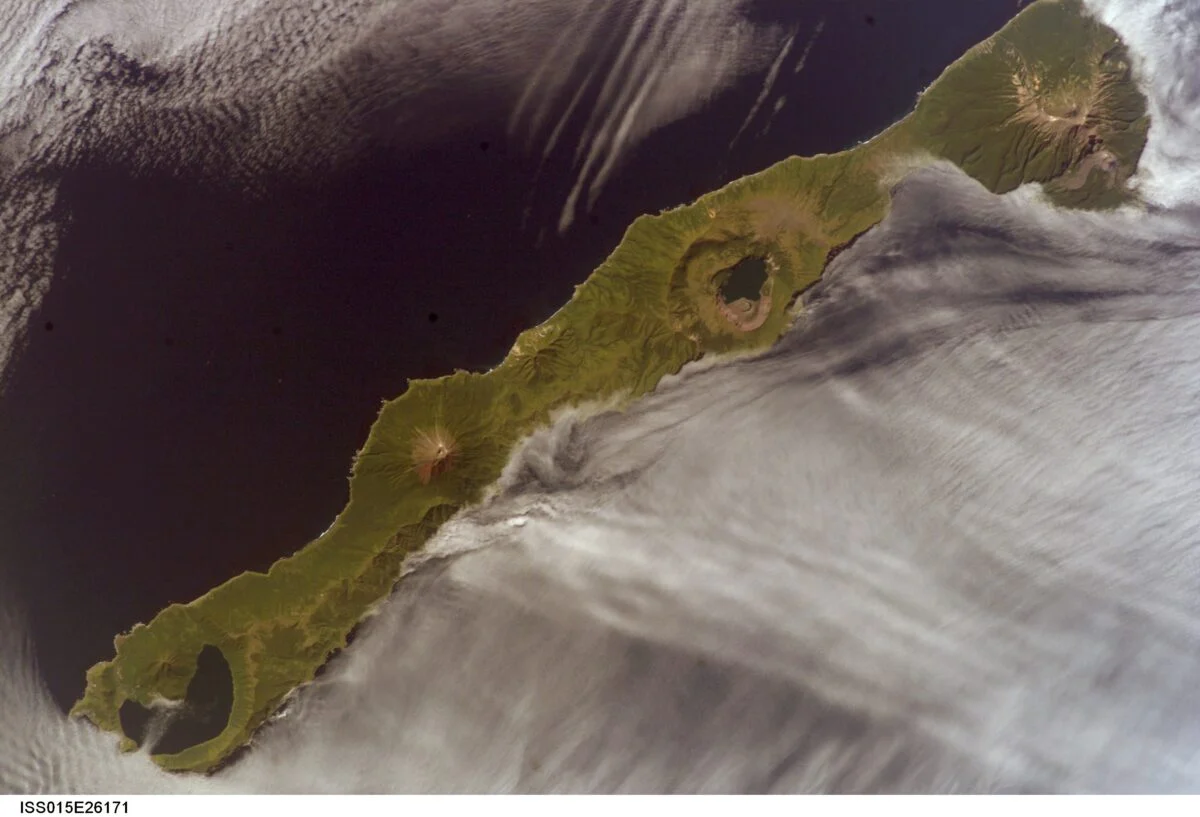
A groundbreaking study has unveiled a complex tapestry of natural disaster and political failure that led to the deaths of nearly a million people in 19th-century India. The research, published in the Journal of Historical Geography, establishes a direct link between two massive volcanic eruptions—one in Japan and another in Nicaragua—and the catastrophic famines that ravaged British-administered Agra and Madras between 1832 and 1838.
While the eruptions triggered a global climatic shift that crippled the Indian monsoon, the study emphasizes that the resulting mass mortality was not an inevitable "act of God." Instead, it was the product of a lethal synergy between atmospheric cooling and the exploitative economic policies of the British East India Company.
Main Facts: A Convergence of Catastrophes
The 1830s were a decade of profound environmental instability. According to Richard Warren, a historical geographer at the University of Bern and the study’s author, the period was marked by two significant volcanic events: the eruption of the Zavaritzkii Caldera on Simushir Island, Japan, in 1831, and the eruption of Cosegüina in Nicaragua in 1835.
These eruptions injected massive quantities of sulfur aerosols into the stratosphere. These particles acted as a veil, reflecting sunlight away from the Earth and causing a global temperature drop of approximately 1 degree Celsius. While a single degree may seem negligible, it was sufficient to disrupt the delicate thermal balance required for the Indian monsoon. The cooling of the Indian landmass reduced the temperature gradient between the land and the surrounding ocean, effectively weakening the winds that carry life-sustaining moisture to the subcontinent.

The study highlights three primary drivers of the 1830s crisis:
- Volcanic Cooling: Atmospheric aerosols from Japan and Nicaragua delayed and weakened the monsoon.
- The El Niño Factor: A powerful El Niño event in 1833 coincided with the peak cooling from the 1831 eruption, creating a "perfect storm" of dry weather.
- Colonial Extraction: The British East India Company’s insistence on high taxation, environmental mismanagement, and a refusal to intervene in grain markets transformed a period of low rainfall into a humanitarian disaster that claimed over 900,000 lives.
Chronology: The Timeline of a Failing Monsoon
The disaster unfolded in stages, with each environmental shock compounded by administrative neglect.
1831: The Japanese Trigger
The Zavaritzkii Caldera, located in the Kuril Islands of northeast Japan, erupted with significant force. The resulting sulfur plumes began to spread through the atmosphere, initiating a period of global cooling that would peak over the next two years.
1832–1833: The Guntur Famine and El Niño
As the cooling effects reached their zenith, a periodic climatic phenomenon known as El Niño struck in 1833. This combination caused an immediate and severe failure of the monsoon. In the Madras Presidency, particularly the Guntur district, the results were horrific. Known locally as the Dokkala Karuvu or the "famine of the ribs," it is estimated that one-third of the population of Guntur perished.

1835: The Nicaraguan Eruption
Just as the region was beginning to show signs of a tentative recovery, the Cosegüina volcano in northwest Nicaragua erupted in 1835. This second injection of aerosols extended the period of atmospheric cooling, ensuring that the monsoon remained erratic and insufficient for several more years.
1837–1838: The Agra Famine
The cumulative effect of successive dry years culminated in the Great Agra Famine. Across the North-Western Provinces, crops of rice, legumes, and seasonal staples failed entirely. By 1838, the death toll across British-administered territories had surpassed 900,000, as the social and economic fabric of rural India collapsed under the weight of debt and hunger.
Supporting Data: Modeling the Climate of the Past
To reconstruct these events, Richard Warren employed a sophisticated interdisciplinary approach. He utilized weather data from historical British records housed in the British Library, feeding this information into a state-of-the-art global climate model. This model, which contains a repository of historical data dating back to the 15th century, allowed Warren to simulate the atmospheric conditions of the 1830s with remarkable precision.
The data revealed that during a typical monsoon, Indian regions might expect upwards of 35 inches of rainfall annually. However, the volcanic-induced cooling disrupted the pressure systems that pull moisture-laden air inland from the ocean. The model confirmed that the peak cooling from the 1831 Japanese eruption coincided exactly with the onset of the 1833 El Niño, a synchronization that made the resulting drought far more severe than either event would have caused in isolation.

Furthermore, the study analyzed the economic data of the period. While food production declined due to drought, the "availability" of food was only part of the problem. Warren’s research shows that the price of essential grains like rice and wheat skyrocketed by 71% during the crisis. Despite this, the East India Company maintained its rigid tax collection systems, often forcing farmers to sell their remaining seed stock or land to pay colonial dues.
Expert Perspectives and Historiographical Context
The study has been lauded by experts for bridging the gap between hard science and historical analysis. Atreyee Bhattacharya, a paleoclimatologist at the University of Colorado Boulder, noted that the research contributes to a "growing body of work showing undeniable connections" between global climate shocks and local societal responses.
The Role of Entitlement
Warren’s findings align with the "entitlement" theory of famine pioneered by Nobel laureate Amartya Sen. Sen argued that famines are rarely caused by a simple lack of food, but rather by a breakdown in the systems that allow people to access food—such as employment, stable prices, and social safety nets. In the 1830s, the East India Company’s refusal to regulate grain prices or provide adequate relief meant that while grain may have existed in the country, it was financially out of reach for the starving masses.
The "Late Victorian Holocausts"
The study also echoes the work of environmental historian Mike Davis, whose book Late Victorian Holocausts argued that colonial policies turned climatic oscillations (like El Niño) into man-made famines. Benjamin Siegel, a historian at Boston University and author of Hungry Nation, praised Warren’s work for providing a "clear-headed assessment" that does not allow climate to become an excuse for political failure. "The climate has been over-determinant in our understanding of agricultural productivity," Siegel said, emphasizing that this study correctly places local politics and economics at the center of the tragedy.

Implications: A Warning for the Modern Era
The historical analysis of the 1830s offers sobering lessons for the 21st century, particularly regarding food security and the controversial field of geoengineering.
The Risks of Geoengineering
One of the most significant implications of Warren’s research concerns "solar geoengineering"—a theoretical proposal to combat global warming by intentionally injecting aerosols into the stratosphere to mimic the cooling effect of a volcano.
Warren and other scientists, such as Braddock Linsley of Columbia University, warn that the 1830s serve as a cautionary tale. "If we geoengineer the stratosphere and tweak it a little bit too much the wrong way, we could end up generating drought and famine," Linsley remarked. The disruption of the monsoon in the 1830s shows that artificial cooling could have disproportionate and devastating effects on equatorial countries that rely on seasonal rains for their survival.
Governance and Climate Change
The study also highlights the critical role of governance in mitigating climate-driven disasters. In the 1830s, the East India Company viewed India primarily as a source of revenue—second only to the opium trade with China. Their priority was the extraction of wealth rather than the protection of the population.

Today, as anthropogenic climate change increases the frequency of extreme weather events, the study suggests that the difference between a "natural disaster" and a "humanitarian catastrophe" lies in the hands of policy-makers. Historical records show that the 1837 famine could have been mitigated had the colonial administration stored grain or intervened to cap prices.
Conclusion
The famines of the 1830s were a "syndemic"—a situation where multiple crises interact to exacerbate one another. The volcanic eruptions in Japan and Nicaragua provided the spark, the El Niño provided the fuel, but it was the rigid and exploitative structure of British colonial rule that allowed the fire to consume nearly a million lives. As the world faces an era of unprecedented climatic shifts, the lessons of Agra and Madras remain more relevant than ever: climate may change the weather, but policy determines who survives the storm.
