

VISAKHAPATNAM – In an era where the economic landscape of India is increasingly defined by the spirit of self-reliance, the coastal city of Visakhapatnam recently served as the backdrop for a transformative gathering of female minds. The conference, titled “Celebrating Women Entrepreneurs: Urban Ecosystem and Grassroots Leadership,” held on Tuesday, June 16, 2026, marked a significant milestone in the regional effort to formalize and scale women-led enterprises.
Organized through a strategic tripartite collaboration between the Global Alliance for Mass Entrepreneurship (GAME), Aspire For Her (AFH), and the Women’s Wing of the Visakhapatnam Chamber of Commerce and Industry (VCCI), the event transcended the typical boundaries of a business seminar. It functioned as a dual-purpose platform: a high-level policy deliberation hub and a vibrant marketplace showcasing the tangible outputs of female ingenuity.
Main Facts: A Convergence of Policy and Practice
The summit was designed to address the systemic bottlenecks that often stifle the growth of women-owned businesses in Tier-II cities and rural hinterlands. By bringing together over a hundred entrepreneurs, ranging from tech-enabled urban startups to traditional grassroots cooperatives, the event aimed to create a "continuum of support."
Key highlights of the event included:
- Strategic Partnerships: The synergy between GAME’s focus on mass entrepreneurship and AFH’s massive community of 1.2 million women provided a national perspective to local challenges.
- High-Profile Advocacy: The presence of Member of Parliament M. Sribharat and VMRDA Commissioner N. Tej Bharath signaled strong political and administrative will to integrate women entrepreneurs into the mainstream urban development agenda.
- Focus Areas: The core deliberations centered on four pillars: Finance, Market Access, Digital Transformation, and Institutional Mentorship.
- The Hamsafal Initiative: A centerpiece of the discussions was the implementation of the Hamsafal program, a dedicated framework designed to transition women from subsistence-level micro-businesses to scalable, sustainable enterprises.
Chronology of the Event: From Vision to Execution
The day commenced with an inaugural ceremony that set a tone of pragmatic optimism. The morning sessions were dominated by keynote addresses that framed entrepreneurship not just as a means of personal income, but as a vital component of the nation’s GDP.
The Morning Plenaries: Identifying the Hurdles
Following the inauguration, the first panel discussion brought together industry veterans and ecosystem enablers. The dialogue focused on the "missing middle" in women’s entrepreneurship—the stage where a business is too large for micro-finance but too small or "risky" for traditional venture capital. Speakers noted that while Visakhapatnam offers a robust industrial base, the "urban ecosystem" must be more intentional in its inclusivity.
The Mid-Day Spotlight: Grassroots Leadership
By midday, the focus shifted to the "Grassroots Leadership" aspect of the summit. This segment highlighted the resilience of community-based organizations. A standout presentation was made by the representatives of the Visakhapatnam Town Fisherwomen Dry Fish Cooperative Society. As one of the region’s oldest Fisherman Farmer Producer Organisations (FFPOs), their journey from 1987 to a 164-member strong cooperative provided a masterclass in longevity and collective bargaining.
The Afternoon Expo: A Showcase of Innovation
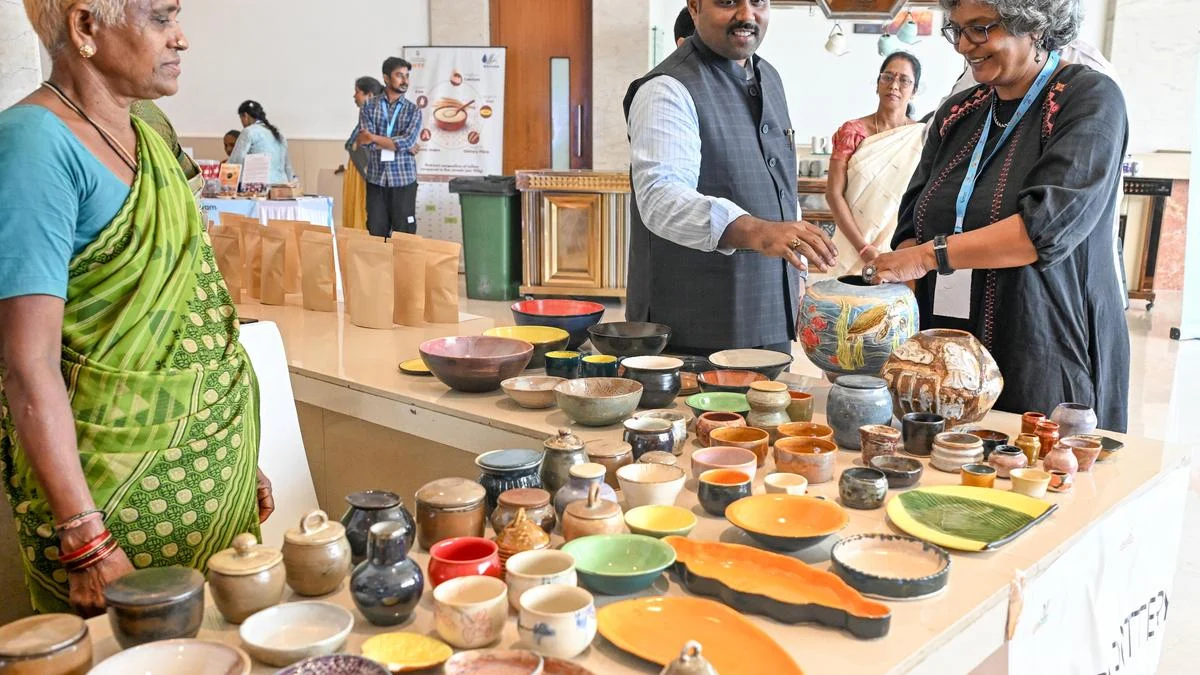
The afternoon saw the "Exhibition Zone" become the center of activity. VMRDA Commissioner N. Tej Bharath spent significant time interacting with vendors, most notably at the Arra Pottery stall, where handcrafted ceramic ware demonstrated the fusion of traditional craft with modern aesthetic sensibilities. Simultaneously, Sankalpa Art Village showcased how creative industries could be leveraged for sustainable rural livelihoods.
Closing Sessions: Networking and Market Linkages
The event concluded with structured "Buyer-Seller Interactions." These sessions were designed to provide immediate value, allowing entrepreneurs to pitch their products directly to retail partners and digital aggregators, effectively shortening the bridge between production and profit.
Supporting Data: The Economic Context of Women-Led Enterprises
To understand the significance of the Visakhapatnam summit, one must look at the broader economic data surrounding women’s entrepreneurship in India.
- The MSME Landscape: According to recent Ministry of MSME reports, women-owned enterprises make up roughly 20% of all micro, small, and medium enterprises in India. However, a vast majority of these remain in the "micro" category. Events like the Vizag summit are critical because they target the transition of these units into "small" and "medium" categories, where job creation potential is highest.
- The Credit Gap: Data from the International Finance Corporation (IFC) suggests an estimated $158 billion credit gap for women-owned MSMEs in India. The summit’s focus on "Finance" addressed this by inviting institutional players to discuss collateral-free loans and gender-disaggregated credit scoring.
- Digital Adoption: With the Hamsafal program aiming to bridge the digital divide, the event tapped into a crucial trend: women-led businesses that adopt digital sales channels see a 20-30% higher revenue growth compared to those that remain offline.
- Legacy of the FFPO: The Visakhapatnam Town Fisherwomen Dry Fish Cooperative Society, registered in 1987, serves as a data point for sustainability. With 164 active members, it proves that the cooperative model, when supported by consistent market access, can withstand decades of market volatility.
Official Responses: Voices of Leadership
The summit featured several high-ranking officials and organizational leaders who articulated a clear roadmap for the future.

M. Sribharat, Member of Parliament:
The MP emphasized the role of policy in creating a level playing field. He noted that the government is keen on fostering an environment where "ease of doing business" is not just for large corporations but also for the woman running a boutique or a food processing unit from her home or a small workshop. He encouraged the entrepreneurs to leverage the city’s growing status as a tech and logistics hub.
N. Tej Bharath, VMRDA Commissioner:
During his visit to the stalls, the Commissioner focused on the "Urban Ecosystem" element. "Urban planning is not just about roads and buildings; it is about creating spaces where local commerce can thrive," he remarked. He expressed particular interest in how the VMRDA could support permanent or semi-permanent marketplaces for women artisans to ensure they have consistent visibility beyond one-off expos.
Subhash Kiran, Programme Director, GAME:
In an exclusive interaction on the sidelines, Kiran highlighted the philosophy of "Mass Entrepreneurship." "Entrepreneurship flourishes when local ecosystems work together. Through collaborations with community organisations, industry and market partners, we are working to help women entrepreneurs move beyond subsistence livelihoods and build enterprises that can scale and access larger markets," he explained.
Divya Sampath, Aspire For Her (AFH):
Sampath spoke on the power of the network. "Aspire For Her is a community of 1.2 million women. In collaboration with GAME, we are implementing the Hamsafal programme to strengthen entrepreneurial journeys and create access to opportunities," she said. She noted that the program focuses heavily on mentorship, ensuring that a woman in Vizag can learn from the successes and failures of an entrepreneur in Mumbai or Bangalore.
Implications: The Path Toward a Gender-Inclusive Economy
The "Celebrating Women Entrepreneurs" summit carries profound implications for the socio-economic fabric of Andhra Pradesh and the wider Indian economy.
1. Moving Beyond "Subsistence"
For too long, women’s entrepreneurship in the grassroots sector has been viewed through the lens of poverty alleviation or "subsistence." This event successfully reframed the narrative toward "growth-oriented" business. By focusing on branding (as seen with Arra Pottery) and formal cooperative structures (the Fisherwomen’s Society), the summit pushed for a professionalization of the sector.
2. Strengthening the Urban-Rural Link
The event acted as a conduit between the rural producer and the urban consumer. By bringing grassroots leaders into a high-end conference setting in Visakhapatnam, the organizers facilitated a transfer of knowledge. Rural entrepreneurs gained insights into urban packaging and digital marketing, while urban enablers gained a deeper appreciation for the supply chain resilience of grassroots organizations.
3. The Role of "Social Capital"
Perhaps the most significant implication is the creation of social capital. Entrepreneurship is often a lonely journey, particularly for women who may face societal pushback. The networking sessions provided a "brave space" for women to share their business journeys, creating a mentorship loop that is likely to persist long after the conference ended.
4. Policy as a Catalyst
The involvement of the VCCI Women’s Wing ensures that the challenges discussed—such as the need for better digital infrastructure and simplified GST compliance for small-scale vendors—will be funneled back to policymakers. This creates a feedback loop where the "Urban Ecosystem" can be refined to better serve its most enterprising citizens.
Conclusion
The summit in Visakhapatnam was more than a celebration; it was a call to action. As the Hamsafal program begins to take deeper root in the region, the transition from "grassroots leadership" to "market leadership" seems not only possible but inevitable. By addressing the pragmatic needs of finance, digital literacy, and market access, the collaboration between GAME, AFH, and VCCI has provided a blueprint for how Tier-II cities can lead the charge in India’s journey toward a truly inclusive $5 trillion economy.
As the 164 members of the Fisherwomen’s Cooperative and the artisans of Arra Pottery return to their work, they do so with more than just new contacts—they carry the validation of an ecosystem that finally recognizes their value as pillars of the modern Indian market.
