

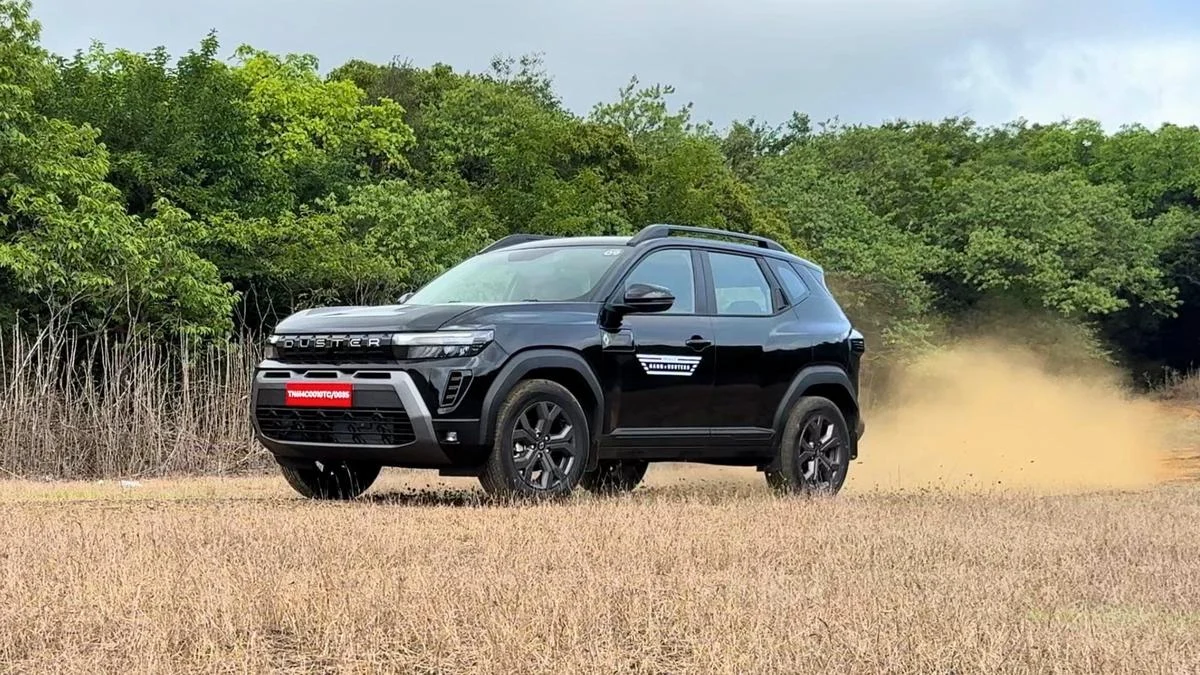
Main Facts: Challenging the "Bigger is Better" Narrative
In the competitive landscape of the Indian automotive market, a persistent skepticism remains regarding small-capacity engines, particularly when tasked with powering substantial SUVs. The prevailing consumer logic suggests that a larger displacement is the only path to effortless performance and long-term durability. However, the introduction of the Renault Duster TCe 100 is a calculated strike against this conventional wisdom.
Equipped with a 999cc, three-cylinder turbocharged petrol engine, the Duster TCe 100 produces a modest 100PS and 166Nm of torque. On paper, these figures might seem underwhelming to those accustomed to the high-output figures of the C-SUV segment. Yet, real-world testing reveals a vehicle that punches significantly above its weight class. By focusing on torque delivery and chassis calibration rather than raw displacement, Renault has produced a variant that positions itself as the "sweet spot" of the lineup—balancing efficiency, drivability, and the rugged DNA that made the original Duster a household name.
With a price range of ₹10.49 lakh to ₹13.49 lakh, the Duster TCe 100 is not merely an entry-level offering; it is a sophisticated alternative to established rivals like the Volkswagen Taigun and Skoda Kushaq, offering a European driving experience at a more accessible price point.
Chronology: The Evolution of a Legend
To understand the significance of the TCe 100, one must look at the timeline of the Duster brand and Renault’s strategic pivot in the Indian market.
- 2012: The Disruptor Arrives: The original Renault Duster was launched in India, effectively creating the compact SUV segment. It became an instant icon due to its ride quality and robust "go-anywhere" attitude.
- 2016–2020: The Diesel Era and Transition: While the 1.5 dCi diesel engine dominated sales, global shifts away from diesel and the implementation of BS6 emission norms forced Renault to rethink its powertrain strategy.
- 2021–2023: The Turbocharged Pivot: Renault began phasing out naturally aspirated engines in favor of high-efficiency turbocharged units. The 1.0-litre TCe engine was first introduced in the Kiger, serving as a testbed for the technology in the Indian climate.
- The Current Launch: Engineering Maturity: The Duster TCe 100 represents the most refined iteration of this 1.0-litre platform. Unlike its application in smaller vehicles, the engine in the Duster has undergone substantial re-engineering of its mounts, gearbox ratios, and ECU mapping to suit a larger, more demanding chassis.
Supporting Data: The Mechanics of Performance
The success of the Duster TCe 100 is rooted in technical nuances that are often overlooked in a cursory glance at a spec sheet.

1. The Torque Curve Advantage
While 100PS is the headline power figure, the 166Nm of torque is the engine’s true protagonist. Crucially, this torque is available from as low as 2,000rpm. This low-end accessibility eliminates the "dead zone" often found in small turbo-petrol engines. In urban environments, the Duster can pull cleanly from 25–30km/h in third gear, reducing the need for frequent downshifts.
2. Transmission and Gearing
The six-speed manual gearbox is a critical component of the TCe 100’s efficiency. Renault engineers have calibrated the ratios to ensure the engine stays within its "power band" during typical highway cruising. At 100km/h, the engine remains relaxed, yet a slight depression of the throttle provides enough boost for overtaking without requiring a drop to fifth gear.
3. NVH (Noise, Vibration, and Harshness) Management
Three-cylinder engines are inherently unbalanced compared to four-cylinder counterparts. To counter this, Renault utilized advanced dampening materials and revised engine mounts. While a slight thrum is audible at idle, the vibration is virtually non-existent once the vehicle is in motion, resulting in a cabin experience that rivals more expensive premium SUVs.
4. Suspension and Chassis Connection
The Duster retains its legendary suspension tuning. It employs a setup that leans toward firmness to maintain body control at high speeds but utilizes long-travel dampers to soak up the sharp edges of broken Indian roads. The steering remains a standout—precise, communicative, and naturally weighted, avoiding the "video game" feel of many modern electronic power steering systems.
Official Responses: Renault’s Engineering Philosophy
While official corporate statements often focus on market share, Renault’s engineering team has emphasized a "right-sizing" philosophy for the Indian market. According to internal insights shared during the vehicle’s development phase, the goal for the TCe 100 was to maximize "usable performance" rather than "peak performance."

Renault’s strategy acknowledges that for the average Indian family, a car is used 70% of the time in congested urban traffic and 30% on highways. Therefore, the engine was tuned to prioritize thermal efficiency and low-end responsiveness. By sharing the basic block with the Kiger but enhancing the peripherals, Renault has achieved an economy of scale that allows them to offer features like all-wheel disc brakes and 17-inch alloy wheels in the Techno variant while keeping the price competitive.
The company has also addressed the "feature-gap" by focusing on tactile quality. The move toward dual-tone interiors, fabric-wrapped touchpoints, and a more intuitive infotainment system is a direct response to consumer feedback that previously criticized Renault for being too "utilitarian."
Implications: A Shift in the SUV Zeitgeist
The performance of the Renault Duster TCe 100 has several long-term implications for the automotive industry and consumer behavior.
1. The Erosion of Displacement Bias
As turbocharging technology matures, the "displacement bias" is likely to fade. If a 1.0-litre engine can climb mountain passes and cruise at 120km/h with composure, the argument for larger, thirstier naturally aspirated engines becomes purely emotional rather than functional. This shift is essential for manufacturers to meet increasingly stringent corporate average fuel economy (CAFE) targets.
2. Democratizing the "European" Driving Feel
Historically, if a buyer wanted an SUV that "handled," they were forced into a higher price bracket occupied by German or Czech brands. The Duster TCe 100 proves that driver engagement—steering feedback and chassis poise—can be delivered at a sub-₹14 lakh price point. This puts pressure on competitors to improve their driving dynamics rather than just adding more screens and sunroofs.

3. The Practicality-Character Balance
The Duster’s success reinforces the idea that character matters. In a sea of "me-too" SUVs that prioritize digital gimmicks, the Duster’s focus on seat comfort, visibility, and ruggedness appeals to a more traditional, "prosumer" segment of the market. However, the lack of ventilated seats and electric adjustments in the current lineup remains a missed opportunity. In a tropical climate like India’s, these are no longer "luxuries" but essential comfort features that could prevent some buyers from making the final leap.
4. Market Positioning and Value
At ₹13.49 lakh for the top-tier TCe 100, Renault is positioning this vehicle as a high-value alternative. It offers more interior volume and a more robust suspension than many sub-compact SUVs, while undercutting the price of mid-sized SUVs. This "bridge" positioning allows Renault to capture buyers who are trading up from premium hatchbacks but find the ₹18-20 lakh price tag of high-end C-SUVs out of reach.
Conclusion: The New Benchmark for "Enough"
The Renault Duster TCe 100 is a masterclass in automotive compromise—not the kind of compromise that leaves the user wanting more, but the kind that provides exactly what is needed with surprising sophistication. It is a vehicle that rewards the driver who looks past the spec sheet and into the actual experience of the road.
By proving that a 1.0-litre engine is more than capable of handling the rigors of an SUV body, Renault has not only extended the life of the Duster brand but has also set a new benchmark for the segment. It stands as a reminder that the most impressive vehicles are often those that do the most with the least, challenging us to reconsider why we ever thought bigger numbers were the only ones that mattered.
As the Indian market continues to evolve, the Duster TCe 100 will likely be remembered as the vehicle that normalized the small-displacement turbo SUV, proving once and for all that in the world of modern engineering, it isn’t the size of the engine in the SUV, but the size of the performance in the engine.

Renault Duster TCe100 Technical Specifications at a Glance:
- Engine: 1.0L 3-Cylinder Turbocharged Petrol
- Power: 100 PS
- Torque: 166 Nm @ 2,000 rpm
- Transmission: 6-speed Manual
- Key Features: 17-inch alloys, All-wheel disc brakes, Sunroof, Android Auto/Apple CarPlay
- Price Range: ₹10.49 lakh – ₹13.49 lakh (Ex-showroom)
Motorscribes, in association with The Hindu, brings you the latest in cars and bikes. Follow them on Instagram @motorscribes
