

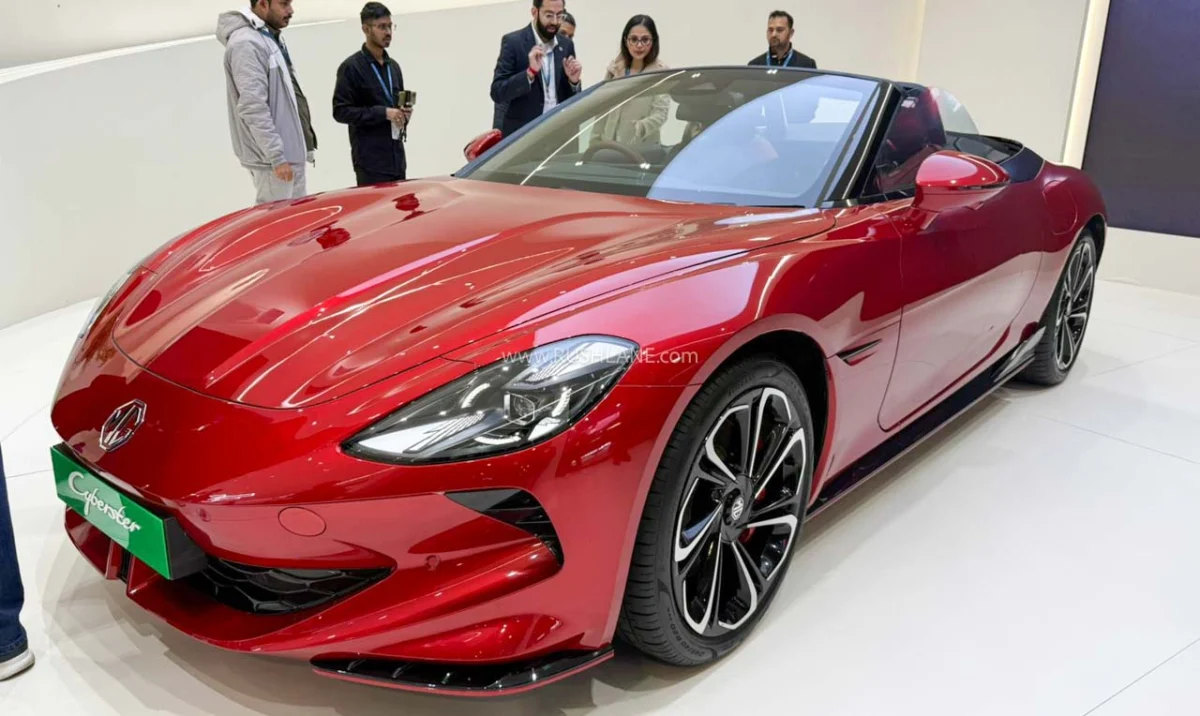
New Delhi, India – In a move that signals a paradigm shift in the luxury automotive landscape, JSW MG Motor India has officially announced the extension of its innovative Battery-as-a-Service (BaaS) ownership program to its premium MG SELECT portfolio. This strategic expansion includes the highly acclaimed MG Cyberster electric roadster and the MG M9 luxury electric MPV, effectively lowering the entry barrier for high-end electric mobility in the Indian market.
By decoupling the cost of the battery from the vehicle’s upfront price, MG is not only challenging traditional ownership models but also addressing one of the primary concerns of EV adopters: the high initial acquisition cost. This development follows the successful implementation of BaaS in MG’s more mainstream offerings, such as the Comet and Windsor EVs, suggesting a long-term commitment to this "pay-as-you-go" energy model.
1. The Core Announcement: Lowering the Threshold for Luxury
The introduction of BaaS to the MG SELECT range represents a significant restructuring of the luxury EV price bracket. Under this new program, the MG M9 and the MG Cyberster are available at introductory prices that are approximately ₹10 lakh lower than their standard ex-showroom counterparts.
Pricing Breakdown under BaaS:
- MG M9 Luxury MPV: Available at an introductory BaaS price of ₹69.99 lakh, with an additional battery rental charge of ₹8 per kilometer.
- MG Cyberster Roadster: Available at an introductory BaaS price of ₹72.49 lakh, with the same battery rental rate of ₹8 per kilometer.
In comparison, the conventional ex-showroom prices for these vehicles are notably higher. The MG M9 typically retails between ₹79.95 lakh and ₹84.94 lakh, while the Cyberster is positioned between ₹82.50 lakh and ₹87.49 lakh. By opting for the BaaS model, customers can reduce their initial capital outlay by ₹9.96 lakh for the M9 and ₹10.01 lakh for the Cyberster.
2. Chronology of the BaaS Evolution in India
The journey of Battery-as-a-Service in India, championed by JSW MG Motor, has been one of rapid iteration and scaling.
- Phase 1: The Mass Market Pilot (2024): MG first introduced the BaaS concept with the MG Windsor EV and later extended it to the MG Comet and ZS EV. The goal was to make EVs price-competitive with Internal Combustion Engine (ICE) vehicles.
- Phase 2: Establishment of MG SELECT (Late 2024): Recognizing the need for a specialized retail experience for its high-end products, MG launched the "MG SELECT" channel. This focused on luxury, bespoke services, and "accessible luxury."
- Phase 3: The Luxury Integration (January 2025): Following the successful debut of the MG Cyberster at the Auto Expo 2025 and the steady demand for the M9 MPV, the company decided to bridge the gap between mass-market financing innovations and luxury aspirations.
- Current Milestone: The announcement marks the first time a luxury-tier electric roadster and a flagship MPV have been offered with a per-kilometer battery rental model in India.
3. Supporting Data: Market Performance and Specifications
Despite being niche offerings, the MG SELECT portfolio has demonstrated strong market resonance. JSW MG Motor India confirmed that the Cyberster and M9 have collectively surpassed 3,000 units in sales since their respective launches. This milestone is particularly impressive given the premium positioning of the vehicles.
MG Cyberster: The Performance Halo
The Cyberster is not merely an electric car; it is a statement of intent. It caters to a performance-oriented demographic that values both heritage and futuristic technology.

- Powertrain: Dual-motor All-Wheel Drive (AWD) setup.
- Output: A staggering 510 PS of power and 725 Nm of peak torque.
- Acceleration: 0-100 km/h in a blistering 3.2 seconds.
- Design Highlights: Signature electric scissor doors and a classic two-seat roadster silhouette that pays homage to MG’s racing pedigree.
MG M9: The "Presidential" Luxury MPV
The M9 targets the corporate elite and large luxury families, competing in a space previously dominated by Japanese and German stalwarts.
- Interior: Features "Presidential Seats" in the second row with 16-way electronic adjustment.
- Comfort: Eight massage modes, integrated ventilation, and heating.
- Technology: Level 2 Advanced Driver Assistance Systems (ADAS), a Driver Monitoring System (DMS), and a 13-speaker premium audio system.
- Safety: Equipped with seven airbags and a robust safety suite designed for high-profile transport.
4. Official Stance and Strategic Vision
While specific executive quotes regarding this exact rollout emphasize "customer-centricity," the broader strategy from JSW MG Motor India highlights a dual focus: affordability and technology.
According to industry analysts, the move to bring BaaS to MG SELECT is a calculated attempt to disrupt the "status quo" of the luxury car market. By offering a luxury EV at a sub-₹75 lakh sticker price (under BaaS), MG is effectively pulling customers from lower segments who were previously intimidated by the ₹85 lakh+ price tag of premium EVs.
The company’s "Experience Centres"—currently numbering 15 across 14 major cities—serve as the primary touchpoints for this new ownership model. These centers are designed to provide a "curated" experience, moving away from traditional showroom environments to a more boutique, lifestyle-oriented approach.
5. Implications for the Indian Automotive Industry
The expansion of BaaS into the luxury sector carries several deep-seated implications for the industry, consumers, and the environment.
I. Lowering the "Psychological Barrier"
For many luxury car buyers, the rapid evolution of battery technology creates a fear of obsolescence. By not "owning" the battery, the customer is shielded from the risks associated with battery degradation and resale value fluctuations. The BaaS model shifts the responsibility of battery health and end-of-life management back to the manufacturer and their financing partners.
II. Impact on Resale Value
One of the most significant debates surrounding BaaS is the impact on the used car market. A vehicle sold without a battery has a different valuation logic. However, MG’s approach ensures that the second or third owner can simply continue the BaaS subscription, potentially making the car more "resellable" because the new buyer doesn’t have to worry about the cost of an aging, out-of-warranty battery.

III. Competitive Pressure
Competitors in the luxury space, such as Mercedes-Benz, BMW, and Audi, currently rely on traditional financing and leasing. MG’s ₹8/km model introduces a level of transparency in operating costs that is rare in the luxury segment. This could force other players to reconsider their entry-level pricing strategies for EVs.
IV. Infrastructure and Urban Mobility
The M9, with its high-capacity battery and luxury focus, is often used for inter-city travel between hubs like Delhi-Jaipur or Mumbai-Pune. A per-kilometer charge aligns the cost of the vehicle directly with its utility. For fleet operators catering to high-end hospitality, this model allows for better OPEX (Operating Expenditure) management compared to a massive upfront CAPEX (Capital Expenditure).
6. Understanding the Economics: Is BaaS Right for Everyone?
While the ₹10 lakh upfront saving is enticing, the long-term viability of BaaS depends on the user’s driving patterns.
- The Low-Mileage User: For a collector or a weekend driver who might only cover 5,000 km a year, the annual battery rental would be ₹40,000. It would take 25 years to reach the ₹10 lakh "saving" threshold, making BaaS an incredibly attractive financial tool.
- The High-Mileage User: For a luxury MPV like the M9 used for daily corporate chauffeuring (e.g., 30,000 km a year), the annual cost would be ₹2.4 lakh. In this scenario, the upfront saving is "spent" in about four years. However, the buyer still benefits from lower initial EMI payments and the ability to deploy that ₹10 lakh elsewhere in their business or investments.
7. Conclusion: A Bold Step Toward an Electric Future
The integration of the MG Cyberster and MG M9 into the BaaS program is more than just a pricing update; it is a bold experiment in consumer psychology. JSW MG Motor India is betting that luxury buyers, much like mass-market buyers, value flexibility and lower initial investment.
With 15 Experience Centres providing a bespoke environment for these transactions and over 3,000 units already on the road, the momentum is clearly in MG’s favor. As the Indian EV market matures, the "ownership" of the vehicle may become secondary to the "experience" of the drive—a shift that JSW MG is uniquely positioned to lead.
The automotive world will be watching closely to see if this model becomes the new standard for luxury electric mobility, or if it remains a unique hallmark of the MG SELECT brand. For now, the dream of owning a 510 PS electric supercar or a "Presidential" limo has become significantly more attainable for the Indian elite.
