

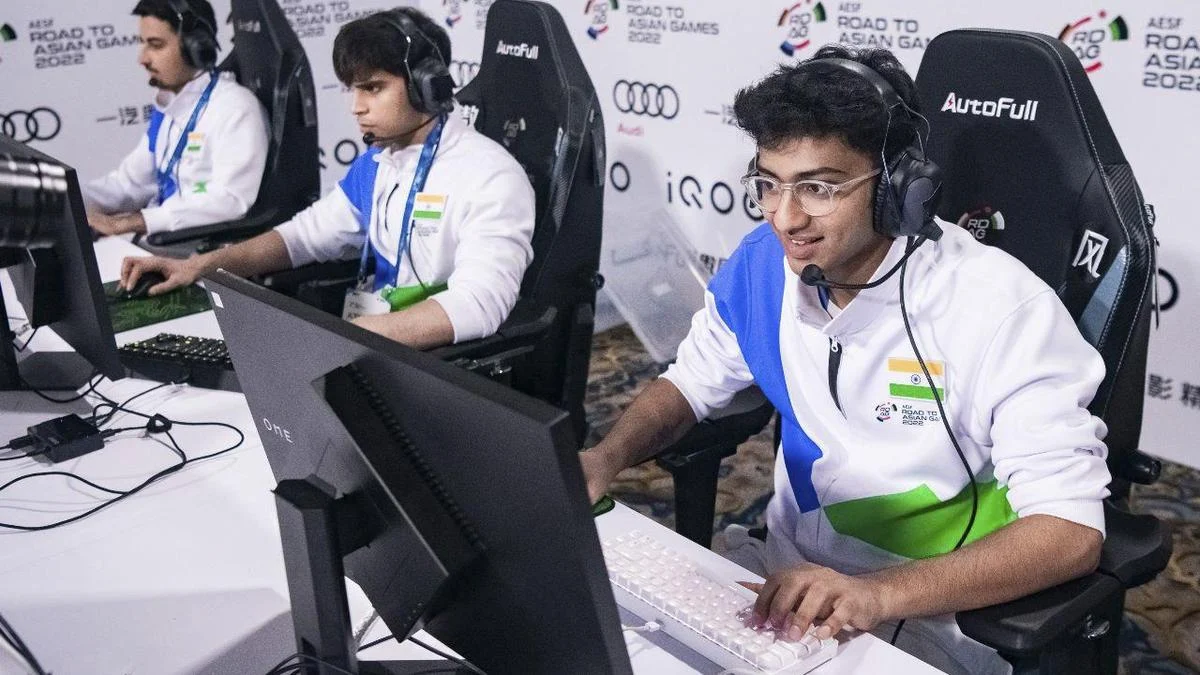
Kochi, India – The flickering glow of a computer screen, once a source of childhood escapism, has transformed into a national stage for Akshaj Shenoy. From battling virtual foes in classic PC games on an aging machine to captaining India’s official League of Legends team, Shenoy’s journey is a testament to the burgeoning power of esports. At 24, Akshaj, known in the digital arena as “Kat Bot,” stands at the forefront of India’s ambition to secure a medal at the prestigious Asian Games 2026 in Aichi-Nagoya, Japan, set to unfold from September 19 to October 4.
The upcoming Games will see India dispatching a formidable 15-member contingent to compete across four of the 11 eSports events: the strategic depths of League of Legends, the team-based combat of Pokémon UNITE, the digital pitch of eFootball, and the rapid-fire puzzle action of Puyo Puyo Champions. This diversified representation underscores India’s growing commitment to recognizing and fostering its digital athletes on an international platform.
Shenoy’s League of Legends squad, a formidable roster comprising Aakash Shandilya (Infi), Sanindhya Malik (Deadcorporal), Mihir Ranjan (Lotus), Ahmed Shahid (Nero), and Rahul Bisht (Bob), earned their right to represent the nation through a grueling regional qualifier in June, emerging from the S8UL eSports roster. Their collective gaze is now firmly fixed on the horizon, fueled by the aspiration to not just compete, but to clinch a coveted medal, building on their foundational experience from the previous Asian Games.
From Humble Beginnings to National Captaincy: Akshaj Shenoy’s Gaming Journey
Akshaj Shenoy’s odyssey into the world of competitive gaming is a narrative steeped in passion, perseverance, and the relentless pursuit of a dream, even when limited by circumstance.
Early Sparks: A Childhood Dream Limited by Hardware
Hailing from the serene coastal city of Kochi, Akshaj’s initial foray into gaming was a nostalgic trip for many of his generation. His earliest memories are etched with the pixelated thrills of classic personal computer titles. He recalls the adrenaline-fueled races of "Road Rash," the iconic 90s motorcycle racing game developed by Electronic Arts, where virtual asphalt met digital rubber in a symphony of speed and occasional fisticuffs. Simultaneously, he navigated the vibrant, perilous landscapes of "Crash Bandicoot," a groundbreaking 3D platformer by Naughty Dog, famed for its innovative level design and quirky protagonist.
However, this early love affair with digital worlds was often punctuated by the stark reality of his hardware limitations. His computer, a faithful but increasingly outdated machine, struggled to keep pace with the rapidly evolving graphics and processing demands of newer titles. The yearning to explore more complex, visually stunning games was a constant, frustrating companion, as his PC simply could not support the cutting-edge experiences he so desperately craved. This period of constraint, rather than dampening his enthusiasm, inadvertently honed his focus and appreciation for games that were accessible, laying the groundwork for future discoveries.
Discovery of a Lifeline: League of Legends and the Rise of Temple of Kings
The pivotal moment in Akshaj’s gaming life arrived at the age of 15. Through the then-burgeoning medium of YouTube gameplay videos, he stumbled upon "League of Legends." This was not just another game; it was a revelation. A Multiplayer Online Battle Arena (MOBA) game, League of Legends offered a rich tapestry of strategy, teamwork, and individual skill, all wrapped in a visually engaging fantasy world. Crucially, and much to young Akshaj’s relief, the game ran smoothly on his modest PC. It was a lifeline, a gateway to a competitive world he never knew he could access.
He plunged headfirst into the game, initially navigating the competitive landscape of the Southeast Asian server. The experience was transformative, teaching him the intricacies of team dynamics, strategic planning, and the importance of communication. It wasn’t long before his innate leadership qualities and strategic acumen began to shine. He eventually formed his own team, christening it "Temple of Kings," a name that perhaps subconsciously foreshadowed his future role as a national captain. This early venture into team formation and competitive play cemented his passion, transforming a hobby into a serious pursuit.
The Dawn of Competitive Esports: Asian Games 2023 Debut
Fast forward to the present, Akshaj Shenoy, now 24, stands as a seasoned veteran in the nascent Indian esports scene. His journey reached a significant milestone when he led the Indian League of Legends team at the Asian Games 2023 in Hangzhou, China. This event marked a historic turning point for esports, as it was officially introduced as a medal competition for the first time. Prior to this, esports had featured as a demonstration sport at the 2018 Asian Games in Jakarta, a tentative step towards mainstream recognition.
The 2023 Games served as a crucible for the Indian squad. Pitted against established powerhouses in the global esports arena, the team, under Akshaj’s leadership, finished a respectable fifth. While a medal remained elusive, the experience was invaluable. It was their first major international event, an immediate immersion into the high-stakes environment of global competition. The team faced "titans on the big stage," as Akshaj puts it, immediately after navigating a single regional competition. This trial by fire provided crucial insights into the level of competition, the strategic nuances required at the elite tier, and the areas needing significant improvement. It was a foundational experience that laid the groundwork for their current, more intensive preparation.

Forging the Future: Asian Games 2026 and Intensified Preparation
The current Indian League of Legends team, a cohesive unit comprising Aakash Shandilya (Infi), Sanindhya Malik (Deadcorporal), Mihir Ranjan (Lotus), Ahmed Shahid (Nero), and Rahul Bisht (Bob), is now channeling the lessons learned from 2023 into their rigorous preparation for Aichi-Nagoya. Their qualification through the highly competitive regional qualifiers in June, as part of the S8UL eSports roster, has only sharpened their resolve.
Akshaj, who also juggles his demanding training schedule with pursuing an MBA, embodies the disciplined life of a modern esports athlete. His days are a finely tuned balance of academic pursuits and intense practice sessions. This dual commitment highlights not only his personal drive but also the evolving perception of esports as a legitimate career path that demands both strategic intellect and unwavering dedication, much like traditional sports. The team is now locked in a cycle of relentless training, aiming to surpass their previous performance and etch India’s name into the Asian Games medal tally.
The Art of War: Deep Dive into League of Legends and India’s Strategy
Understanding the strategic depth of League of Legends is crucial to appreciating the immense skill and teamwork required at the professional level. Akshaj Shenoy, as the team captain and midlaner, offers a window into the intricacies of their chosen battlefield.
Understanding the Battlefield: League of Legends Mechanics
At its core, League of Legends is a Multiplayer Online Battle Arena (MOBA) game where two teams of five players each battle to destroy the opposing team’s "Nexus," located within their base. This objective, however, is far from simple. It requires a delicate balance of individual skill, strategic foresight, and seamless team coordination, all unfolding on a dynamically changing map.
Akshaj elaborates on the game’s fundamental objective: "The main objective of the game is to destroy your enemy base by accumulating resources and getting stronger." Players control unique "champions," each with distinct abilities, strengths, and weaknesses. Over the course of a match, which can range from 20 minutes to over an hour, players accumulate gold and experience by defeating enemy minions, champions, and neutral monsters, allowing them to purchase items and level up their abilities, thereby growing "stronger."
The game map itself is a symmetrical, diamond-shaped arena, colloquially described by Akshaj as "a square divided into two triangles with three lanes." These lanes – Top, Mid, and Bot – are the primary routes connecting the two bases, defended by turrets and inhibitors. Between these lanes lies the "Jungle," a treacherous terrain filled with neutral monsters that offer buffs and gold, and strategic objectives like the Dragon and Baron Nashor, which provide powerful team-wide advantages.
Akshaj’s role as a midlaner is pivotal. Positioned in the central lane, he is often considered the primary damage dealer or a key playmaker, with direct access to both sides of the map. "I will be on the middle lane, helping the team through the map and acting as a facilitator for the team," he explains. This means not only winning his individual lane matchup but also roaming to other lanes to assist teammates, secure objectives, and control the flow of the game, dictating the tempo and creating opportunities for the team to gain advantages. It’s a role that demands exceptional mechanical skill, map awareness, and shot-calling ability.
Evolution of Preparation: Lessons from 2023 to 2026
The Indian team’s approach for the 2026 Asian Games, while maintaining its core strategic philosophy, has undergone a significant transformation in terms of intensity and methodology. The experience of 2023, where they found themselves "against titans on the big stage immediately after one regional competition," served as a crucial learning curve.
"Last year’s Games were our first international event; we were against titans on the big stage immediately after one regional competition," Akshaj reflects. This baptism by fire revealed the stark difference between regional and international competitive standards. While their fundamental "approach hasn’t changed much," the preparation has intensified dramatically. "We have been dedicating more time to practicing. Our preparation method has changed. We are spending twice the time we spent during the last edition, and we have had more time with our coach, Samuel Boudrie," he reveals.
This intensified regimen encompasses a dual focus: honing individual prowess and strengthening team synergy. Akshaj explains, "It’s an intense game, and you must be good at an individual level while also fighting as a team. We prioritise both solo and team practices." During the day, players engage in "solo practices," dedicating their free time to individually refining their champion mechanics, understanding specific matchups, and improving their decision-making. These individual sessions are critical for ensuring each player is operating at their peak performance.

However, the true magic happens at night. "At night, we play as a team for at least three sessions, which last for a total of four to five hours, followed by a review meeting with the coach," Akshaj details. These marathon team sessions are where strategies are forged, communication channels are streamlined, and team cohesion is built. They practice specific compositions, execute complex objective plays, and simulate various in-game scenarios. The post-practice review meetings with coach Samuel Boudrie are equally vital, providing critical analysis of their gameplay, identifying mistakes, and refining strategies, ensuring continuous improvement.
The Disciplined Life of an Esports Athlete
The life of a professional esports athlete, especially one balancing academics, is far from the stereotypical image of endless casual gaming. It demands immense discipline, rigorous time management, and mental fortitude. Akshaj Shenoy exemplifies this commitment, meticulously balancing his MBA studies with his demanding training schedule.
"Since practice is usually at night, I spend the day at my dad’s office or studying," he states, highlighting the structured nature of his day. This disciplined approach is not merely a personal choice but a necessity for aspiring esports professionals. The ability to compartmentalize responsibilities, focus intently on each task, and manage energy levels throughout a long day is paramount. "Your time-management skills matter a lot," he emphasizes, underscoring that success in esports, much like in traditional sports or academics, is not solely about raw talent but also about meticulous planning and execution in daily life. This rigorous routine, demanding late nights and focused days, is the unsung hero behind the flashy plays and strategic victories on the virtual battlefield.
Beyond the Screen: Perspectives on Esports Growth and Challenges
Akshaj Shenoy, with his unique vantage point as both a player and a student of business, offers insightful perspectives on the broader landscape of esports – its potential, its pitfalls, and the crucial support it needs to flourish in India.
The Blurring Lines: Competition vs. Leisure
While passionately dedicated to competitive gaming, Akshaj remains acutely aware of the potential downsides, particularly the addictive nature of video games. He offers a thoughtful caution: "They are designed to attract players and retain them." This candid admission acknowledges the sophisticated psychological mechanisms embedded within game design, aimed at maximizing engagement and playtime.
He then draws a crucial distinction between gaming for relaxation and gaming for competition. "Essentially, games are meant for relaxation. So, once it gets competitive, the entire dynamic changes." When gaming transitions from a leisure activity to a professional pursuit, the stakes escalate, and the pressure intensifies. What was once a source of unwinding can become a source of immense stress and relentless demand. Akshaj stresses the importance of individual agency and self-awareness in navigating this duality: "People should be self-aware and spend time depending on whether they want to treat it like a competition or a leisure activity." This nuanced perspective is vital for promoting healthy gaming habits, ensuring that the pursuit of excellence doesn’t compromise well-being.
The Horizon of Esports in India
Akshaj is optimistic about the future of esports, particularly in India. He firmly believes that "the inclusion of eSports is only the beginning," signaling a transformative era for digital sports. He observes a growing trend where players are "upgrading their setups and trying other games," moving beyond the previously dominant mobile gaming scene. The emergence of "newer titles coming up" alongside increased "government support [for] athletes and the sector" are significant catalysts "boosting the scene." This indicates a maturing ecosystem, where diverse gaming genres are gaining traction, and institutional backing is starting to legitimize esports as a viable industry.
However, he also highlights a unique challenge faced by esports athletes: a "shorter average career span than traditional athletes." Unlike physical sports where careers can extend well into the 30s or even 40s, factors such as "age will affect your response speed" in reaction-based games. The split-second decisions and mechanical precision required in high-level competitive gaming are often most acute in younger individuals. Recognizing this reality, Akshaj offers practical advice for aspiring professionals: "So, if someone wants to pursue eSports, they should eventually focus on content creation as well." This foresight into diversification suggests a sustainable career model, where competitive play can transition into roles as streamers, analysts, coaches, or content creators, leveraging their expertise and fan base.
Infrastructure: The Unsung Hero of Competitive Gaming
Perhaps the most critical, yet often overlooked, aspect of fostering a world-class esports ecosystem is infrastructure. Akshaj poignantly points out a significant disadvantage for Indian players: "For instance, the game I play doesn’t have a server for us, which puts us at a disadvantage at the competitive level." The absence of local game servers for major titles like League of Legends means Indian players are forced to connect to servers in other regions (like Southeast Asia), resulting in higher "ping" (latency) and input lag.
This seemingly technical detail has profound implications for competitive play. "We are not used to playing games with low lag or input latency. These titles are reaction-based, so your input and ping levels matter," he explains. In games where victory can hinge on milliseconds, a higher ping can be the difference between landing a crucial skill shot and missing it, between dodging an enemy attack and being eliminated. This fundamental disadvantage means Indian players often train under suboptimal conditions, requiring them to overcompensate for latency issues, which can hinder their performance when competing on an even playing field internationally.

He contrasts this with other titles: "But for games like PUBG: Battlegrounds, some of this framework has been put in place, showing that games can be lucrative career choices." This illustrates that with proper investment in local servers, high-speed internet infrastructure, and dedicated training facilities, India can indeed create an environment where esports athletes can thrive and compete on par with the global elite. The infrastructure deficit remains a significant hurdle that needs urgent attention for the sector to truly unlock its full potential.
A Medal Dream and the Future of Indian Esports
As Akshaj Shenoy and his team gear up for the Asian Games 2026, their aspirations extend beyond personal glory; they embody the dreams of a burgeoning industry and a nation eager to make its mark on the global esports stage.
The Road Ahead for Aichi-Nagoya
Akshaj’s expectations for the upcoming Asian Games are unequivocally high. Drawing confidence from their past experiences and intensified preparation, he declares, "We will have a better showing than we did last time and are hoping for a medal." This confident outlook is not merely wishful thinking but stems from a deeper understanding of their growth, improved strategies, and rigorous training regimen. A medal, whether gold, silver, or bronze, would be more than just a piece of metal; it would be a powerful symbol of India’s arrival in the competitive esports arena.
The broader impact of a potential medal on Indian esports would be transformative. Such an achievement would undoubtedly inspire a new generation of young talent, proving that esports is not just a pastime but a legitimate and rewarding career path. It would attract further investment from sponsors, technology companies, and government bodies, accelerating the development of infrastructure, training academies, and professional leagues within the country. A medal would legitimize the struggles and dedication of countless aspiring players, shifting societal perceptions and paving the way for greater acceptance and support.
Shaping a New Sporting Landscape
The journey of Akshaj Shenoy and his team is emblematic of a significant cultural shift – the integration of esports into the mainstream sporting landscape. For India, a nation deeply passionate about sports, this represents an exciting new frontier. Esports is no longer just a niche activity; it is a global phenomenon with massive viewerships, substantial prize pools, and dedicated professional athletes.
The Asian Games’ inclusion of esports as a medal event is a critical step in this legitimization process. It signifies that the skills, discipline, and strategic acumen required to excel in digital competitions are comparable to those demanded by traditional sports. This recognition can unlock immense potential for economic growth in India, fostering job creation for coaches, analysts, content creators, event organizers, and developers within the esports ecosystem.
With its vast youth population, technological adoption, and a growing middle class, India possesses all the ingredients to become a global esports powerhouse. However, realizing this potential hinges on continued government support, private sector investment in infrastructure, and a sustained effort to nurture talent from the grassroots level. Akshaj Shenoy, with his humble beginnings and unwavering determination, stands as a pioneer, embodying the challenges and triumphs of this new sporting era. His quest for a medal at Aichi-Nagoya is not just a personal ambition but a beacon of hope for the future of Indian esports, charting a course towards a future where pixelated dreams translate into tangible glory on the world stage.
