


TECHNOLOGY
In a significant move that has sent ripples through the Indian consumer electronics market, tech giant Apple has substantially increased the prices of its MacBooks, iPads, and a range of other products. This unprecedented adjustment, with some models now costing up to an additional Rs 1 lakh, is a direct consequence of a severe global memory chip shortage, a crisis exacerbated by the insatiable demand from the burgeoning artificial intelligence (AI) industry. Apple CEO Tim Cook has starkly characterized the situation as a "hundred-year flood," underscoring the extraordinary nature of the supply chain pressures currently facing the company and the wider tech sector.

The price revisions, which affect popular devices like the iPad Air, iPad Pro, MacBook Air, and various MacBook Pro configurations, reflect a broader market shift where the fundamental components of modern computing – memory (both RAM and NAND flash) – have become a battleground commodity. AI powerhouses such as OpenAI, Google, and Anthropic are aggressively procuring vast quantities of these chips to fuel their data centers and train increasingly complex large language models, diverting supply and driving up costs to historic levels. This report will delve into the main facts surrounding Apple’s decision, trace the chronology of this global crunch, present supporting data, analyze official responses, and explore the far-reaching implications for consumers and the tech industry.
Main Facts: Apple Responds to Unprecedented Supply Chain Strain
Apple’s recent decision to raise product prices in India stands as a stark indicator of the profound challenges currently gripping the global technology supply chain. The company, known for its meticulously managed logistics and considerable market leverage, has found itself in an unenviable position, compelled to pass on significant cost increases to its end consumers. The primary driver behind this move is a critical shortage of memory chips—specifically DRAM (Dynamic Random-Access Memory) and NAND flash storage—components essential for the operation of virtually every modern electronic device, from smartphones to supercomputers.
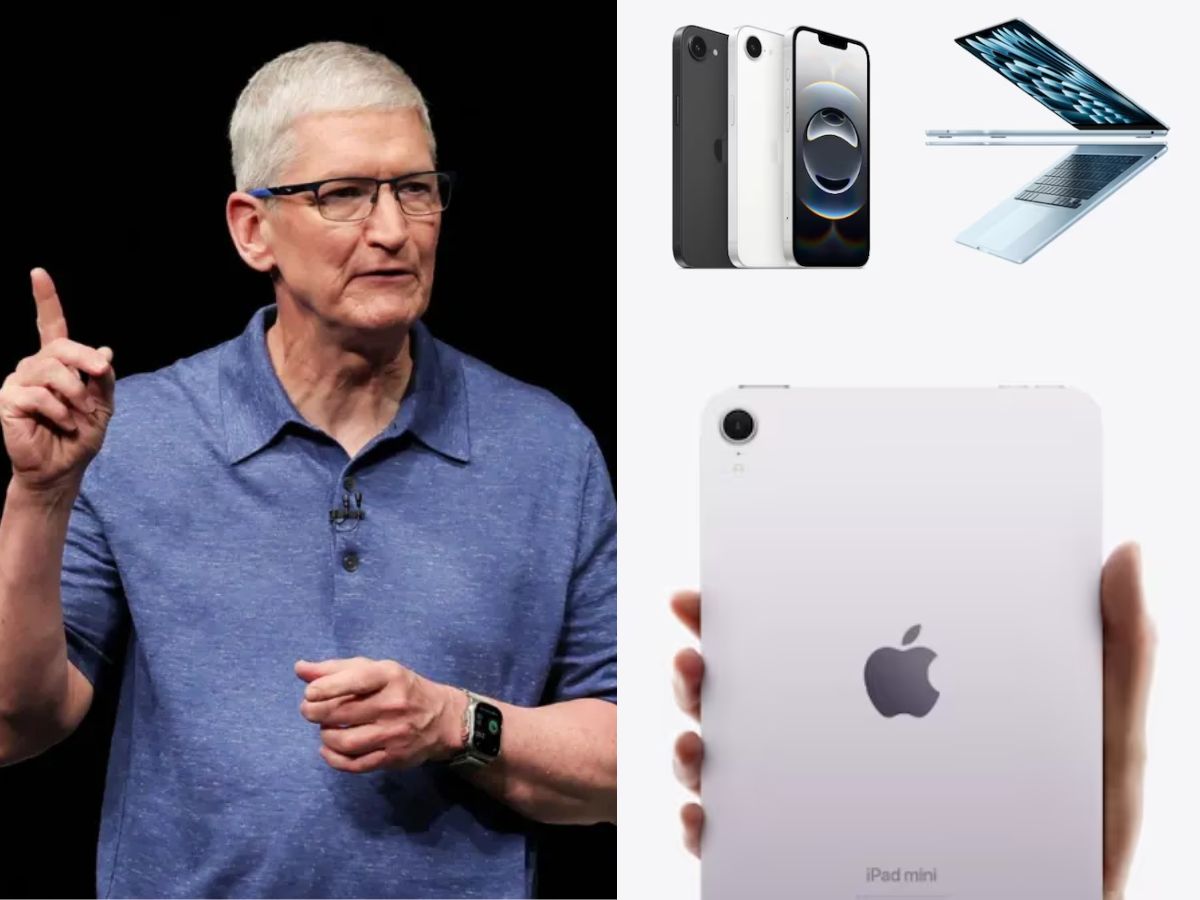)
This scarcity is not merely a cyclical downturn but, as articulated by Tim Cook, an event of "hundred-year flood" proportions, indicating an unparalleled intensity and duration. Cook, with over four decades of experience in the technology industry, has emphasized that he has never witnessed such a rapid and dramatic surge in component costs. The immediate impact on the Indian market is palpable, with MacBooks and iPads experiencing price hikes ranging from a considerable Rs 10,000 to an astounding Rs 1 lakh for high-end models. For instance, the base iPad now starts at approximately Rs 49,990, the iPad Air at Rs 89,900, and the iPad Pro reaching around Rs 1.39 lakh. MacBook prices have seen similar escalations, with the MacBook Air M5 now costing nearly Rs 1.49 lakh, the MacBook Pro M5 around Rs 2.39 lakh, and the top-tier MacBook Pro M5 Max soaring to approximately Rs 5 lakh. Even other Apple devices, such as the Mac mini, Apple TV 4K, and HomePod, have witnessed significant price adjustments, now priced around Rs 44,900 each. Interestingly, iPhone prices have been spared for now, a strategic decision likely aimed at maintaining demand ahead of future product cycles, though analysts caution that this reprieve may be temporary if the memory crunch persists or intensifies.
The root cause of this memory crisis lies squarely with the burgeoning demand from the artificial intelligence sector. Companies at the forefront of AI development—including industry giants like Google, Microsoft, Meta, and specialized firms such as OpenAI and Anthropic—are engaged in an intense arms race to build and expand their AI data centers. These facilities require vast quantities of high-performance memory to train increasingly sophisticated large language models (LLMs) and execute complex AI inference tasks. Unlike traditional computing, which can often make do with standard memory configurations, advanced AI workloads demand specialized, high-bandwidth memory (HBM) and large capacities of both DRAM and NAND to process gargantuan datasets and perform parallel computations at unprecedented speeds. This unprecedented appetite from AI has created a colossal imbalance in the supply-demand dynamics of the global memory market, effectively outbidding consumer electronics manufacturers for crucial components and forcing them to absorb or pass on dramatically elevated costs.

Chronology of a Crunch: From Anticipation to Impact
The current memory crisis, while feeling sudden to many consumers, has been brewing for some time, with industry observers tracking its trajectory from early warning signs to its current acute phase. Understanding this chronology is crucial to grasping the depth and complexity of the problem.
Early Warning Signs
The seeds of the current memory shortage were sown well before 2024, with early indicators emerging in late 2022 and throughout 2023. As generative AI models like ChatGPT began to capture public imagination and demonstrate transformative capabilities, tech companies initiated massive investments in AI infrastructure. Memory manufacturers, while initially cautious after a period of oversupply in the consumer market, started receiving significant orders for specialized memory chips. Reports from market intelligence firms like TrendForce and Gartner in late 2023 began to highlight an impending surge in demand for High-Bandwidth Memory (HBM) and high-density DRAM modules, specifically for AI accelerators. These reports noted that while overall memory production capacity might appear sufficient, the allocation and type of memory required for AI were creating a distinct bottleneck. Manufacturers were subtly signaling a shift in their production priorities towards these higher-margin, AI-centric components.
)
Escalation of AI Demand
The year 2024 witnessed an exponential acceleration in the demand for AI-related hardware. Major tech players announced multi-billion dollar commitments to expand their AI data centers, each requiring thousands of AI GPUs (Graphics Processing Units) that, in turn, are tightly integrated with HBM and vast amounts of conventional DRAM and NAND storage. The scale of these investments is staggering: training a single cutting-edge LLM can require hundreds of petabytes of storage and terabytes of high-speed memory. This isn’t just about consumer-facing AI applications; it’s about the foundational infrastructure that underpins everything from cloud computing to scientific research. The sheer volume of orders from this concentrated group of AI giants began to outstrip the industry’s ability to produce specialized memory at the required pace, leading to bidding wars for available supply. The rapid pace of AI innovation means that new, more powerful models are constantly being developed, each demanding even greater memory resources, creating a feedback loop of escalating demand.
Supplier Prioritization Shifts
As the AI boom intensified, memory manufacturers – primarily Samsung, SK Hynix, and Micron Technology, who together dominate the global DRAM and NAND markets – began to strategically re-evaluate their production lines and sales strategies. Producing HBM and other high-performance memory for AI accelerators is a more complex and often more profitable endeavor than manufacturing standard consumer-grade DRAM or NAND flash. Consequently, these suppliers started reallocating significant portions of their production capacity towards AI components. This shift involved not just increasing HBM output but also prioritizing orders from major AI clients for conventional memory, often at premium prices and with longer lead times for other customers. For consumer electronics companies like Apple, this meant reduced access to the volumes of memory they typically require for their products, and at significantly higher costs. The strategic decision by memory suppliers to cater to the high-margin AI market effectively starved the traditional consumer electronics sector, creating the "unsustainable" situation Tim Cook described.
)
Apple’s Position and Response
Apple, with its immense purchasing power and sophisticated supply chain management, is usually well-insulated from such severe market fluctuations. However, the magnitude of the current memory crisis has proven too large to absorb entirely. While Apple does not publicly disclose the precise timing of its component procurement decisions, industry analysts suggest that the company would have begun feeling the escalating pressure on memory costs throughout late 2023 and early 2024. The decision to raise prices in India likely came after a period of attempting to absorb these increased costs, a strategy that became untenable as supplier prices continued to climb. For Apple, maintaining its product margins and ensuring a stable supply, even at a higher cost, became paramount. The Indian market, being a key growth region for Apple, becomes an early indicator of how the company is managing these global pressures, signaling that such price adjustments could eventually extend to other markets if the situation doesn’t improve. The timing of the announcement reflects a calculated response to sustained market forces, indicating that the company has exhausted other avenues for cost mitigation.
Supporting Data: The Economics Behind the Hike
The memory price hike isn’t an arbitrary decision but a direct reflection of underlying economic forces at play in the global semiconductor market. A closer look at the data and market dynamics reveals the scale of the challenge.
)
Memory Market Overview
The global memory market, particularly for DRAM and NAND flash, is notoriously cyclical, experiencing periods of boom and bust. However, the current surge is distinct due to the unprecedented demand from AI. According to market research firm TrendForce, average selling prices (ASPs) for both DRAM and NAND flash began to rebound sharply in late 2023, after a prolonged downturn. For Q1 2024, TrendForce reported a nearly 15-20% quarter-over-quarter increase in DRAM contract prices, with similar or even higher jumps expected for Q2 and Q3. Some estimates suggest that certain specialized memory types, particularly HBM, have seen price increases of over 50-100% year-on-year. This rapid appreciation fundamentally alters the bill of materials for devices that rely heavily on memory, such as MacBooks and iPads, which often feature large capacities of both high-speed DRAM and robust NAND storage. The premium for HBM, essential for AI GPUs, has a knock-on effect, diverting resources and inflating prices for even standard memory as overall capacity becomes tighter.
The AI Data Center Arms Race
The scale of investment in AI data centers is staggering and directly correlates with the memory crunch. Microsoft, Google, Amazon Web Services (AWS), Meta, and other tech giants are collectively pouring hundreds of billions of dollars into building out their AI infrastructure. Each new generation of AI GPU, such as NVIDIA’s H100 or the upcoming Blackwell series, requires increasingly sophisticated and voluminous memory configurations. An NVIDIA H100, for instance, comes equipped with 80GB of HBM3 memory, which is significantly more complex and expensive to produce than the 8GB or 16GB of standard LPDDR memory found in a typical high-end smartphone or laptop. A single AI data center can house tens of thousands of these GPUs, meaning a single facility might demand petabytes of HBM and exabytes of high-performance NAND storage. This concentrated demand from a few, extremely well-resourced companies creates an economic force that traditional consumer electronics manufacturers struggle to compete against. The urgency for these AI firms to deploy new models and maintain their competitive edge means they are willing to pay premium prices, effectively setting the market rate for high-end memory components.
)
Impact on Manufacturing Costs
For a company like Apple, the increased cost of memory components directly translates into a higher manufacturing cost per unit. While Apple is renowned for its efficient supply chain and its ability to negotiate favorable terms with suppliers due to the sheer volume of its orders, even its formidable leverage has limits in a market characterized by extreme scarcity and unprecedented demand from a new, deep-pocketed segment. When suppliers are facing a backlog of orders for high-margin AI components, their incentive to prioritize traditional consumer electronics orders, especially at previously negotiated lower prices, diminishes significantly. Tim Cook’s acknowledgement that Apple was forced to raise prices because suppliers were passing on "huge price increases" and the situation had become "unsustainable" for consumer goods underscores this reality. Absorbing these costs would drastically erode Apple’s traditionally healthy profit margins, which are crucial for its ongoing R&D, marketing, and shareholder returns. The company’s decision to hike prices reflects a strategic calculation that maintaining profitability and ensuring product availability, even at a higher price point, is preferable to absorbing losses or facing severe product shortages.
India-Specific Context
India is a rapidly growing market for Apple, with the company making significant inroads in recent years, expanding its retail presence and local manufacturing efforts. However, the Indian market is also highly price-sensitive. The recent price increases will undoubtedly test this sensitivity. Compounding the global memory shortage issue are India’s existing import duties and taxes on electronic goods, which already contribute to higher prices for Apple products compared to many other regions. A global component price hike, when combined with these local taxes, creates an amplified effect on the final retail price. This dual pressure makes Apple’s decision to raise prices in India particularly impactful, potentially slowing its growth momentum in a market it has aggressively targeted for expansion. The move indicates that the global supply pressures are so severe that Apple is willing to risk some market share in a critical growth region rather than absorb the escalating component costs.
)
Official Responses and Industry Perspectives
The unfolding memory crisis has prompted various responses from key players across the tech ecosystem, offering insights into the scale of the problem and potential paths forward.
Apple’s Stance
Apple’s official communication, primarily through CEO Tim Cook, has been transparent about the reasons behind the price increases. Cook’s description of the situation as a "hundred-year flood" is a powerful rhetorical device, designed to convey the extraordinary nature of the challenge. His statement that he hasn’t witnessed such a sharp rise in costs in over 40 years underscores the unprecedented pressure on Apple’s supply chain. The company’s justification is clear: suppliers are demanding "huge price increases" for memory components, making it "unsustainable" for Apple to continue absorbing these costs without impacting its financial health. This public acknowledgment is significant for a company that typically maintains tight control over its pricing and supply chain narrative. It signals that the problem is systemic and beyond Apple’s usual mitigation strategies, effectively preparing consumers for the reality of higher prices for the foreseeable future. While the company maintains a focus on delivering value, the current market dynamics have forced a pragmatic adjustment.
)
Memory Manufacturers’ Outlook
The major memory manufacturers – Samsung, SK Hynix, and Micron – have largely acknowledged the robust demand for AI-related memory and are actively investing in expanding their HBM production capabilities. However, increasing semiconductor manufacturing capacity is a capital-intensive and time-consuming process, often requiring several years to bring new fabs online. In their recent earnings calls, these companies have expressed optimism about the long-term growth prospects driven by AI, but they also highlight the current tightness in the market, particularly for HBM. SK Hynix, a leader in HBM technology, has stated that its HBM production capacity for 2024 is already largely sold out. Samsung and Micron are also aggressively ramping up their HBM production but face challenges in scaling quickly enough to meet the explosive demand. Their forecasts generally suggest that while supply will gradually increase, the demand from AI is expected to remain incredibly strong for the next few years, implying that the current high-price environment for memory chips is unlikely to abate quickly. They are effectively capitalizing on the AI boom, prioritizing these high-value segments.
Analyst Views
Tech industry analysts have largely corroborated Apple’s narrative, providing external validation for the memory shortage. Firms like IDC, Counterpoint Research, and Canalys have published reports detailing the impact of AI demand on component pricing. Many analysts predict that the memory crunch, particularly for HBM and high-density DRAM, will persist through at least 2025, and potentially into 2026, as new fab capacity takes time to come online. They warn that Apple’s price hikes are likely a precursor to similar adjustments from other consumer electronics manufacturers across the PC, smartphone, and tablet segments. Analysts also point out that while the AI boom is a primary driver, geopolitical factors, ongoing trade tensions, and the inherent complexity of semiconductor manufacturing also contribute to supply chain vulnerabilities. The consensus is that the golden era of cheap memory may be over, at least for the medium term, and consumers will need to adjust their expectations regarding device pricing. There’s also speculation that if the memory shortage worsens, Apple might eventually be forced to raise iPhone prices, especially for models requiring higher memory configurations.
)
Competitor Reactions
While Apple has been the most prominent to announce significant price hikes in India, other PC and tablet manufacturers are also facing similar pressures. Dell, HP, Lenovo, and even Android tablet makers are experiencing increased costs for DRAM and NAND. Many have already subtly adjusted prices or reduced promotional discounts rather than making explicit announcements. Some smaller players might absorb costs for longer, but their margins are often thinner than Apple’s, making such a strategy unsustainable in the long run. The gaming industry, which relies heavily on high-performance GPUs and fast memory for consoles and PC components, is also feeling the pinch. While direct price hikes haven’t been as uniformly announced across all competitors, the underlying cost pressures are universal, suggesting that Apple’s move is more of a leading indicator for a broader trend across the consumer electronics landscape.
Implications: Beyond the Price Tag
The "hundred-year flood" of memory crisis and Apple’s subsequent price hikes carry significant implications that extend far beyond the immediate financial burden on consumers, potentially reshaping purchasing habits, market strategies, and the trajectory of technological development.
)
Impact on Indian Consumers
For Indian consumers, the price increases for Apple products, particularly MacBooks and iPads, represent a substantial financial hurdle. Apple products are already positioned as premium devices in India, often seen as aspirational purchases. The additional Rs 10,000 to Rs 1 lakh increase makes these devices even more exclusive. This could lead to several shifts in consumer behavior:
- Extended Upgrade Cycles: Consumers may choose to hold onto their existing devices for longer periods, deferring upgrades to newer models.
- Shift to Older Generations: There might be an increased demand for older generation Apple products or refurbished devices, if available at lower price points.
- Exploring Alternatives: Some consumers might pivot to competing brands offering Windows laptops or Android tablets, which, while also facing memory cost pressures, might not have seen as dramatic price adjustments yet, or offer more budget-friendly options.
- Impact on Students and Professionals: For students and creative professionals who rely on MacBooks and iPads for their work, the higher entry barrier could limit access to these powerful tools, potentially affecting productivity and educational opportunities.
- Reduced Market Penetration: For Apple, which has been aggressively trying to expand its market share in India, these price hikes could slow down its growth momentum and make it harder to attract new users, particularly in the vast middle-class segment.
Broader Tech Market Ripple Effects
Apple’s move is likely just the tip of the iceberg. As a bellwether for the consumer electronics industry, its price adjustments signal that similar actions from other manufacturers are probable.
)
- Wider Price Increases: Expect other PC, laptop, and tablet manufacturers to subtly or overtly raise their prices in the coming months as they too grapple with higher memory costs.
- Impact on Component Suppliers: Manufacturers of other components might also face increased pressure as OEMs try to offset memory costs by negotiating harder on other parts, potentially squeezing margins across the supply chain.
- Gaming Industry: The gaming sector, heavily reliant on high-performance GPUs and fast memory for consoles and PC components, could also see increased prices or slower innovation cycles if memory scarcity continues.
- Innovation in Budget Segments: The pressure might spur innovation in more cost-effective memory solutions or encourage manufacturers to optimize software to run efficiently on less memory-intensive hardware.
Future of AI Development
While the memory shortage is driven by AI demand, it could paradoxically, in the very long term, influence the trajectory of AI development itself.
- Continued Outbidding: For the foreseeable future, AI companies will likely continue to outbid others for memory, given the strategic importance and potential returns of AI. This could solidify the competitive advantage of the largest tech giants who can afford these premiums.
- Efficiency Drives: The high cost of memory might incentivize AI researchers and engineers to develop more memory-efficient AI models and algorithms, potentially leading to breakthroughs in how AI is trained and deployed.
- Investment in Memory R&D: The crisis could stimulate greater investment in novel memory technologies, beyond current HBM, DRAM, and NAND architectures, potentially leading to new types of memory that are more cost-effective or better suited for AI workloads.
- Geopolitical Implications: The reliance on a few key memory manufacturers, predominantly in South Korea and the U.S., highlights geopolitical sensitivities and could spur nations to invest more in domestic semiconductor production capabilities to reduce supply chain risks.
Apple’s Strategic Response
Beyond immediate price hikes, Apple will likely implement a multi-faceted strategic response to mitigate the long-term effects of the memory crisis:
)
- Supplier Diversification: While challenging, Apple might intensify efforts to diversify its memory suppliers or invest in emerging memory technologies.
- Vertical Integration: Apple’s long-term strategy of designing its own silicon (M-series chips) could extend to deeper involvement in memory research and potentially even co-development with memory manufacturers to optimize designs and secure supply.
- Software Optimization: Further optimization of iOS, iPadOS, and macOS to run more efficiently on existing or even slightly reduced memory configurations could be a focus.
- Product Line Adjustments: Future product refreshes might see strategic adjustments to memory configurations, perhaps offering fewer high-memory options or making them significantly more expensive, pushing consumers towards cloud-based storage solutions.
- Localized Production: Continued investment in local manufacturing in markets like India could offer some buffer against global supply chain disruptions, though component sourcing remains global.
Long-Term Outlook
The "hundred-year flood" metaphor suggests a crisis of significant duration and impact. While memory manufacturers are expanding capacity, the lead times for new fabs are long, and AI demand shows no signs of abating. The supply-demand imbalance is likely to persist for at least the next 18-24 months. Factors that could alleviate the shortage include:
- New Fab Capacity: Significant new memory manufacturing facilities coming online.
- Cooling AI Demand: A hypothetical slowdown in the frantic pace of AI infrastructure build-out, though this seems unlikely in the short term.
- Economic Downturn: A broader economic recession could reduce overall demand for consumer electronics, freeing up some memory supply, but this would come with its own set of negative consequences.
- Technological Breakthroughs: Revolutionary memory technologies that are cheaper or more efficient to produce could fundamentally alter the market.
In conclusion, Apple’s price adjustments in India are a tangible manifestation of a profound shift in the global technology landscape, driven by the unprecedented demands of artificial intelligence. The "hundred-year flood" described by Tim Cook signifies a new era of scarcity and elevated costs for fundamental computing components. For consumers, this means higher prices and potentially longer upgrade cycles. For the tech industry, it represents a recalibration of supply chains, manufacturing priorities, and potentially, the very pace and direction of innovation in an AI-powered world. The ripples of this crisis will continue to spread, demanding adaptability and strategic foresight from companies and consumers alike.
