

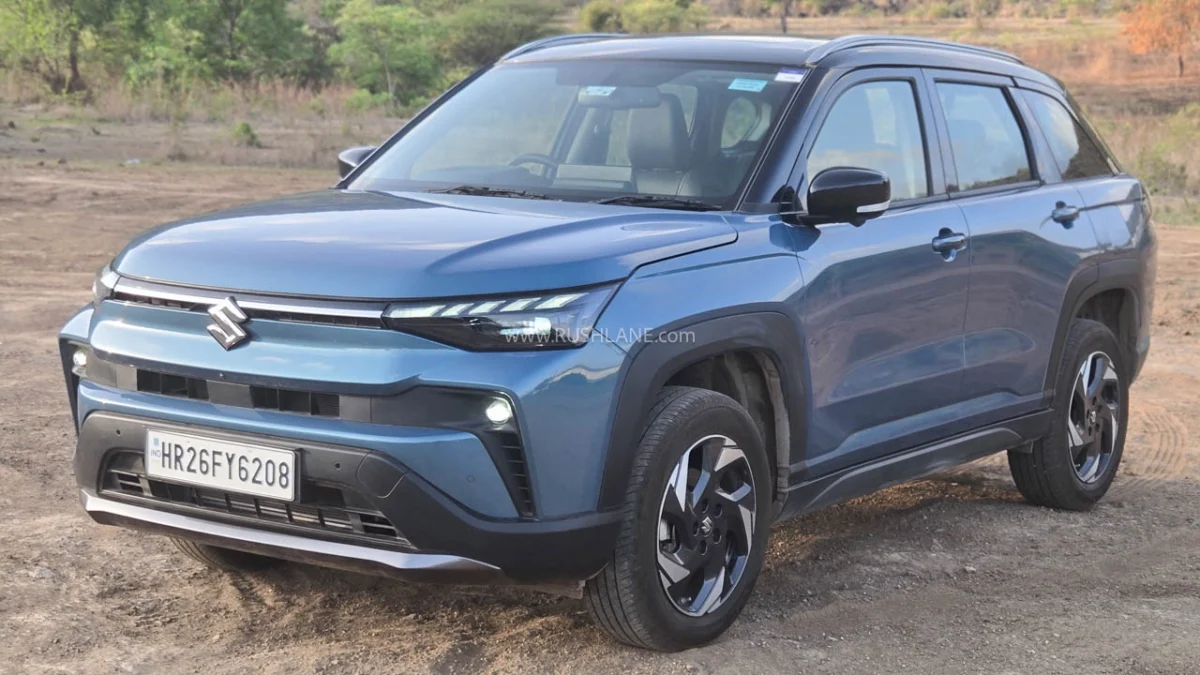
In a move that has sparked significant debate across the Indian automotive landscape, Maruti Suzuki, the country’s largest carmaker, recently introduced its latest offering, the Victoris. While the vehicle itself has been lauded for its cutting-edge hybrid technology and fuel efficiency, one specific omission has dominated headlines: the absence of a factory-fitted spare wheel. In its place, Maruti Suzuki has provided a puncture repair kit as standard equipment across all variants, including Petrol, CNG, and Strong Hybrid models.
This decision marks a pivotal moment in the evolution of the Indian passenger vehicle market, signaling a shift toward global standards where weight reduction and space optimization often take precedence over traditional redundancies. However, following a wave of consumer feedback and market resistance, the company has introduced a comprehensive spare wheel accessory kit. This article provides an in-depth analysis of the controversy, the technical logistics of the new accessory, and the broader implications for the Indian consumer.
Main Facts: The Victoris "No-Spare" Policy
The Maruti Suzuki Victoris was launched as a forward-looking vehicle designed to maximize cabin space and fuel economy. To achieve these goals, engineers opted to remove the traditional spare wheel—a component that typically weighs between 12kg and 18kg and occupies a significant portion of the luggage compartment.
Key Highlights of the Initial Launch:
- Universal Omission: The spare wheel was removed from the entire lineup, ranging from the entry-level petrol variants to the top-tier Strong Hybrid models.
- Standard Replacement: Every Victoris unit comes equipped with a Puncture Repair Kit, which includes a liquid sealant and a portable 12V air compressor.
- The Regulatory Loophole: Under current Indian regulations, manufacturers are permitted to sell vehicles without a spare wheel provided the vehicle is equipped with tubeless tires, a Tire Pressure Monitoring System (TPMS), and a puncture repair kit.
- The Pivot: Due to persistent consumer demand, Maruti Suzuki has now listed a "Spare Wheel Assembly" as a Genuine Accessory (MGA), allowing buyers to retrofit the component at an additional cost.
Chronology of Events: From Innovation to Adaptation
The journey of the Victoris’ spare wheel saga reflects the tension between modern automotive engineering and the practical realities of Indian road conditions.
- Late 2025 – Pre-Launch Strategy: Maruti Suzuki decides to follow European and North American trends by prioritizing weight reduction in the Victoris to meet stringent CAFÉ (Corporate Average Fuel Economy) Phase III norms.
- Early 2026 – The Launch: The Victoris hits the market. While initial reviews are positive regarding performance, "no spare wheel" becomes a viral talking point on social media and automotive forums.
- Mid-2026 – Market Feedback: Reports emerge of customers expressing hesitation in showrooms. Long-distance travelers and rural buyers express concern over the reliability of puncture kits in areas with poor road infrastructure.
- August 2026 – The Accessory Launch: Maruti Suzuki officially releases the "Spare Wheel Kit" through its authorized dealerships, offering a structured solution for those unwilling to rely solely on the sealant kit.
Supporting Data: Costs and Technical Specifications
The decision to offer the spare wheel as an accessory rather than a standard fitment has introduced a new cost structure for buyers. Based on official company data, the cost of "peace of mind" varies significantly depending on the chosen powertrain.
Pricing Breakdown
The core of the accessory is the wheel component itself, which is priced uniformly across the range. However, the hardware required to secure the wheel varies.
| Component | Estimated Price (INR) | Applicability |
|---|---|---|
| Wheel Component (Space Saver) | ₹2,350 | All Variants |
| Tire (Rubber) | Market Rate (Extra) | All Variants |
| Mounting Bracket & Hardware | Varies by Model | Petrol, CNG, Hybrid |
| Luggage Board Modifications | Included in Kit | CNG and Hybrid |
Engineering Challenges by Powertrain
The Victoris is built on a platform that accommodates three distinct types of propulsion, each presenting unique challenges for spare wheel storage:
- Petrol Variants: These are the most straightforward. The chassis already has the mounting points, and no significant modification to the trunk lining is required.
- CNG Variants: The presence of the CNG cylinder in the trunk complicates matters. The accessory kit for the CNG variant includes specialized brackets to mount the wheel either vertically or in a revised sub-floor arrangement, requiring "trimming" of the standard luggage board.
- Strong Hybrid Variants: This is the most complex installation. The high-voltage battery pack is often located near the rear axle or under the trunk floor. To accommodate a spare wheel, Maruti Suzuki has designed a specific assembly that raises the floor height slightly, utilizing a "space-saver" thin-profile wheel to minimize the loss of cargo volume.
Official Responses and Regulatory Context
Maruti Suzuki’s official stance has remained focused on the benefits of the puncture repair kit while acknowledging consumer preference.
The Manufacturer’s Perspective
In various briefings, company representatives have highlighted that the puncture repair kit is an "empowering tool." They argue that jacking up a car on a busy highway or in the rain is a safety hazard and a physically demanding task that many drivers, including the elderly and women, may find difficult. The sealant kit, by contrast, allows the driver to fix a standard nail puncture in under ten minutes without removing the wheel.

The Regulatory Landscape
The Ministry of Road Transport and Highways (MoRTH) amended the Central Motor Vehicles Rules (CMVR) to allow this shift. The regulation specifies that if a vehicle falls under the M1 category (passenger cars up to 8 seats) and is equipped with TPMS and tubeless tires, the spare wheel is no longer a mandatory factory item. Maruti Suzuki has adhered strictly to these guidelines, ensuring the Victoris remains compliant while pushing the boundaries of traditional Indian car configurations.
Implications: Puncture Kits vs. Spare Wheels in the Indian Context
The move by Maruti Suzuki is more than just a cost-cutting or weight-saving measure; it is a test of the Indian consumer’s readiness for global automotive trends. However, the "Indian Context" presents unique challenges that these global trends often overlook.
The Limitations of Puncture Kits
While puncture kits are effective for small punctures (up to 6mm) caused by nails or screws, they are virtually useless in the following scenarios common in India:
- Sidewall Cuts: Sharp stones or deep potholes often cause tears in the tire’s sidewall. Sealants cannot fix these.
- Rim Damage: A heavy impact with a pothole can deform the wheel rim, leading to immediate air loss that a kit cannot rectify.
- The "200 km" Rule: Most sealants are temporary fixes. They are rated for a maximum distance of approximately 200 kilometers and a speed cap of 80 km/h. In vast stretches of the Indian interior, finding a specialized tire shop that can clean the sealant and properly plug the tire within 200km can be a challenge.
Impact on Resale and Insurance
Industry analysts suggest that the absence of a spare wheel could marginally affect resale values in the used car market, where "completeness" is a highly valued trait. Furthermore, insurance companies are currently evaluating whether the use of a puncture kit (which technically modifies the internal state of the tire) affects claims related to tire bursts or subsequent accidents.
Market Trendsetter?
Maruti Suzuki’s move is being closely watched by competitors like Hyundai, Tata Motors, and Mahindra. If the Victoris continues to sell in high volumes despite the spare wheel controversy, it is likely that other manufacturers will follow suit to save costs and improve their fleet-wide fuel efficiency ratings.
Conclusion: A New Era of Choice
The Maruti Suzuki Victoris "spare wheel accessory" launch represents a compromise between a manufacturer’s vision of the future and a consumer’s demand for traditional security. By offering the wheel as an accessory, Maruti has effectively moved the cost and the decision-making process to the customer.
For the urban commuter who rarely leaves city limits and has access to 24/7 roadside assistance, the puncture kit and the resulting increase in fuel efficiency/trunk space may be a welcome trade-off. However, for the highway cruiser and the rural driver, the ₹2,350 (plus tire and mounting costs) investment in a genuine spare wheel remains an essential insurance policy against the unpredictable nature of Indian roads.
As the automotive industry moves toward electrification and increased efficiency, the spare wheel may eventually go the way of the manual window crank—a relic of a different era. For now, however, the Victoris ensures that while the future is here, the safety net of the past is still available for a price.
