

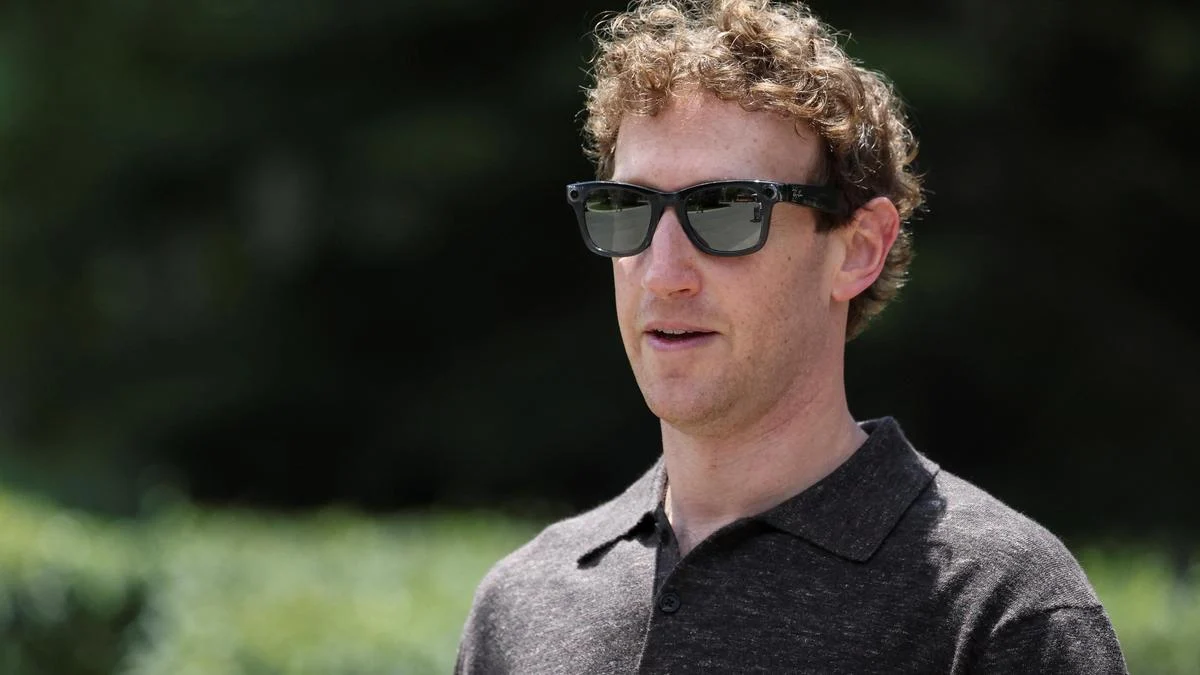
New Delhi, India – August 5, 2026 – In a significant escalation of regulatory pressure, Meta CEO Mark Zuckerberg has issued an apology for the pervasive issues of child abuse content, deepfakes, and operational errors plaguing the company’s platforms. This unprecedented apology came on Wednesday, August 5, 2026, following a high-stakes meeting between Meta’s global leadership team and India’s IT Minister Ashwini Vaishnaw, convened after the Indian government’s stern summons regarding the controversial temporary removal of Prime Minister Narendra Modi’s Facebook post.
The high-level discussions, which also included IT Secretary S. Krishnan, saw the Indian government unequivocally assert that social media giants like Meta are not covered under the ‘intermediary’ definition as per Indian law. This declaration effectively strips Meta of the ‘safe harbour’ protections traditionally afforded to platforms merely hosting third-party content, holding them directly accountable for content dissemination and algorithmic decisions. Government sources revealed that Meta’s team, including Global Affairs officer Joel Kaplan, admitted to extensive payments made for "boosting a certain type of content," expressing regret and apologising for the error.
This development marks a critical juncture in the ongoing dialogue between global technology behemoths and sovereign nations seeking to regulate the digital space, underscoring India’s firm resolve to ensure platform accountability and safeguard its digital ecosystem from misuse and manipulation.
A. Main Facts: A Confrontation Over Accountability
The core of the recent confrontation between the Indian government and Meta revolves around a multifaceted set of grievances, culminating in a direct apology from the company’s top brass. The issues span from grave concerns over child safety to questions of algorithmic neutrality and political interference.
Firstly, Child Sexual Abuse Material (CSAM) has emerged as a paramount concern. India, like many nations, is battling the proliferation of CSAM online, and Meta’s platforms, particularly Instagram, have come under intense scrutiny for their alleged role in facilitating the spread of such horrific content, even through paid advertisements. The government had previously slapped a notice on Meta over this issue, demanding robust measures.
Secondly, the rise of deepfakes and synthetically generated information presents a formidable challenge to public order and national security. The government has expressed serious apprehension regarding the potential for advanced AI-driven manipulation to spread misinformation, incite social unrest, and compromise democratic processes. Meta’s perceived failure to adequately address this threat has been a point of contention.

Thirdly, errors in platform operation and algorithmic bias have been highlighted as critical flaws. This was starkly demonstrated by the temporary restriction of Prime Minister Narendra Modi’s Facebook post. While Meta initially attributed this to a "technical glitch" in its automated content filters, the Indian Ministry of Electronics and Information Technology (MeitY) deemed this explanation "inadequate," demanding a deeper understanding of the algorithms’ operation and potential biases. The government’s firm stance is that if an automated system errs, it is incumbent upon the technology company to improve its tools, rather than citing glitches as an excuse.
Crucially, the government has challenged Meta’s legal standing as a mere ‘intermediary’. By declaring that Meta "selects who receives the content" and admits to "boosting a certain type of content" through paid means, New Delhi argues that the company actively engages in content curation and promotion, thereby transcending the passive role of an intermediary. This reclassification has profound legal implications, as it removes the ‘safe harbour’ protection under the IT Act, which shields intermediaries from liability for user-generated content. Without this protection, Meta could be held directly responsible for objectionable content on its platforms, including those related to national security and public order.
The meeting saw Meta’s global team, led by Global Affairs officer Joel Kaplan, directly engaging with IT Minister Ashwini Vaishnaw and IT Secretary S. Krishnan. The explicit apology from Mark Zuckerberg, communicated through his team, for child abuse content, deepfakes, and operational errors, signifies the gravity of the situation and the mounting pressure on the social media giant to comply with India’s regulatory framework. The admission of "a lot of money paid for boosting a certain type of content" further complicated Meta’s position, raising questions about transparency, algorithmic manipulation, and potential influence on public discourse.
B. Chronology of Events: A Rapid Escalation
The recent high-level confrontation is the culmination of a series of events that rapidly escalated over a few weeks, bringing Meta’s global leadership to New Delhi.
- July 23, 2026: Prime Minister Narendra Modi posts a direct selfie video on Instagram, later shared on Facebook, addressing Indian youth. The post underscores the government’s commitment to crack down on paper leaks, a significant issue amplified by student protests organised by the "Cockroach Janta Party" at the time. The Facebook version of this crucial post is briefly restricted by Meta before being restored.
- Late July 2026: Meta attributes the incident to a "technical glitch" in its automated content filters and issues an apology.
- Late July 2026 (exact date not specified in original, but implied before July 28): The Ministry of Electronics and Information Technology (MeitY) finds Meta’s explanation "inadequate," asserting that a technology company must improve its tools if automated systems are prone to errors.
- July 28, 2026: In response to the growing government scrutiny, Meta implements enhanced and rigorous safeguards for content posted by PM Modi and other prominent accounts. The company outlines these specifics in a letter to the government, indicating multiple levels of checks involving senior company officials.
- Last Month (approx. July 2026): The Indian government slaps a notice on Meta over the issue of Child Sexual Abuse Material (CSAM) being found in paid advertisements on Instagram, escalating concerns beyond just political content.
- Tuesday, August 4, 2026: IT Secretary S. Krishnan speaks to reporters, explicitly outlining the government’s concerns ahead of the anticipated meeting. He states that a range of issues, including CSAM, synthetically generated information (deepfakes), and safeguards for prominent verified accounts, would be taken up. Krishnan questions Meta’s technological capabilities, asking why certain things "have not been working the way they are supposed to work" and demanding clarity on compliance with Indian law. He also emphasizes that the issue extends beyond technical aspects to "national security and public order."
- Wednesday, August 5, 2026:
- Meta’s global team, including Global Affairs officer Joel Kaplan, holds separate meetings with IT Minister Ashwini Vaishnaw and IT Secretary S. Krishnan in New Delhi.
- During these meetings, government sources confirm that Meta CEO Mark Zuckerberg apologises for child abuse content, deepfakes, and operational errors.
- Meta’s team admits to having paid "a lot of money for boosting a certain type of content," expressing regret and apologising for this mistake.
- The government unequivocally communicates to Meta that they are not covered under the ‘intermediary’ definition, thereby removing ‘safe harbour’ protections.
- A Parliamentary standing committee demands a direct apology from Meta chief Mark Zuckerberg over the removal of PM Modi’s post.
- In a letter to the secretary, MeitY, a director of the Lok Sabha secretariat warns that protection and immunity for Mr. Zuckerberg may be withdrawn if no apology is received within three days.
This sequence highlights the government’s systematic approach: from demanding explanations for a specific incident to broadening the scope to systemic issues like child safety and misinformation, culminating in a direct challenge to Meta’s legal status and a demand for personal accountability from its CEO.
C. Supporting Data and Context: The Broader Landscape of Digital Governance
The confrontation with Meta is not an isolated incident but rather a reflection of India’s evolving and increasingly stringent digital governance framework, aiming to assert greater control over global tech platforms operating within its borders.

The ‘Intermediary’ Dilemma and Safe Harbour:
At the heart of the legal argument is the definition of an ‘intermediary’ under India’s Information Technology (IT) Act, 2000, and its subsequent rules. An intermediary is generally understood as an entity that merely provides a service to users, such as hosting content, without actively modifying or originating it. The ‘safe harbour’ provision protects such intermediaries from liability for third-party content. However, the Indian government’s assertion that Meta "selects who receives the content" and admits to "boosting a certain type of content" fundamentally challenges this definition. When a platform’s algorithms actively curate, promote, or amplify content, especially paid content, it blurs the line between a passive host and an active publisher or editor. This reclassification has massive implications, as it would hold Meta directly accountable for content that violates Indian law, including those pertaining to national security, public order, and obscenity. This move aligns with a global trend where governments are pushing back against the "platform immunity" argument, demanding greater responsibility from tech giants for the content and its impact.
The Scourge of CSAM:
Child Sexual Abuse Material (CSAM) is a global crisis, and its prevalence on social media platforms is a grave concern for governments worldwide. India has robust laws against child exploitation, and the government’s notice to Meta regarding CSAM in paid advertisements on Instagram highlights a systemic failure in content moderation and ad vetting processes. The fact that such abhorrent material could be monetized through the platform underscores a critical lapse in Meta’s internal controls and its commitment to child safety. This issue transcends mere "technical glitches" and points to a deeper ethical and operational challenge for the company.
Deepfakes and Algorithmic Manipulation:
The proliferation of deepfakes and synthetically generated information poses a significant threat to information integrity, individual privacy, and democratic processes. These advanced forms of misinformation can be used to create highly convincing but fabricated videos or audio, impersonate public figures, or spread malicious narratives. India, with its vast and diverse population, is particularly vulnerable to such manipulation, which can incite communal tensions, spread political propaganda, or disrupt public order. The government’s demand for Meta to address these issues effectively is a call for greater technological sophistication and proactive measures to identify and mitigate such threats, moving beyond reactive content removal.
Algorithmic Bias and Transparency:
The restriction of PM Modi’s post brought to the forefront the issue of algorithmic bias and the lack of transparency in how platforms make content moderation decisions. While Meta cited a "technical glitch," the government’s "inadequate" response signals a demand for more than just surface-level explanations. IT Secretary S. Krishnan explicitly asked for clarification on "algorithmic bias" and "how their algorithm operates," highlighting the need for platforms to be transparent about the rules and logic governing their content distribution and moderation systems. The concern extends to whether algorithms might inadvertently or intentionally suppress certain viewpoints or amplify others, thereby influencing public discourse and political outcomes.
National Security and Public Order:
Government sources emphatically stated that the issue is not just about technical aspects but about "national security and public order." This elevates the conversation beyond mere platform management to matters of sovereign importance. Any content or algorithmic decision that has the potential to destabilize society, incite violence, or undermine national interests falls squarely under this purview. By invoking national security, the government underscores the seriousness with which it views the responsibilities of platforms operating within its jurisdiction and signals a willingness to take stringent action if these concerns are not adequately addressed.
D. Official Responses and Demands: An Ultimatum Delivered
The Indian government’s unified and firm response highlights its unwavering resolve to hold global tech companies accountable. The official pronouncements and demands have been clear, direct, and carry significant weight.

IT Minister Ashwini Vaishnaw’s Stance: As the Union Minister for Electronics and Information Technology, Vaishnaw’s role was central in conveying the government’s non-negotiable expectations. While specific quotes from him post-meeting were not detailed in the original article, his ministerial position implies he presided over the stern warning about Meta’s legal status and the demand for accountability. The fact that Meta’s global team met him directly underscores the high political significance attached to the issue.
IT Secretary S. Krishnan’s Articulated Concerns: Krishnan was particularly vocal, clearly articulating the government’s multi-pronged concerns. His statements on August 4, 2026, served as a prelude to the demands made during the meeting:
- Comprehensive Issue Addressing: He emphasized that "a range of issues" would be taken up, specifically naming CSAM, synthetically generated information (deepfakes), and safeguards for prominent personalities’ verified accounts.
- Technological Competence: Krishnan challenged Meta’s technological prowess, stating, "Meta, as one of the leading technology companies in the world, should have the technology to address such issues effectively." He demanded to understand "why some of these things have not been working the way they are supposed to work, and what are the challenges." This implies a belief that Meta possesses the capability but perhaps lacks the will or focus to implement solutions effectively in India.
- Compliance with Indian Law: He stressed the need for "a clear understanding of India’s law, what compliance must look like, and a clearer understanding of how they intend to make sure compliance happens." This is a direct mandate for Meta to adapt its global policies and technical solutions to India’s specific legal and regulatory framework.
- National Security and Public Order: Krishnan reiterated the government’s core concern, stating that the issue transcends technicalities and touches upon "national security and public order." He indicated that Meta would be "categorically asked to clarify issues around algorithmic bias, how their algorithm operates and the company’s role in public order."
MeitY’s Inadequate Explanation Verdict: The Ministry of Electronics and Information Technology (MeitY) consistently maintained that Meta’s initial explanation of a "technical glitch" for the Prime Minister’s post removal was "not reasonable" and "inadequate." This firm stance underscored the government’s demand for more substantive explanations and robust solutions rather than superficial apologies. They argued that if automated systems are flawed, a technology company’s primary responsibility is to improve them, not to merely cite errors.
Parliamentary Standing Committee’s Ultimatum: Adding a significant political dimension, a Parliamentary standing committee on August 5, 2026, directly demanded an apology from Meta chief Mark Zuckerberg himself. The threat, conveyed via a director of the Lok Sabha secretariat to MeitY, was stark: "protection and immunity for Mr. Zuckerberg may be withdrawn if there is no apology in three days." This unprecedented move signifies the Indian legislative body’s seriousness in holding Meta’s top global executive personally accountable and demonstrates the potential for severe legal repercussions if compliance is not met. The withdrawal of immunity could expose Zuckerberg to potential legal action under Indian law.
Government’s Intent to Engage Global Leadership: The decision to summon Meta’s top global executives, rather than just local representatives, was a deliberate strategic move. As stated by government sources, the intent was to ensure that "Meta’s leadership – all the way to the top – is made fully aware of concerns being raised by Indian authorities." This underscores the Centre’s desire for direct engagement with Meta’s international decision-makers on platform accountability, bypassing layers of bureaucracy and local teams.
E. Implications: A Precedent for Digital Governance
The recent showdown between the Indian government and Meta carries far-reaching implications, not only for Meta’s operations in India but also for the broader landscape of digital governance and the relationship between global tech giants and sovereign nations.

Heightened Regulatory Scrutiny and Compliance Costs for Meta:
For Meta, the immediate implication is a significant increase in regulatory scrutiny and potentially substantial compliance costs. The explicit apology from Zuckerberg for child abuse content, deepfakes, and operational errors, coupled with the admission of paid content boosting, puts Meta squarely in the government’s crosshairs. The company will likely need to invest heavily in bolstering its content moderation teams, enhancing AI-driven detection systems for CSAM and deepfakes, improving algorithmic transparency, and aligning its internal policies with Indian law. The government’s firm stance on the ‘intermediary’ definition means Meta might face direct legal liability for a wider range of content, necessitating a fundamental shift in its operational philosophy within India. The enhanced safeguards implemented for prominent accounts like PM Modi’s could become a template for other high-profile users, adding layers of complexity to moderation workflows.
A Precedent for Other Big Tech Companies:
This assertive approach by the Indian government sets a powerful precedent for other global social media and technology companies operating in India. The message is clear: India will not hesitate to challenge the ‘safe harbour’ protections if platforms are perceived to be actively curating or promoting content, or if they fail to address critical issues like child safety and misinformation. Other tech giants, including Twitter (now X), Google, and Amazon, will be closely watching these developments and are likely to proactively review their own compliance mechanisms and legal interpretations within India to avoid similar confrontations. This could usher in an era of stricter enforcement and greater accountability across the board for big tech in one of the world’s largest digital markets.
Shaping India’s Digital Sovereignty:
The incident underscores India’s growing assertion of its digital sovereignty. As a rapidly digitizing nation with a massive online user base, India is keen to ensure that its digital ecosystem remains secure, safe, and aligned with national interests and laws. The government’s emphasis on "national security and public order" reflects a strategic intent to regulate online platforms as critical infrastructure rather than mere content hosts. This approach is part of a broader global trend where nations are seeking to reclaim regulatory control over digital spaces from predominantly US-based tech companies. This could lead to the formulation of more comprehensive digital laws and regulations in India, potentially influencing global regulatory discussions.
Impact on User Trust and Platform Credibility:
The public apology and the revelations about paid content boosting and systemic failures in addressing child abuse and deepfakes could erode user trust in Meta’s platforms. Transparency and accountability are crucial for maintaining user confidence, and these admissions highlight significant operational and ethical lapses. For Indian users, concerns about data privacy, content manipulation, and the safety of online spaces will likely intensify, potentially influencing platform choices and usage patterns.
The Ongoing Debate on Algorithmic Transparency:
The government’s explicit demand for clarity on "algorithmic bias" and "how their algorithm operates" pushes the global conversation on algorithmic transparency further. This is a complex technical and ethical challenge, as proprietary algorithms are often considered trade secrets. However, the increasing impact of these algorithms on public discourse, political processes, and individual experiences necessitates greater oversight. India’s firm stance could catalyze global efforts towards establishing standards for algorithmic audits, explainability, and accountability, particularly in markets deemed critical for national interests.
In conclusion, the direct apology from Meta’s CEO, the government’s redefinition of ‘intermediary’ status, and the threat of withdrawing immunity for Mark Zuckerberg mark a watershed moment in digital governance. It signals a new era where global tech giants must navigate a more assertive regulatory landscape in key markets like India, emphasizing local compliance, ethical operation, and unwavering accountability for the vast power they wield over information and public discourse. The coming months will reveal the extent of Meta’s operational changes and the lasting impact of this confrontation on the future of digital platforms in India and beyond.
