

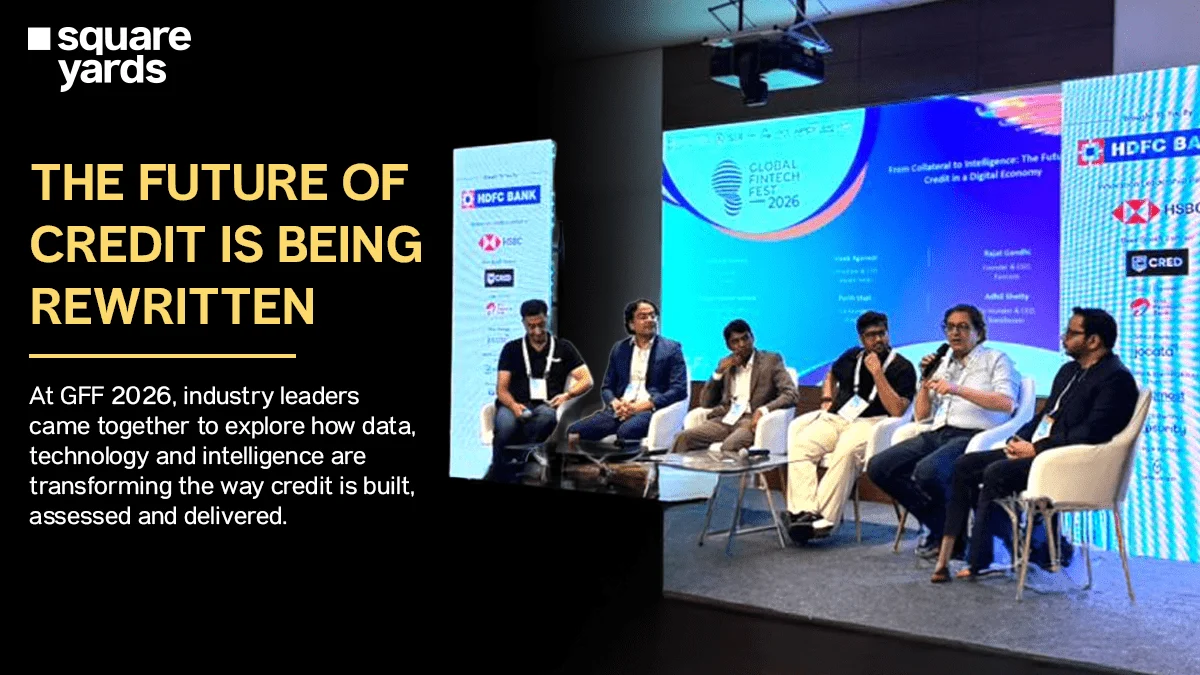
MUMBAI – The Global Fintech Fest (GFF) 2026 has once again cemented its status as the premier crossroads for financial innovation, drawing over 50,000 delegates to discuss the hyper-acceleration of the digital economy. Amidst a flurry of product launches and policy announcements, one particular session captured the zeitgeist of the era: “From Collateral to Intelligence: The Future of Credit in a Digital Economy.”
This landmark panel discussion, featuring prominent industry figures including Mr. Vivek Agarwal, explored a fundamental shift in the banking paradigm. The conversation signaled the end of the "Collateral Age"—where credit was reserved for those with tangible assets—and the dawn of the "Intelligence Age," where data-driven insights democratize access to capital.
Main Facts: The Death of the Asset-Backed Era
The core thesis of the GFF 2026 panel was simple yet profound: the traditional reliance on physical collateral (such as real estate, gold, or machinery) is no longer the primary gatekeeper of credit. In a world where digital footprints are ubiquitous, "Intelligence" has become the new currency.
The Shift to Data-Centric Lending
For decades, the banking sector operated on a "look-back" model, assessing creditworthiness based on historical balance sheets and physical security. However, as highlighted by the panel, the modern financial ecosystem is pivoting toward a "look-forward" model. This involves leveraging real-time data, behavioral analytics, and predictive AI to assess a borrower’s future ability to repay, rather than their current asset pool.
The Role of Digital Intelligence
Digital intelligence refers to the synthesis of vast datasets—ranging from GST filings and cash flow statements to digital transaction histories and even social behavior patterns. The panel argued that this intelligence provides a more accurate, granular, and dynamic view of risk than a static property deed ever could.
Key Participant: Vivek Agarwal
A central figure in this dialogue, Mr. Vivek Agarwal, provided critical insights into how technology-led approaches are bridging the gap between traditional banking and the unbanked or underbanked segments. His contributions underscored the necessity of a "connected ecosystem," where data flows seamlessly between platforms to create a holistic profile of the borrower.
Chronology: The Evolution of Credit (2020–2026)
To understand the gravity of the discussions at GFF 2026, one must look at the rapid evolution of the lending landscape over the last six years.
2020–2022: The Digitization of Onboarding
Spurred by the global pandemic, financial institutions moved from physical to digital. This era was defined by Video KYC (Know Your Customer), digital signatures, and the initial adoption of API-based lending. Credit was still largely collateral-based, but the process of getting that credit became faster.
2023–2024: The Rise of Open Finance
The implementation of the Account Aggregator (AA) framework and Open Banking protocols allowed for the first real exchange of data. Lenders began looking at bank statements digitally, reducing the time to disburse loans from weeks to days. "Cash-flow-based lending" started to gain traction among MSMEs (Micro, Small, and Medium Enterprises).
2025: The AI Integration Phase
By 2025, Generative AI and Machine Learning models became standard in risk assessment. Banks began moving away from generic credit scores (like CIBIL) toward proprietary "Intelligence Scores" that updated in real-time based on a business’s daily digital sales.
2026: The Intelligence Era (Current State)
As showcased at GFF 2026, the industry has reached a tipping point. Credit is now "embedded" into the point of need. Whether it is a small retailer buying inventory or a consumer purchasing a high-value service, credit is extended instantly based on the "Intelligence" of the transaction ecosystem, often without the borrower ever stepping into a bank or pledging an asset.
Supporting Data: The Impact of Intelligence-Driven Models
The transition discussed at GFF 2026 is backed by staggering industry metrics. According to data presented during the summit, the shift toward intelligence-based credit has fundamentally altered the efficiency of the global economy.
- Reduction in Approval Times: In 2021, the average turnaround time (TAT) for an MSME loan was 15 to 20 days. By mid-2026, intelligence-driven platforms have reduced this to under 15 minutes for pre-qualified borrowers.
- Financial Inclusion Growth: Intelligence-based models have allowed for a 40% increase in credit penetration among first-time borrowers who lacked traditional collateral.
- Default Rate Accuracy: AI-driven "Intelligence" models have proven to be 25% more accurate in predicting defaults compared to traditional collateral-based underwriting, as they account for real-time market volatility.
- Cost of Acquisition (CAC): The cost for banks to acquire a customer has dropped by an estimated 60% due to the automated nature of digital intelligence gathering, allowing for lower interest rates for the end consumer.
| Metric | Traditional Model (2020) | Intelligence Model (2026) |
|---|---|---|
| Primary Basis | Physical Collateral | Digital Data/AI Insights |
| Loan Approval Time | 2-3 Weeks | < 30 Minutes |
| Documentation | Physical/Paper-heavy | 100% Paperless/API-driven |
| Risk Assessment | Historical/Static | Predictive/Real-time |
Official Responses: Insights from the GFF 2026 Stage
The panel "From Collateral to Intelligence" featured a high-level exchange between regulators, fintech founders, and banking veterans.
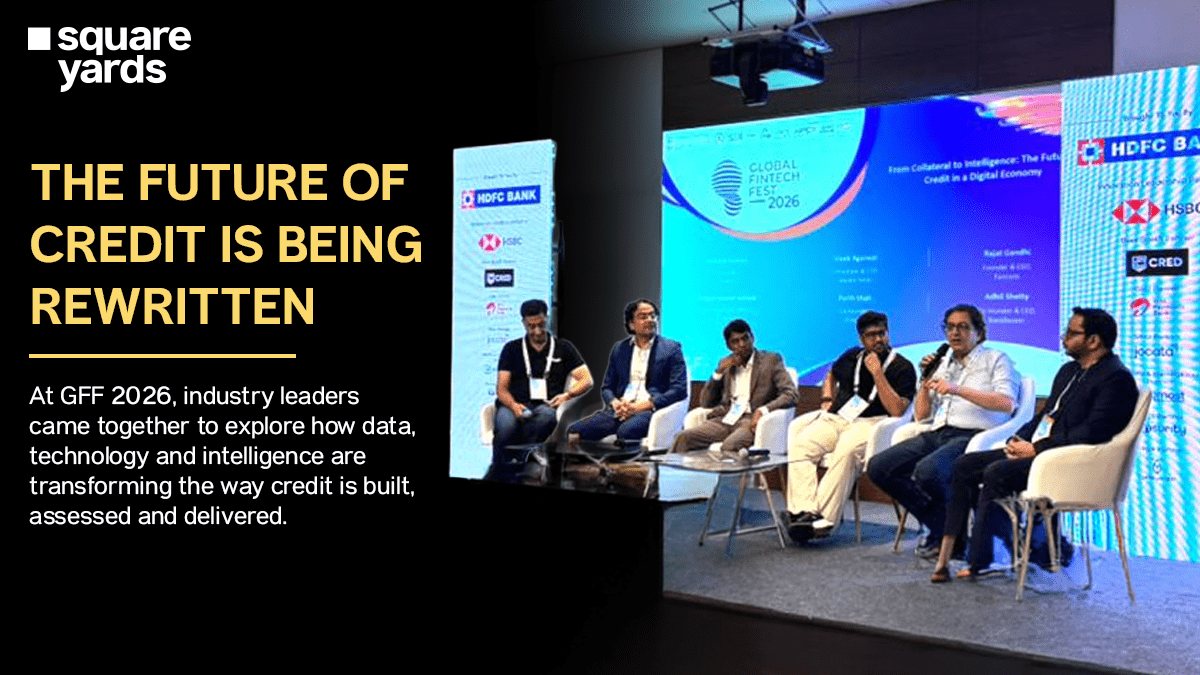
The Perspective of Vivek Agarwal
Mr. Vivek Agarwal emphasized that the future of credit is not just about "more data," but about "smarter data." He noted:
"We are moving into an era where the connectivity of the financial ecosystem determines the health of the economy. By moving from collateral to intelligence, we are essentially unlocking the ‘trapped value’ in small businesses that have great cash flows but no land to pledge. This is the true meaning of a digital economy."
Regulatory Sentiment
While official names of regulators were part of the broader GFF discourse, the consensus from the policy side was one of "cautious optimism." Representatives from central banks highlighted that while intelligence-driven credit is revolutionary, it must be balanced with robust data privacy laws. The "Consent Architecture" was cited as the most critical component—ensuring that users own their data and choose who gets to see it for credit purposes.
Industry Leaders’ Consensus
The panel concluded that the "Fintech-Bank Partnership" is no longer optional. Traditional banks provide the balance sheet and regulatory trust, while fintechs provide the "Intelligence Engine." This synergy is what will drive the next $10 trillion in global credit growth.
Implications: A New Social Contract for Credit
The shift discussed at GFF 2026 has far-reaching implications that extend beyond the balance sheets of banks. It suggests a rewriting of the social contract between lenders and borrowers.
1. The Democratization of Entrepreneurship
In the collateral-based world, wealth generated wealth. If you owned property, you could get a loan to start a business. In the intelligence-based world, merit and performance generate wealth. A young entrepreneur with a high-growth digital storefront can now access the same capital as a legacy landowner.
2. The Rise of "Credit-as-a-Service" (CaaS)
We are seeing the rise of invisible banking. Credit is becoming a feature of other platforms. For example, logistics platforms are now using the "Intelligence" of a driver’s delivery history to offer instant vehicle insurance or repair loans. The loan is no longer a destination; it is a seamless part of the workflow.
3. Ethical Challenges and Algorithmic Bias
The panel did not shy away from the risks. As we rely more on "Intelligence," there is a risk of algorithmic bias. If the data fed into the AI reflects historical prejudices, the "Intelligence" might unfairly exclude certain demographics. GFF 2026 participants called for "Explainable AI" (XAI) in lending, where a computer’s decision to deny credit can be audited and explained in human terms.
4. The Resilience of the Financial System
By using real-time intelligence, the financial system becomes more resilient to shocks. During the 2008 crisis, banks didn’t know the quality of their collateral until it was too late. In 2026, intelligence-driven models allow for "dynamic provisioning," where banks can see a downturn in a specific sector in real-time and adjust their risk appetite instantly.
Conclusion: Shaping the Next Phase of Fintech
The Global Fintech Fest 2026 has made one thing clear: the transition from collateral to intelligence is irreversible. As digital adoption continues to accelerate across the globe, the ability to harness data and transform it into actionable credit intelligence will be the defining competitive advantage for financial institutions.
Conversations led by experts like Vivek Agarwal highlight a future that is more inclusive, efficient, and transparent. However, the success of this "Intelligence Era" will depend on the industry’s ability to maintain public trust through rigorous data security and ethical AI practices.
As the curtains close on GFF 2026, the financial world leaves Mumbai with a new mandate: to stop looking at what a borrower owns, and start looking at what a borrower is capable of achieving. In the digital economy, intelligence is not just a tool—it is the foundation of the new global credit architecture.
