

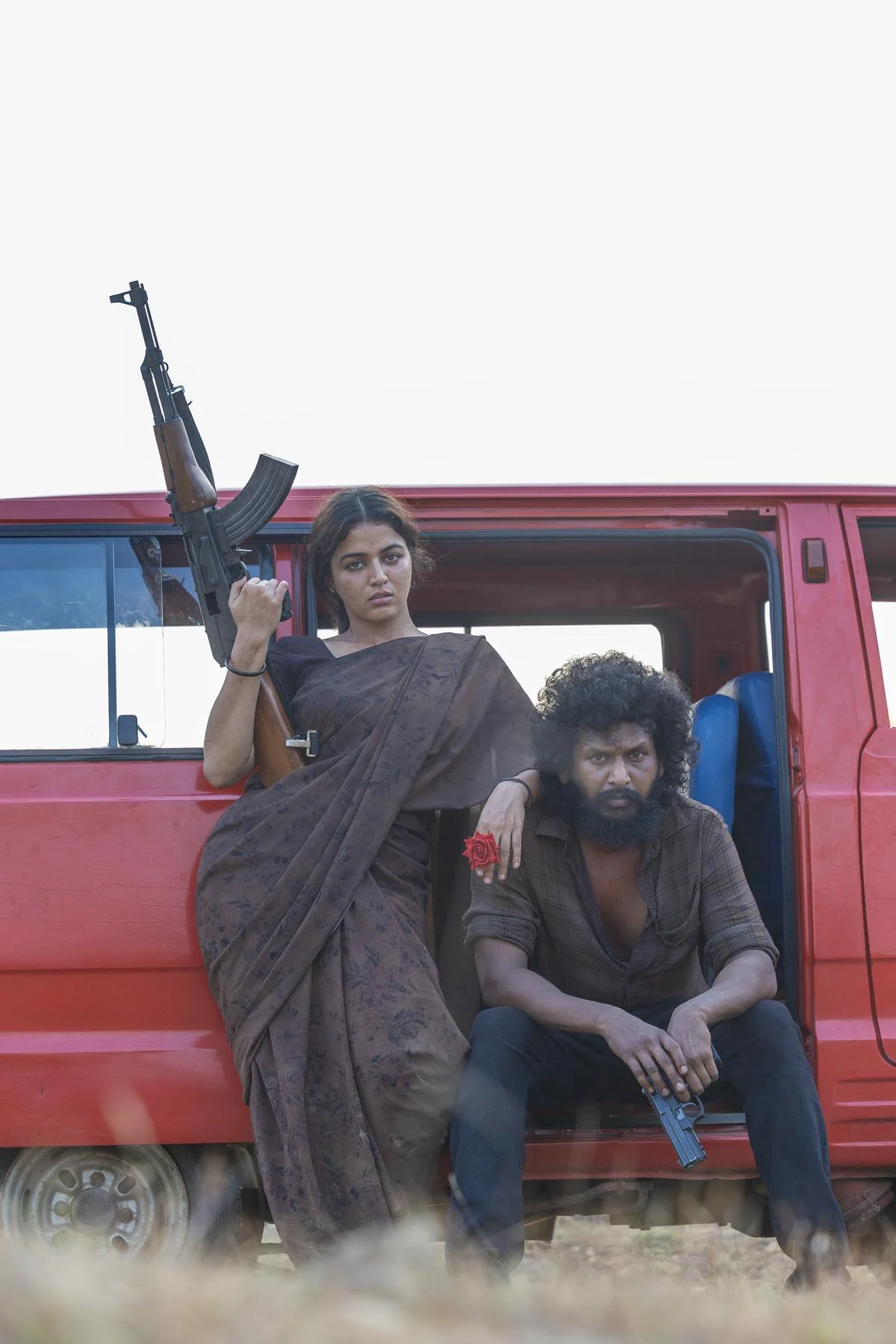
Filmmaker Arun Matheswaran, who burst onto the scene with the critically acclaimed debut Rocky, has carved a niche for himself exploring the darker facets of human nature and orchestrating cinematic violence with a raw, unvarnished intensity. However, with each subsequent project, there’s been a discernible shift, a sense of diminishing returns as the films increasingly lean towards a more stylized, less grounded approach. His latest offering, DC, starring Lokesh Kanagaraj in his debut lead role and Wamiqa Gabbi, continues this trajectory, presenting a visually arresting and action-packed experience that, unfortunately, falters in its emotional resonance.
The Genesis of "DC": A Violent Symphony in the Making
DC, a title derived from its two central protagonists, Devadas (Lokesh Kanagaraj) and Chandra (Wamiqa Gabbi), positions itself as a brutal exploration of depravity and a celebration of cinematic mayhem. Matheswaran’s directorial vision, evident from his earlier works, consistently grapples with the extremes of human behavior, often juxtaposing them with explosive action sequences. While Rocky managed to find a compelling, albeit unsettling, narrative thread within its violence, DC appears to be a film that prioritizes spectacle over substance, with even moments of potential lyricism seemingly existing solely to propel the next set piece.
The film introduces Devadas as a gangster steeped in the realities of a violent world, yet burdened by a profound disillusionment with societal injustice. His existence is a testament to a life forged in conflict and bloodshed. Conversely, Chandra’s story is one of profound trauma, a stark depiction of a child sold into sex work at a tender age and subjected to eighteen years of relentless exploitation within the confines of her existence. Matheswaran attempts to establish a stark contrast between these two characters: the beast forged in war and mayhem, and the caged spirit brutalized daily. The narrative hinges on the eventual convergence of their paths and the transformative impact they might have on each other.

A Narrative of Contrasts and Complications
At its core, DC attempts to reimagine the classic "Devadas" narrative, drawing parallels to Sarat Chandra Chattopadhyay’s seminal work. However, Matheswaran injects a significant dose of his signature grit. The question posed is: what if Devadas’s destined love, Parvathy, is lost before their romance can even blossom or be contemplated? What if this Devadas is not a melancholic figure but a hardened gangster with a volatile temperament? And what if his fate is intertwined not with Parvathy, but with another woman, equally scarred by her own arduous battles? In this twisted retelling, Devadas is reimagined as a sort of anti-hero, a Robin Hood figure operating outside the bounds of law.
The film’s narrative unfolds with Devadas, a gangster under the purview of the cop-turned-gangster Arasu (played by Thalaivasal Vijay), engaging in a violent confrontation. After a successful raid on a police ammunition consignment in Gobichettipalayam and exacting revenge upon a cop, Devadas and his associates seek refuge in a Chennai lodge. It is here that Devadas encounters Parvathy (Sanjana Krishnamoorthy), a bar singer. This encounter, initially framed with the melodic touch of Ilaiyaraaja, tragically takes a dark turn. Simultaneously, the film begins to weave in the harrowing story of Chandra, a sex worker.
The Spectacle of Violence: A Double-Edged Sword
The initial half of DC demonstrates Matheswaran’s prowess in crafting compelling action sequences. The film offers ample scope for character development within its gritty setting, but it is the meticulously choreographed action set pieces that truly seize the audience’s attention. Every shootout, including a particularly thrilling engagement at a wedding hall, is executed with an exhilarating intensity. The mini-revenge arcs undertaken by Devadas and Chandra as they navigate their cat-and-mouse game with the police serve as the film’s standout moments.

However, as the film progresses, the relentless barrage of violence begins to feel repetitive and emotionally hollow. The sheer volume of bullets and the seemingly endless demise of police officers create a sense of detachment. The narrative often falls into a predictable pattern: Devadas and his crew face imminent danger, escape it, only to inevitably cross paths with the police again, leading to another eruption of gunfire. This repetitive cycle lends the latter half of the film the feeling of a stylized, albeit violent, game of cops and robbers, lacking genuine stakes.
The Erosion of Emotional Depth: A Critical Flaw
The most significant criticism leveled against DC is its weakened emotional core. While the characters are presented as morally ambiguous, unafraid to resort to violence for survival, the film struggles to forge a genuine connection with their plight. A pivotal moment sees Das questioning Chandra about her knowledge of him. Her detailed recitation of his past – his mother’s death, his strained relationship with his father, the tragic demise of Parvathy and his friend Sebastian, and his fear of losing her – encapsulates everything that defines Das’s character. This exposition, while comprehensive, feels more like a character summary than an organic revelation, highlighting the film’s struggle to translate emotional complexity into compelling drama.
The film attempts to build a foundation for the relationship between Das and Chandra, but the subtext, while present, is insufficient to sustain sustained audience interest. The suggestion that Parvathy reminded Das of his late mother, and that Chandra, in turn, reminds him of Parvathy, is a fragile thread upon which their bond is hung. For Chandra, who finds solace in a plastic flower, Das represents a knight in shining armor, someone who sees beyond her physical existence. Matheswaran seems to believe this is sufficient motivation for the audience to champion their bloody crusade against the police, simply because "the cops are bad."

Missed Opportunities for Dramatic Resonance
A more adept storyteller might have found opportunities to inject moments of stillness and introspection, allowing for richer dramatic development. Scenes set by the seashore or during their numerous journeys in a red Omni van could have been utilized to craft more meaningful dialogue and deepen the characters’ connection. Instead, the film prioritizes forward momentum, often at the expense of emotional nuance.
Anirudh’s Score: A Saving Grace Amidst the Chaos
Amidst the film’s narrative shortcomings, ace composer Anirudh Ravichander emerges as a significant contributor to DC‘s impact. The composer unleashes a formidable arsenal of musical compositions, blending classical arrangements with energetic rock anthems like "Ain’t Nobody" and "Bum Baa Diga Diga." His score infuses the film with a pulsating energy, almost allowing DC to achieve its full potential. The "Raga of Revenge" motif, in particular, becomes a haunting echo of the characters’ violent journey.
Technical Brilliance: A Feast for the Senses
Beyond the music, the technical aspects of DC are undeniably impressive. Cinematographer Mukesh G, editor GK Prasanna, and production designer Kannan S collaborate to create a visually rich and immersive world. The film is bathed in vibrant colors and striking contrasts, contributing to its overall aesthetic appeal. The editing ensures a brisk pace, and many of the frames are visually arresting, contributing to the film’s overall impact.

Performances: A Mixed Bag of Strengths and Limitations
Wamiqa Gabbi delivers a performance that is consistent with her established talent, bringing depth and intensity to her portrayal of Chandra. The true surprise, however, is Lokesh Kanagaraj. While his character, Devadas, feels somewhat tailored to his acting capabilities, Kanagaraj imbues the role with a raw intensity, holding the screen with his presence even when the character’s emotional arc is underdeveloped. The lingering images of their solitary gazes, set against the backdrop of Anirudh’s powerful score, are a testament to their efforts.
Conclusion: A Film Forever Flirting with its Potential
Ultimately, DC is a film that operates on the precipice of greatness, constantly flirting with its own potential. It is a visually stunning and audibly exhilarating experience, replete with some of the most expertly crafted action sequences in recent Tamil cinema. However, its inability to translate its compelling premise into a truly resonant emotional narrative prevents it from achieving its loftier ambitions. While the visceral thrill of the violence and the impressive technical execution might satisfy some viewers, those seeking a deeper exploration of human depravity and its consequences may find themselves wanting. DC stands as a testament to Arun Matheswaran’s undeniable talent for crafting cinematic spectacle, but it also serves as a stark reminder that even the most explosive action cannot entirely compensate for a hollow heart.
