

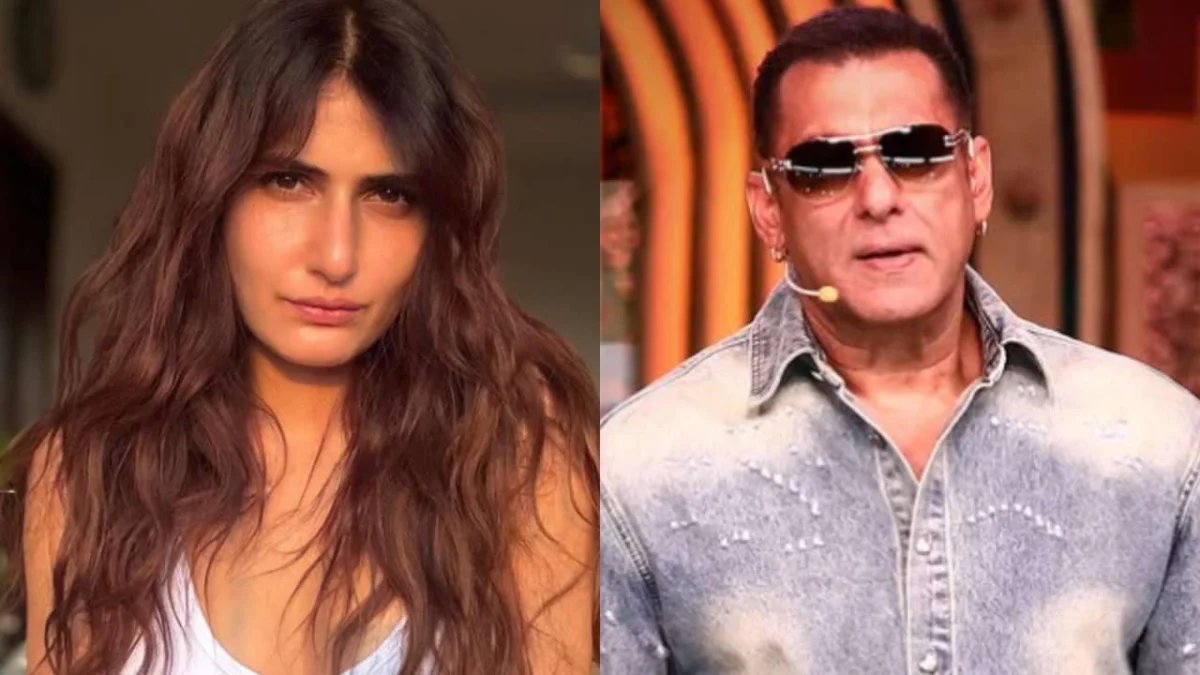
Mumbai, India – [Date of Publication] – Bollywood actress Fatima Sana Shaikh has publicly lauded superstar Salman Khan for his robust and decisive response to online trolls during a recent episode of Bigg Boss 20. Praising Khan’s "mud tod jawaab" (a fitting and decisive answer), Shaikh emphasized the significant impact celebrities in powerful positions can have by speaking out against the pervasive issues of trolling, body-shaming, and age-shaming that plague the digital landscape. Her remarks come as Khan, the long-standing host of the popular reality show, used the "Weekend Ka Vaar" segment to directly address and condemn the online vitriol directed at him and, more broadly, at individuals in the public eye.
Shaikh, who is slated to appear on an upcoming "Weekend Ka Vaar" episode to promote her web series "Hunkkaar: The Roar," expressed her admiration for Khan’s stance. In a pre-recorded segment, she stated, "Jiss tarike se aapne trolls ko iss baar muh tod jawaab diya hai, it’s a huge thing. Kyunki, aapke position mein koi aisi baat karta hai, koi muddon pe khada hota hai, woh bahut hi bada impact deta hai logon pe." (The way you shut down trolls this time, it’s a huge thing. Because when someone in your position speaks up, takes a stand on these issues, it leaves a lasting impact on people.) Her sentiments underscore a growing recognition within the industry of the responsibility that comes with a prominent platform and the potential for influential figures to effect positive change.
)
The Genesis of Khan’s Stand: Addressing Persistent Online Abuse
The impetus for Shaikh’s praise, and indeed for Khan’s powerful rebuttal, stemmed from a recent "Weekend Ka Vaar" episode of Bigg Boss 20. The episode saw Salman Khan directly confront and dismantle the barrage of negative comments and personal attacks he has been subjected to online. These attacks have predominantly focused on his physical appearance, his age, and his personal life – themes that have become unfortunately commonplace in the relentless scrutiny of celebrities.

Khan, known for his candid and often unvarnished approach, did not shy away from addressing these criticisms head-on. In a particularly poignant moment, he symbolically shed his shirt and hat, a gesture interpreted by many as a powerful statement against superficial judgments based on physical attributes. This act served as a prelude to a more profound discussion about the damaging nature of online trolling. He questioned the ethics of individuals profiting from the act of insulting others, highlighting the financial incentives that often fuel such negativity. Furthermore, Khan broadened his condemnation to encompass the specific harms of body-shaming and age-shaming, making it unequivocally clear that celebrities, despite their public profiles, should not be expected to endure relentless personal attacks.
)
Beyond Personal Grievances: A Broader Call Against Cyberbullying and Shaming
Salman Khan’s address transcended a mere defense of his own person. He skillfully pivoted to a more universal message, touching upon the societal impact of online abuse, particularly the insidious nature of body-shaming and age-shaming. His commentary also extended to the particularly vulnerable position women find themselves in online, especially after childbirth.
)
While deliberately not naming any specific individual, Khan referenced the recent public discourse surrounding women’s bodies post-pregnancy. He articulated a clear and empathetic message: that weight fluctuations after childbirth are a natural and normal occurrence. He further emphasized that women should be afforded the autonomy to decide when they are ready to return to their professional lives, without facing undue pressure or judgment. This nuanced perspective resonated with many, offering a much-needed counter-narrative to the often harsh and unforgiving standards imposed by online communities.
)
The Bigg Boss host also extended a pointed message to the paparazzi, a crucial element in the celebrity ecosystem. He decried the practice of filming women, particularly in what he described as "inappropriate ways." Khan revealed a personal connection to this issue, sharing that even his own niece had been subjected to such invasive and disrespectful behavior. He implored photographers to refrain from posting such content, even for the sake of generating views and clicks, highlighting the ethical responsibility that accompanies their profession.
)
The "Mud Tod Jawaab": A Strategic and Impactful Rebuttal
The phrase "mud tod jawaab," as used by Fatima Sana Shaikh, aptly encapsulates the nature of Salman Khan’s response. It suggests a rebuttal that is not only strong but also effective in silencing the detractors and establishing a clear boundary. In the context of celebrity culture, where public figures are often subjected to relentless scrutiny and criticism, such a decisive stand can be incredibly empowering.
)
Chronology of Events and Statements:
)
- Recent Bigg Boss 20 "Weekend Ka Vaar" Episode: Salman Khan directly addresses online trolls.
- Khan’s On-Air Rebuttal: He removes his shirt and hat, criticizes those who profit from insults, and speaks against body-shaming and age-shaming. He also addresses the societal pressures on women post-pregnancy.
- Khan’s Message to Paparazzi: He condemns inappropriate filming of women and urges responsible reporting.
- Upcoming Bigg Boss 20 "Weekend Ka Vaar" Episode: Fatima Sana Shaikh is scheduled to appear.
- Fatima Sana Shaikh’s Statement: She praises Khan’s "mud tod jawaab" and highlights the impact of celebrities speaking out.
Supporting Data: The Pervasiveness of Online Trolling and Shaming
The concerns raised by both Salman Khan and Fatima Sana Shaikh are not isolated incidents but reflect a broader societal problem. Studies and reports consistently highlight the escalating nature of online harassment and cyberbullying.
)
- Global Prevalence: Numerous surveys indicate that a significant percentage of internet users have experienced or witnessed online harassment. This includes cyberbullying, hate speech, and targeted personal attacks.
- Impact on Mental Health: The psychological toll of online trolling and shaming can be severe, leading to anxiety, depression, low self-esteem, and in extreme cases, suicidal ideation. For public figures, the constant barrage of negativity can be particularly debilitating, impacting their professional lives and personal well-being.
- Body-Shaming and Age-Shaming Statistics: While specific statistics for these forms of shaming are harder to isolate, the prevalence of unrealistic beauty standards perpetuated by social media and the cultural emphasis on youth contribute to widespread body image issues and age-related anxieties. Women, in particular, often face intense scrutiny regarding their appearance as they age or after undergoing significant life changes like childbirth.
- The Role of Social Media Platforms: Social media platforms, while facilitating connection and information sharing, also provide a fertile ground for anonymity and the amplification of negative sentiments. The algorithms often prioritize engagement, which can inadvertently promote sensational and controversial content, including hateful commentary.
Official Responses and Industry Reactions
While the primary "official response" in this context comes from Salman Khan himself during the show, Fatima Sana Shaikh’s endorsement provides significant external validation. Her statement, amplified by media coverage, signals a growing consensus within the film fraternity that addressing online abuse is crucial.
)
- Industry Solidarity: Shaikh’s public praise for Khan demonstrates a form of solidarity among actors, acknowledging the shared challenges they face in the public sphere. It suggests a potential shift towards more collective advocacy against online harassment.
- Influence of "Bigg Boss": As a flagship reality show with a massive viewership, "Bigg Boss" provides an unparalleled platform for such discussions. Khan’s pronouncements on the show have the potential to reach millions, raising awareness and fostering dialogue on critical issues.
- The Power of Role Models: Celebrities like Salman Khan, when they choose to use their platform for positive social commentary, can serve as powerful role models. Their willingness to confront difficult topics can inspire their fan base and encourage greater empathy and understanding.
Implications for the Future of Celebrity and Online Discourse
Salman Khan’s direct confrontation with online trolls, validated by Fatima Sana Shaikh, carries significant implications for the future of celebrity engagement with public discourse and the evolving landscape of online interaction.
- Setting Precedents: Khan’s actions could set a precedent for other celebrities, encouraging them to speak out against online abuse rather than remaining silent or resorting to private channels. This collective voice could exert greater pressure on social media platforms to implement more robust mechanisms for combating harassment.
- Shifting the Narrative: By directly challenging the legitimacy of baseless criticism and highlighting the human cost of online vitriol, Khan is actively working to shift the narrative around celebrity scrutiny. He is advocating for a more respectful and empathetic online environment, where individuals are not reduced to targets for public derision.
- Empowering Vulnerable Groups: His specific mention of the pressures faced by women after childbirth and his condemnation of inappropriate paparazzi behavior are crucial. These instances highlight the intersectionality of online abuse and societal biases, and his willingness to address them can empower individuals who have experienced similar forms of harassment.
- The Responsibility of Influence: The exchange underscores the immense responsibility that comes with wielding influence in the digital age. Celebrities are increasingly expected to not only entertain but also to engage with societal issues, using their platforms for constructive purposes. Fatima Sana Shaikh’s commendation of Khan’s "huge thing" emphasizes this evolving expectation.
- A Call for Digital Citizenship: Ultimately, the incident serves as a broader call for responsible digital citizenship. It reminds both creators and consumers of online content of the impact of their words and actions, urging for a more civil and ethical approach to online interactions. The ongoing dialogue initiated by figures like Salman Khan and Fatima Sana Shaikh is a vital step in fostering a healthier and more supportive digital ecosystem for all.
