

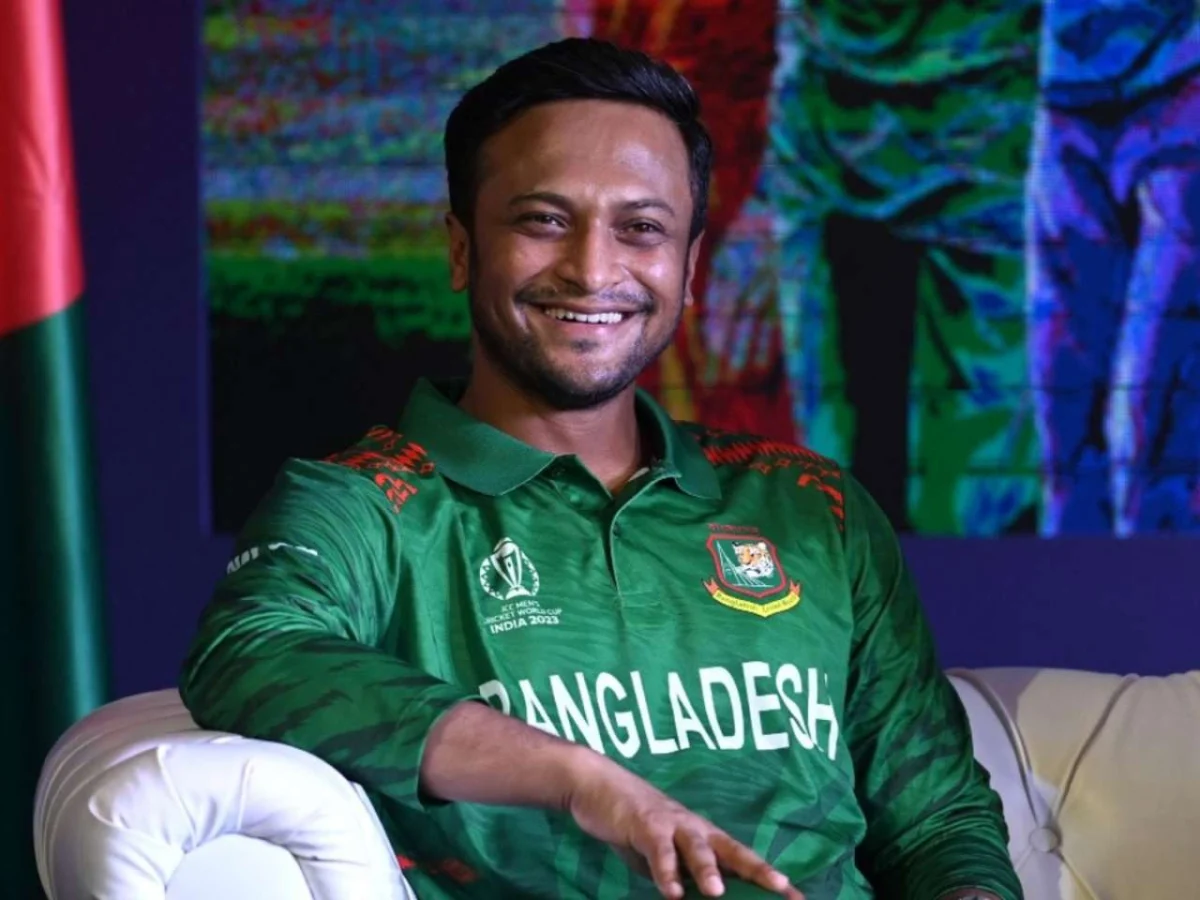
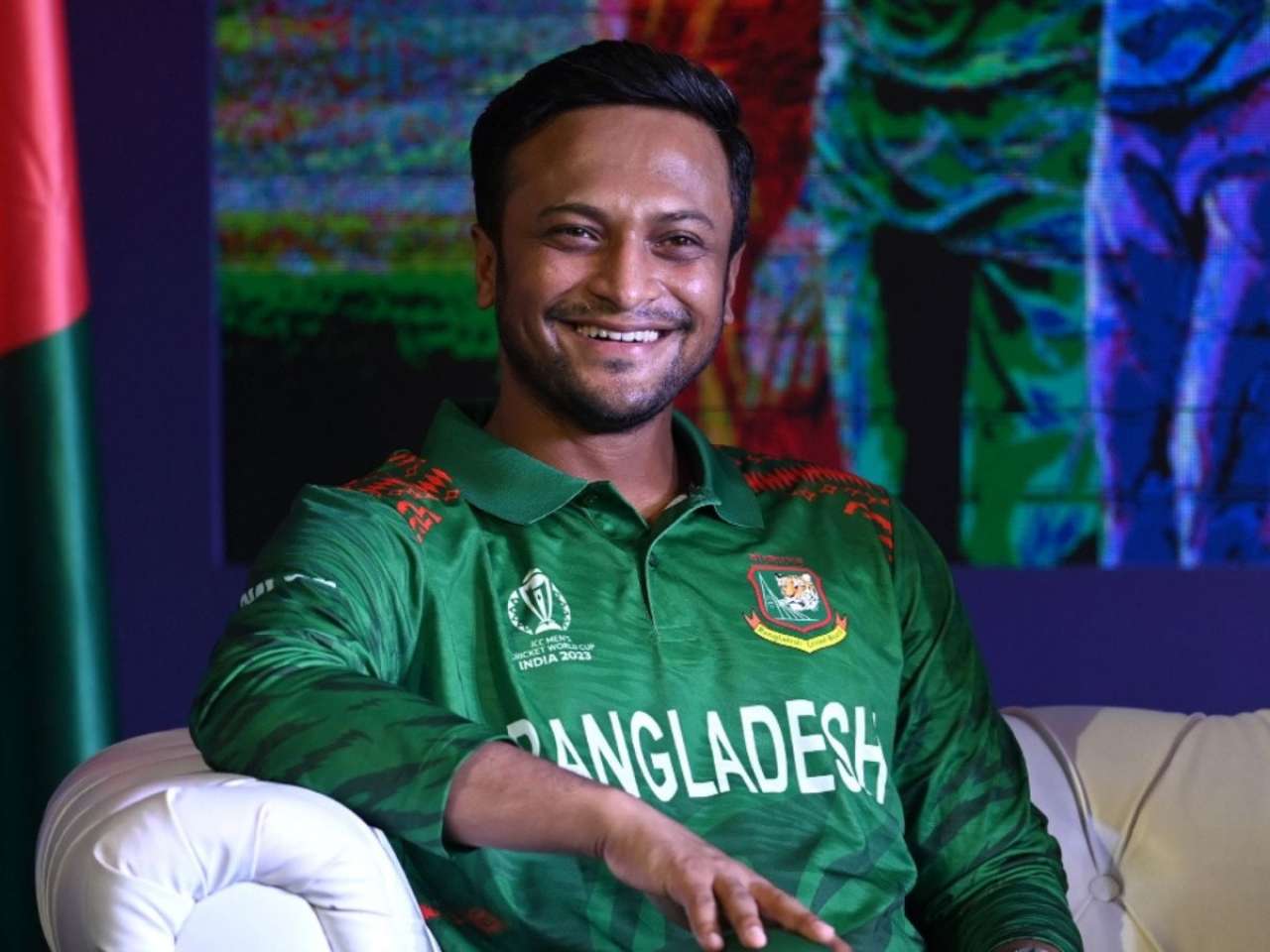
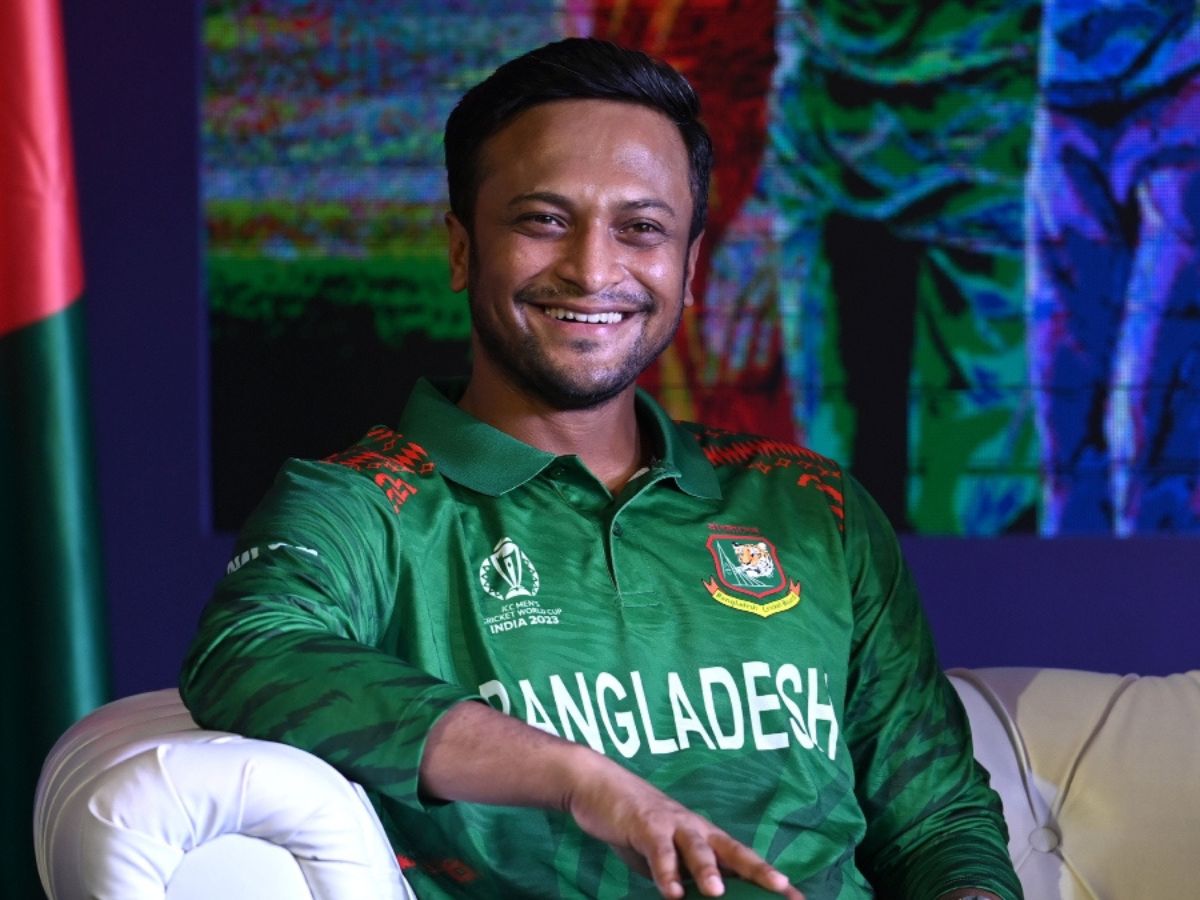
Dhaka, Bangladesh – August 7, 2026 – In a dramatic confluence of sport and politics, Bangladesh’s iconic all-rounder, Shakib Al Hasan, has declared his unwavering commitment to representing his nation at the 2027 ODI World Cup, even as he prepares to confront a murder trial in his homeland. Speaking from his current residence in the United States, Shakib articulated a defiant stance, asserting his innocence and readiness to face legal proceedings, provided the Bangladeshi government can assure his personal safety. This extraordinary declaration illuminates the perilous tightrope walk for public figures in a nation grappling with profound political upheaval.
Shakib’s predicament is intrinsically linked to the seismic political shifts that have rocked Bangladesh since August 2024. The fall of Sheikh Hasina’s government, triggered by widespread student-led protests and a subsequent violent crackdown, has plunged the nation into a period of uncertainty, forcing many prominent figures, including Shakib, into exile or facing charges. His ambition to don the national colours again, at an age when most cricketers contemplate retirement, underscores not only his enduring passion for the game but also the complex interplay between personal aspirations and national turmoil.
The Political Whirlwind: A Chronology of Events
Shakib Al Hasan’s current legal quandary and self-imposed exile are direct consequences of a turbulent period in Bangladesh’s recent history, specifically the dramatic collapse of the Awami League government led by Prime Minister Sheikh Hasina in August 2024. To fully grasp Shakib’s situation, it is crucial to understand the sequence of events that unfolded.
The August 2024 Uprising: A Nation in Turmoil
The summer of 2024 witnessed unprecedented student-led protests that escalated into a nationwide movement, challenging Sheikh Hasina’s decade-long authoritarian rule. Initially sparked by issues related to government quotas in public service, the demonstrations rapidly broadened to encompass wider grievances, including economic hardship, corruption, and allegations of human rights abuses. The government’s response was swift and, according to various human rights organizations and international observers, brutally repressive. A violent crackdown ensued, leading to widespread clashes between protestors and security forces. Tragically, reports indicate that over 1,400 people lost their lives in the unrest, and thousands more were injured or detained.
)
The intensity of the protests, coupled with the international condemnation of the state’s heavy-handed response, eventually proved insurmountable for the Awami League government. In a stunning turn of events, Sheikh Hasina was forced to resign and subsequently fled the country, reportedly seeking refuge in India. An interim government was installed, tasked with stabilizing the nation and paving the way for future elections. This period marked a profound rupture in Bangladesh’s political landscape, dismantling established power structures and creating a volatile environment where former loyalties and affiliations came under intense scrutiny.
Shakib’s Self-Imposed Exile and the Shadow of Charges
Amidst this political maelstrom, Shakib Al Hasan, a known affiliate and supporter of the Awami League, found himself in a precarious position. Following the fall of Hasina’s government, he departed Bangladesh for the United States, where he currently resides on Long Island with his wife and three children. His decision to leave was driven by a genuine concern for his safety, given the heightened political tensions and the targeting of individuals associated with the previous regime.

It was during this period of exile that the charges against him, including that of murder, emerged. The International Crimes Tribunal in Dhaka, an institution whose legitimacy and impartiality have been subjects of debate, particularly concerning politically charged cases, initiated proceedings against individuals deemed responsible for the violent crackdown on the August 2024 protests. Sheikh Hasina herself was sentenced to death in absentia by this tribunal, a stark indicator of the gravity of the charges and the political vendetta perceived by many. Shakib, by virtue of his association with the former government and his public support for Hasina, became embroiled in these legal battles, facing accusations related to the tragic loss of life during the protests. His statement, "I know I haven’t done anything," underscores his belief in his own innocence and the politically motivated nature of the charges.
Aborted Returns: Promises, Posts, and Political Interference
Despite the serious allegations, Shakib has made concerted efforts to return to Bangladesh, driven by his desire to clear his name and, crucially, to resume his international cricket career. However, these attempts have been thwarted by a convoluted interplay of official assurances and sudden reversals, painting a clear picture of political interference.
)
One notable incident occurred in late 2024. After nearly two months of meticulous arrangements, Shakib received assurances of security from the interim government, prompting him to board a flight home. He even communicated his travel plans from the airport lounge. Yet, mid-journey, he received an abrupt instruction to turn back. Landing in Dubai, he was forced to re-route to New York, leaving him bewildered. "I have no idea what changed in just 12 hours," he recounted, highlighting the arbitrary nature of the decision.
A subsequent attempt to return also collapsed, this time explicitly linked to a social media post. Shakib had shared a birthday message for Sheikh Hasina, an act that authorities cited as the reason for blocking his entry. His incredulous reaction, "I don’t get how that could be considered grounds for keeping me out of Bangladesh," encapsulates the frustration of being caught in a political crossfire where even personal expressions of loyalty are weaponized. Previous officials had reportedly suggested he distance himself from Hasina and the Awami League if he wished to return, an idea Shakib vehemently rejected: "I won’t even consider it." This unwavering loyalty, while admirable to his supporters, has undoubtedly complicated his path back home.
)
Sheikh Hasina’s Impending Return: A Shared Destiny?
The political narrative is further complicated by Sheikh Hasina’s announced intention to return to Bangladesh in December, accompanied by other Awami League leaders. Hasina, currently in India, faces a death sentence from the International Crimes Tribunal. Shakib’s statement, "Whatever the captain says, we follow her. They’ll make the call, and we’ll follow their lead," suggests a deep-seated loyalty and an indication that his return might be strategically timed or dependent on Hasina’s own political manoeuvres. This intertwining of fates underscores the extent to which Shakib’s personal and professional life remains inextricably linked to the broader political destiny of Bangladesh.
Shakib’s Enduring Ambition: Cricket Amidst Crisis
Despite the monumental legal and political challenges he faces, Shakib Al Hasan’s dedication to cricket remains undimmed. His aspiration to play in the 2027 ODI World Cup is not merely a personal goal but a powerful statement of resilience and defiance in the face of adversity.
)
A Pillar of Bangladesh Cricket
Shakib Al Hasan is arguably the greatest cricketer Bangladesh has ever produced. A true all-rounder, he has consistently ranked among the world’s best in both formats, achieving the rare feat of being ranked number one in all three formats (Tests, ODIs, T20Is) simultaneously by the ICC. His statistics are staggering: over 7,000 runs and 250 wickets in ODIs, over 4,000 runs and 200 wickets in Tests, and significant contributions in T20Is. He has been the bedrock of Bangladesh’s rise in international cricket, often carrying the team on his shoulders with match-winning performances. His leadership qualities have also been invaluable, having captained the national side across formats.
Beyond the numbers, Shakib embodies the fighting spirit of Bangladeshi cricket. His aggressive batting, crafty left-arm spin, and astute cricketing brain have made him a talismanic figure. His presence in the squad not only elevates the team’s performance but also instills confidence and belief, making his potential absence a significant blow to the national team’s aspirations.
)
The 2027 ODI World Cup Dream: A Race Against Time
For Shakib, targeting the 2027 ODI World Cup is an audacious goal. By then, he would be around 40 years old, an age at which only a handful of cricketers, typically specialist batsmen or slow bowlers, have successfully competed at the highest level. Achieving this feat would cement his legacy as one of the most enduring and remarkable athletes in the sport’s history. It would also represent a triumphant return from what appears to be a politically motivated exile and legal battle, transforming a personal ordeal into a narrative of ultimate redemption.
The physical demands of a modern ODI World Cup are immense, requiring peak fitness and consistent performance. For an all-rounder who contributes significantly with both bat and ball, the challenge is even greater. This ambition speaks volumes about his self-belief and his commitment to the game, even as external pressures mount.
)
Current Form and Franchise Leagues
Remarkably, despite his political and legal woes, Shakib has continued to play franchise leagues around the world, demonstrating his ongoing fitness and skill. "I’m playing most of the franchise leagues. I feel great, still enjoy the game, and I’m playing well," he affirmed. This engagement in competitive T20 leagues is crucial for maintaining match fitness, sharpness, and form. It allows him to compete against top international players and adapt to different conditions, ensuring that he remains relevant in the cricketing world even without international duty.
His performances in these leagues serve as a tangible testament to his abilities, providing a strong argument for his continued inclusion in the national squad, should he resolve his issues and return. It also offers a glimmer of hope for Bangladesh cricket, as a fit and firing Shakib would be an invaluable asset.
)
The Acknowledgment: "I Can’t Wait Too Long"
Despite his optimism and current form, Shakib is also a pragmatist. His statement, "But, honestly, I can’t wait too long," is a stark acknowledgment of the biological clock ticking for any elite athlete. The window for international cricket, especially at the World Cup level, is finite. Prolonged absence from the national team, coupled with the mental and emotional toll of his legal battles, could ultimately diminish his ability to perform at the required standard. This creates a powerful tension: his desire to play versus the external forces that threaten to prematurely end his international career. The urgency in his voice underscores the critical need for a resolution to his legal and political entanglement sooner rather than later.
The Legal Labyrinth and Official Stances
Shakib Al Hasan’s situation is not merely a personal crisis but a microcosm of the broader legal and political challenges facing Bangladesh. The murder trial, the calls for safety guarantees, and the shifting government stances all highlight the fragility of the rule of law and the deep divisions within the nation.
)
The Nature of the Charges: Politically Motivated?
The "murder trial" facing Shakib is deeply embedded in the political context of the August 2024 student protests and the subsequent violent crackdown. While the specifics of the charges against Shakib are not fully detailed in the original report, it is highly probable that they are linked to his perceived association with, or direct involvement in, the actions taken by Sheikh Hasina’s government during that period. In such politically charged environments, accusations, particularly severe ones like murder, can often be used as a tool to discredit, neutralize, or punish political opponents and their allies.
The International Crimes Tribunal, which has sentenced Sheikh Hasina to death, operates within a framework that has drawn criticism regarding due process and political independence. For Shakib to face such a serious charge, particularly when he denies any wrongdoing, suggests a strong possibility that the legal proceedings are politically motivated, aiming to remove him from the public sphere or pressure him into distancing himself from the former regime. The lack of clarity around the specific evidence or direct actions attributed to Shakib only strengthens this perception.
)
Government’s Stance on Safety: A Critical Precondition
Shakib’s insistence on a "guarantee of safety" from the government before his return is not merely a personal preference but a crucial precondition that speaks volumes about the current political climate in Bangladesh. His previous aborted attempt to return, where an initial promise of security was inexplicably withdrawn mid-flight, underscores the volatility and untrustworthiness of official assurances. In a nation where political power shifts can lead to swift and severe repercussions for those associated with the previous administration, such a guarantee is not a formality but a fundamental requirement for personal security and legal fairness.
The interim government, tasked with maintaining stability, faces a dilemma. Granting a high-profile figure like Shakib a public safety guarantee could be seen as a concession to the former regime or a challenge to the legitimacy of the charges against him. Conversely, denying it could further fuel accusations of political persecution and undermine its own claims of fostering a fair and just environment.
)
Interim Government’s Actions: Flip-Flopping and Political Pressure
The interim government’s inconsistent actions regarding Shakib’s return—first offering security, then retracting it, and later blocking his entry over a social media post—reveal a government operating under immense political pressure and perhaps internal divisions. The suggestion that Shakib "should distance himself from Hasina and the Awami League" if he wanted to come back is a stark example of political conditionalities being imposed on legal and personal freedoms. This demand goes against the principles of individual liberty and due process, effectively asking him to disavow his political affiliations to secure his freedom and safety.
Shakib’s steadfast refusal to compromise his loyalty ("I won’t even consider it") highlights a deeply principled stance, but one that further complicates his situation. It shows a fundamental clash between his personal convictions and the political demands of the current authorities.
)
The International Crimes Tribunal: A Controversial Institution
The International Crimes Tribunal in Dhaka, which has issued a death sentence against Sheikh Hasina and is handling cases related to the August 2024 crackdown, has a contentious history. While initially established to try war crimes from the 1971 Liberation War, its mandate and procedures have often drawn criticism from international human rights organizations for alleged lack of transparency, due process concerns, and perceived political influence. In the context of the current political climate, its actions, particularly against high-profile figures associated with the previous government, are viewed by many as politically motivated rather than purely judicial. This perception further clouds the legitimacy of the charges against Shakib and raises serious questions about the fairness of any trial he might face.
Profound Implications: Beyond the Boundary Ropes
Shakib Al Hasan’s saga transcends the personal and professional, carrying significant implications for Bangladesh’s sporting future, political landscape, and international standing.
)
For Shakib’s Legacy: A Test of Resilience
The current crisis will undoubtedly shape Shakib Al Hasan’s legacy. If he successfully navigates these challenges, clears his name, and returns to represent Bangladesh at the 2027 World Cup, his story will be one of unparalleled resilience, transforming him into an even greater national icon—a symbol of enduring spirit against overwhelming odds. However, if the legal battles consume him, or if political forces permanently sideline him, his legacy might be tinged with the tragedy of unfulfilled potential and the harsh realities of political entanglement. The perception of whether he is a victim of political persecution or a participant in controversial actions will largely define how history remembers him.
For Bangladesh Cricket: A Talent in Limbo
The potential absence of Shakib Al Hasan poses a severe threat to Bangladesh cricket. As the team’s most influential player for over a decade, his contributions in all facets of the game are almost irreplaceable. Losing him, particularly in the lead-up to a major tournament like the World Cup, would be a massive blow to the team’s morale, strategic planning, and overall competitiveness. It could also create a leadership vacuum and significantly impact the development of younger players who look up to him.
)
Beyond the immediate sporting impact, this situation could deter other prominent Bangladeshi athletes from engaging in politics, or conversely, make them more vulnerable to political pressures. It sends a chilling message about the risks involved when national heroes step into the political arena.
For Bangladesh’s Political Stability: A Nation Divided
Shakib’s case is a stark illustration of the deep political instability and polarization that continues to grip Bangladesh. The charges against him, the controversial tribunal, the interim government’s inconsistent actions, and Sheikh Hasina’s planned return all point to a nation still reeling from political upheaval. The saga underscores the challenges faced by the interim government in establishing trust, ensuring justice, and fostering reconciliation. If high-profile figures like Shakib cannot return safely or face fair trials, it erodes public confidence in the legal system and further entrenches political divisions, potentially leading to renewed unrest.
)
The Role of Sports Figures in Politics: A Double-Edged Sword
Shakib’s predicament highlights the complex and often perilous relationship between sports and politics, particularly in South Asian nations where cricketers often attain celebrity status akin to politicians or film stars. While their popularity can be leveraged for positive social change or political advocacy, it also makes them vulnerable to political pressures and partisan struggles. Shakib’s unwavering loyalty to Sheikh Hasina, while commendable from a personal standpoint, has entangled him in a high-stakes political drama, demonstrating the double-edged sword of public affiliation. This case will undoubtedly serve as a cautionary tale for other athletes contemplating a foray into the political landscape.
International Scrutiny and Human Rights Concerns
The ongoing saga of Shakib Al Hasan will inevitably draw international scrutiny to Bangladesh. Global sporting bodies, human rights organizations, and international media will closely monitor the legal proceedings and the treatment of a world-renowned athlete. Any perception of political persecution, denial of due process, or arbitrary actions by the government could severely damage Bangladesh’s international reputation, impacting its diplomatic relations, foreign investment, and even its standing in global sporting forums. The case thus becomes a test of Bangladesh’s commitment to justice, human rights, and the rule of law in the eyes of the world.
)
Conclusion
Shakib Al Hasan stands at a critical juncture, his illustrious cricketing career hanging in the balance against a backdrop of grave political accusations. His defiant resolve to face a murder trial while simultaneously eyeing the 2027 ODI World Cup is a testament to his indomitable spirit, yet it is shadowed by the formidable challenges ahead. The demand for a government guarantee of safety, the history of aborted returns, and the politically charged nature of the allegations underscore a profound crisis that extends far beyond the boundaries of the cricket field.
As Bangladesh navigates its tumultuous political landscape, the fate of one of its greatest sporting heroes remains intricately woven into the nation’s destiny. Whether Shakib ultimately triumphs over these adversities to reclaim his place in international cricket or becomes a casualty of political turmoil will not only define his legacy but also serve as a poignant reflection of the state of justice and stability in Bangladesh. The world watches on, awaiting the next chapter in this extraordinary saga where sport, politics, and personal courage collide.
