

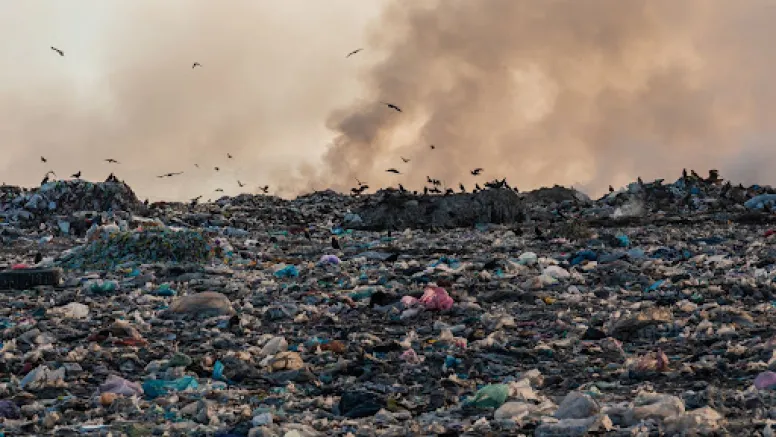
BENGALURU – In the heart of Uttar Pradesh, within the silent, chemical-laden soils of Ummari village, a team of Indian scientists has uncovered a biological paradox. In a landscape defined by the toxic legacy of banned pesticides, a new species of bacteria has been found not only surviving but flourishing. This microbe, named Microbacterium pollutisoli, represents a significant breakthrough in both environmental microbiology and the search for next-generation biotechnological tools.
The discovery, spearheaded by researchers from the University of Delhi and the CSIR-Institute of Microbial Technology (IMTECH), highlights a growing frontier in science: the "mining" of contaminated sites for extremophiles—organisms that adapt to harsh conditions in ways that could eventually benefit human health and industry.
The Core Discovery: Life in a Chemical Graveyard
The primary finding of the study, recently published and detailed by research groups in Bengaluru and New Delhi, is the isolation of a previously unknown bacterium from soil heavily contaminated with Hexachlorocyclohexane (HCH). HCH is a notorious organochlorine pesticide, once used widely in agriculture and public health (most notably as Lindane), but now banned globally under the Stockholm Convention due to its persistence in the environment and its classification as a human carcinogen.
Microbacterium pollutisoli was identified after rigorous testing confirmed it as a distinct species within the genus Microbacterium. While many microbes perish in the presence of high HCH concentrations, this specific strain has evolved to withstand the chemical stress of the Ummari dumpsite. Interestingly, while the bacteria do not directly "eat" or degrade the pesticide, their ability to maintain cellular integrity in such a hostile environment has led to the development of unique genetic signatures that produce valuable secondary metabolites.
Chronology of the Discovery
The journey to identifying Microbacterium pollutisoli began with an environmental survey of pesticide "hotspots" in Northern India.

- Site Selection and Sampling: Researchers targeted Ummari village in Uttar Pradesh, a site known to house significant residues of HCH. Soil samples were extracted from a depth of 30 centimeters—a zone where oxygen levels are lower and chemical concentrations are often most stable and lethal.
- Isolation and Cultivation: Back in the laboratory, the soil was subjected to enrichment cultures. Scientists were looking for "survivors"—microbes that could grow on agar plates despite the presence of environmental stressors. A specific yellow-pigmented colony caught the attention of the team.
- Phenotypic Characterization: Over several months, the team observed the physical and metabolic traits of the isolate. They tested its growth limits, discovering its ability to survive a wide range of temperatures (12°C to 46°C) and highly alkaline pH levels.
- Genomic Sequencing and Comparison: The final phase involved deep-dive DNA sequencing. By comparing the genetic blueprint of the Ummari isolate with known databases, the researchers realized they were looking at a unique branch on the tree of life.
- Formal Classification: Following the "polyphasic" approach—which combines physical, chemical, and genetic data—the species was officially named and registered.
Supporting Data: The Anatomy of a Survivor
The scientific validity of Microbacterium pollutisoli as a new species rests on several key data points that distinguish it from its closest relative, Microbacterium invictum.
Genomic Divergence
In modern microbiology, the gold standard for defining a species is Average Nucleotide Identity (ANI). If two microbes share more than 95-96% ANI, they are generally considered the same species. Microbacterium pollutisoli shares only 83% ANI with M. invictum. This 17% difference represents millions of years of evolutionary divergence, likely accelerated by the selective pressure of the contaminated soil in Uttar Pradesh.
Metabolic Capabilities
The study found that M. pollutisoli possesses a metabolic versatility that its cousins lack. It can successfully digest sugars like maltose and lactose, which are essential for energy production in varying environments. Furthermore, the fatty acid profile of its cell wall—the "fingerprint" of a bacterium—showed a unique composition of branched-chain fatty acids, which likely contributes to its membrane stability in toxic soil.
Resilience Metrics
- Temperature Range: 12°C to 46°C (Optimal growth at 30°C).
- pH Tolerance: High survival rates in alkaline conditions, which is typical of soils where pesticide breakdown products alter the natural chemistry.
- Morphology: Short, rod-shaped, forming shiny yellow circular colonies on nutrient agar.
The Genetic Goldmine: Biosynthetic Gene Clusters (BGCs)
What has excited the scientific community beyond the mere discovery of a new species is the contents of its genome. Microbacterium pollutisoli contains several Biosynthetic Gene Clusters (BGCs). These are "instruction manuals" within the DNA that tell the bacteria how to build complex molecules.
1. Carotenoids
The yellow pigment of the bacteria is more than just a visual trait; it is caused by carotenoids. In nature, these compounds act as powerful antioxidants, protecting the microbe from oxidative stress caused by HCH. For industry, natural carotenoids are in high demand for use in vitamins, food coloring, and nutritional supplements.

2. Ectoine
The researchers identified genes for the production of ectoine, a "compatible solute" or extremolyte. Ectoine helps cells survive extreme osmotic stress and dehydration. It is currently a high-value ingredient in the skincare industry for its ability to protect human skin from UV radiation and environmental pollutants.
3. Beta-lactones
Perhaps most significantly, the genome revealed pathways for beta-lactones. This class of chemical compounds is a cornerstone of pharmaceutical research, often serving as the structural basis for new antibiotics or even anti-obesity medications (such as Orlistat). Finding a new natural source for these compounds is a major win for drug discovery.
Official Responses and Scientific Context
While formal statements from government environmental agencies are pending regarding the cleanup of the Ummari site, the research community has been vocal about the implications.
Lead researchers from the University of Delhi emphasized that this discovery underscores the importance of "microbial prospecting." According to the team, "The fact that such a potent source of potential medicines was found in a place we usually consider ‘dead’ or ‘ruined’ should change how we look at environmental conservation. We aren’t just cleaning up soil; we are protecting a genetic library that we haven’t even finished reading."
Microbiologists at CSIR-IMTECH noted that the discovery of M. pollutisoli is a testament to India’s rich microbial diversity. "The Western Ghats and the Himalayan regions are often the focus of biodiversity studies, but this research proves that even the anthropogenically altered landscapes of the Indo-Gangetic plain hold biological secrets," one researcher noted during a technical briefing.

Implications for the Future
The discovery of Microbacterium pollutisoli carries weight in three distinct fields:
Environmental Bioremediation
While this bacterium does not consume HCH, its presence provides a roadmap for how life survives in contaminated zones. By studying its stress-response mechanisms, scientists can engineer other bacteria to be more "tough," allowing them to survive long enough to break down pesticides in cleanup operations.
Pharmaceutical Innovation
The "antibiotic crisis"—the rise of drug-resistant bacteria—requires a constant influx of new chemical structures. The beta-lactones and other metabolites produced by M. pollutisoli offer a fresh starting point for chemists to develop new treatments for infections that are currently untreatable.
Industrial Biotechnology
The ability of this microbe to thrive at 46°C and in alkaline conditions makes it an ideal candidate for industrial fermentation. Most industrial processes generate heat and change pH levels; a "hardy" microbe like M. pollutisoli reduces the cost of cooling and pH stabilization in large-scale bio-reactors.
Conclusion: The Etymology of Resilience
The name Microbacterium pollutisoli—derived from the Latin pollutus (contaminated) and solum (soil)—is a permanent reminder of the microbe’s origin. It serves as a stark symbol of nature’s ability to adapt to the worst of human intervention.

As the world grapples with the long-term effects of the "Pesticide Era," the tiny, yellow rod-shaped inhabitant of Ummari village offers a glimmer of hope. It suggests that within our greatest environmental mistakes may lie the keys to our future medical and technological triumphs. For now, the "Microbacterium of polluted soil" remains a subject of intense study, a tiny sentinel standing guard in the toxic earth, waiting to yield its next secret.
