

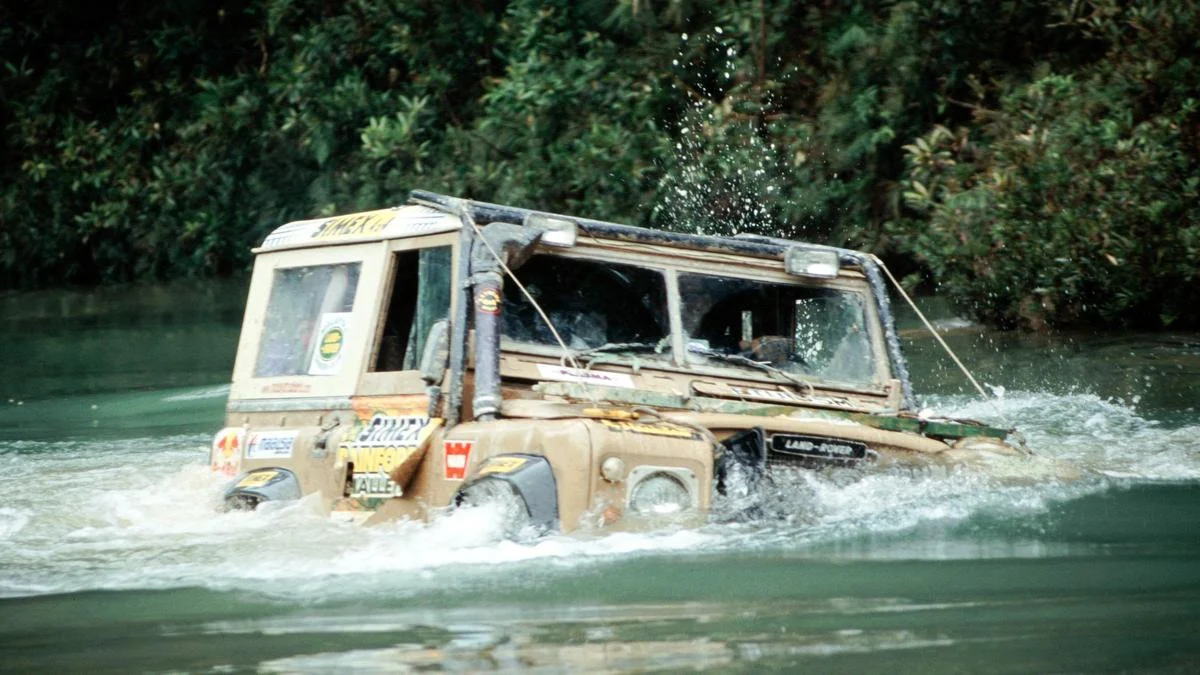
In the heart of the Goan monsoon, where the sky routinely opens up to drench the Western Ghats in a relentless downpour, a different kind of thunder echoes through the dense foliage. It is the roar of modified engines, the clanking of recovery winches, and the high-revving grit of the Rainforest Challenge (RFC) India. This year, the 2026 edition of the world-renowned off-road event witnessed a historic milestone as Athul Thomas and Binil Babu, representing "Team Killerbull," etched their names into the annals of Indian motorsports.
Emerging as champions in the highly competitive 4X4 Stock class, the duo from Kerala achieved what no other team from the state had managed before in this specific category. Navigating their Maruti Jimny through a labyrinth of slush, steep inclines, and treacherous riverbeds, Thomas and Babu secured a victory that transcends mere trophies, highlighting the growing prowess of Kerala’s off-roading community on the national stage.
The Crucible of Off-Roading: Understanding RFC India
To appreciate the magnitude of this victory, one must understand the pedigree of the Rainforest Challenge. Headquartered in Malaysia and founded by Luis J.A. Wee in 1997, the RFC is globally recognized as one of the top ten toughest motor races in the world, often ranked alongside the Dakar Rally and the King of the Hammers.
The Indian edition, launched in 2014, has found its spiritual home in Goa. Supported by the State Government of Goa, the event is timed to coincide with the peak of the monsoon season. This is intentional; the rain transforms the already challenging terrain into a primordial soup of red mud and unpredictable water levels, testing the limits of both man and machine.
The competition is divided into various categories, including Extreme, Modified, and Stock. While the Extreme category features "monsters"—highly modified vehicles with massive tires and custom engines—the Stock class is perhaps the most relatable yet demanding. It requires drivers to compete in vehicles that remain close to their factory specifications, meaning success depends less on mechanical overkill and more on the surgical precision of the driver and the strategic ingenuity of the co-driver.
Chronology of a Conquest: Four Days in the Jungle
The journey to the podium was a grueling four-day marathon that concluded on August 1, 2026. The event was structured into 14 distinct "Special Stages" (SS), each designed to test a specific aspect of off-road driving: traction, winching, water wading, and side-slope stability.
Day 1: The Initial Plunge
The competition began with the "Prologue" stages. For Athul Thomas, a veteran with a decade of experience and over 300 motorsports events under his belt, the focus was on establishing a rhythm. For his co-driver, Binil Babu, the experience was entirely different. A seasoned motorbike racer and manager at Ducati Kochi, Babu was stepping into a competitive four-wheeler for the first time. The opening stages were a baptism by fire—or rather, by mud—as they navigated the Jimny through narrow gaps marked by cones, where a single touch meant a point penalty.
Days 2 and 3: The Endurance Phase
As the race moved deeper into the forest, the difficulty spiked. There were no roads—only GPS coordinates and the punishing reality of the Goan wilderness. The "Predator" and "Terminator" stages (as they are traditionally known in RFC parlance) forced teams to work in tandem. In the Stock category, the Maruti Jimny’s light weight proved to be an advantage in the deep slush, but its lower ground clearance compared to modified rigs required Thomas to choose lines with extreme care.

Binil Babu’s role was critical during these days. As a co-driver, he frequently had to exit the vehicle to scout the path ahead, attach winch cables to sturdy trees, and guide Thomas through "blind" obstacles. "It is grueling and intense," Babu remarked, reflecting on the 14 stages. "The terrain is tough; you are literally driving through forests with uneven paths. There are no roads really—just cones marking the way."
Day 4: The Final Push to Glory
By the final day, the physical and mental toll was evident on all participants. Of the 25 teams in the 4X4 Stock category, many had suffered mechanical failures or succumbed to the exhaustion of the "Twilight Zone" stages. Team Killerbull, however, remained consistent. Their synergy—born from a shared history in Kerala’s racing circuit—allowed them to maintain a high scoring rate. When the final tallies were calculated, Thomas and Babu had amassed a staggering 1,247 points out of a possible 1,400, securing the top spot on the podium.
Supporting Data: Performance and Technical Specifications
The victory of the Maruti Jimny in the Stock class is a significant data point for automotive enthusiasts. In a field of 24 other cars in their category, the Jimny’s performance metrics were telling:
- Total Points Scored: 1,247 / 1,400 (89% efficiency).
- Reliability: Zero major mechanical failures over 14 stages, a testament to both the vehicle’s build and the team’s "mechanical sympathy."
- Experience Gap: Athul Thomas brought 10 years of expertise, while Binil Babu transitioned from two wheels to four, proving that racing fundamentals (line choice, throttle control, and situational awareness) are transferable across disciplines.
While other teams from Kerala saw success in the Extreme and Modified categories, the "Stock" win is particularly prestigious for manufacturers and daily-driver enthusiasts, as it demonstrates the "out-of-the-box" capability of the vehicle.
Official Responses and Participant Perspectives
Following their return from Goa, the duo has been vocal about the challenges facing motorsports in India, particularly in the southern states. Despite their success, the financial reality of the sport remains a significant hurdle.
"Preparing for the race cost us close to ₹6 lakh," Binil Babu revealed. "We dipped into our savings to make this happen. If we get sponsors, it lightens the financial burden considerably."
Babu highlighted a disparity in how different regions support their athletes. He noted that the winners of the 4X4 Extreme class, representing Arunachal Pradesh, received a hero’s welcome and significant state recognition. While not asking for identical treatment, the Kerala duo emphasized the need for local corporate and government support to sustain the state’s burgeoning talent pool.
"Kerala has many talented drivers and riders," Babu added. "Unfortunately, they cannot follow their passion because of how expensive the sport is. Also, this is a great outlet for youngsters who love speed; it changes your perspective on it. Your entire attitude towards speed becomes healthy."

Implications for the Future of Indian Motorsports
The victory of Athul Thomas and Binil Babu at RFC India 2026 carries several implications for the future of the sport and the automotive culture in India.
1. The Professionalization of Off-Roading
For years, off-roading was viewed as a fringe hobby for the wealthy. However, the success of teams like Killerbull, who approach the sport with professional rigor and technical strategy, is shifting this perception. Their win serves as a blueprint for how a disciplined approach can overcome the lack of high-budget modifications.
2. Safety and "Healthy Speed"
One of the most profound implications mentioned by the winners is the psychological impact of competitive racing on road safety. By providing a controlled, high-stakes environment for speed and technical driving, events like the RFC act as a pressure valve for young drivers. When "speed" is associated with a 1,400-point scoring system and strict safety protocols, it ceases to be a reckless street activity and becomes a disciplined craft.
3. Economic and Tourism Potential
The success of the Indian edition of the RFC, supported by the Goa government, underscores the potential for "motorsports tourism." As Kerala teams continue to dominate, there is a growing argument for Kerala to host its own sanctioned off-road events, utilizing its unique geography—from the high-altitude terrains of Idukki to the slush-heavy plantations of Wayanad—to attract global participants.
4. The "Jimny Effect"
The Maruti Jimny has long been a cult favorite, but its performance in the Stock category at RFC India 2026 solidifies its reputation as a legitimate off-road tool. This victory is likely to spur further interest in the Stock and "Green" off-roading movements, where the focus is on minimal environmental impact and maximum driver skill.
Conclusion
The story of Athul Thomas and Binil Babu is a narrative of grit, friendship, and the pursuit of excellence against the odds. By conquering the mud of Goa, they have not only brought home a trophy but have also laid down a marker for the future of Kerala’s motorsports. As they look toward future challenges, the hope remains that their success will act as a catalyst for better infrastructure, more robust sponsorship, and a wider appreciation for the grueling, muddy, and magnificent world of off-road racing. For Team Killerbull, the 1,247 points were more than just a score—they were a statement that Kerala has arrived on the global off-roading map.
