

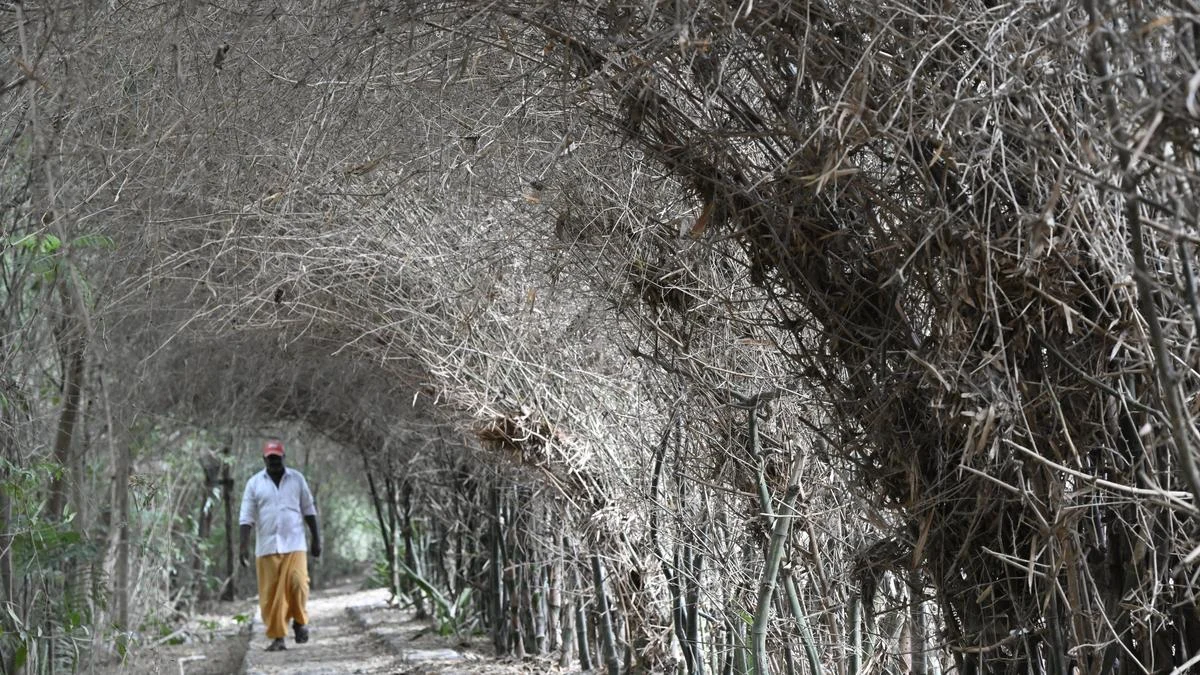
Coimbatore, India – In a pioneering initiative aimed at safeguarding its precious water resources and revitalizing its ecological tapestry, Coimbatore is embracing an ancient yet remarkably relevant solution: bamboo. The city’s iconic Vellalore Lake, a haven for butterflies and waterfowl, and the historically significant Kolarampathy Lake, nestled beside the revered Perur Temple, are now being embraced by thriving bamboo fences. This innovative project, spearheaded by the local NGO Kovai Kulangal Padhukaapu Amaippu with crucial support from the district administration and CSR initiatives, marks a significant stride in urban environmental conservation, highlighting bamboo’s multifaceted potential beyond its traditional roles.
The sight of slender, woody bamboo stalks swaying gently along the bunds of these water bodies is more than just aesthetically pleasing; it signifies a strategic defense against the twin threats of encroachment and waste dumping, while simultaneously fostering a vibrant ecosystem. As ducks glide on the still waters of Vellalore Lake and pelicans stretch their wings, the bamboo stands as a silent sentinel, guarding the fragile biodiversity that makes these urban oases thrive.
The Genesis of a Green Initiative: Reviving Neglected Water Bodies
The inspiration behind this ambitious project stems from a simple yet profound question posed by R. Manikandan of Kovai Kulangal Padhukaapu Amaippu: "Why not bamboo?" This question reflects a broader vision to restore neglected water bodies in Coimbatore, transforming them from forgotten corners into thriving ecological hubs. For too long, these vital water sources have suffered from neglect, facing the dual pressures of human encroachment and the insidious creep of pollution.

"While tall palmyra trees lining lakes are a familiar sight even now, bamboo has completely disappeared. We are bringing it back," Manikandan explains, emphasizing that this decision is not an arbitrary one but is firmly rooted in extensive research and a deep understanding of nature’s resilience. The NGO’s commitment to restoring these vital ecosystems, supported by the district administration and the CSR efforts of JDFS Business Solutions LLP, underscores a growing recognition of the critical role of natural solutions in urban planning.
The Ecological Prowess of Bamboo: A Natural Defender and Habitat Creator
The choice of bamboo is far from accidental; its inherent characteristics make it an ideal candidate for ecological restoration and protection. Manikandan elaborates on the scientific backing behind this choice: "The bamboo root system grows into a dense ‘mat’ of fine roots which is shallow but wide-spread. This means that its ability to hold soil together along fragile river banks (where erosion is possible) is excellent." This natural anchoring system is crucial for stabilizing the lake bunds, preventing soil erosion, and mitigating the risk of landslides, particularly during monsoon seasons.
Beyond its soil-binding capabilities, bamboo plays a vital role in atmospheric regulation. "A mature bamboo plant generates a higher output of oxygen," Manikandan notes, highlighting its contribution to improving air quality in the urban environment. Furthermore, the dense green barrier formed by the bamboo serves as a significant deterrent to human interference. "The green barrier discourages encroachments and illegal dumping of wastes," he states, directly addressing the persistent challenges faced by these water bodies.

Crucially, the bamboo plantations are designed to foster biodiversity. "It restores bio-diversity by building a habitat for birds, rodents and other wildlife," Manikandan adds, painting a picture of a rejuvenated ecosystem where nature can flourish unimpeded. The bamboo groves create microhabitats, providing shelter, nesting sites, and foraging grounds for a wide array of fauna, thereby enhancing the overall ecological health of the lakes.
A Symphony of Species: The First Phase of Plantation
The initial phase of this ambitious project has seen the planting of over 300 bamboo saplings, encompassing a remarkable diversity of 16 distinct bamboo species. These include well-known varieties such as Burmese bamboo and giant bamboo, alongside more specialized types like Taiwan giant bamboo, Travancore reed, Buddha belly, and yellow bamboo. This deliberate selection of multiple species aims to maximize the ecological benefits and ensure resilience.
Dr. Kannan CS Warrier, Director of the Kerala Forest Research Institute (KFRI) in Thrissur, a renowned institution housing Asia’s largest bambusetum with 72 species, provides expert insights into the selection process. "All the 16 species are highly effective in soil conservation, as they are clumping bamboos that grow close to each other featuring short root systems that expand slowly in tight clusters. It serves as a living net under the soil and holds the earth together," he explains. KFRI is a key partner in this initiative, providing the saplings and technical expertise. Dr. Warrier further reveals that KFRI has over three lakh bamboo saplings ready for distribution across India, with plans to expand their collection to over 80 species.

Bamboo Beyond Conservation: A "Magic Material" for Sustainable Futures
The significance of bamboo extends far beyond its role as an ecological barrier. Environmentalists and experts are increasingly recognizing bamboo as a "magic material" with immense potential for sustainable development across various sectors. M. Baburaj, an environmentalist who resides in a remarkable three-storey "bamboo house" in Wayanad, Kerala, and directs the World of Bamboo craft village, has been a vocal advocate for bamboo for over three decades.
"Besides conservation, it’s time to look at eco-friendly industrial applications," Baburaj urges. He highlights bamboo’s versatility, stating it can serve as raw material in as many as 10 industries, including sustainable architecture, lumbering, furniture manufacturing, bioplastic production, and ethanol generation. He laments the underutilization of bamboo’s potential in areas like architecture, a gap this project indirectly addresses by showcasing its structural and ecological benefits.
Baburaj also draws attention to bamboo biochar, a product derived from bamboo that significantly enhances soil quality. "Bamboo biochar effectively improves the carbon content of soil by adding stable fixed carbon, boosting soil organic matter, and driving long-term carbon sequestration," he explains. In the face of escalating global warming and climate change, bamboo emerges as a potent ally. "Beyond capturing carbon, it helps reduce greenhouse gas emissions, creates cooler microclimates, and improves groundwater recharge," he emphasizes, suggesting that a significant part of the solution to combating climate change may indeed lie in this versatile plant.

A Historical Perspective: Bamboo’s Enduring Legacy
The utilization of bamboo is not a modern invention; its significance is deeply woven into the fabric of Indian history and culture. D. Saravanan, an environmentalist who transformed 100 acres of barren wasteland into the lush Aranya Forest and Sanctuary, exemplifies the power of natural solutions. Over nearly three decades, he utilized hundreds of bamboo trees, alongside native plants and water conservation techniques, to revive the local ecosystem, replenish groundwater levels, and improve the microclimate.
Saravanan refers to bamboo as "green gold" and "poor man’s timber," underscoring its accessibility and value. He notes that bamboo, whose name is believed to derive from the Dutch word "Mambu," has a rich history in India, with 168 species, 106 of which are native and 42 cultivated. Its importance is even mentioned in Kautilya’s Arthashastra as a vital source of income.
"It is the fastest growing biomass, reaching up to three feet daily," Saravanan states, highlighting its rapid growth cycle. "It can be harvested in three to five years and thrives in a wide range of environments." He further emphasizes its environmental benefits, explaining that bamboo plays a crucial role in regulating atmospheric gases: "A hectare of bamboo plantation absorbs 17 tonnes of carbon in one year. Each bamboo plant absorbs 3.5 kilograms of carbon." This remarkable carbon sequestration capability makes bamboo a powerful tool in the fight against climate change.

Tailoring the Bamboo Ecosystem: Species for Specific Roles
The strategic selection of bamboo species is crucial for maximizing their ecological impact. Dr. Kannan elaborates on the specific roles different varieties play:
- Taiwan Giant Bamboo: Identified as the most versatile and economically viable species, its towering presence creates significant biomass.
- Travancore Reed Bamboo: A key endemic species of the Western Ghats, it plays a vital role as a biodiversity corridor, facilitating the movement of species.
- Burmese Bamboo: Known for growing as a tall, dense clumping grass, it forms major mid-story layers in mixed deciduous forests, providing crucial habitat.
- Multiplex (Green Bamboo) and Bush Bamboo: These varieties contribute to the under-story of forests, creating ideal foraging grounds for reptiles and rodents.
- Needle Bamboo: Similar to bush bamboo, it contributes to the lower strata of the ecosystem.
These varied species collectively create a multi-layered ecosystem within the bamboo groves. "Giant bamboo varieties form towering groves creating dense forest canopies," Dr. Kannan explains. "Burmese bamboo grows as a tall, dense clumping grass forming major mid-story layer in mixed deciduous forests. Others like multiplex or green bamboo, bush bamboo and needle bamboo build the under-story of forest, a perfect foraging ground for reptiles and rodents," he adds. This layered structure is ideal for a diverse range of wildlife, from insects and amphibians in the undergrowth to songbirds and tree frogs in the mid-canopy, and larger birds in the upper reaches.
A Comprehensive Restoration Plan: Ensuring Long-Term Success
The restoration initiative at Vellalore and Kolarampathy Lakes is a meticulously planned undertaking, encompassing several key components to ensure the long-term success of the bamboo plantations. The plan includes:

- Clearing Invasive Vegetation: Removing invasive shrubs and weeds along a thousand-foot stretch of the tank bunds is the first step, creating a clean slate for new growth.
- Installation of Protective Fencing: A 1,150-foot GI diamond mesh fence is being installed to provide initial protection to the young saplings from grazing animals and accidental damage.
- Drip Irrigation System: To ensure the optimal growth and survival of the bamboo, a drip irrigation system is being implemented, providing a consistent and efficient water supply.
Manikandan is optimistic about the project’s outcomes. "The project is expected to stabilize the tank bund, improve biodiversity, provide shelter for birds and small animals, and also serve as a model for protecting other waterbodies," he states, highlighting the replicable nature of this initiative.
Implications and the Road Ahead: Bamboo as a Catalyst for Change
The successful implementation of the bamboo fencing project in Coimbatore holds significant implications, not just for the immediate ecological health of the lakes but also for broader urban environmental strategies. It demonstrates a pragmatic and nature-based approach to tackling complex urban environmental challenges like encroachment and pollution.
The project serves as a potent reminder that often, the most effective solutions are already present in nature. By harnessing the inherent strengths of bamboo, Coimbatore is not only safeguarding its valuable water resources but also investing in a more sustainable and resilient future. The initiative has the potential to inspire similar projects in other cities grappling with similar issues, fostering a nationwide movement towards the rediscovery and widespread adoption of bamboo as a cornerstone of ecological restoration and sustainable development. As Saravanan aptly puts it, "One of the solutions to combating climate change may just lie in bamboo." The verdant embrace of bamboo around Coimbatore’s lakes is a testament to this profound truth, heralding a greener, healthier future for the city and beyond.
