

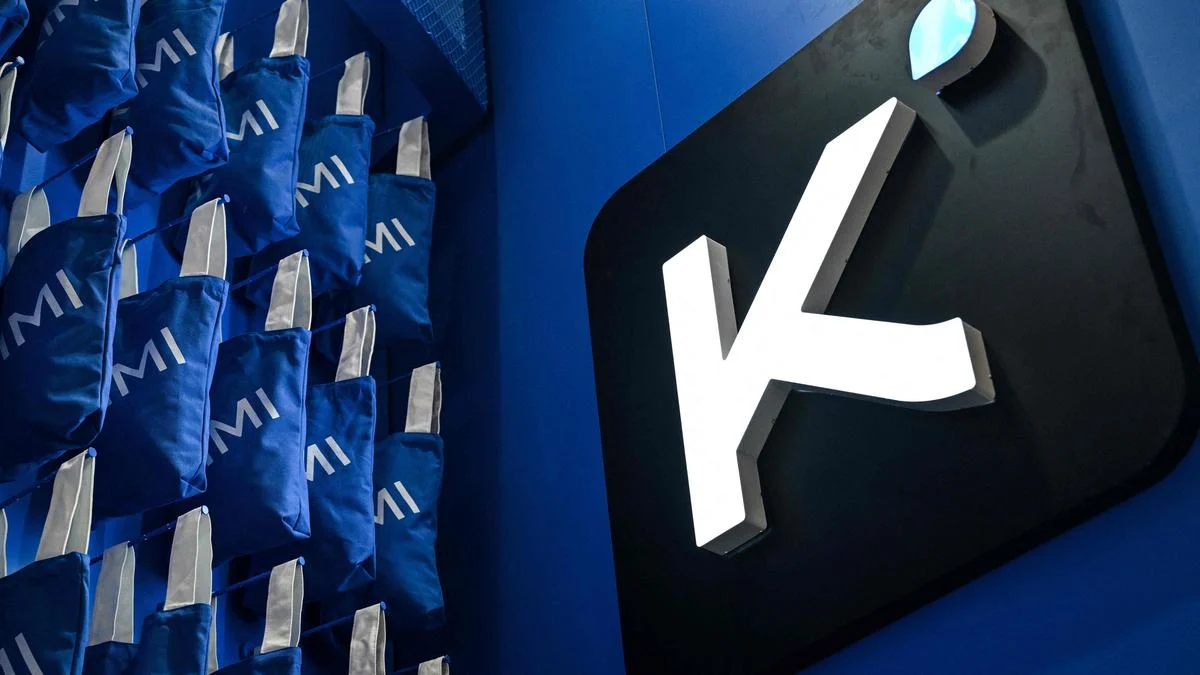
Shanghai, China – August 9, 2026 – A new epoch in artificial intelligence has dawned, heralded by the audacious entry of China’s Moonshot AI into the global arena. The company’s recent release of the Kimi K3 model, followed swiftly by the unprecedented move to open its model weights, has sent seismic waves through the international tech community, triggering a scramble for competitive advantage and igniting a fierce debate over the future of AI development. Far from being just another incremental update, Kimi K3 represents a significant inflection point, challenging the established order and forcing American tech giants to re-evaluate their strategies amidst growing panic and a deeply divided response.
A Seismic Shift in the AI Landscape
The digital world was set ablaze on July 16, 2026, when Moonshot AI unveiled Kimi K3, an AI model boasting an staggering 2.8 trillion parameters and an expansive 1 million-token context window. Billed unequivocally as the "world’s first open 3T-class model," Kimi K3 immediately drew comparisons to its Western counterparts, particularly Google’s Gemma 4, which, by contrast, registers a mere 30.7 billion total parameters. While Moonshot AI candidly acknowledged that Kimi K3’s overall performance still "trails" industry leaders like Anthropic’s Claude Fable 5 and OpenAI’s GPT 5.6 Sol across certain benchmarks, the company confidently asserted its frontier-level capabilities across its own rigorous evaluation suite.
The true game-changer, however, arrived on July 27. Moonshot AI didn’t just release Kimi K3; it released its model weights, a move that fundamentally democratizes access to this powerful AI. This decision allows developers, businesses, and researchers worldwide to download, modify, and run Kimi K3 for their commercial needs under a remarkably flexible licence. This act of "open-weight" release, a strategic departure from the more common proprietary or "closed" model approach, immediately positioned Kimi K3 not merely as a competitor, but as a potential disruptor of the entire AI ecosystem. Moreover, the economic proposition was equally compelling: Kimi K3’s operational cost was reported to be approximately a third of Anthropic’s Fable model in terms of input and output token prices, promising significant cost savings for adoption and deployment.
The implications were immediate and far-reaching. Online forums and tech circles buzzed with a mix of awe and alarm. Solutions ranging from calls for more U.S. open models and increased U.S. visa allocations for AI talent, to the construction of more U.S. data centres and fostering domestic competition, began circulating with an palpable sense of urgency. The Kimi K3 launch wasn’t just a technological announcement; it was a strategic declaration from Beijing, underscoring China’s rapid advancements and ambition in the AI race, and directly challenging America’s perceived technological hegemony.
A Detailed Chronology of Disruption
The emergence of Kimi K3 is not an isolated incident but rather a culmination of years of intense geopolitical and technological rivalry between the United States and China. This rivalry has been characterized by a fierce competition for talent, significant investments in research and development, and a contentious "chip war" where the U.S. has imposed export controls on advanced semiconductors crucial for AI development.
Precursors to a Paradigm Shift: The US-China AI Rivalry
For years, the narrative of AI leadership has largely been dominated by American firms like OpenAI, Google, and Anthropic, whose large language models (LLMs) have set benchmarks for performance and innovation. China, while making significant strides, often seemed to be playing catch-up, albeit rapidly. However, Chinese tech giants and startups have been quietly building robust AI ecosystems, fostering domestic talent, and investing heavily in foundational research. The "chip war," aimed at slowing China’s AI progress by restricting access to advanced semiconductors, inadvertently fueled China’s determination to achieve self-sufficiency and innovate at an accelerated pace.
One significant event that foreshadowed the current tensions occurred in February 2026. Anthropic, a prominent U.S. AI firm backed by Amazon and Google, publicly alleged that Moonshot AI was among several Chinese AI labs engaged in what it termed "illicit distillation." Anthropic claimed that these labs had generated millions of exchanges with its Claude model through hundreds of "fraudulent" accounts. The alleged purpose of this extensive, unauthorized interaction was to target and reverse-engineer Claude’s sophisticated capabilities, including its agentic reasoning, tool use, coding and data analysis prowess, computer-use agent development, computer vision, and reasoning traces. This accusation, while serious, inadvertently served as a testament to the advanced capabilities of Anthropic’s models, suggesting that Chinese firms saw significant value in understanding their architecture and performance. It also highlighted the increasingly aggressive tactics in the global AI race, where proprietary knowledge and advanced techniques are highly coveted.
Kimi K3’s Unveiling (July 16, 2026)
The initial reveal of Kimi K3 on July 16, 2026, was a moment of profound significance. Moonshot AI’s announcement highlighted the model’s impressive scale: 2.8 trillion parameters, a metric reflecting the model’s complexity and learning capacity, and a 1 million-token context window, indicating its ability to process and understand exceptionally long pieces of text or code – a critical advantage for complex tasks like summarizing entire books or analyzing extensive codebases. The claim of being the "world’s first open 3T-class model" was particularly striking, signaling a new benchmark in accessibility for extremely large models. The immediate reaction from the global tech community was a mix of admiration for the technical achievement and concern over its strategic implications. It was clear that China was no longer just a participant but a formidable frontrunner in developing frontier AI models.
The Open-Weight Release (July 27, 2026)
Just over a week later, on July 27, Moonshot AI doubled down on its disruptive strategy by releasing the full model weights for Kimi K3. This decision moved Kimi K3 beyond merely being an "open model" (where API access might be provided but the underlying code is proprietary) to a truly "open-weight" model, akin to Meta’s Llama series. For developers, this meant unparalleled flexibility: the ability to download the model, run it locally or on private infrastructure, fine-tune it with proprietary data, and integrate it deeply into custom applications without reliance on Moonshot’s API or facing potential vendor lock-in.
The licensing terms, described as "far more flexible," specifically allowed for commercial use, a crucial detail that instantly made Kimi K3 an attractive alternative for businesses seeking to deploy powerful AI capabilities without the steep costs and restrictive terms often associated with leading proprietary models. This open-weight approach stands in stark contrast to the closed-source models prevalent among many leading U.S. firms, which typically offer access only through APIs and maintain strict control over their underlying architectures.
US Tech’s Divided Response
The Kimi K3 launch and subsequent open-weight release sent a ripple of apprehension across Silicon Valley and beyond. The American response was swift but fragmented, revealing deep fissures within the U.S. tech industry regarding the optimal strategy to maintain AI leadership.
In a remarkable display of industry unity, over 270 companies, including titans like Amazon, Google, Meta, Microsoft, Nvidia, OpenAI, and SpaceX, co-signed an open letter titled "Open Weights and American AI Leadership." This powerful consortium called for immediate policy measures to support the development and deployment of open-weight models within the U.S. Their argument was clear: fostering an open AI ecosystem was essential to drive innovation domestically, retain top talent, and ultimately ensure American technological dominance in the face of rising international competition. The letter implicitly acknowledged the strategic advantage gained by models like Kimi K3 and sought to replicate that dynamism within U.S. borders.

However, this apparent unity was shattered by the conspicuous absence of one major player: Anthropic. The Claude-maker, instead of joining the chorus for open models, issued its own separate, stark warning. Anthropic stressed the inherent risks associated with open-weight models, citing potential misuse, security vulnerabilities, and the difficulty of controlling harmful applications once the underlying technology is widely distributed. In a move that underscored its divergent strategy, Anthropic also advocated for stricter chip restrictions against China, suggesting a preference for limiting China’s access to critical hardware rather than competing directly in the open-model space. This stance highlighted a fundamental philosophical divide within the U.S. AI industry: one faction championing open innovation, the other prioritizing control and safety, particularly in the context of geopolitical competition.
The shift in AI company-customer relations was also brought into sharp relief by Kimi K3’s emergence. A historical reference point illustrates this change: in September 2024, OpenAI CEO Sam Altman famously offered a somewhat flippant response to an X user inquiring about a new AI feature. "[H]ow about a couple of weeks of gratitude for magic intelligence in the sky, and then you can have more toys soon?" Mr. Altman posted, a comment that elicited both amusement and criticism. Fast forward to 2026, and such a response seems almost anachronistic. Users no longer need to wait patiently or express "gratitude" for proprietary model updates when Chinese contenders like Alibaba, DeepSeek, and now prominently, Moonshot AI, are actively inviting them to explore more open, powerful, and significantly more affordable alternatives. This shift signals a fundamental rebalancing of power between AI providers and their user base, driven by competitive pressure.
Unpacking the Data: Technical Prowess and Market Strategy
The significance of Kimi K3 extends beyond mere market disruption; it delves into the core technical advancements and strategic economic decisions that underpin its success.
The Engineering Behind Kimi K3
To appreciate Kimi K3’s achievement, it’s crucial to understand the technical metrics involved. "Parameters" refer to the values within an AI model that are learned during training, essentially the model’s knowledge base. A higher number of parameters generally correlates with greater complexity, nuance, and capability in understanding and generating human-like text, code, and other forms of data. Kimi K3’s 2.8 trillion parameters dwarf many existing models, suggesting an immense capacity for learning and inference. For context, Google’s Gemma 4, a highly capable model, reported 30.7 billion parameters – a difference of nearly two orders of magnitude. This scale allows Kimi K3 to process and synthesize information with a depth previously confined to only the most advanced, proprietary systems.
The "1 million-token context window" is another groundbreaking feature. The context window determines how much information an AI model can consider at any given time when generating a response. Traditional models often struggle with context windows of a few thousand tokens, limiting their ability to handle long documents, complex conversations, or extensive codebases. A 1 million-token window means Kimi K3 can effectively "read" and understand the equivalent of several large novels or an entire software repository in a single interaction. This capability unlocks new possibilities for applications requiring deep contextual understanding, such as sophisticated research assistants, advanced legal document analysis, comprehensive code debugging, or even crafting entire screenplays. The "3T-class model" designation, therefore, speaks to not just the sheer size (trillions of parameters) but also the unprecedented contextual awareness it offers, making it a formidable tool for frontier-level tasks.
While Moonshot AI acknowledges that Kimi K3 still "trails" certain benchmarks set by Claude Fable 5 and GPT 5.6 Sol, this doesn’t diminish its impact. Performance metrics are complex, and a model excelling in one area (like context window or parameter count) might still be catching up in others (like nuanced reasoning or safety alignment). The key is Kimi K3’s frontier-level performance across its own evaluation suite, indicating a robust, general-purpose capability that is highly competitive, especially given its open nature and cost-effectiveness.
The Economics of Open AI
The economic dimension of Kimi K3 is perhaps its most immediate disruptive force. The claim that it costs "about a third of Anthropic’s Fable model in terms of the input and output token prices" is a direct challenge to the prevailing business models of many U.S. AI firms. For businesses, particularly startups and SMEs, the cost of accessing and deploying advanced AI models has been a significant barrier. Proprietary models often come with usage-based fees that can quickly escalate with increased demand, making large-scale deployment economically unfeasible for many.
Kimi K3’s lower token prices, combined with its open-weight licensing, fundamentally alters this equation. Businesses can now experiment, build, and scale AI-powered applications with substantially reduced operational expenditure. This shift could democratize AI adoption, enabling a broader range of companies to integrate sophisticated AI capabilities into their products and services. The total cost of ownership (TCO) for deploying AI models becomes far more attractive, fostering innovation and competition at the application layer. This economic advantage is a powerful incentive for companies to "vote with their wallets," potentially leading to a significant migration towards more affordable and flexible open-weight models.
The Broader Chinese AI Ecosystem
Kimi K3 is not an outlier but rather a leading example of a broader trend within China’s burgeoning AI ecosystem. Firms like Alibaba and DeepSeek have also been active in developing and releasing open or semi-open AI models, contributing to a vibrant domestic scene that prioritizes accessibility and collaboration. This collective effort is fostering a rapid cycle of innovation, where models can be quickly iterated upon, fine-tuned, and deployed by a vast community of developers. This collaborative approach, combined with substantial government backing and a massive domestic market for testing and deployment, positions China to become a significant force in defining the future trajectory of open AI.
Official Reactions and Geopolitical Echoes
The Kimi K3 phenomenon has elicited strong reactions from all stakeholders, each with their own strategic motivations and concerns, further embedding AI development within a complex geopolitical framework.
Moonshot AI’s Vision and Ambition
Moonshot AI’s public messaging, particularly its stated mission to "empower everyone to be superhuman," provides insight into its strategic motivations. The open-weight release of Kimi K3 aligns perfectly with this vision, positioning the company as a champion of accessible AI that can augment human capabilities on a massive scale. By lowering the barrier to entry through open access and competitive pricing, Moonshot AI aims to foster a vast developer ecosystem around its models, accelerating innovation and solidifying its market position.
Regarding Anthropic’s earlier allegations of "illicit distillation," Moonshot AI has largely maintained a strategic silence or issued general denials, choosing instead to let its technological releases speak for themselves. The very act of releasing Kimi K3 and its weights, a model with capabilities that can be benchmarked against Claude, implicitly serves as a powerful counter-narrative, suggesting that their advancements are driven by independent innovation rather than illicit means.

The American Industry’s Policy Push
The "Open Weights and American AI Leadership" letter, signed by an unprecedented alliance of U.S. tech giants, is more than just an industry plea; it’s a strategic policy recommendation aimed at preserving U.S. dominance. The call for "more U.S. open models" reflects a recognition that closed, proprietary systems, while profitable, might not be sufficient to maintain a competitive edge against a rapidly innovating open ecosystem. Companies like Meta, which has been a strong proponent of open-source AI with its Llama series, see open models as a way to accelerate research, attract talent, and build a strong defensive moat against competitors. Nvidia, a key hardware provider, also benefits from a thriving open ecosystem as it drives demand for its GPUs.
The demands for "more U.S. visas" for AI talent and "more U.S. data centres" are direct responses to perceived bottlenecks in America’s AI infrastructure and talent pool. These policy suggestions aim to bolster the foundational elements necessary for sustained AI leadership: human capital and computational resources. The underlying message is that U.S. industry needs government support to foster an environment where open innovation can flourish, ensuring that the next Kimi K3 emerges from American labs.
Anthropic’s Stance: Safety, Security, and Strategic Controls
Anthropic’s dissenting stance, backed by Amazon and Google, highlights the legitimate concerns surrounding the proliferation of powerful AI technologies. Their warnings about the "risks of open-weight models" are multifaceted. Firstly, there are safety concerns: once a model’s weights are public, it becomes exceedingly difficult to control how it’s used. Malicious actors could fine-tune these models for harmful purposes, such as generating misinformation, developing autonomous weapons, or facilitating cyberattacks, without oversight from the original creators. Secondly, there are intellectual property risks: the open nature could lead to the rapid dissemination and potential theft of proprietary techniques and algorithms, undermining the competitive advantage of the original developers. Thirdly, national security risks are paramount: powerful open models could be leveraged by adversarial states to enhance their military capabilities or conduct sophisticated espionage.
Anthropic’s push for "chip restrictions against China" aligns with a more protectionist and control-oriented approach to AI competition. This strategy seeks to maintain a technological lead by limiting a rival’s access to the essential hardware required to train and deploy advanced AI models. This reflects a belief that controlling critical resources is a more effective long-term strategy than an unfettered race in an open ecosystem, especially when dealing with a geopolitical rival like China. The divergence between Anthropic and its peers underscores the complex ethical and strategic dilemmas inherent in the development of increasingly powerful AI.
Implications for the Future of AI
The Kimi K3 saga is more than just a headline; it’s a harbinger of significant shifts that will redefine the landscape of artificial intelligence for years to come.
Reshaping Global AI Leadership
Kimi K3 represents a credible challenge to the long-held assumption of unassailable American AI leadership. While it may not instantly crown China as the undisputed leader, it undeniably signals a narrowing of the gap and a diversification of the global AI power base. The strategic embrace of open-weight models by Chinese firms suggests a deliberate attempt to build a global developer community and ecosystem that could rival or even surpass those built around proprietary American models. This shift could lead to a more multipolar AI world, where innovation springs from diverse geographical and ideological centers, potentially accelerating overall AI progress but also complicating international governance and ethical alignment efforts. The question is no longer if China will compete at the highest levels of AI, but how it will leverage its unique approach to challenge the status quo.
A More Accessible and Competitive Landscape
One of the most profound implications of Kimi K3’s open-weight release is the democratization of advanced AI. By providing powerful, cost-effective models with flexible licensing, Moonshot AI and its Chinese counterparts are significantly lowering the barrier to entry for startups, smaller businesses, and individual developers globally. This newfound accessibility will foster an explosion of innovation at the application layer, as more actors can experiment with, build upon, and deploy sophisticated AI solutions without needing massive computational resources or licensing budgets. This increased competition among AI model providers will likely drive down prices across the board, pushing both open and closed model developers to innovate faster and offer more value to users. The "vote with their wallets" mandate from companies and users will increasingly favor models that offer the best combination of performance, flexibility, and affordability.
Navigating Ethical Minefields and Regulatory Challenges
The debate ignited by Anthropic concerning the risks of open-weight models highlights a critical ethical and regulatory challenge. While openness fosters innovation, it also exacerbates the dual-use dilemma of powerful AI – the potential for beneficial and harmful applications. Regulators worldwide will face immense pressure to develop frameworks that can govern the responsible development and deployment of open-weight models, balancing the imperative for innovation with the need to mitigate risks like misuse, bias, and security vulnerabilities. This will require unprecedented international cooperation to establish norms and standards, as national regulations alone may prove insufficient in a globally interconnected AI ecosystem. The rapid pace of open-weight releases complicates traditional regulatory approaches, which often struggle to keep pace with technological advancements.
The "Vote with Wallets" Mandate
Ultimately, the long-term success of Kimi K3 and the broader open AI movement will depend on adoption. Businesses and developers will make their choices based on practical considerations: performance, cost, ease of integration, and the flexibility offered by licensing terms. The early indicators suggest a strong appetite for open, affordable models, especially from regions and companies that have historically been priced out of frontier AI access. The coming weeks and months will provide crucial insights into whether Kimi K3 was a singular technological marvel or if it truly signals a sustained shift in how powerful AI tools are developed, distributed, and consumed globally. The market’s response will determine if Chinese firms have indeed "raised the bar" in marketing more open AI tools, fundamentally altering the competitive dynamics for years to come.
Conclusion: A New Chapter in AI’s Evolution
The launch of Moonshot AI’s Kimi K3 and its subsequent open-weight release marks a pivotal moment in the history of artificial intelligence. It has not only showcased China’s formidable capabilities in developing frontier AI models but has also forced a fundamental re-evaluation within the U.S. tech industry regarding strategy, competition, and the very nature of AI leadership. The debate between open and closed models, innovation and safety, accessibility and control, is now at the forefront of the global technological discourse. As companies and users increasingly "vote with their wallets" for models that offer compelling value, flexibility, and power, the AI landscape is set for a dramatic reshaping. The Kimi K3 earthquake has irrevocably altered the terrain, ushering in a new chapter where competition is fiercer, innovation more democratized, and the geopolitical stakes higher than ever before. The world watches to see who will truly lead in this brave new era of artificial intelligence.
