

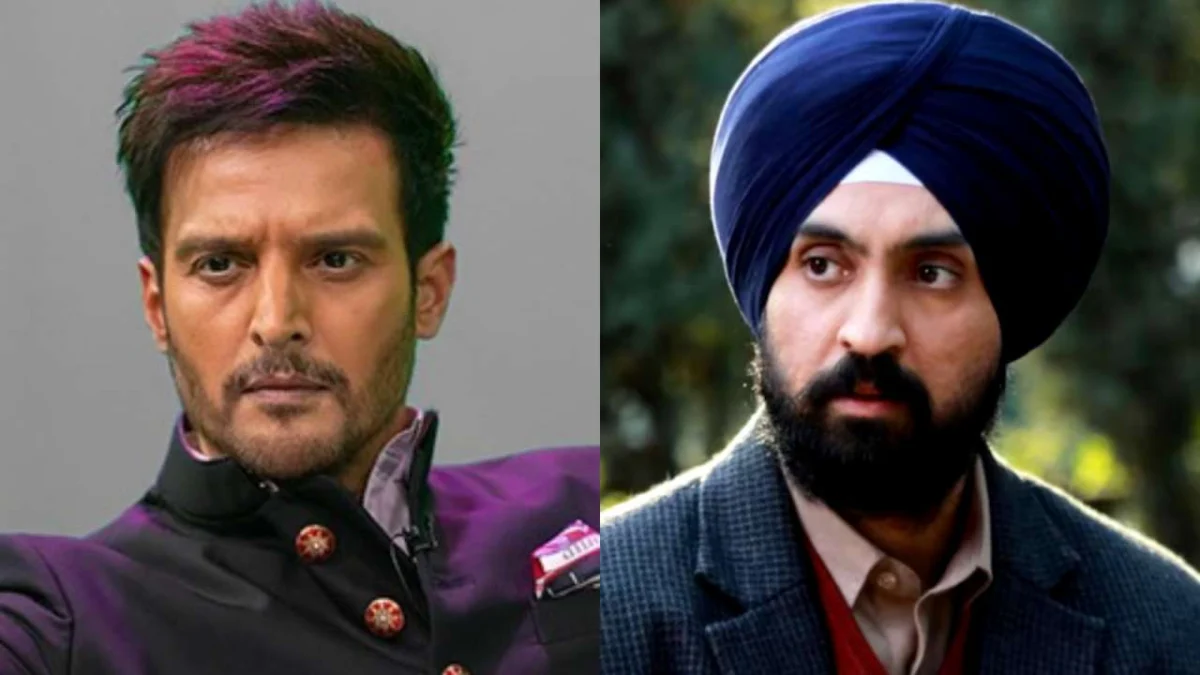
Mumbai, India – The turbulent era of Punjab’s insurgency, a period etched with profound socio-political upheaval, continues to resonate within the Indian film industry. While films like Gulzar’s seminal "Maachis" (1996) garnered critical acclaim and commercial success for its unflinching portrayal of the human cost of conflict, contemporary attempts to revisit this sensitive history, such as Honey Trehan’s "Satluj," starring Diljit Dosanjh, face starkly different challenges. Actor Jimmy Shergill, who made his indelible mark in Bollywood with "Maachis," offers a candid perspective on why films delving into politically charged historical events often encounter obstacles, attributing it to the inherent nature of truth-telling and the inevitable entanglement with political realities.
"Politics exists, and it will always go on," Shergill stated in a recent interview, addressing the recent controversy surrounding the removal of "Satluj" from the streaming platform ZEE5 just two days after its release in India. "But it is good when such issues are stirred up because it brings every single aspect out into the open. When you touch upon even a single aspect of sensitive matters, other hidden aspects surface as well. So, that is the politics of it." His observations underscore a recurring theme: the delicate balance between artistic expression and the potential for historical narratives to unearth uncomfortable truths that can have far-reaching implications.
The Shadow of "Satluj": A Human Rights Activist’s Story Muted
"Satluj," a film based on the life of human rights activist Jaswant Singh Khalra, sought to shed light on the alleged enforced disappearances and extrajudicial killings carried out by the Punjab Police during the height of the insurgency in the early 1990s. Khalra’s relentless pursuit of justice for the victims of these atrocities brought him into direct conflict with powerful forces, ultimately leading to his own disappearance. The film, which had been in censorship limbo for over three years and reportedly underwent 127 cuts by the Central Board of Film Certification (CBFC), finally premiered on ZEE5. However, its presence was fleeting, sparking widespread debate and concern among audiences and industry observers alike.
The sudden unavailability of "Satluj" on the platform in India, while reportedly remaining accessible elsewhere, has fueled speculation about external pressures and the continued sensitivity surrounding the events it depicts. This incident serves as a stark reminder of the challenges faced by filmmakers venturing into territories that touch upon state-sponsored violence and human rights abuses, particularly in a region with such a deeply scarring historical legacy.
)
"Maachis": A Groundbreaking Debut in a Tumultuous Landscape
In stark contrast to the recent struggles of "Satluj," Jimmy Shergill’s acting debut, "Maachis," stands as a testament to the power of cinema to not only depict a tumultuous period but also to achieve critical and commercial success. Directed by the legendary Gulzar, "Maachis" plunged viewers into the heart of Punjab’s insurgency during the 1980s, exploring the personal and political turmoil of individuals caught in the crossfire of violence. The film, which also featured stellar performances from Chandrachur Singh, Om Puri, and Tabu, was lauded for its nuanced storytelling and its ability to capture the psychological toll of conflict.
"Maachis" not only garnered significant critical acclaim but also achieved commercial success, a rare feat for films dealing with such heavy subject matter. Its impact was further solidified by its recognition at the 44th National Film Awards, where it bagged two prestigious honours: Best Popular Film Providing Wholesome Entertainment and Best Actress for Tabu’s captivating performance. This dual success underscores the possibility of engaging audiences with difficult historical narratives when handled with sensitivity, artistic integrity, and a clear directorial vision.

Shergill’s Genesis: Learning from the Master
Reflecting on his formative experience with "Maachis," Shergill emphasizes the profound influence of Gulzar’s guidance. As a newcomer from Delhi with limited acting experience beyond formal classes, he was thrust into a role that demanded significant emotional depth and a nuanced understanding of the character’s plight. "Whatever the film was trying to convey was actually the vision of the makers, I was just a newcomer, who had come from Delhi," Shergill recounted. "I read the script and I cried. I suddenly learnt that I’m doing the film and was told to grow my hair and beard. It was my first film and I didn’t really know how to play a role like that; I had only done acting classes. I had absolutely no idea how I would look on screen or how it would all turn out."
Gulzar’s directorial approach was one of immersive tutelage. He insisted that Shergill be present on set for every shot, encouraging him to observe and absorb the intricacies of filmmaking. "So, every single shot happened right in front of me. He would say things like, ‘Let’s change this, pick up those clothes and keep them aside,’ and I would quickly run over to help," Shergill reminisced, highlighting a hands-on learning experience that transcended traditional acting instruction.
)
The actor vividly recalls his anxiety surrounding a pivotal monologue scene. The weight of the scene and the responsibility it entailed left him feeling overwhelmed. "I was terrified just thinking about it. I’d say, ‘Sir, I want to sit down’ but he would simply reply, ‘Everything will fall into place, you’ll nail it. If you weren’t capable of doing it, I wouldn’t have cast you in this film.’ His words used to leave me confused, but he just kept reassuring me, saying, ‘It will happen,’ and that is exactly how the scene came together." This anecdote underscores Gulzar’s faith in his actors and his ability to instill confidence, a crucial element for navigating the emotional complexities of such a film.
The Politics of Portrayal: Why Sensitive Histories Spark Controversy
Shergill’s assertion that "politics exists, and it will always go on" in the context of sensitive historical films is borne out by the differing fates of "Satluj" and "Maachis." While "Maachis" was a product of a different era and perhaps a more lenient regulatory environment, "Satluj" highlights the enduring challenges of confronting narratives that question established accounts or expose uncomfortable truths about institutional actions.
)
The fact that "Satluj" faced over 127 cuts and a subsequent removal from a prominent streaming platform, even after a theatrical release in some regions, points to a continued unease with confronting the full spectrum of the insurgency period. The film’s focus on the alleged atrocities committed by state actors inevitably treads on sensitive ground, potentially triggering a defensive reaction from institutions and individuals implicated in those events.
Shergill’s observation that "when you touch upon even a single aspect of sensitive matters, other hidden aspects surface as well" is key. Historical narratives are rarely monolithic. The insurgency in Punjab was a complex phenomenon with multiple actors, motivations, and consequences. Films that delve into this period risk unearthing narratives that challenge dominant historical interpretations, leading to a politicization of the artistic output.
)
Implications for the Future of Historical Cinema
The contrasting journeys of "Satluj" and "Maachis" raise pertinent questions about the future of cinematic exploration of India’s contentious past. While the desire to understand and learn from history is crucial, the ability of filmmakers to do so without undue interference remains a significant concern.
For Filmmakers: The experience of "Satluj" suggests that projects dealing with sensitive historical periods, particularly those involving allegations of state misconduct, require meticulous planning, robust legal backing, and a willingness to navigate protracted censorship processes. The support of production houses and streaming platforms that are prepared to stand by their content in the face of controversy will be vital.
)
For Audiences: The removal of "Satluj" deprives audiences of an opportunity to engage with a critical historical narrative and the story of a human rights activist who fought for justice. It highlights the importance of accessible platforms for diverse historical perspectives and the need for informed public discourse on such sensitive topics.
For Policy Makers and Censors: The stringent censorship applied to "Satluj" and its subsequent removal raises questions about the role of regulatory bodies in shaping historical narratives. A balance needs to be struck between protecting national interests and ensuring the freedom of expression that allows for a comprehensive and nuanced understanding of the past.
)
For the Industry: The success of "Maachis" demonstrates that films tackling difficult subjects can resonate deeply with audiences. However, the challenges faced by "Satluj" underscore the ongoing need for a more supportive ecosystem for filmmakers to explore the complexities of India’s history, even when those explorations are uncomfortable.
As Jimmy Shergill rightly points out, politics is an ever-present force. The hope remains that as a society, India can evolve to engage with its past with greater maturity and openness, allowing cinema to play its vital role in illuminating, rather than obscuring, the lessons of history. The echoes of Punjab’s insurgency serve as a potent reminder of the enduring power of storytelling and the critical importance of preserving the space for these stories to be told, in all their complexity and truth.
)
Shergill himself continues to be an active presence in the industry. He is currently featured in the Netflix series "Operation Safed Sagar," where he portrays Wing Commander BS Dhanoa, the commanding officer who spearheaded critical aerial combat operations. This role, in a different context of national service, showcases his versatility and continued commitment to bringing compelling characters to life on screen.
