

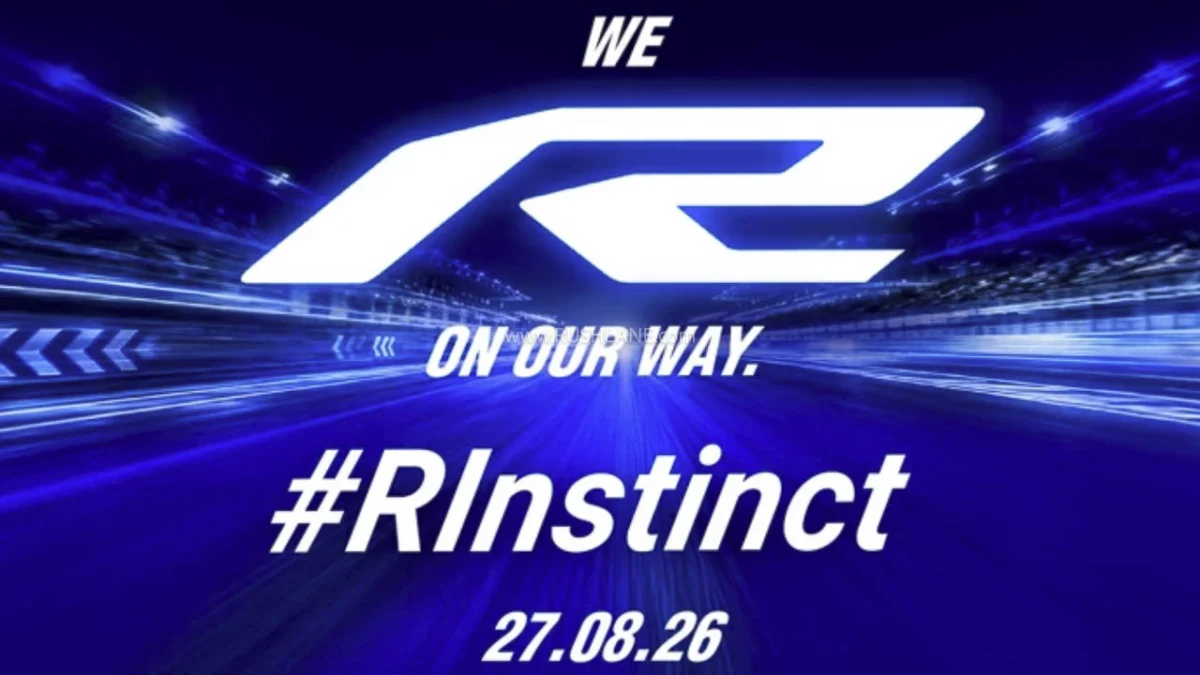
The Indian motorcycling landscape is on the precipice of a significant shift as Yamaha Motor India officially opens the doors for what is arguably its most strategic launch in recent years. On August 27, 2026, the Japanese manufacturer is set to unveil a new member of its prestigious "R" family. While the company has maintained a level of tactical ambiguity regarding the specific nomenclature of the motorcycle, all signs—ranging from international trademark filings to subtle design cues in teaser campaigns—point toward the debut of the Yamaha YZF-R2.
As of today, enthusiasts and prospective buyers can secure their place in the delivery queue by placing a booking on Yamaha India’s official digital portal. With a refundable token amount of Rs 10,000, Yamaha is gauging the immense market appetite for a machine that promises to bridge the cavernous gap between the entry-level legend, the R15, and the premium, twin-cylinder R3.
The Main Facts: Bridging the Displacement Gap
For years, Yamaha’s R-series lineup in India has faced a "missing middle" dilemma. The YZF-R15, currently in its fourth version, has dominated the 150cc-160cc premium segment with its high-tech liquid-cooled engine and Deltabox frame. On the other end of the spectrum, the YZF-R3 caters to a niche audience, its price tag often inflated by its status as a Completely Knocked Down (CKD) or Completely Built Unit (CBU) import.
The upcoming motorcycle, widely believed to be the R2, is designed to occupy the 200cc to 210cc space. This segment is crucial for riders who find the R15 slightly underpowered for long-distance touring but find the R3’s pricing and maintenance costs prohibitive.
Booking Logistics and Launch Timeline
The official booking window is now live, and Yamaha has confirmed that customers who pre-book will receive priority during the initial delivery phase. The launch event, scheduled for August 27, 2026, will be the platform where Yamaha reveals the final specifications, variant breakdowns, and the much-anticipated price list. By keeping the booking amount at a relatively accessible Rs 10,000 and making it fully refundable, Yamaha is ensuring a high volume of lead generation while maintaining a "no-risk" environment for the consumer.

Chronology: The Road to the R2
The journey to this launch has been marked by a series of calculated corporate moves and "accidental" leaks that have kept the motorcycling community in a state of constant speculation.
- Late 2024 – Early 2025: The Trademark Trail: Yamaha filed for the "R2" trademark in multiple jurisdictions, including India, Australia, New Zealand, the Philippines, and several European markets. This signaled that the R2 was not just a regional experiment but a global product designed to meet diverse emissions and licensing standards (such as A2 licensing in Europe).
- December 2025: The Patent Leak: Reports surfaced regarding a new engine platform internally codenamed "070." This platform was rumored to be a single-cylinder, liquid-cooled engine with a displacement hovering around the 200cc mark, specifically designed for markets where 200cc-250cc bikes are the volume drivers of the "performance" category.
- August 2026: The "R-Instinct" Campaign: Yamaha India began a cryptic social media campaign using the hashtag #RInstinct. The tagline "We R On Our Way" served as a double entendre—emphasizing the "R" DNA while confirming the imminent arrival.
- The Visual Clue: In the most recent teaser, the stylised "R" logo featured a tail that subtly curled into the shape of a numeral "2." This was the clearest indication yet that the R2 nameplate was indeed the chosen moniker for the Indian market.
Supporting Data: Technical Expectations and Local Manufacturing
The most significant takeaway for the Indian market is the shift in manufacturing strategy. Unlike the R3, which is largely imported, the R2 is expected to be a cornerstone of Yamaha’s "Make in India" initiative.
Manufacturing and Chassis
The motorcycle is expected to roll off the assembly lines at Yamaha’s state-of-the-art facility in Chennai. By localizing production, Yamaha can avoid the heavy import duties that have historically made their mid-capacity bikes less competitive.
The R2 is rumored to utilize a beefed-up version of the iconic Deltabox frame. This frame is celebrated for its rigidity and handling prowess, and adapting it for a 200cc engine would theoretically provide a class-leading power-to-weight ratio and cornering stability. Suspension duties are likely to be handled by 37mm or 41mm Upside Down (USD) front forks and a linked-type rear monoshock, mirroring the premium kit found on the R15 V4 and the MT-15.
Engine and Performance Metrics
While official figures are under embargo until the 27th, industry analysts expect the following:

- Engine Type: Single-cylinder, 4-valve, liquid-cooled, SOHC.
- Displacement: Approximately 200cc to 210cc.
- Power Output: Expected to be in the vicinity of 24–26 PS.
- Torque: Approximately 20–22 Nm.
- Transmission: 6-speed gearbox with an Assist and Slipper clutch.
The inclusion of Variable Valve Actuation (VVA) is almost certain. VVA has been Yamaha’s "secret sauce," allowing their engines to provide linear power delivery across both low-end and high-end RPM ranges—a feature that would give the R2 a distinct advantage over its more "peaky" rivals.
Technology Suite
In keeping with the "R" instinct, the R2 is expected to be a tech-forward machine. Anticipated features include:
- Traction Control System (TCS): A rarity in the 200cc segment but a staple in Yamaha’s premium Indian lineup.
- Quickshifter: Likely available as standard on higher trims for clutchless upshifts.
- TFT Display: A full-color console with Bluetooth connectivity via the Y-Connect app, offering turn-by-turn navigation, call/SMS alerts, and fuel consumption tracking.
Official Responses and Brand Strategy
Yamaha India’s leadership has been vocal about their "The Call of the Blue" brand strategy, which prioritizes premium positioning over mass-market commuter volume. By launching the R2, Yamaha is doubling down on this philosophy.
A spokesperson for Yamaha India recently noted that the brand’s focus is on "aspirational motorcycling." The R-series isn’t just about transport; it’s about a lifestyle and a connection to Yamaha’s MotoGP heritage. The "We R On Our Way" campaign is intended to evoke that sense of belonging to a global racing lineage.
The company’s decision to keep the specifications hidden until the final moment is a classic marketing "drop" strategy. By opening bookings based on brand trust alone, Yamaha is demonstrating the strength of the "R" badge in India.

Implications for the Indian Market and Competition
The arrival of the Yamaha R2 will send ripples through the entry-level sportbike segment, which has recently seen a resurgence of interest.
The Competitive Landscape
The R2 will enter a battlefield occupied by established veterans and aggressive newcomers:
- KTM RC 200: The current benchmark for track-focused 200cc bikes. The R2 will need to match the RC’s aggressive ergonomics and raw power while offering a more refined, everyday-usable package.
- Bajaj Pulsar RS200: A long-standing favorite for those seeking a "big bike" look at an affordable price. The R2 will likely be priced higher but will counter with superior technology and brand prestige.
- Hero Karizma XMR 210: Hero’s flagship offers great value and a modern DOHC engine. Yamaha’s challenge will be to justify a potential Rs 20,000–Rs 30,000 premium over the Karizma through superior fit, finish, and electronic aids.
Strategic Pricing
Estimates suggest the Yamaha R2 will be priced between Rs 2.10 lakh and Rs 2.35 lakh (ex-showroom). If Yamaha manages to stay closer to the Rs 2 lakh mark, it could potentially cannibalize sales from its own R15, as riders might opt for the extra displacement for a marginal price increase. However, if priced too close to the R3 (unlikely due to the R3’s twin-cylinder nature), it may struggle to find a high-volume audience.
Export Potential
Localizing the R2 in India isn’t just about the domestic market. India is increasingly becoming a global export hub for small and mid-displacement motorcycles. The R2 produced in Chennai is likely destined for markets in Southeast Asia, Latin America, and even Europe, where it could serve as a premium A2-compliant entry point for young riders.
Conclusion: A New Benchmark in Sight?
The Yamaha YZF-R2 represents more than just a new model; it represents Yamaha’s recognition of the evolving Indian rider. The market is no longer satisfied with just "looking fast"; riders demand the hardware, electronics, and performance to back up the aesthetics.

As August 27 approaches, the excitement continues to build. Whether the R2 becomes the new segment leader depends on how Yamaha balances the price-to-performance equation. However, given the brand’s track record with the R15 and its commitment to local manufacturing, the R2 is poised to be a formidable contender that could finally provide the perfect stepping stone for the next generation of Indian sportbike enthusiasts.
For now, the message from Yamaha is clear: The "R Instinct" is alive, and the wait for a true 200cc supersport is nearly over.
