

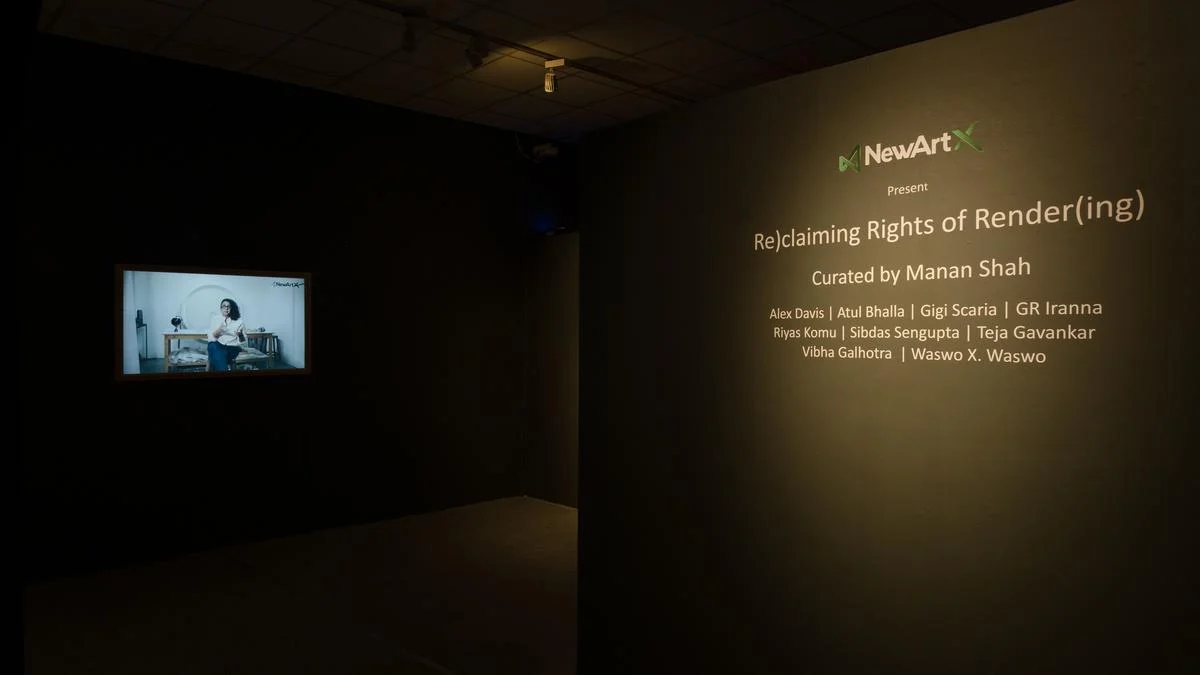
New Delhi – In an era where artificial intelligence is rapidly reshaping the discourse around creativity, a groundbreaking exhibition at Bikaner House is challenging the notion that technology is supplanting human artistry. "(Re)claiming Rights of Render(ing)," presented by NewArtX (NAX), showcases the innovative ways nine prominent contemporary artists are embracing digital mediums, not as a replacement for their established practices, but as a powerful new language for artistic expression. The exhibition, which runs until August 14th, serves as a compelling testament to the enduring spirit of artistic exploration in the face of technological advancement.
A Fusion of Tradition and Innovation: The Core of the Exhibition
The exhibition’s title, "(Re)claiming Rights of Render(ing)," hints at a deliberate reassertion of artistic agency in the digital realm. Far from being passive users of technology, the participating artists are actively engaging with digital tools to expand their creative horizons and convey complex ideas with unprecedented nuance. This is not about replicating traditional art forms in a digital space; rather, it’s about leveraging the unique capabilities of digital technologies to forge entirely new artistic experiences.
One of the most striking examples of this fusion is evident in the work of Riyas Komu, an artist renowned for his hyperrealistic portraits. For "(Re)claiming Rights of Render(ing)," Komu has ventured into digital art with a poignant piece that captures the precise moment of Mahatma Gandhi’s assassination: 5:17 PM on January 30, 1948. This work transcends mere historical documentation; it invites viewers to contemplate the weight of that specific moment, rendered with the sterile precision and temporal depth that only digital mediums can offer. It’s a powerful illustration of how digital art can imbue historical events with a renewed sense of immediacy and emotional resonance, while remaining deeply rooted in the artist’s characteristic meticulousness.
Komu is one of nine distinguished contemporary artists who have transcended the familiar landscapes of paint, stone, and bronze to explore the vibrant and dynamic world of digital fine art. The exhibition features a diverse array of artistic voices, including Alex Davis, Atul Bhalla, Gigi Scaria, GR Iranna, Sibdas Sengupta, Teja Gavankar, Vibha Galhotra, and Waswo X Waswo. Their contributions span a spectrum of cutting-edge technologies, from immersive virtual reality experiences and interactive installations to intricate digital sculptures, compelling video art, and dynamic projection mapping. Despite the technological sophistication, the underlying conceptual frameworks and thematic concerns remain intrinsically linked to each artist’s established artistic trajectory, demonstrating a thoughtful and organic integration of new tools into their creative processes.
NewArtX: Cultivating an Ecosystem for Digital Artistry
At the heart of "(Re)claiming Rights of Render(ing)" lies the vision of NewArtX (NAX), a Mumbai-based studio founded in May 2024 by Saryu Pareek Gupta and Pulkit Gupta. NAX is not merely a facilitator of digital art production; it aims to cultivate an entire ecosystem that empowers artists to explore and experiment with digital mediums without the prohibitive financial and technical hurdles that often impede such endeavors.
Saryu Pareek Gupta, co-founder of NewArtX, articulates this mission with clarity: "The exhibition is less about showcasing technology and more about creating an ecosystem where artists can experiment with it. The artists conceptualised these works because they felt the digital medium was the best way to express their ideas. Our studio team supports them with the technology, software, and hardware needed to realise those concepts." This collaborative approach ensures that the artistic vision remains paramount, with technology serving as a supportive tool rather than a dominant force. NAX’s commitment extends beyond technical assistance; they provide the necessary infrastructure, enabling artists to focus on conceptualization and execution, thereby democratizing access to advanced digital art creation.
This exhibition marks a significant milestone for NewArtX, being their first conceptual solo show. While they have presented three shows since their inception, "(Re)claiming Rights of Render(ing)" signifies a deeper dive into curated artistic exploration, moving beyond a showcase of individual digital pieces to a cohesive narrative about the evolving role of technology in art.

Curatorial Vision: Challenging Perceptions and Engaging Audiences
Manan Shah, the curator of the exhibition, emphasizes that the selection of participating artists was driven not by their pre-existing expertise in digital art, but by their eagerness to extend their established artistic language into new formats. This approach ensures that the exhibition is a genuine exploration of artistic adaptation, rather than a mere collection of digitally proficient artists.
Shah’s curatorial insight is particularly evident in his description of Vibha Galhotra’s work, "Who Owns The Earth?". Viewers don the VR headsets and are transported to a simulated desert, an environment designed to evoke discomfort and provoke introspection. The work tackles the pressing theme of climate change, a subject Galhotra has consistently explored in her previous sculptural installations. However, here, the medium is transformed into an interactive digital installation, offering a profoundly immersive and challenging experience that transcends the physical limitations of traditional sculpture. "It’s a conceptually strong show," Shah remarks, highlighting the intellectual rigor underpinning each artistic contribution.
Alex Davis, another artist featured, is known for his captivating sculptural installations and a deep fascination with metal. In "(Re)claiming Rights of Render(ing)," Davis translates this aesthetic sensibility into digital sculpture, maintaining the same luminosity and tactile quality that characterizes his physical works. This demonstrates a remarkable ability to transfer artistic essence across different mediums.
The exhibition further highlights the diverse applications of digital technology:
- Teja Gavankar presents an interactive installation that invites viewer participation and engagement.
- Gigi Scaria meticulously manipulates images using digital tools, transforming them into intricate collages and evocative sculptural forms.
- Atul Bhalla and Sibdas Sengupta utilize video walls and sophisticated digital editing techniques to craft compelling moving-image works that address critical environmental and social concerns.
- Waswo X Waswo and GR Iranna demonstrate a masterful synthesis of photography, digital editing, and fine-art printing to construct layered and visually rich narratives.
Addressing Barriers: The Mission of NewArtX
Pulkit Gupta, co-founder of NewArtX, reiterates the studio’s core objective: to dismantle the financial and technical barriers that frequently prevent artists from embracing digital creative processes. "We want to create an ecosystem for artists who want to explore the digital medium and support them through a digital studio, technology, and hardware so they don’t have to bear the financial burden of producing these works," he explains. This commitment to accessibility is crucial for fostering a more inclusive and dynamic art world, where innovative ideas are not stifled by economic or technical limitations.
The establishment of NewArtX in May 2024, and their subsequent presentation of three shows culminating in this significant conceptual exhibition, underscores their rapid ascent and impactful contribution to the contemporary art scene. Their approach democratizes digital art, making it more attainable for artists to experiment and innovate, ultimately enriching the artistic landscape for both creators and audiences.
Conclusion: A Glimpse into the Future of Art
"(Re)claiming Rights of Render(ing)" is more than just an exhibition; it is a powerful statement about the future of art. It affirms that technology is not an antagonist to human creativity but a potent ally, offering new avenues for expression and deeper engagement with the world around us. By showcasing the bold experiments of established artists and providing a supportive infrastructure through NewArtX, this exhibition paves the way for a new generation of digital artists and challenges us to reconsider the very definition of artistic practice in the 21st century. The exhibition at LTC, Bikaner House, New Delhi, offers a compelling glimpse into this evolving artistic frontier, inviting viewers to witness firsthand how tradition and innovation are converging to redefine the boundaries of art.
