

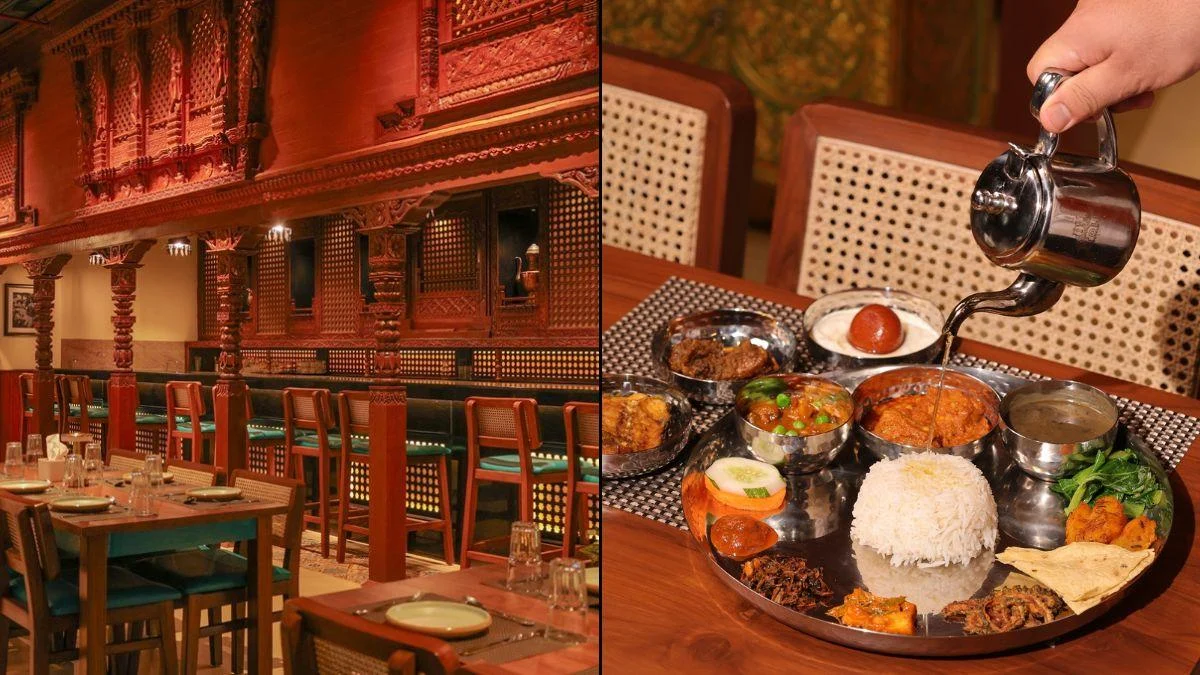
New Delhi, India – For too long, Delhi’s culinary landscape has been dominated by a singular perception of Nepali cuisine: the ubiquitous momo. While this beloved dumpling has indeed found a fervent following, it has often overshadowed the vast and rich tapestry of Nepal’s gastronomic heritage. The city’s restaurants have largely offered a limited, often Indianized, interpretation of Nepali flavors, leaving a significant void for authentic culinary experiences. This gap is now being artfully filled with the arrival of Jimbu Thakali, a celebrated Kathmandu-based restaurant chain dedicated to showcasing the nuanced and diverse Thakali cuisine of Nepal.
A Culinary Voyage Rooted in Tradition
Jimbu Thakali, now open at M3M 65th Avenue in Gurugram, is more than just a restaurant; it’s a portal to the heart of Nepal. From the moment one steps inside, the dedication to authenticity is palpable. The staff are not merely servers but storytellers, eager to share the origins of each dish and the cultural significance of the restaurant’s decor, which features terracotta surfaces, earthy textures, traditional Newari-style wooden detailing, and evocative artwork from the Mustang region.
The restaurant’s commitment to authenticity extends to its ingredients. While staples like lentils, vegetables, and meats are sourced locally to ensure freshness, crucial elements that define Thakali cuisine remain imported. These include the eponymous aromatic Himalayan herb, jimbu, and the zesty wild-growing Nepali Sichuan pepper, timur. These ingredients, with their distinctive flavors, are irreplaceable and form the very soul of the dishes served.

The Visionary Behind Jimbu Thakali
The driving force behind Jimbu Thakali is Vivek Man Sherchan, a hospitality entrepreneur with a unique journey. After training as a commercial airline pilot and spending years in the food and beverage industry in the United States, Sherchan returned to Nepal in 2010. His initial venture, Capital Grill, became a popular establishment for expatriates and diplomats. However, the devastating 2015 earthquake prompted a profound reevaluation of his business pursuits, leading to the conception of Jimbu Thakali.
"I decided, when in Rome, you know? What’s the most popular palate in Nepal?" Sherchan recounts his thought process. His answer was the food that Nepalis consumed daily at home – rice-based meals accompanied by vegetables, lentils, and a variety of side dishes. The challenge, he realized, was to elevate this everyday familiarity into a refined restaurant experience.
The Essence of Thakali Cuisine: A Staple Reimagined
Sherchan emphasizes that the Thakali thali is not merely a meal but a fundamental part of Nepali life. "The thali itself is something that the average Nepali household consumes almost every day," he explains. Jimbu Thakali was born from the idea of providing a convenient yet authentic dining experience, allowing people to enjoy the comfort of home-cooked meals in a restaurant setting. "If you have someone actually already doing that and gives you a better service, why not?" he poses, highlighting the restaurant’s value proposition.

The Historical Tapestry of Thakali Flavors
The origins of Thakali cuisine are deeply intertwined with the Thak Khola region of Mustang, a historically significant area along the Kali Gandaki trade corridor. The high altitude of Mustang dictated its agricultural output, with buckwheat becoming a staple. Simultaneously, its strategic position on trade routes facilitated the exchange of ingredients and culinary influences from afar. This unique geographical and cultural context shaped the distinctive characteristics of Thakali food, with ingredients like jimbu, timur, and fermented products playing pivotal roles.
Sherchan elaborates on the fascinating evolution of the Thakali thali, particularly in relation to rice. "Mustang does not cultivate a single grain of rice," he states. "It’s buckwheat, but they grow the best buckwheat. So, whenever they had any chance of having rice, they imported rice. Whenever they cooked rice, they made sure everything around it was extra special. And that’s how the Thakali thali evolved." This historical dependence on imported rice, coupled with a rich local produce, led to the development of a thali that celebrated every component, transforming a simple meal into a culinary art form.
A Culinary Revelation: Dishes That Tell a Story
The menu at Jimbu Thakali is a testament to this philosophy, offering a delightful exploration of authentic Nepali flavors. Among the standout dishes are the Mustang-spiced potatoes, a deceptively simple yet profoundly satisfying preparation. Tossed with salt and jimbu, these potatoes are cooked to a tender perfection, their subtle flavors enhanced by the aromatic herb.

Equally intriguing are the Kanchayamba, Thakali buckwheat fries, which offer a delightful alternative to traditional potato fries. The nutty, grainy texture of buckwheat, when fried, becomes a wonderfully crisp vessel for seasoning, providing a unique and enjoyable culinary experience.
The mushroom choila is another revelation. Served cold and delicately coated in Newari spices, it presents a captivating interplay of sharp, acidic notes against the chilled texture of the mushrooms. While initially an unexpected combination, it quickly becomes deeply compelling and addictive.
Even the mutton momos, while more familiar, stand out due to the meticulous effort invested in their filling and seasoning. They are a refined rendition of a beloved dish, showcasing the quality of ingredients and the precision of preparation.

The Indulgent "Cheli Jwai" Thali
However, the undisputed highlight for many diners is the cheli jwai Thali, a culinary experience named after the Nepali term for a son-in-law. "The idea, as Vivek explains, is that ‘when the son-in-law comes home, you pamper him with an extravagant meal’," Sherchan shares. This thali embodies the spirit of generous hospitality and culinary abundance, and it’s easy to understand its popularity.
The success of a truly great thali, as this reviewer observed, lies in the consistency of its offerings. It’s one thing to excel in a few dishes, but maintaining an exceptional standard across every element on a sprawling plate is what truly distinguishes a mediocre meal from a magnificent one. The cheli jwai thali at Jimbu Thakali unequivocally falls into the latter category. From the perfectly cooked mutton and flavorful chicken to the comforting homestyle dal, tender aloo, slightly bitter karela, and crispy fish fry, accompanied by papad and a serving of saag, each component shines individually. The meal culminates in a rich, decadent finale with generous dollops of liquid ghee poured over the entire plate, creating a symphony of flavors and textures that is hard to fault.
A Legacy of Flavor: A Mother’s Recipes
A significant part of Jimbu Thakali’s culinary identity can be attributed to Vivek Man Sherchan’s mother, whose recipes form the bedrock of the Thakali menu. "Our entire Thakali menu is based on my mom’s recipes," he reveals. His mother inherited a rich tradition of cooking from a family renowned for its culinary prowess, particularly in preparing large communal meals and celebrations. This familial connection imbues the food with a profound sense of continuity, a vital element as Jimbu Thakali endeavors to introduce a cuisine deeply rooted in domestic cooking to a new and discerning market.

Bridging Cultures: The "Roti Beti" Connection
Sherchan eloquently describes the historical and cultural relationship between India and Nepal using an old Nepali expression: "roti beti ke rishte." This phrase translates to "the relationship of bread and daughters," signifying a deep familial and cultural connection. "It’s like the betis traveled, but the roti never did," he observes, highlighting the surprising scarcity of authentic Nepali restaurants in Delhi for so long, despite the immense popularity of momos.
The modern era has seen an intensification of cultural exchange between Delhi and Kathmandu, with frequent flights making the journey increasingly accessible. This increased connectivity has undoubtedly contributed to a growing appreciation for authentic Nepali culture and cuisine. Sherchan notes that a significant portion, around 80%, of Jimbu Thakali’s early patrons in Gurugram had previously dined at their outlets in Nepal, underscoring the brand’s existing reputation and the demand for its offerings.
Echoes of History: The Walls That Tell Tales
Beyond its culinary offerings, Jimbu Thakali is adorned with visual narratives that add layers of depth to the dining experience. The restaurant’s interiors are a curated blend of aesthetic elements, featuring terracotta surfaces, earthy textures, Newari-style wooden detailing, and artwork from Mustang. However, it is the series of black-and-white photographs interspersed throughout the space that hold particularly captivating backstories.

Sherchan recounts a remarkable tale of a European man, known locally as Ansari, who arrived in his family’s village in Mustang during the 1950s and was taken in by his grandfather. Ansari spent several years documenting the region through his lens. It was only later that the family discovered his identity: a Third Reich fugitive who had fled Nazi Germany and was living in hiding.
Decades later, amidst the political shifts following China’s takeover of Tibet and the presence of Tibetan guerrillas in Mustang, Nepalese authorities, mistaking the enigmatic foreign photographer for a CIA operative, deported him.
Years later, the man returned to Nepal, embracing a new path as a Buddhist monk named Sugata. His extraordinary life journey was eventually chronicled in the book Bird of Passage, co-authored with Rachel Kellett. In the late 1990s, Sugata, now an elderly and blind figure, returned to Mustang and entrusted the original photographic negatives to Sherchan’s cousin. These poignant images, capturing a forgotten era and a man of mystery, now adorn the kitchens of Jimbu Thakali, serving as a constant reminder of the restaurant’s deep connection to its heritage and the intriguing stories that shape it.

A Culinary Homestay Experience
With such a rich and curious history embedded within its very walls, Jimbu Thakali offers more than just a meal; it provides a genuine culinary homestay experience. It is a destination worth seeking out, especially for those ready to venture beyond Delhi’s ubiquitous momo obsession and discover the multifaceted culinary landscape of Nepal. The restaurant invites diners to taste the authentic Nepal that exists far beyond the familiar dumpling, offering a journey of flavors, stories, and cultural immersion.
Pricing: A meal for two at Jimbu Thakali is approximately ₹2,000.
Location: M3M 65th Avenue, Sector 65, Gurugram.
Hours: Currently open for lunch and dinner.
