

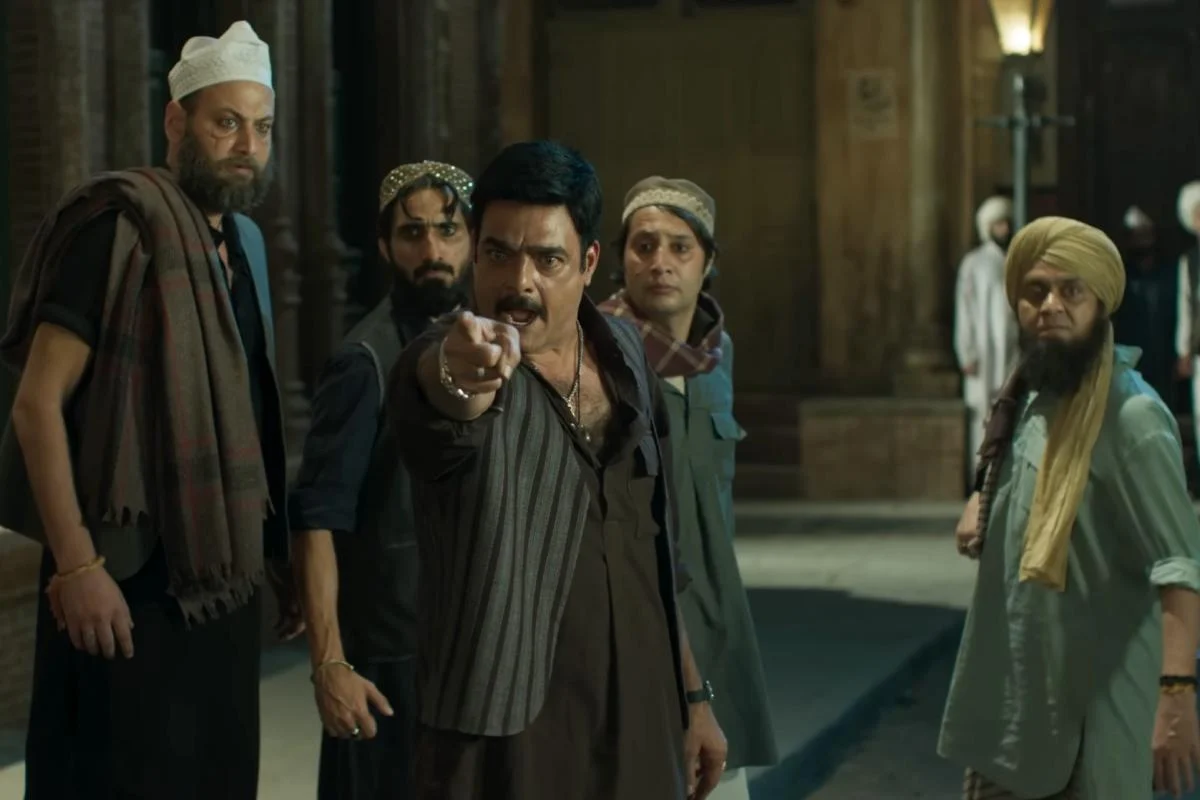
In a cinematic era often defined by divisive narratives and polarized portrayals of the past, director Rajkumar Santoshi’s latest offering, "Batwara 1947," emerges as a poignant and deeply humanistic exploration of the Partition. Adapted from Asghar Wajahat’s seminal play, Jis Lahore Nai Vekhya O Janmeya Nai, the film bravely confronts the ideological chasm of the Partition and artfully subverts the established persona of its lead, Sunny Deol, to underscore a profound truth: that empathy and shared human experience can transcend even the most rigidly drawn artificial borders.
The film’s narrative centers on a Muslim refugee family, the Mirzas, who arrive in Lahore after fleeing the harrowing communal violence in Meerut. Having lost everything, they are allocated a sprawling haveli, a symbol of hard-won refuge and supposed recompense. Their newfound sanctuary, however, is unexpectedly occupied by an elderly Hindu woman, Durga Devi, affectionately known as Mai. This encounter sets the stage for a profound moral and emotional confrontation, forcing the characters, and indeed the audience, to question the very foundations of identity, belonging, and humanity in the wake of unimaginable trauma.
A Tale of Two Cities, A Shared Humanity
The premise of "Batwara 1947" is deceptively simple, yet it serves as a powerful vessel for a complex exploration of the human psyche under duress. Sikandar Mirza and his wife Hamida (portrayed with nuanced vulnerability by Preity Zinta) carry the deep psychological scars of communal brutality. For them, the haveli represents not just a physical space, but a sanctuary from the nightmares that haunt their waking hours. It is a tangible representation of a life stolen and a future they desperately seek to rebuild. Their initial perception of Mai is one of otherness, a chilling reminder of the very people they believe inflicted such unimaginable suffering upon their community.
However, Santoshi masterfully peels back the layers of animosity and ingrained prejudice. The film challenges the audience’s preconceived notions by presenting Mai not as a symbol of the "other," but as a fragile grandmother, offering tea and home remedies – acts of simple human kindness that begin to chip away at the hardened resolve of the Mirzas. The narrative deliberately contrasts the abstract hatred fueled by communal rhetoric with the tangible reality of a shared human vulnerability.
The Unraveling of Prejudice: A Mother’s Love as a Universal Compass
The film’s true strength lies in its subtle yet powerful portrayal of Sikandar’s evolving perspective. Despite the machinations of opportunistic neighbors, the radicalized influence of his own son, Karan Deol, and the pervasive communal propaganda that seeks to divide, Sikandar begins to see beyond religious dogma. He witnesses in Mai not an enemy, but a reflection of his own lost mother, a poignant realization that trauma knows no religious affiliation. This burgeoning empathy is powerfully articulated when Sikandar declares, "A mother is a religion in herself; every person’s first religion is their mother." This pivotal moment signals a profound shift in the film’s thematic focus, redefining patriotism not by national borders or religious affiliations, but by an internal compass of morality and shared human connection.
The deeply moving sequence on Diwali, where Mai sings a devotional Ram bhajan, further blurs the lines of religious and familial bonds. The lyrics, penned by Javed Akhtar and set to a soul-stirring melody by A.R. Rahman, resonate with a universal truth: "If you see with the eyes of your heart, you will find Ram everywhere." This moment not only softens Mai’s hardened exterior but also evokes in Sikandar the memory of his own son, lost to the same barbarity that fuels his struggle for forgiveness and peace. The film’s critique of the Central Board of Film Certification (CBFC) for assigning an ‘A’ certificate to a film promoting such a timely and humane message is a testament to its perceived power to challenge societal norms.
Cinematographic Prowess and Theatrical Roots
Ace cinematographer Santosh Sivan plays a crucial role in navigating the film’s dual atmospheric zones. He skillfully captures the psychological terror of the Partition’s aftermath, creating an immersive experience that draws the audience into the characters’ trauma. Yet, he also seamlessly transitions to the more bombastic, Sunny Deol-esque action sequences, a structural paradox that Santoshi employs to good effect.
"Batwara 1947" retains the theatrical essence of its source material, with Santoshi carefully preserving the archetypes that are essential to stage plays for immediate character establishment. However, he imbues these archetypes with a cinematic flair, tailored to leverage the star power of his lead actors. This preservation of the play’s stylized nature lends the film a timeless quality, transforming it into a moral fable that transcends its historical setting.
The Enduring Magic of Santoshi and Deol: Redefining Action for Empathy
The reunion of director Rajkumar Santoshi and actor Sunny Deol, a partnership that defined gritty 90s cinema with iconic films like Ghayal, Ghatak, and Damini, proves to be a significant draw. Their magic has not waned; instead, it has evolved. Santoshi, known for his high-octane directorial style, here channels his energy into a slower, more emotionally driven narrative. He masterfully strips away Deol’s post-Gadar persona of overt jingoism and replaced it with a portrayal of a vulnerable Muslim migrant.
In "Batwara 1947," Deol’s character, Sikandar, not only uses his formidable physical presence to protect an elderly Hindu woman but also, reminiscent of his earlier roles in Ghatak and Damini, interrogates the silence and inaction of a seemingly virtuous civil society. Deol delivers his most potent performances when his explosive vocal delivery is channeled into a desperate, morally righteous interrogation of the system. The film’s genius lies in its ability to make the audience, accustomed to cheering for his patriotic fervor, now applaud his roar for empathy and coexistence. The message is delivered with the force of a sledgehammer, urging a re-evaluation of heroism from brute force to compassionate understanding.

Shabana Azmi: A Pillar of Grace and Emotional Depth
Shabana Azmi, as Durga Devi, delivers a performance of profound grace and unwavering poise, acting as a perfect aesthetic foil to Sunny Deol’s intensity. Much like Naseeruddin Shah’s compelling performance in Main Vaapas Aaunga, Azmi, with her gentle Punjabi dialect and the subtle quiver in her voice, imbues Mai with immense emotional gravity. Her steadfast refusal to abandon "Durga Niwas" is not an act of political defiance, but a quiet, resolute assertion that the lines drawn by cartographers can never truly partition the human soul.
The Nuances of the Play vs. The Film’s Adaptations
While "Batwara 1947" excels in highlighting the burgeoning bond between Mai and Sikandar, it does so at a perceived cost to the original play’s rich tapestry of supporting characters. In Wajahat’s play, these characters represented the broader socio-political fabric of Lahore, offering diverse perspectives on the Partition’s impact. In the film adaptation, with limited screen time and the need to accommodate Sunny Deol’s central role, some of these crucial characters are regrettably reduced to functional plot devices.
The philosophical poet and the progressive priest, who held significant ideological weight in the play, are given minimal space to develop. The film also shifts the narrative burden of confronting the primary antagonist, Yakub Pahalwan (played by Abhimanyu Singh, who veers from a genuine threat to a caricatured portrayal), from the priest’s ideological conviction to Sikandar’s physical resilience. This shift, while amplifying Deol’s action hero status, arguably diminishes the nuanced theological and social commentary present in the original text.
Furthermore, the father-son dynamic between Sunny Deol and his real-life son, Karan Deol, who plays Sikandar’s radicalized son, feels underdeveloped and lacks significant impact. Karan’s performance, while earnest, struggles to fully embody the emotional and linguistic nuances expected of a character raised in a Muslim household amidst the turmoil of the Partition.
Implications and a Call for Empathy
Despite these narrative compromises, "Batwara 1947" stands as a powerful and timely cinematic achievement. Santoshi’s occasional reliance on a cartoonish villain and larger-than-life action sequences are ultimately overshadowed by the profound impact of the Sunny-Shabana dynamic and the film’s overarching message of empathy and coexistence.

In 2001, Gadar: Ek Prem Katha revolutionized the way popular Indian cinema approached the Partition, often through a lens of nationalistic fervor. With "Batwara 1947," Sunny Deol, in a remarkable turn, flips that 25-year-old legacy on its head. He moves beyond the jingoistic portrayals of the past to champion a message of human connection and understanding. The film poses a crucial question to its audience: will this tide of empathy turn, and will audiences embrace a narrative that prioritizes shared humanity over divisive ideologies?
As "Batwara 1947" continues to resonate with audiences in theaters, it serves as a powerful reminder that in the aftermath of conflict and division, it is the quiet acts of kindness, the recognition of shared pain, and the willingness to see the "other" as fundamentally human that hold the true power to heal and to build a better future. The film is not just a retelling of a historical event; it is a profound meditation on what it truly means to be human in a world often fractured by artificial boundaries.
