

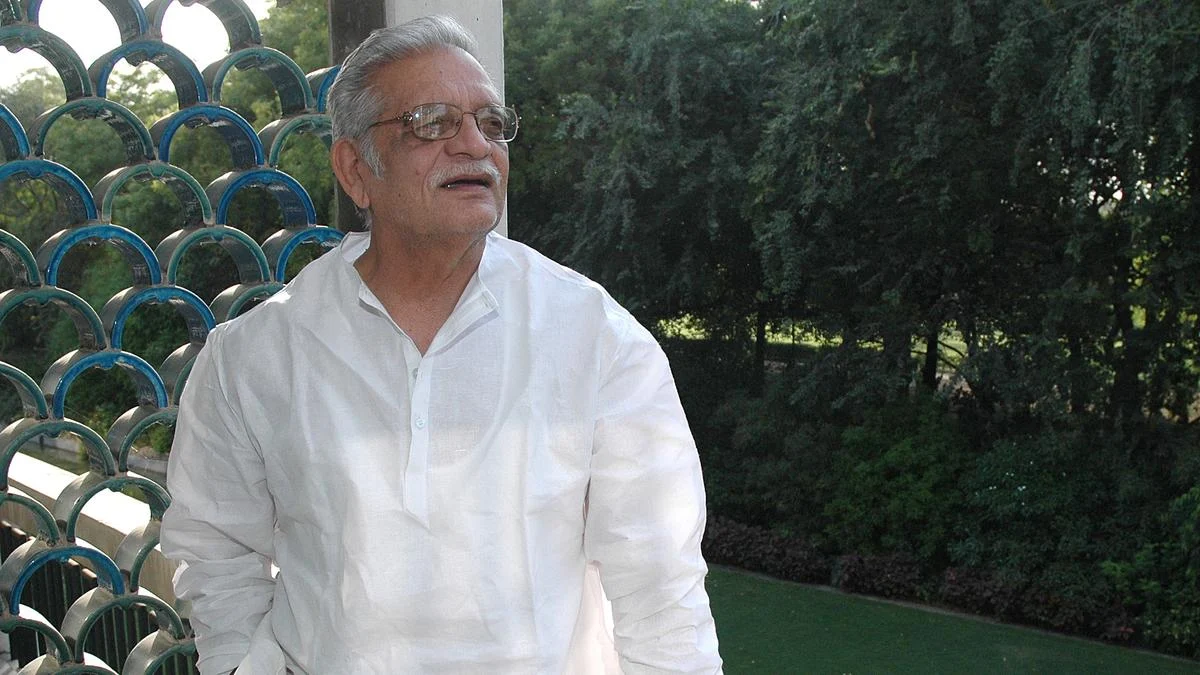
The multifaceted genius of Gulzar Sahib continues to shape Indian arts and letters, a testament to his relentless creativity and profound humanism.
In the grand tapestry of Indian arts and letters, few figures loom as large or cast as enduring a shadow as Sampooran Singh Kalra, affectionately known to the world as Gulzar. Like a mighty river that flows with an unyielding spirit, constantly transforming yet retaining its essential character, Gulzar’s career, spanning over seven decades, embodies a similar paradox of dynamism and permanence. He has not merely navigated the shifting tides of artistic movements but has, in many ways, been a vanguard, consistently producing work of exceptional caliber without succumbing to the grandiosity that often accompanies such sustained brilliance. His journey is a profound exploration of creativity’s enduring power, its ability to adapt, innovate, and resonate across generations and disciplines.
A Legacy Forged in Versatility
Gulzar’s is a name synonymous with artistic excellence across an astonishing spectrum of public crafts. An influential Urdu poet whose verses echo with profound emotion and sharp intellect, he is also a celebrated lyricist whose songs have become anthems for millions. His prowess extends to filmmaking and television direction, where he has crafted narratives that are both thought-provoking and deeply human. Beyond these visual mediums, he is a prolific author, screenwriter, children’s writer, and translator, each role undertaken with a signature blend of sensitivity and insight.
The sheer breadth of his accomplishments is staggering. From the prestigious Dadasaheb Phalke Award, India’s highest honor in cinema, to the Jnanpith Award, India’s highest literary honor, Gulzar’s contributions have been recognized with every conceivable national and international accolade. He has even graced the global stage with an Oscar for his work on "Jai Ho" and a Grammy Award, underscoring the universal appeal of his artistry. As he himself aptly puts it, quoting a line he penned for the film Anand, his career has been not just extensive but profoundly expansive – "Zindagi badi honi chahiye, lambi nahi" (Life should be big, not just long).
From Humble Beginnings to Literary Titans
Gulzar’s entry into the realm of film songwriting occurred at a time when the industry boasted a constellation of lyrical masters. Stalwarts like Shailendra, Sahir Ludhianvi, Shakeel Badayuni, and Rajendra Krishan were the reigning voices, setting a formidable standard. Yet, Gulzar, with his debut film song for Bimal Roy’s Bandini – "Mora Gora Ang Laile," imbued with the essence of Vaishnava verse – immediately carved out his distinct niche. It was a remarkable feat to establish such a singular voice in a room already filled with such titans.
The Unmistakable Gulzar Idiom
Despite the inherent constraints of film songs – the need to adhere to metre, rhyme, musicality, and specific narrative situations – Gulzar has consistently commanded a unique and instantly recognizable idiom. His style defies simple categorization, presenting a fascinating amalgam of artistic elements. It is a curious blend that encompasses:
- Abstraction: As seen in the philosophical musings of "Is mod se jaate hain" from Aandhi.
- Symbolism: The evocative imagery in "Wo Yaar hai Jo Khushboo Ki Tarah, Jiski Zubaan Urdu Ki Tarah" from Dil Se.
- Poetic Flourish: The tender lyricism of "Do Nainon Mein Aansoo Bhare Hain, Nindiya Kaise Samaye" from Khushboo.
- Paronomasia (Wordplay): The playful yet profound use of language in "Sare ke Sare gama Ko Lekar Gaate Chale" from Parichay.
- Political Messaging: The poignant social commentary in "Haal Chaal Thik Thaak Hain" from Mere Apne.
- Allusion to Nature: The lyrical evocation of the elements in "Hawaaon Pe Likh Do" from Do Dooni Chaar.
- Vivid Imagery: The evocative depiction of small towns in "Chhote Chhote sheheron" from Bunty Aur Babli.
- Dark Humor: The stark wit in "Goli Maar Bheje Mein" from Satya.
- Arcane Vocabulary: The rich and evocative use of language in "Aab-o-dana dhoondhte hain ek aashiyaana dhoondhte hain" from Gharonda.
- A Rich Worldview: The contemplative wisdom of "Aane Wala Pal" from Golmaal.
- Emotional Heft: The profound emotional impact that can "ambush a listener mid-song" in lines like "Humne Dekhi hai In Aankhon Ki Mehekti Khushboo" from Khamoshi.
Critics might argue that such intellectual sophistication is at odds with the presumed simplicity of a "film song," a form often expected to resonate with the masses without demanding extensive interpretation. However, Gulzar has consistently defied this notion. Many of his songs have achieved unparalleled popular acclaim. "Humko Mann Ki Shakti Dena" from Guddi, a song that remains a staple in schools even today, exemplifies his ability to craft lyrics with profound spiritual and moral resonance. Similarly, the rustic exuberance of "Beedi Jalaile" from Omkara and the infectious playfulness of "Kajra Re" from Bunty Aur Babli demonstrate his versatility in capturing diverse moods and themes. His uncommon idiom has found universal acceptance, greatly aided by composers such as R.D. Burman, A.R. Rahman, and Vishal Bhardwaj, who have masterfully matched their musical compositions to his lyrical genius.

The Courage of a Filmmaker and Screenwriter
Gulzar’s intellectual rigor and artistic courage extend seamlessly to his work as a filmmaker and screenwriter. Many of his cinematic endeavors are adaptations of literary works, a testament to his ability to grasp the emotional core of a story and translate it into the visual medium with profound sensitivity. He possesses a remarkable knack for infusing cinema with an understanding of language, character nuances, subtext, the power of silence, recurring motifs, and thematic refrains.
His films have often tackled topical issues, championed progressive values, and spoken truth to power, all without ever descending into preachiness. He presents nuanced worldviews and poses uncomfortable questions, inviting audiences to engage with complex societal issues.
- Mere Apne (1971): His directorial debut, this film centered on disaffected youth, exploring themes of political disillusionment and loneliness.
- Aandhi (1975): A political thriller that boldly centered its narrative on a female protagonist, granting her immense agency and placing the male lead in a supportive role.
- Mausam (1975): This film delicately navigated the complex and potentially taboo subject of a sex worker’s misplaced romantic affection for her biological father, a narrative choice that few directors would have dared to undertake at the time.
- Maachis (1996): A bold and layered exploration of radicalization set against the backdrop of the Punjab insurgency, it probed raw wounds and societal complexities without resorting to simplistic finger-pointing.
Gulzar has consistently eschewed the easy path, both in his choice of subjects and the sophisticated manner in which he treats them, demonstrating an unwavering commitment to artistic integrity and intellectual exploration.
A Prolific Voice Beyond the Silver Screen
Beyond his contributions to cinema, Gulzar’s prowess as a poet and prose stylist is nothing short of prolific. His Partition stories carry the immense emotional weight of firsthand experience, resonating with a profound sense of loss and displacement. He writes for children with the same sincerity and depth he reserves for adult readers, bridging generational divides with his storytelling.
His poetry seamlessly navigates the structured beauty of the Urdu ghazal and nazm, while also embracing the liberating autonomy of free verse. He is also the celebrated creator of the Triveni, a unique three-line verse form, akin to an Indian Haiku, where the third line, through a subtle shift in perspective, entirely alters the emotional import of the first two.
Translations form a significant and illuminating part of Gulzar’s oeuvre. He has independently translated literary giants such as Rabindranath Tagore and Kusumagraj. Furthermore, his ambitious project, A Poem a Day, anthologizes scores of contemporary poets from across all Indian languages, showcasing his dedication to bridging linguistic and cultural divides through poetry. What emerges from this vast body of work is an unyielding love not merely for the written word, but also for the reader. It is a rare ability to distill the most mundane observations into exquisite poetry, making him akin to an itinerant water-carrier whose vessel, eternally replenished, continues to pour out its wisdom to generations of thirsty readers.
A Humble Giant: Respect for Seniors and Peers
A remarkable facet of Gulzar’s personality is his unmitigated affection and profound respect for his seniors and peers. This reverence permeates his work, akin to the moon borrowing the sun’s luminosity but softening it for a gentler passage. Whether in his biographical sketches, his extensive interviews, or his adaptations of their lives and works, an unfeigned humility shines through, a willingness to allow another’s genius to stand taller than his own.

He frequently quotes or paraphrases poets like Khusrau, Ghalib, and T.S. Eliot, a testament to his groundedness and his secure understanding of his own craft. His narratives on figures like his mentor Bimal Roy, his friend R.D. Burman, and his seniors Shailendra, Sahir, and Faiz are imbued with immense tenderness. His landmark tele-serials, such as Mirza Ghalib, which chronicled the life of the iconic Urdu poet, and Tehrir Munshi Premchand Ki, dedicated to the celebrated Hindi author, stand as glorious examples of his respectful and insightful tributes.
The Paradox of Misattribution in the Digital Age
Ironically, Gulzar’s towering stature has given rise to a curious modern phenomenon. Having attained a quasi-mythological status amongst the masses, his name is routinely invoked to lend gravitas to mediocre verse he never penned. The internet is awash with lines deliberately misattributed to him, aiming to confer credibility and heft to anything vaguely poetic. It is a poignant irony of our times that the more a voice commands public trust, the more it is compelled to bear the weight of words it never uttered.
While a vigilant community of admirers actively combats this digital misattribution through the hashtag #NotByGulzar, its sheer volume underscores how perversely his poetic persona has permeated public consciousness. He is, at times, perceived more as a brand to be flaunted than the painstaking artist he has always been, dedicated to the meticulous craft of his creations.
Endurance Through Rigor and Curiosity
In an era characterized by public posturing, where dilettantes often produce fleeting content for short attention spans, and where flamboyance is frequently rewarded over moderation, Gulzar stands as a powerful testament to longevity and restraint. The patient romance of classical arts often finds itself overshadowed by the immediate titillations of faster, more ephemeral forms. Yet, Gulzar’s enduring presence is less a result of a fortunate bargain struck with time and more a consequence of his unwavering rigor, his resilience as a man deeply devoted to his craft, and his incorruptible curiosity. This relentless inquisitiveness continues to propel him to explore new ideas and discover novel ways of articulating them.
A Lifelong Journey of Discovery
In one of his poignant songs from the 1980s film Hip Hip Hurray, Gulzar encapsulates his philosophy of life and art:
Roz tere jeene ke liye ek subah mujhe mil jaati hai
(Every day, to live your life, a morning comes to me)
Murjhati hai koi shaam agar to raat kahin khil jaati hai
(If an evening wilts, a night blossoms somewhere)

Main roz subah tak aata hoon, aur roz shuru karta hoon safar
(I arrive each morning, and begin my journey anew)
Haath badha ae zindagi, aankh milake baat kar
(Extend your hand, O life, look me in the eye and speak)
As Gulzar Sahib turned 92 on August 18, 2026, what truly sets him apart is his extraordinary ability to meet life with the alertness of someone encountering it for the very first time. He looks it directly in the eye, daring to chronicle its triumphs and sorrows with unwavering fidelity and boundless imagination.
Happy birthday, Gulzar Sahib! We are infinitely grateful to have you in our lives, for better and for verse.
(Kalyan is an IT professional with Infosys. Views expressed are personal.)
