

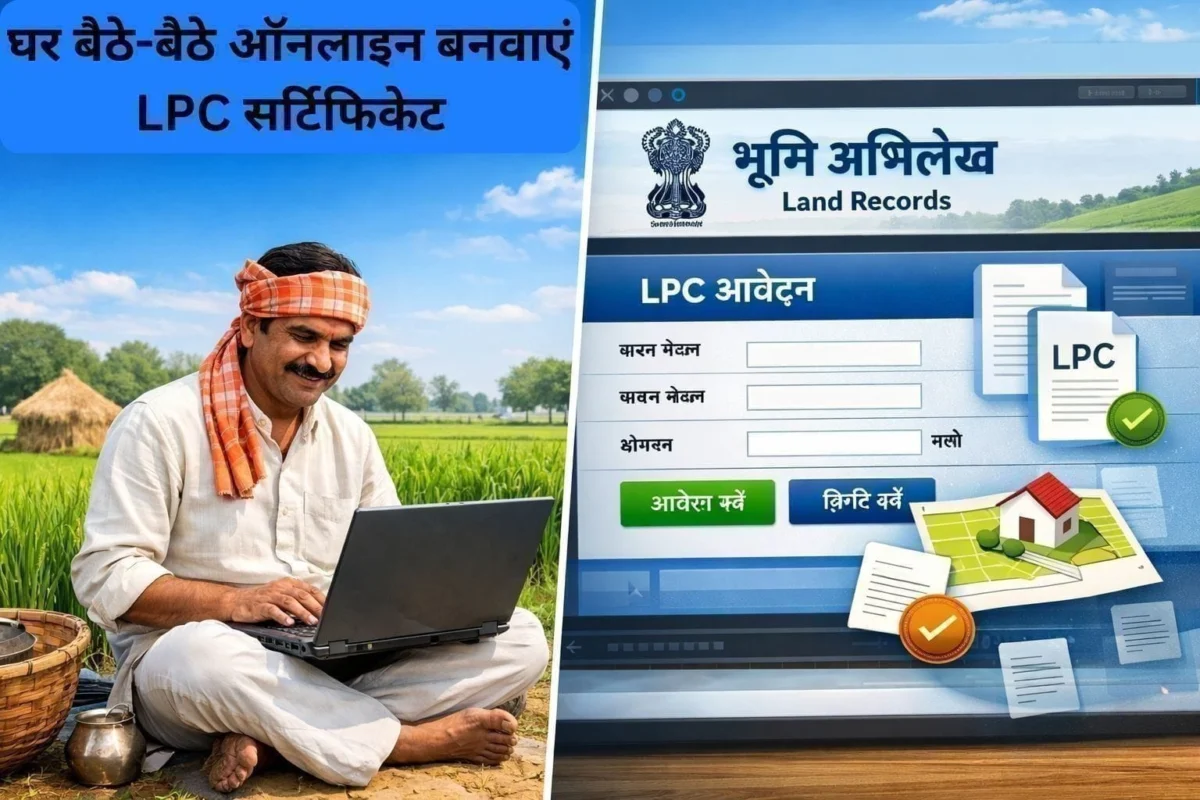
PATNA – In a significant move toward administrative transparency and the modernization of agrarian records, the Government of Bihar has successfully transitioned the Land Possession Certificate (LPC) process to a fully digital platform. This shift marks a departure from decades of bureaucratic delays, offering the state’s millions of landowners a streamlined, time-bound, and corruption-resistant method to validate their property rights.
The Land Possession Certificate, colloquially known as the LPC, is more than just a piece of paper; it is the primary legal instrument that establishes an individual’s actual physical possession and ownership of a specific plot of land. For a state like Bihar, where the economy is fundamentally rooted in agriculture, the LPC serves as the "identity card" of the land, unlocking access to credit, subsidies, and legal protection.
1. Main Facts: Understanding the LPC and its Digital Avatar
The Land Possession Certificate is a mandatory document issued by the Revenue and Land Reforms Department of Bihar. It certifies that the applicant is the rightful occupant of the land and that the land records (Jamabandi) are updated in their name.
Why the LPC is Indispensable
Under the current administrative framework, the LPC is required for several critical activities:
- Agricultural Credit: Banks and financial institutions mandate a valid LPC for the issuance of Kisan Credit Cards (KCC) and agricultural loans.
- Government Subsidies: To avail of benefits under various state and central schemes, such as the PM-Kisan Samman Nidhi or diesel subsidies, farmers must prove possession through this certificate.
- Legal Clarity: In cases of land disputes or property sales, the LPC acts as prima facie evidence of possession, preventing illegal encroachments and fraudulent transactions.
- Court Proceedings: It is often required as a supporting document in civil litigations involving land boundaries.
The Digital Shift
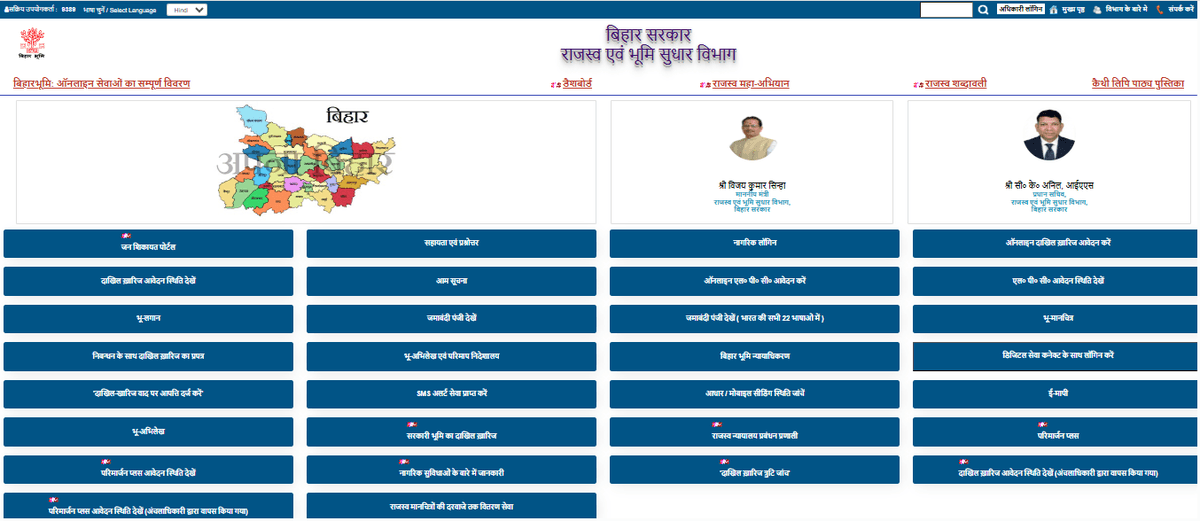
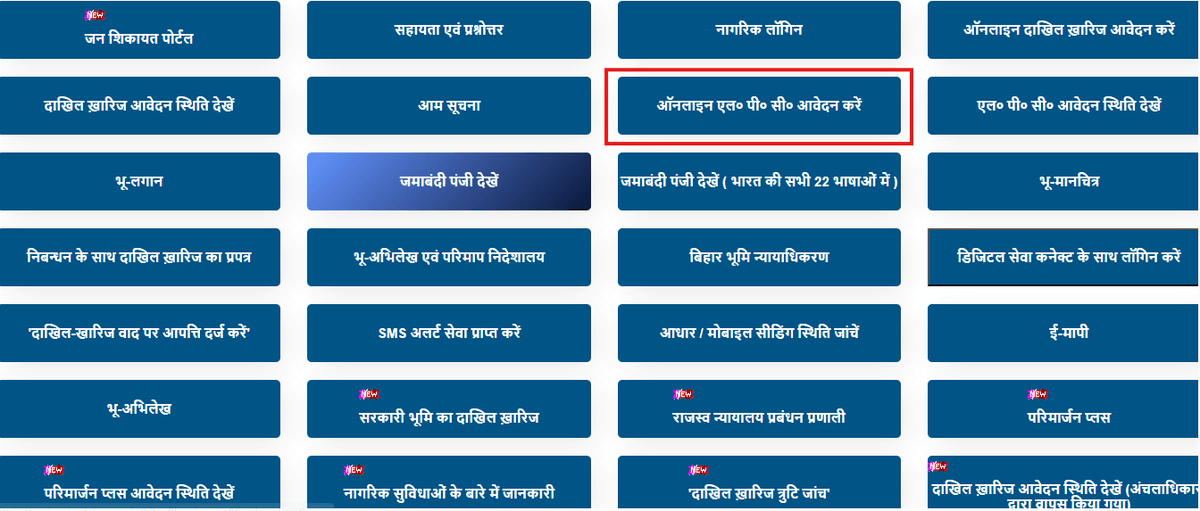
Previously, obtaining an LPC required multiple visits to the Anchal Adhikari (Circle Office), often involving intermediaries and significant "processing time." The launch of the Bihar Bhumi Portal (biharbhumi.bihar.gov.in) has centralized this process. Citizens can now apply from Common Service Centers (CSCs) or their own homes, with a statutory timeline of 7 to 30 days for issuance.
2. Chronology: From Feudal Records to the Bihar Bhumi Portal
The journey of land records in Bihar is a complex narrative of reform. To understand the importance of the online LPC, one must look at the timeline of administrative evolution.
- The Legacy Era (Pre-2000s): Land records were maintained manually in registers known as Registers-II. These were prone to wear and tear, manipulation, and loss. Obtaining a possession certificate was a matter of administrative discretion rather than a right.
- The Digital India Land Records Modernization Programme (DILRMP): Following national guidelines, Bihar began the Herculean task of digitizing millions of legacy land records. This involved scanning old maps and digitizing the Jamabandi (records of right).
- 2017-2020: The Portal Launch: The Bihar Bhumi portal was launched to provide "Anytime, Anywhere" access to land records. Initially, it allowed users to view their Khatiyan and Register-II details.
- 2021-Present: Integrated Services: The government integrated the LPC application process into the portal. This was followed by the introduction of "Parimarjan," a digital window to correct errors in digitized records, ensuring that the data used for LPCs is accurate.
3. Supporting Data: The Step-by-Step Implementation Flow
The efficiency of the online LPC system is built on a structured four-step digital workflow.
Step 1: Registration and Authentication
The user must visit the official portal and create a secure profile using a mobile number and email ID. This ensures that the application is tied to a verifiable identity, reducing the risk of proxy applications.
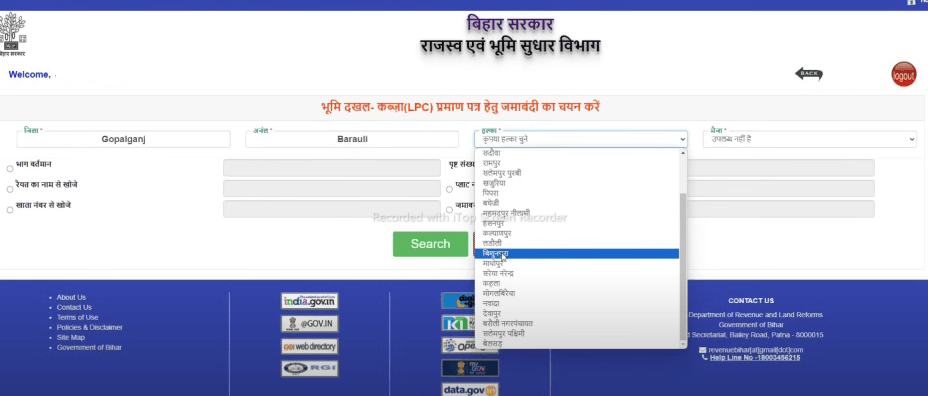
Step 2: Identification of the Land Parcel
The applicant selects the District, Circle (Block), and Mauza (Village). The system then requires the selection of the land parcel using the Khata number or Jamabandi number. This step is crucial because the LPC can only be issued if the land is already registered in the applicant’s name in the digital Register-II.
Step 3: Documentation and Self-Declaration
A unique feature of the online process is the requirement of a Self-Declaration (Affidavit). The applicant must upload a signed declaration in PDF format, swearing that the information provided is true and that they are in actual possession of the land. This shifts the legal burden of truth to the applicant while simplifying the verification process for the Circle Officer.
Step 4: Tracking and Issuance
Upon submission, the system generates a unique Application ID. This ID allows the applicant to track the movement of the file from the Revenue Karamchari (Village Accountant) to the Circle Inspector and finally the Circle Officer (CO).
4. Official Responses and Administrative Mechanism
The Revenue and Land Reforms Department has emphasized that the online LPC is a tool for empowerment. Official directives from the department state that any delay beyond the 30-day window without a valid reason can lead to administrative inquiries against the concerned Circle Officer.
Troubleshooting through "Parimarjan Plus"
A common official response to the high rejection rate of LPCs was the discrepancy in old records. To address this, the government launched Parimarjan Plus. This portal allows farmers to rectify mistakes in their name, father’s name, area of land, or khata/khesra numbers online. Once the record is corrected via Parimarjan, the LPC application usually proceeds without hindrance.
Verification Standards
Revenue officials clarify that while the process is online, the "physical possession" aspect is still subject to verification. The Revenue Karamchari is tasked with ensuring that the applicant is not just the owner on paper but is also the actual occupant, especially in cases where the land might be under litigation or "Gair Mazarua" (government) category.
5. Implications: Transparency, Economy, and Social Justice
The move to an online LPC system has profound implications for the socio-economic fabric of Bihar.
Impact on Rural Credit
By making LPCs accessible, the government has directly boosted the KCC (Kisan Credit Card) penetration. With a valid LPC, a farmer can approach any nationalized or rural bank and claim credit at subsidized interest rates. This reduces the reliance on local moneylenders who often charge usurious rates, leading to debt traps.
Reduction in Corruption and "Middleman" Culture
The "Circle Office culture," often criticized for its opacity, has been significantly disrupted. Since the application is digital, every step is time-stamped. Officials can no longer "sit" on files indefinitely without being flagged by the system. This transparency has significantly reduced the "speed money" traditionally associated with land documentation.
Legal Empowerment
For the first time, small and marginal farmers have a reliable way to defend their property. In a state where land disputes account for a large percentage of criminal cases, having a government-verified, digitally signed LPC provides a layer of legal security that was previously reserved for the elite who could navigate the manual system.
Challenges and the Road Ahead
Despite the success, challenges remain:
- Digital Literacy: A significant portion of the rural population still relies on cyber cafes or intermediaries to navigate the portal, which can lead to data entry errors.
- Server Downtime: The Bihar Bhumi portal often faces high traffic, leading to slow loading times and technical glitches during document uploads.
- Legacy Errors: Millions of records still contain typos or incorrect mapping from the manual era, requiring a massive push for the "Parimarjan" service.
6. Conclusion: A New Era for Land Governance
The Bihar Bhumi LPC Online system is a cornerstone of the state’s broader "e-Governance" initiative. By turning a complex legal requirement into a user-friendly digital service, the state has not only simplified the lives of its citizens but has also laid the groundwork for a more modern, transparent, and credit-ready agricultural economy.
As the state moves toward the next phase of land reforms—including the use of drones for land mapping and the "Unique Land Parcel Identification Number" (ULPIN)—the LPC portal stands as a successful proof of concept. For the farmers of Bihar, the digital LPC is not just a certificate; it is a symbol of their right to the soil, protected by the click of a button.
Disclaimer: This article is intended for informational purposes. While every effort has been made to ensure accuracy, land laws and portal interfaces are subject to change by the Government of Bihar. Applicants are advised to consult the official Bihar Bhumi portal or a legal expert for critical property transactions.
