

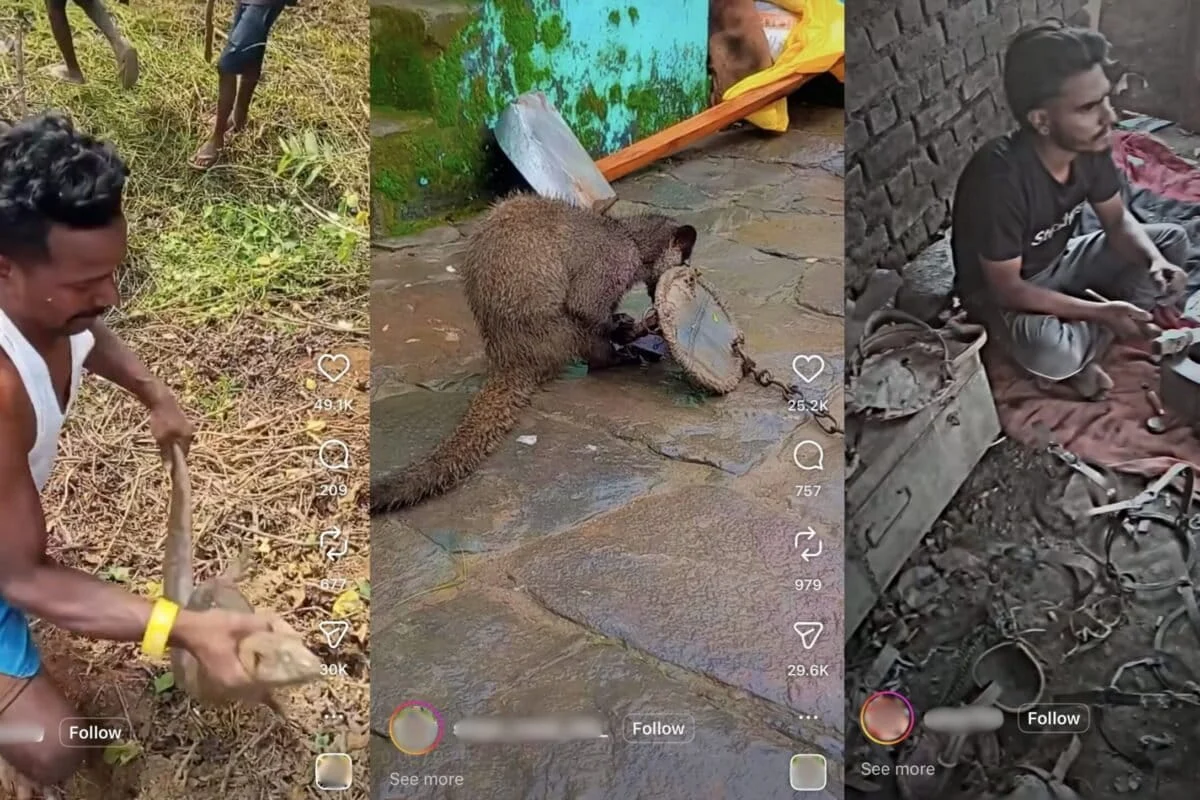
In the palm of a hand, a thumb swipes upward. First, a recipe for dal; next, a travel vlog from Goa; then, a graphic video of a monitor lizard being unearthed and slaughtered. This is the reality of the modern "scroll"—a digital landscape where the line between entertainment and illicit activity has become dangerously blurred.
As India’s digital penetration reaches its zenith, a new and sophisticated threat has emerged: cyber-enabled wildlife crime. What was once confined to clandestine meetings in remote forest fringes or shadowed back alleys of urban markets has now moved to the brightly lit, algorithmic stages of Instagram, YouTube, and Facebook. Here, the illegal handling, trapping, and trading of protected species are not just visible—they are being "liked," shared, and monetized.
Main Facts: The Normalization of the Illicit
The crisis came to a head in early 2025 when P.M. Muthanna, the head of field conservation at the Centre for Wildlife Studies (CWS) in Karnataka, noticed a disturbing trend on his Instagram feed. Instead of the usual conservation success stories, he was served reels demonstrating the capture of wild animals. These weren’t educational videos; they were "how-to" guides for violating the Wildlife (Protection) Act of 1972.
Muthanna’s investigation revealed a ecosystem of illegal content. Among the most viral were videos of civet cats struggling in agonizing jaw traps—content that garnered over 25,000 likes. Other reels showcased the hunting of monitor lizards, protected under Schedule I of Indian law, and even workshops demonstrating the manufacture of the very traps used to maim them.
According to conservationists, this content serves a dual purpose. For some creators, it is "lifestyle" content meant to portray a rugged, rural persona. For others, it is a digital storefront. The comment sections of these videos often transform into unregulated marketplaces where users inquire about prices and delivery methods, eventually moving the transaction to encrypted messaging apps like WhatsApp or Telegram to evade detection.
The scale of this issue is not merely local; it is a global crisis. Illegal wildlife trade is currently ranked as the fourth largest illicit transnational activity in the world, trailing only drugs, human trafficking, and counterfeiting. In India, the lack of systematic data makes it difficult to quantify the exact volume of these crimes, but the anecdotal evidence suggests an exponential rise in tandem with high-speed internet access.

Chronology: From Field to Feed (2017–2026)
The evolution of cyber-enabled wildlife crime in India has followed a clear trajectory, moving from dark-web forums to mainstream social media.
- 2017–2021: Operation Wildnet. During this period, the Wildlife Crime Control Bureau (WCCB) launched an early intervention aimed at digital platforms. Authorities booked approximately 80 cases, signaling the government’s initial recognition of the internet as a crime scene. However, this remained an exception rather than the rule.
- January 2025: Systematic Monitoring Begins. The Wildlife Trust of India (WTI) began a rigorous monitoring program to track wildlife crimes across social media. They identified Instagram as the primary hub for such content due to its visual-first algorithm.
- February 2026: Formal Complaints. P.M. Muthanna sent a comprehensive dossier to the WCCB, flagging eight specific Instagram accounts that were openly selling jaw traps and documenting the illegal hunting of protected monitor lizards.
- June 2026: The Public Call for Accountability. WTI launched a national campaign urging citizens to report online wildlife crimes. This campaign was born out of frustration with the low response rates from social media giants like Meta.
- Present Day: Despite formal complaints and public outcry, many of the flagged accounts remain active, their content continuing to feed recommendation algorithms.
Supporting Data: The Enforcement Gap
Data compiled by the Wildlife Trust of India (WTI) highlights a stark disparity in how different tech giants handle illegal wildlife content. Since early 2025, WTI has flagged over a thousand YouTube videos. Their efforts saw a 90% success rate, with Google-owned YouTube removing the majority of the offending content for violating community guidelines.
In contrast, the response from Meta-owned platforms (Facebook and Instagram) has been described as lackluster. Only 15% of the content flagged by WTI on Meta platforms was removed. Furthermore, a specific pattern emerged: Meta was more likely to remove videos showing the sale of live animals or active hunting, but frequently ignored content featuring "derivatives"—teeth, claws, skins, and fat extracted from wildlife.
This discrepancy is mirrored in global studies. A 2021 investigation by the International Fund for Animal Welfare (IFAW) found nearly 1,200 online advertisements featuring 2,400 animals or animal parts across 34 U.S.-based marketplaces. The persistence of these ads suggests that even with sophisticated AI, platforms are failing to stem the tide.
The internal logic of these platforms may be part of the problem. Independent technologist Rohini Lakshané notes that moderation systems are often optimized for "high-profile" harms such as terrorism or nudity. Wildlife trafficking, being more niche and requiring specific biological knowledge to identify, often receives less investment. Furthermore, recent layoffs across the tech industry have decimated human moderation teams, leaving the task to AI that may not recognize a "jaw trap" or a "Schedule I lizard" as a violation of policy.
Official Responses and Legal Hurdles
The primary obstacle in India is a legislative one. The Wildlife (Protection) Act of 1972 is a robust piece of legislation, but it was drafted decades before the advent of the internet. It contains no specific provisions for "cyber-enabled" crime.

Pradipty Bhardwaj, a Ph.D. scholar researching the adequacy of Indian law, points out that the Act generally requires a "physical seizure" of wildlife items to book a case. Proving a link between a digital video and a physical crime is a labyrinthine process for forest department officials, many of whom lack the technical training to gather digital evidence that will hold up in court.
Furthermore, while the Information Technology (Intermediary Guidelines and Digital Media Ethics Code) Rules of 2021 require platforms to exercise "due diligence," their liability is limited. They are generally only required to act after they receive knowledge of illegal content. This "reactive" model allows illegal content to go viral and do its damage—both to animals and to public perception—long before a moderator intervenes.
The WCCB, the government’s specialized body for wildlife crime, has been largely silent on the recent influx of complaints. Muthanna’s February 2026 letter, which detailed specific accounts and illegal activities, has yet to receive a formal response or result in visible enforcement action. This silence underscores the resource gap between nimble, tech-savvy poachers and the traditional, bureaucratic structures of law enforcement.
Implications: Biosecurity and the Future of Conservation
The proliferation of wildlife crime on social media carries risks that extend far beyond the loss of individual animals.
1. Zoonotic Disease and Disease Spillover
Moving wild species out of their native ecosystems and into domestic settings—often seen in "exotic pet" reels—creates a bridge for pathogens. When humans handle monitor lizards or keep Indian star tortoises in urban homes without regulation, they increase the risk of disease spillover. The global community is still reeling from the effects of zoonotic diseases, and the unregulated online wildlife trade provides a perfect vacuum for the next pandemic.
2. The "Trusted Flagger" Model
To combat this, experts are looking toward the European Union’s 2025 model, which grants "Trusted Flagger" status to civil society organizations. This allows experts to have a direct line to social media platforms, ensuring that when a wildlife expert flags a video of a jaw trap, it is removed immediately rather than waiting weeks for a generalist moderator to review it. WTI is currently pushing to join the YouTube Priority Flagger program, hoping to replicate this success in India.

3. The Ethics of the Algorithm
There is an urgent need for social media companies to take moral responsibility for their algorithms. When a platform recommends a hunting video to a user because they previously watched a nature documentary, the algorithm is effectively facilitating a crime. Conservationists argue that "illegal wildlife trade" should be treated with the same urgency as "child safety" or "financial fraud."
4. Legislative Reform
India’s legal framework must evolve. This includes amending the Wildlife (Protection) Act to include digital advertisements and online facilitation as punishable offenses. It also requires training a new generation of "Cyber Foresters" who can navigate the digital landscape as effectively as they navigate the jungle.
As P.M. Muthanna noted, the battle is lopsided. "Compared to Meta, NGOs like ours are very small… Our hope rests with the forest department, WCCB, customs, and police." Without a unified front involving the government, tech giants, and conservationists, the "like" button will continue to be a tool for the destruction of India’s natural heritage. The reels may be short, but the damage they inflict is permanent.
