

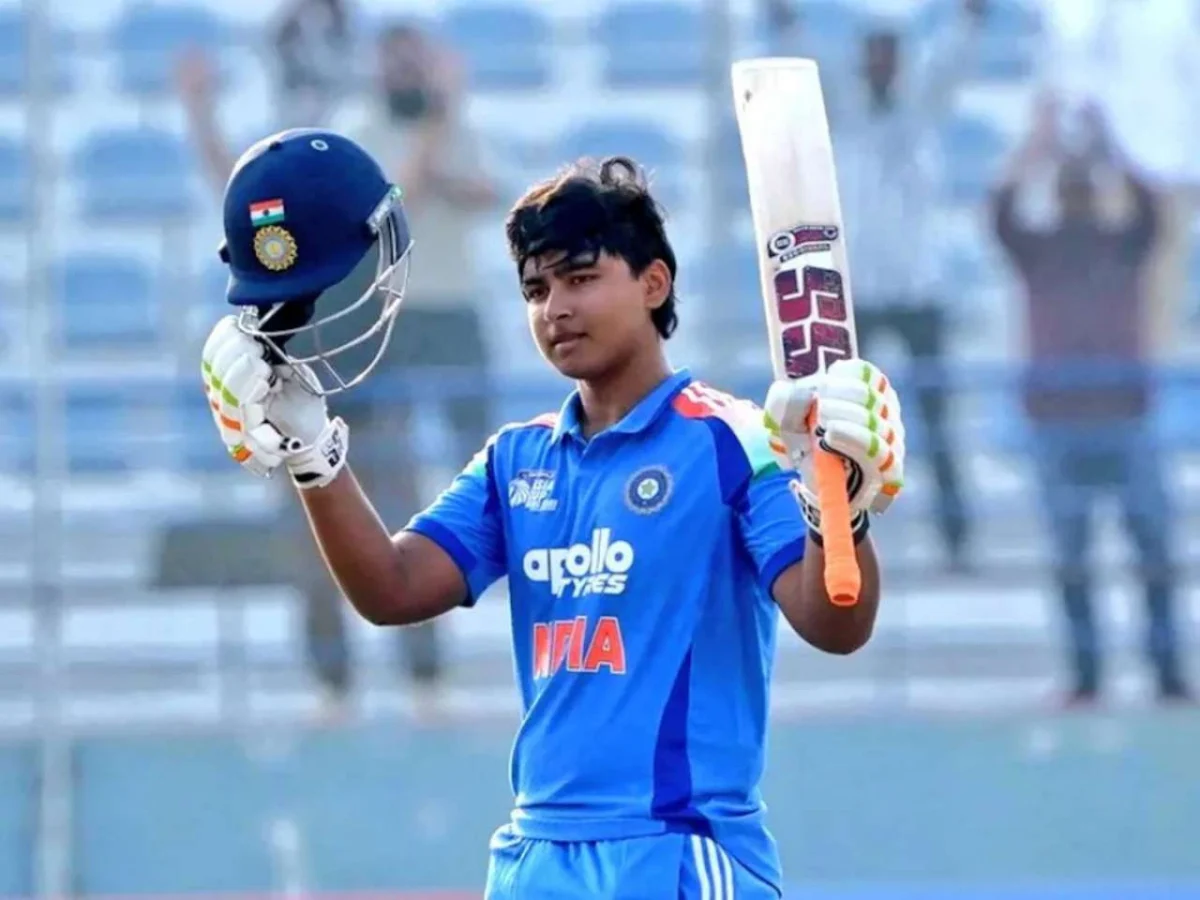
Mumbai, India – August 27, 2026 – The Board of Control for Cricket in India (BCCI) recently unveiled its 15-member squad for the upcoming home U19 series against Australia, an announcement that has ignited a fierce debate across the cricketing fraternity. While the inclusion of familiar names like Anvay Dravid, son of legendary Rahul Dravid, and the highly anticipated debut call-up for Aaryavir Sehwag, son of Virender Sehwag, garnered significant attention, it was a glaring omission that truly sent ripples through social media and expert circles: that of 15-year-old batting prodigy, Vaibhav Sooryavanshi.
Sooryavanshi, a left-handed sensation who has already etched his name into the annals of Indian cricket with a senior T20 International cap and a sensational IPL Orange Cap triumph, finds himself excluded from the very squad he seemed destined to lead. Despite his tender age, which technically makes him eligible for at least two more U19 World Cups, the selectors’ decision has sparked intense discussion. At the heart of this discourse lies the BCCI’s stringent 2016 policy, which limits players to participating in only one U19 World Cup, regardless of their age eligibility. This rule, designed to broaden the talent pool and prevent stagnation, now clashes directly with the extraordinary rise of a generational talent, forcing Indian cricket to confront the delicate balance between nurturing prodigies and adhering to systemic frameworks.
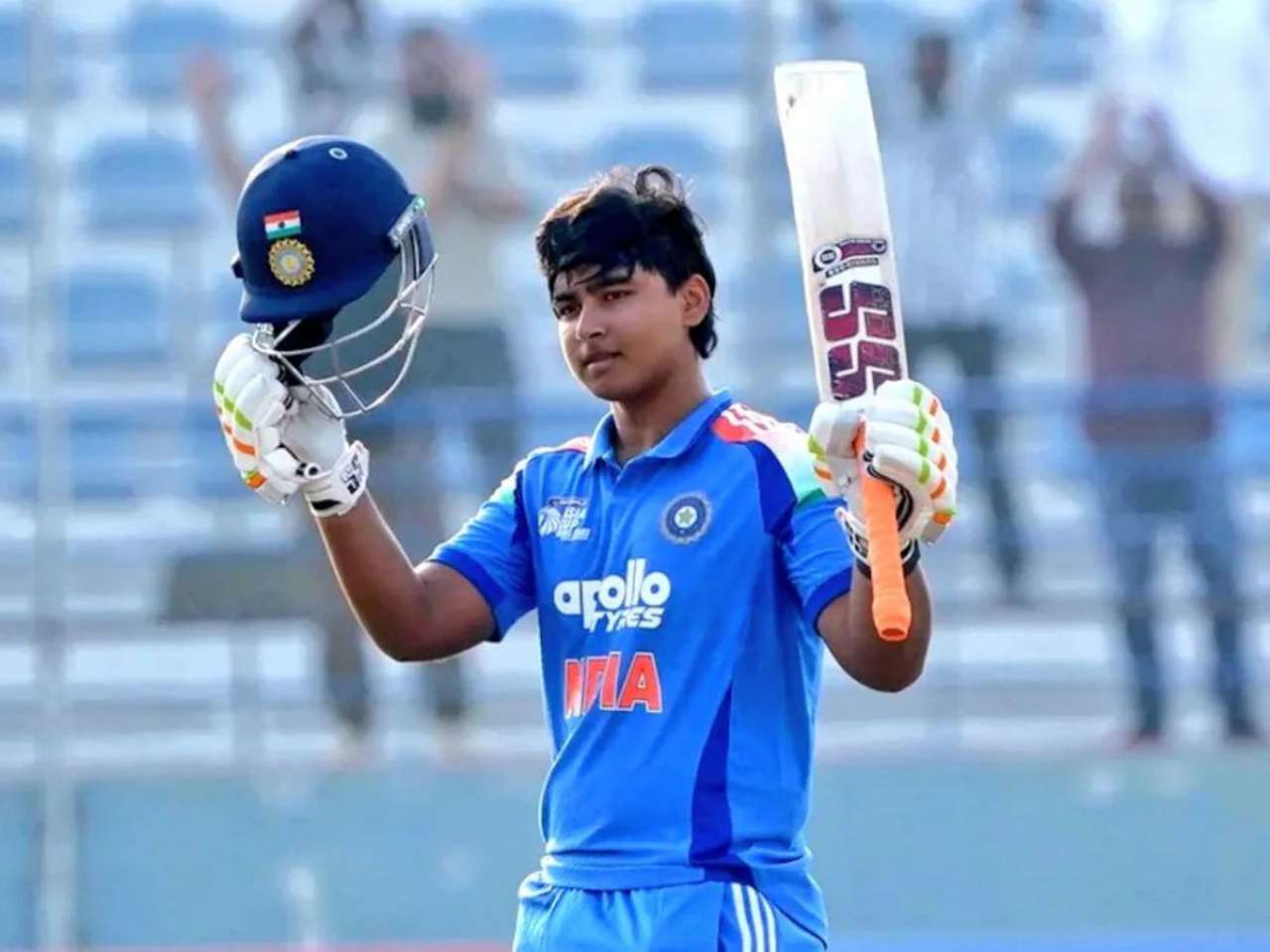
The public outcry has been immediate and vocal, with fans questioning the rationale behind sidelining a player who, by all accounts, appears ready for the next level, if not beyond. This article delves into the intricacies of Sooryavanshi’s omission, examining the BCCI’s policy, the player’s meteoric rise, expert opinions, and the profound implications this decision holds for India’s youth cricket development pathway.
Main Facts: The Shocking Omission and the Underlying Policy
The announcement of India’s U19 squad for the Australia series typically generates excitement, signaling the emergence of the next generation of cricketing stars. However, this year, the spotlight has been firmly fixed on who isn’t on the list rather than who is. Vaibhav Sooryavanshi, a name that has become synonymous with precocious talent and blistering performances, was conspicuously absent. This omission is not merely a selection anomaly; it represents a direct confrontation between an individual’s exceptional talent and an institutional policy.
)
At just 15 years old, Sooryavanshi possesses a cricketing resume that most players twice his age would envy. He is a proven match-winner, a junior World Cup hero, and already a capped senior international cricketer, having played in T20 Internationals. His electrifying performance in the IPL 2026 season, where he dominated seasoned bowlers to claim the coveted Orange Cap, cemented his status as one of the most exciting prospects in global cricket. Given his age and unparalleled achievements, his exclusion from a U19 squad—a stepping stone for many—seems counter-intuitive to the very idea of nurturing extraordinary talent.
The root cause of this contentious decision lies in a policy enacted by the BCCI in 2016. This rule dictates that a player, once having participated in an ICC U19 Cricket World Cup, becomes ineligible for any subsequent editions, even if they still meet the age criteria. The policy’s stated objective was to ensure a wider distribution of opportunities for young cricketers, preventing a select few from dominating the age-group circuit and fostering a more expansive talent pipeline. While noble in its intent, the rule has inadvertently created a challenging scenario for players who, like Sooryavanshi, achieve senior-level success at an exceptionally young age after their U19 World Cup debut.

For Vaibhav, his participation in a junior World Cup, where he famously scored 175 runs in the final, has inadvertently triggered this clause. The selectors, bound by the BCCI’s directive, were left with little choice but to exclude him, despite his overwhelming form and undeniable potential. This situation has ignited a nationwide debate on whether a rigid policy, however well-intentioned, should supersede the development and utilization of an extraordinary talent like Sooryavanshi. The discussion now centers on the balance between equitable opportunity for many and tailored pathways for the truly exceptional.
Chronology: Vaibhav Sooryavanshi’s Meteoric Rise and the Evolution of BCCI Policy
To fully grasp the magnitude of Vaibhav Sooryavanshi’s omission, it’s essential to trace his remarkable journey and understand the policy shift that now dictates his U19 fate.
)
Vaibhav Sooryavanshi: A Prodigy’s Rapid Ascent
Vaibhav Sooryavanshi’s name first began circulating in cricketing circles when he was barely in his teens, his aggressive left-handed batting style and uncanny ability to dominate bowlers at junior levels quickly marking him as a talent to watch.
- Early Dominance (Circa 2022-2024): Sooryavanshi rapidly climbed through state age-group ranks, consistently outperforming peers often several years his senior. His fearless approach and natural stroke-making ability made him a standout in local and national U14 and U16 tournaments, catching the eye of national selectors.
- ICC U19 Cricket World Cup Debut (Early 2025): At an astonishingly young age, Sooryavanshi earned his spot in India’s U19 World Cup squad. He was one of the youngest participants in the tournament held in the Caribbean. While his overall tournament performance was solid, it was his unforgettable knock in the final that truly announced his arrival on the global stage. Against a formidable England U19 side, Sooryavanshi hammered an astonishing 175 runs off just 130 balls, laced with boundaries and audacious sixes. This monumental innings anchored India’s imposing total of 411, ultimately leading the team to a resounding 100-run victory and securing their sixth U19 World Cup trophy. His performance was hailed as one of the finest individual displays in the tournament’s history, earning him the Man of the Match award in the final. This tournament, unknowingly, would also mark his only appearance in an U19 World Cup.
- IPL 2026: The Orange Cap Phenomenon: Following his U19 World Cup heroics, Sooryavanshi was a hot commodity in the IPL 2026 auction. Picked up by a franchise for a significant sum, he transcended expectations. Throughout the season, he was the talk of the town, consistently delivering breathtaking performances. His aggressive yet mature batting saw him amass an incredible 776 runs, clinching the prestigious Orange Cap as the tournament’s leading run-scorer. This tally included a magnificent century and five half-centuries, showcasing his consistency and ability to perform under immense pressure against the world’s best bowlers. His strike rate consistently hovered above 150, making him a nightmare for opposition captains.
- Senior International Debut and T20I Cap (Mid-2026): Sooryavanshi’s IPL heroics inevitably led to his first call-up to the senior national team. He was included in the squad for a T20I tour of Ireland. Although he didn’t get an opportunity to make his playing debut in Ireland, the experience of being around the national setup was invaluable. His big break came shortly after during a home T20I series against England. He was drafted into the playing XI, making his T20I debut at the age of just 15 years and a few months, becoming one of India’s youngest ever male international cricketers. However, the initial pressure seemed to get to him, as he managed only 42 runs across three games, leading to him being temporarily dropped from the XI.
- Resurgence Against Zimbabwe (Late 2026): True to his resilient nature, Sooryavanshi bounced back with remarkable maturity. Given another opportunity in a T20I series against Zimbabwe, he seized it with both hands. In the opening match, he scored a crucial maiden T20I fifty, showcasing his ability to learn and adapt. While he had a quieter second game, scoring 20 runs, he finished the series with a flourish, smashing an explosive 81 runs in the third T20I. His consistent performances earned him both the Player of the Match award for his final innings and the Player of the Series award, firmly re-establishing his credentials on the international stage.
The BCCI’s 2016 Policy Shift: One World Cup Per Player
The rule that now dictates Sooryavanshi’s U19 eligibility has its origins in a strategic decision made by the BCCI in 2016. Prior to this, it was not uncommon for exceptionally talented youngsters to participate in multiple U19 World Cups, leveraging their age eligibility.
)
- Pre-2016 Era: Players like Sandeep Sharma, known for his swing bowling, aggressive middle-order batsman Vijay Zol, the flamboyant Sarfaraz Khan, and stylish right-hander Ricky Bhui, all had the opportunity to represent India in two U19 World Cups. This allowed them extended exposure to international age-group cricket, potentially refining their skills and offering more opportunities to showcase their talent before transitioning to senior cricket. While beneficial for individual players, concerns began to emerge within the BCCI regarding the broader impact on the talent pool.
- The Rationale for Change: The primary motivation behind the 2016 rule change was to democratize opportunities within the U19 setup. The BCCI felt that allowing a select group of players to participate in multiple tournaments was inadvertently limiting the exposure and development opportunities for other promising youngsters. The new policy aimed to:
- Broaden the Talent Pool: Ensure that a larger number of young cricketers received the experience of playing in a global tournament, thereby expanding India’s overall talent base.
- Prevent Stagnation: Encourage players to transition faster to higher levels of cricket (state teams, India A, senior national team) rather than lingering in age-group cricket.
- Promote Healthy Competition: Foster a more competitive environment for selection, knowing that each player essentially had one shot at the U19 World Cup stage.
- Focus on Senior Transition: Shift the focus from U19 success as an end in itself to viewing it as a crucial but singular step towards senior cricket.
- Impact on Previous Talents: The effects of this rule were immediately felt. Prominent examples include all-rounder Washington Sundar, who, despite being age-eligible, missed out on a second U19 World Cup in 2018 after having played in the 2016 edition. This decision, though controversial then, set the precedent that is now being applied to Vaibhav Sooryavanshi.
Sooryavanshi’s early participation in the U19 World Cup, while a testament to his exceptional talent, has now become the very reason for his exclusion from subsequent U19 squads. The rule, once a forward-thinking policy, now finds itself under intense scrutiny as it impacts a player who has arguably already outgrown the age-group format in terms of performance.
Supporting Data: The Numbers Behind the Prodigy and Expert Commentary
Vaibhav Sooryavanshi’s exclusion, while policy-driven, is particularly jarring when viewed through the lens of his statistical output and the opinions of cricketing pundits. His numbers speak volumes about his rare talent and readiness for higher challenges.
)
Sooryavanshi’s Astonishing Statistics:
- ICC U19 Cricket World Cup (Early 2025):
- Matches: 6
- Runs: 380 (including the 175 in the final)
- Average: 76.00
- Strike Rate: 115.5
- Centuries: 1
- Half-Centuries: 2
- Impact: Crucial to India’s sixth title win.
- Indian Premier League (IPL) 2026:
- Matches: 15
- Runs: 776
- Average: 59.69
- Strike Rate: 158.36
- Centuries: 1
- Half-Centuries: 5
- Sixes: 48
- Fours: 70
- Orange Cap Winner: The youngest ever to achieve this feat. His consistency and ability to score quickly against international bowlers like Trent Boult, Kagiso Rabada, and Rashid Khan were unparalleled. He single-handedly won several games for his franchise, demonstrating a maturity beyond his years.
- T20 International (T20I) Career (Mid-Late 2026):
- Matches: 6
- Runs: 198
- Average: 39.60
- Strike Rate: 142.44
- Fifties: 2
- Player of the Series (vs. Zimbabwe): A remarkable comeback after a challenging debut series, highlighting his mental fortitude.
These statistics paint a clear picture of a player who is not merely promising but already a performer at elite levels. At 15, his IPL and T20I numbers are comparable to, if not superior to, many established international cricketers. His U19 World Cup final knock remains a benchmark for age-group performances.
Expert Opinions: The Talent vs. Policy Debate
The cricketing world has been quick to weigh in on Sooryavanshi’s exclusion, with opinions sharply divided on the merits of the BCCI’s one-U19 World Cup policy.
)
Arguments in Favour of the Policy:
- Former National Selector (anonymity requested): "The rule was brought in for a reason. We want to expose as many young talents as possible to the U19 World Cup experience. If a player like Vaibhav has already played it and then gone on to play for the senior national team and dominate the IPL, then he has clearly outgrown the U19 level. His spot is better utilized by another deserving youngster who hasn’t had that exposure yet. It keeps the pipeline flowing."
- Youth Coach, Karnataka State: "It’s about equity. There are hundreds of talented kids vying for those 15 spots. If one exceptional player keeps occupying a slot, it limits opportunities for others. The U19 setup is a platform, not a career destination. Once you’ve made your mark there, and especially if you’ve moved beyond it like Vaibhav has, it’s time for others to shine."
- Sports Psychologist: "While it might seem harsh for Vaibhav, it can also prevent burnout or a sense of complacency. It forces players to constantly seek the next challenge. For someone like him, the focus should now be on India A tours, domestic first-class cricket, and solidifying his place in the senior national team, not playing against U19 opponents."
Arguments Against the Policy (and in favour of Sooryavanshi’s inclusion):
)
- Legendary Indian Cricketer Sunil Gavaskar (via his column): "This is a classic case of bureaucracy stifling genius. When you have a talent like Vaibhav Sooryavanshi, who is just 15 and already an international cricketer, you don’t shackle him with arbitrary rules. The U19 World Cup is a development stage. For a player this young, even if he’s played it once, the experience of leading another U19 side, refining his captaincy skills, or simply continuing to play age-group cricket alongside his senior commitments, could be invaluable. Rules should be flexible enough to accommodate extraordinary circumstances. We risk losing out on nurturing a potential generational talent to its fullest."
- Renowned Cricket Analyst Harsha Bhogle (on social media): "The BCCI’s ‘one U19 World Cup’ rule is well-intentioned, but it lacks nuance. When a player like Vaibhav Sooryavanshi is 15, has an IPL Orange Cap, and a T20I cap, he’s clearly an outlier. For such players, the focus should be on their optimal development path. If that path involves another U19 World Cup, perhaps as a captain or mentor figure, then that option should be on the table. Are we saying a 15-year-old is ‘too experienced’ for U19s when he has several years left in that age bracket? It’s a missed opportunity for him and for the U19 team to benefit from his presence."
- Former India U19 Coach: "While the policy has its merits for the average player, Vaibhav is anything but average. He could have been an incredible leader for the U19 side, guiding younger players, sharing his experience of playing at the highest level. That kind of mentorship is invaluable. We should be finding ways to integrate such talents, not exclude them."
Comparative Analysis: Global Approaches to Youth Prodigies
The debate around Sooryavanshi also prompts a look at how other major cricketing nations manage their exceptional young talents.
- Australia: While they have strict age eligibility, Australia often fast-tracks genuine prodigies into state-level first-class cricket or even their ‘A’ teams. If a player is deemed too good for U19s, they move up quickly. However, they don’t typically enforce a "one U19 World Cup" rule to the same extent if age permits.
- England: The ECB focuses heavily on their academy systems and Lions tours. Players like Joe Root or Ben Stokes, who showed early promise, were carefully managed, often moving directly into county cricket and then national selection without necessarily playing multiple U19 World Cups, but without a specific rule preventing it.
- Pakistan: Known for unearthing young fast bowlers, Pakistan has a history of giving very young players senior international debuts if they are deemed ready. The focus is more on raw talent and potential, with less rigid age-group progression if a player is exceptional.
- South Africa: Similar to Australia, South Africa often promotes players to provincial or franchise cricket if they excel, rather than holding them back in age-group tournaments.
The international landscape suggests a varied approach, but few nations have a policy as restrictive as the BCCI’s one-U19 World Cup rule when it comes to highly successful players still within the age bracket. This highlights the unique challenge India faces in balancing its vast talent pool with nurturing its most exceptional individuals.
)
Official Responses: BCCI and Selectors Stand Firm
The intense scrutiny surrounding Vaibhav Sooryavanshi’s omission has naturally prompted reactions from the Board of Control for Cricket in India (BCCI) and the national junior selection committee. Their responses indicate a firm stance on the existing policy, emphasizing its long-term benefits for Indian cricket, despite the immediate controversy.
BCCI’s Unwavering Position:
A senior BCCI official, speaking on condition of anonymity, reiterated the board’s commitment to the 2016 policy. "The rule was implemented after extensive deliberation and with a clear vision," the official stated. "Its core objective is to ensure that a broader base of young talent gets the invaluable experience of playing in an ICC U19 Cricket World Cup. We believe this promotes a healthier, more competitive ecosystem across all age-group levels."
)
When pressed on the specifics of Sooryavanshi’s case, the official acknowledged the player’s extraordinary talent but maintained that the policy must be applied uniformly. "Vaibhav is an exceptional talent, and his achievements at such a young age are truly remarkable. He has already proven himself at the highest level, having played in a junior World Cup and then gone on to represent the senior national team and excel in the IPL. For a player of his caliber, the focus now shifts to domestic first-class cricket, India A tours, and solidifying his place in the senior team. The U19 World Cup pathway is designed to be a stepping stone for those who are yet to achieve that level of exposure."
The BCCI’s stance suggests a philosophical commitment to collective development over individual exceptions, arguing that bending the rule for one player, no matter how talented, could set an undesirable precedent and undermine the policy’s original intent.
)
Junior Selection Committee’s Perspective:
The chairman of the national junior selection committee, in a press briefing following the squad announcement, addressed the questions regarding Sooryavanshi directly. "We understand the public’s sentiments and the excitement around Vaibhav," he began. "He is an outstanding cricketer. However, as a selection committee, we are bound by the regulations set forth by the BCCI. The ‘one U19 World Cup’ rule is very clear. Vaibhav has already had the opportunity to represent India in an U19 World Cup, where he performed brilliantly and helped us win the trophy."
He further elaborated on the criteria used for the current squad selection: "Our mandate is to identify and nurture the next wave of talent. We look for players who show potential, who are performing well in age-group tournaments, and who are yet to gain significant international exposure. Players like Aaryavir Sehwag, who has shown consistent promise in domestic junior circuits, get their first call-up, and Anvay Dravid, who has been steadily performing, retains his spot. We aim to give these players a platform to prove themselves on the international U19 stage."
)
The chairman subtly implied that Sooryavanshi, having already achieved so much at a senior level, had effectively "graduated" from the U19 program. "His journey now is on a different trajectory," he added. "We believe he has a bright future in senior cricket, and his focus should be on that transition. Our role is to ensure that other deserving young cricketers get their chance at the U19 level."
These official responses underscore a consistent message: while Sooryavanshi’s talent is not disputed, the institutional framework prioritizes a broad-based talent development strategy. The BCCI and its selectors appear resolute in upholding the policy, even if it means facing public criticism for sidelining a generational talent from an age-group tournament. This firm stance indicates that any re-evaluation of the policy would likely require significant internal debate and potentially a shift in the board’s long-term vision for youth cricket.
)
Implications: The Future for Sooryavanshi and Indian Cricket’s Youth Pathway
The exclusion of Vaibhav Sooryavanshi from the India U19 squad is more than just a selection decision; it carries profound implications for the young prodigy himself, for the broader landscape of Indian cricket’s youth development, and for the ongoing philosophical debate within the sport.
For Vaibhav Sooryavanshi: A Pivotal Juncture
For Vaibhav, this decision marks a significant turning point. While it might feel like a setback or even an injustice to some, it also presents a unique challenge and opportunity:
)
- Accelerated Senior Pathway: This decision implicitly pushes Sooryavanshi further into the senior circuit. He will now likely focus entirely on domestic first-class and List A cricket, alongside his T20 commitments in the IPL and for the national team. The expectation will be for him to perform consistently at these higher levels, solidifying his spot in the senior setup.
- Mental Fortitude Test: Such a public omission, despite his achievements, will be a test of his mental resilience. How he responds to this perceived snub will be crucial. If he channels any disappointment into even greater performances, it could forge an even stronger character.
- Mentorship and Guidance: The BCCI and national selectors will need to ensure adequate support and a clear pathway for Sooryavanshi. This might involve inclusion in India A tours, specialized coaching, and continuous communication to manage his expectations and development. The risk is that without the U19 World Cup as a potential target, a young player might feel a void, which needs to be proactively addressed.
- Focus on Longevity: By not playing U19 World Cups, Sooryavanshi reduces his age-group workload, potentially allowing him to focus on fitness and skill development for a longer, more impactful senior career. However, he will miss out on potential leadership experience in a global age-group tournament.
Ultimately, Sooryavanshi’s trajectory will now be keenly watched. His ability to translate his prodigious talent into sustained senior-level success, bypassing the U19 stage, will be the ultimate validation of the BCCI’s policy, or a testament to his own extraordinary ability to overcome systemic hurdles.
For Indian Cricket: Reassessing the Youth Development Philosophy
The Sooryavanshi case reignites a critical debate about the optimal approach to youth development in a country overflowing with cricketing talent.
)
- The "One World Cup" Rule Under Scrutiny: While the BCCI stands firm, the public outcry and expert opinions will undoubtedly force an internal re-evaluation of the rule’s rigidity. Should there be exceptions for truly generational talents who already play senior international cricket at 15? Or does adhering strictly to the rule ensure fairness and a broader talent pool, even at the cost of sidelining a prodigy? The debate is complex, balancing egalitarian principles with meritocratic recognition.
- Defining "Overqualified": Sooryavanshi’s situation forces Indian cricket to define when a player becomes "overqualified" for age-group cricket, especially when they are still age-eligible. Is it a T20I cap? An IPL Orange Cap? Or simply reaching a certain performance threshold? Clearer guidelines, or at least a more flexible approach for exceptional cases, might be needed.
- Impact on U19 Squad Composition: The rule ensures that U19 World Cup squads are populated by players who are genuinely developing and seeking their first major international exposure. This can lead to a more diverse and potentially less top-heavy squad, where more players get a chance to shine. However, it also means that the team might miss out on the invaluable experience and leadership that a player like Sooryavanshi could offer.
- The IPL’s Role: The Indian Premier League has become an undeniable fast-track for talent. Sooryavanshi’s IPL success catapulted him into national reckoning, bypassing traditional age-group progression. This phenomenon highlights the evolving nature of talent identification and development, where franchise cricket plays an increasingly significant role in shaping careers, sometimes ahead of official pathways.
- Long-Term Player Management: The BCCI needs to ensure that its policies are not just about selection but also about comprehensive player management. For players like Sooryavanshi, who achieve so much so young, a tailored development plan that includes physical conditioning, mental health support, and continuous skill refinement is paramount.
Public and Media Scrutiny: The Prodigy Paradox
The public and media will continue to scrutinize every move related to Sooryavanshi and the BCCI’s youth policies. This situation exemplifies the "prodigy paradox" – how to effectively nurture exceptionally gifted individuals within a structured system designed for the collective. While the BCCI aims to create a robust and equitable pipeline, the human element of a 15-year-old talent being denied an age-group opportunity will resonate deeply.
The ultimate success of this policy, and its application to Sooryavanshi, will be judged not just on the performance of the current U19 squad, but on the long-term careers of all players within India’s vast cricketing ecosystem. The Vaibhav Sooryavanshi conundrum will remain a defining case study in the ongoing evolution of sports administration and talent development in India.
