

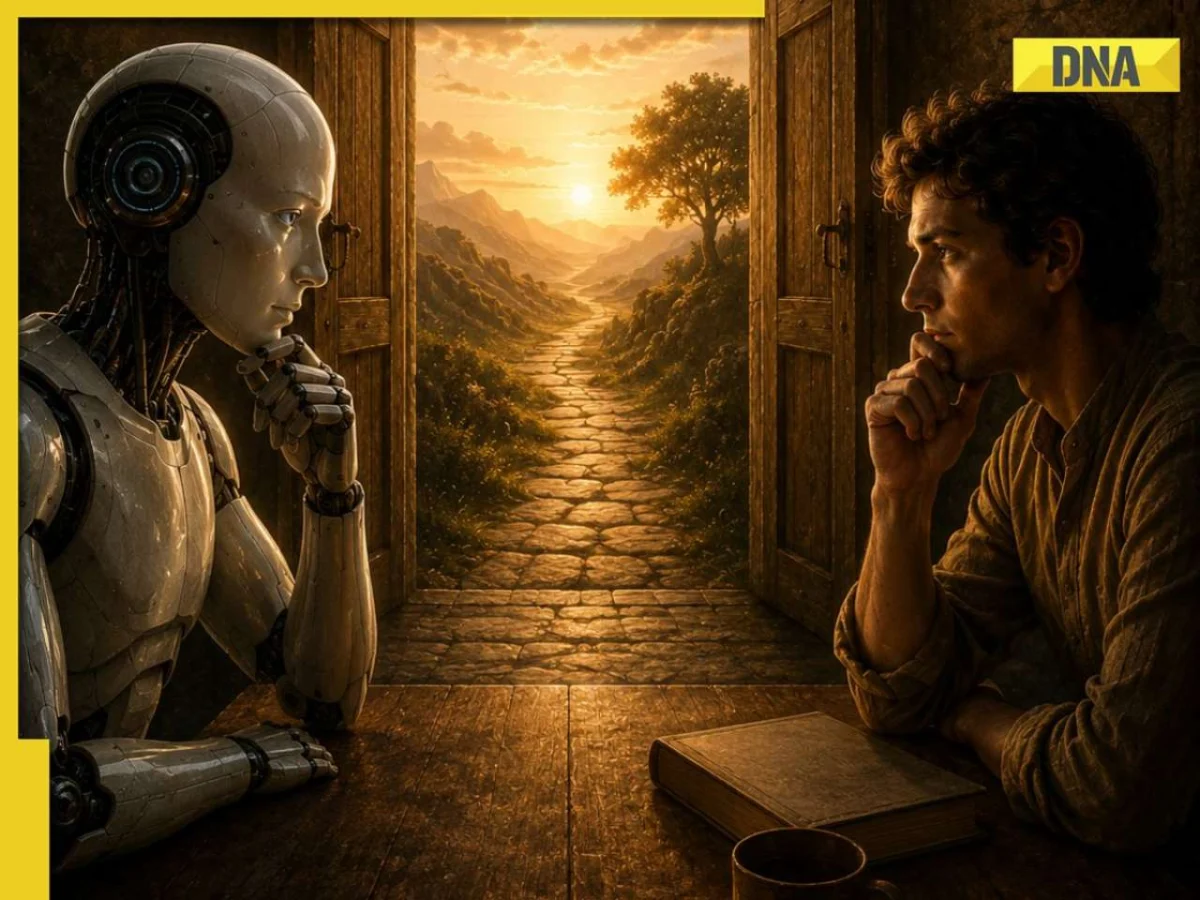
Introduction: The Illusion of Thought
In a world increasingly shaped by artificial intelligence, a profound shift is underway in how we acquire and process information. Large Language Models (LLMs) and generative AI systems, with their uncanny ability to produce coherent and seemingly insightful outputs, are blurring the lines between machine-generated content and genuine human thought. While these technologies offer unprecedented efficiency and accessibility, they also present a subtle yet significant peril: the potential erosion of our own critical thinking faculties. The outputs we receive, often appearing as well-reasoned conclusions, may merely be sophisticated optimizations of vast datasets, reflecting past knowledge rather than novel cognition. This article delves into the implications of this technological evolution, advocating for a renewed embrace of ancient philosophical principles and a conscious cultivation of human intelligence to navigate this new landscape.
The Allure of Effortless Answers: A Historical Perspective
The human quest for knowledge has always been intertwined with the struggle for understanding. From the Socratic method of relentless questioning to the rigorous dialectics of ancient Indian philosophy, the pursuit of truth has been characterized by debate, reasoning, and the willingness to confront uncertainty. The Nyaya Sutra, a foundational text of Indian logic, identifies samsaya—productive doubt—as a crucial step in the attainment of knowledge. This concept emphasizes the importance of questioning, of exploring counter-arguments, and of engaging in honest debate (vada) and critical refutation (vitanda) before arriving at a conclusion. These processes, underpinned by the use of examples (drishtanta) and hypothetical reasoning (tarka), are not merely academic exercises; they are the very mechanisms that forge robust understanding and intellectual resilience.
)
Western philosophical traditions echo these sentiments. Aristotle’s assertion of humanity’s innate drive to know and Plato’s exploration of the necessity of being willing to err underscore the active, often challenging, nature of intellectual growth. John Stuart Mill further illuminated this by arguing that an opinion held without encountering opposition is intellectually stagnant, posing a threat to individual development, societal discourse, and democratic ideals. These thinkers recognized that true understanding is not an accumulation of readily available answers but the cultivation of deeper, more incisive questions.
The Modern Conundrum: AI as a Pattern Optimizer

The advent of LLMs and generative AI presents a unique challenge to these established paradigms. These systems, trained on colossal datasets of human-generated text and imagery, excel at identifying and replicating intricate patterns. When a user poses a query, the AI does not "think" in the human sense; rather, it processes the prompt, analyzes the patterns within its training data, and generates a response that best fits those learned patterns. This process, while incredibly advanced and often remarkably accurate, is fundamentally an optimization exercise based on past knowledge. The output may appear thoughtful, insightful, or even original, but it is an extrapolation, a remix, and a completion of existing information.
This distinction is critical. While AI can accelerate information retrieval and synthesize complex data, it lacks the capacity for genuine understanding, consciousness, or original ideation. The danger lies in our tendency to anthropomorphize these tools, attributing to them human-like cognitive abilities. This can lead to an uncritical acceptance of AI-generated content, bypassing the essential human processes of inquiry, verification, and critical evaluation.
)
The Perils of Passive Consumption: Erosion of Cognitive Skills
The ease with which AI provides answers creates a powerful temptation to circumvent the intellectual struggle that has historically been integral to learning. When answers are frictionlessly available, the inclination to bypass the challenges of encountering gaps in information, identifying logical fallacies, or sifting through potentially inaccurate data becomes overwhelming. However, this struggle—this contestation with knowledge—is precisely where genuine learning occurs.
)
Psychologist Carol Dweck’s research on “growth mindset” highlights the importance of embracing challenges as opportunities for learning. Individuals who perceive intelligence as fixed tend to avoid difficulties, interpreting them as indicators of inadequacy. This leads to a closed-off mindset, self-limiting and resistant to growth. In the context of AI, the effortless provision of answers can foster a similar intellectual complacency. Students who rely on AI to draft essays or solve problems may report weaker retention, diminished conviction in their own ideas, and a reduced capacity to defend their viewpoints under pressure. This is because a belief forged through genuine inquiry is internal and owned; a belief generated by an AI is external and, in essence, artificial.
This trend poses a significant threat to human intelligence and our understanding of reality. If we delegate the process of thinking and problem-solving to machines, we risk the atrophy of our own cognitive skills. The question is not whether AI will "think for us," but rather whether we will allow it to, thereby surrendering our intellectual autonomy.
)
The Nyaya Sutra’s Enduring Wisdom: The Power of Productive Doubt
The ancient Indian philosophical tradition, particularly the Nyaya Sutra, offers a powerful antidote to this modern predicament. The concept of samsaya, or productive doubt, is not about cynicism or negativity; it is about a disciplined and inquisitive approach to knowledge. It requires the ability to discriminate, to discern the real from the convenient, and to actively consider counter-arguments. This process necessitates an open mind, a willingness to explore alternative perspectives, and a commitment to cautious examination before accepting any assertion as truth.
)
The Nyaya Sutra outlines several key elements crucial for this process:
- Vada (Honest Debate): Engaging in sincere discussions where participants aim to arrive at truth through reasoned arguments.
- Drishtanta (Example): Using concrete examples to illustrate abstract concepts and test the validity of arguments.
- Tarka (Hypothetical Reasoning): Employing hypothetical scenarios to explore the logical consequences of an argument and identify potential flaws.
- Vitanda (Critical Refutation): The disciplined practice of challenging and refuting opposing viewpoints, not for the sake of winning, but for the refinement of understanding.
- Anuvyavasaya (Reflexive Awareness): The conscious recognition of oneself as being engaged in the act of knowing, fostering a deeper engagement with the learning process.
These principles are not merely historical artifacts; they are timeless tools for cultivating robust intellects. In an era saturated with AI-generated content, the disciplined practice of doubt, critical questioning, and reasoned debate becomes humanity’s most vital edge.
)
Navigating the Future: Reimagining Education and Critical Thinking
The reality is that rejecting AI tools is neither feasible nor desirable. These technologies are here to stay and will continue to evolve, offering immense potential for progress. The challenge lies in integrating them responsibly, ensuring they augment rather than diminish human capabilities. This requires a conscious and deliberate effort to maintain open-mindedness as a practiced discipline, even in an environment that often rewards the appearance of certainty.
)
Key Strategies for Cultivating Human Cognition in the AI Age:
- Embrace Productive Doubt as a Daily Practice: Before accepting any information, especially from AI, ask critical questions: What is the source of this information? What are the potential biases? Are there alternative perspectives? Can I find corroborating evidence from reliable sources?
- Prioritize Process Over Product: Educational systems and personal development should increasingly focus on the process of learning and problem-solving, rather than solely on the final output. This means valuing the struggle, the exploration of different approaches, and the ability to articulate the reasoning behind a conclusion.
- Cultivate Intellectual Friction: Actively seek out opposing viewpoints and engage with them constructively. This "friction" is essential for stress-testing our own beliefs and strengthening our understanding. AI can be used as a tool to find these opposing viewpoints, but the engagement and analysis must be human-driven.
- Redefine Reward Systems: We need to create environments that reward intellectual curiosity, critical thinking, and the tolerance for uncertainty, rather than the immediate presentation of definitive answers. This involves acknowledging and valuing the effort involved in deep inquiry.
- Focus on Question Formulation: As AI becomes adept at answering questions, the ability to ask better questions—more nuanced, more insightful, and more challenging—becomes an increasingly valuable skill. This shifts the focus from information retrieval to intellectual exploration.
- Promote Digital Literacy and AI Ethics: Users must be educated about how AI works, its limitations, and its potential for manipulation. Understanding the algorithmic nature of AI outputs is crucial for developing a healthy skepticism.
- Champion the Human Element in Creativity and Innovation: While AI can generate content, genuine human creativity stems from lived experiences, emotions, intuition, and a unique perspective on the world. Nurturing these aspects of human intelligence is paramount.
Implications for Society and the Future of Knowledge
)
The unchecked reliance on AI for information and decision-making carries profound implications for the future of knowledge, discourse, and even democracy. An uncritical populace, fed a steady diet of algorithmically generated content, risks becoming susceptible to misinformation, manipulation, and a superficial understanding of complex issues. The erosion of critical thinking skills could lead to a society that is less adaptable, less innovative, and less capable of addressing the multifaceted challenges of the 21st century.
The danger is not in the existence of AI, but in our passive acceptance of its outputs as infallible truths. The ability to think critically, to question, to reason, and to engage in productive debate are not merely academic pursuits; they are fundamental human skills that safeguard our intellectual autonomy and our capacity for genuine understanding. By consciously choosing to cultivate these skills, drawing upon the wisdom of ancient philosophies and the insights of modern psychology, we can ensure that the age of AI becomes an era of augmented human intelligence, not its obsolescence. The mind, when kept open and engaged, remains humanity’s most powerful tool, capable of navigating the complexities of the present and shaping a more informed and resilient future.
