

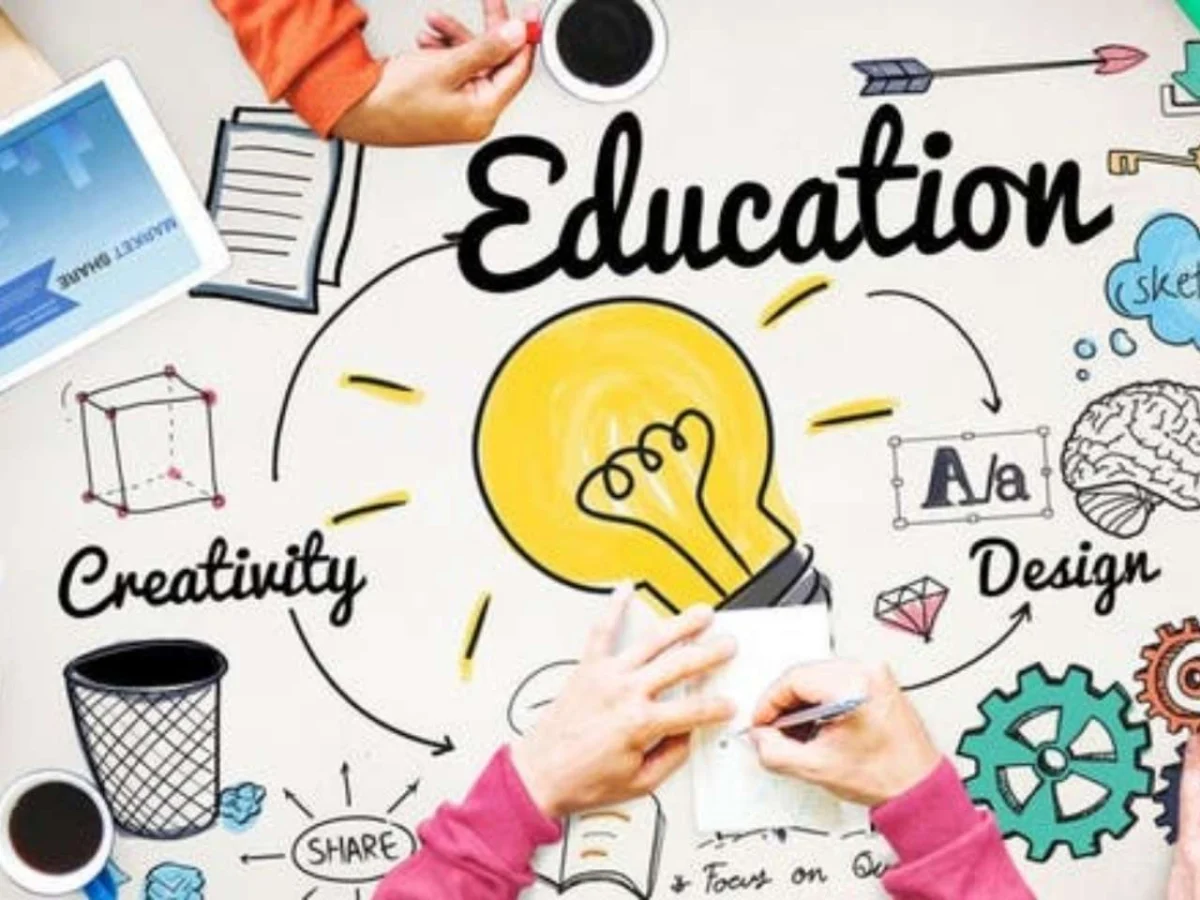
The contemporary educational landscape is awash with eloquent pronouncements championing creativity. Policy documents, institutional visions, and public speeches consistently laud its importance, painting a picture of an educational system designed to foster innovation and critical thinking. Yet, a stark paradox persists: within the confines of the classroom, this celebrated ideal often finds itself quietly suppressed. We implore students to diverge from the beaten path, to think outside the box, yet simultaneously reward them for adhering to prescribed answers and demonstrating mastery of pre-determined knowledge. While we extol the virtues of innovation, the prevailing assessment mechanisms – marks, examinations, and standardized outcomes – largely continue to measure learning through the lens of conformity. This fundamental contradiction lies at the very heart of the ongoing debate surrounding creativity in education. If the true purpose of education is to equip young minds for an increasingly uncertain and complex future, then creativity must transcend its status as a mere decorative ideal and evolve into a central, guiding principle that shapes our pedagogical approaches, assessment strategies, and fundamental understanding of learning itself.
The Chasm Between Aspiration and Implementation
The crisis in creativity within education is not merely a symptom of declining innate imaginative capacity among students. Rather, it is rooted in a deeper, systemic issue: many educational structures inherently favour conformity over genuine curiosity. The traditional classroom often prioritizes the acquisition of the "correct" answer, overlooking the value of a probing, thoughtful question. The pressure to complete syllabi within rigid timelines can lead to an emphasis on speed and superficial coverage, at the expense of the deeper reflection and intellectual exploration that are crucial for fostering creativity. In such an environment, even the most passionate advocacy for creativity, expressed through mere slogans, proves insufficient.
)
To truly cultivate creativity, a profound shift is required across multiple facets of the educational ecosystem. This transformation must encompass pedagogy, assessment, curriculum design, and the overarching institutional culture. Furthermore, it necessitates a broader recognition that creativity is not an isolated classroom technique but an intricate ecosystem influenced by a multitude of factors, including the home environment, community influences, linguistic nuances, technological integration, and even public policy.

Empowering Educators: The Linchpin of Creative Learning
A critical, and often overlooked, element in this discussion is the role of teachers. Educators are frequently tasked with the ambitious goal of nurturing creative learners, yet they often operate within a framework of considerable constraints. Rigid timetables, the relentless pressure of examinations, overcrowded classrooms, and insufficient professional support can all stifle their ability to foster innovative learning environments. Compounding this challenge is the fact that many teachers themselves are products of a highly examination-oriented system. Expecting them to instantaneously adopt creative pedagogies without adequate training, resources, and institutional backing is an unrealistic proposition.
)
For creativity to become an integrated, everyday aspect of learning, teacher education programs must undergo a significant evolution. They need to move beyond a sole focus on content delivery and equip educators with the skills and understanding necessary to design and implement inquiry-based, interdisciplinary, and reflective classroom experiences. Crucially, educational institutions must grant teachers the autonomy to experiment and innovate. Creativity cannot be cultivated in environments where educators feel constantly monitored, rushed, or undervalued. Providing them with the freedom to explore new approaches and learn from both successes and failures is paramount.
)
Addressing the Social Divide: Creativity as an Inclusive Endeavor
The social dimension of creativity is another critical area that demands attention. While creativity is often framed as an individual talent, its development is profoundly shaped by external factors such as access to resources, exposure to diverse experiences, linguistic proficiency, technological integration, institutional support, and the cultivation of social confidence. Students in well-funded urban schools or elite higher education institutions typically benefit from superior infrastructure, a wider array of extracurricular activities, robust research networks, and highly qualified faculty. Conversely, students in rural, semi-urban, or under-resourced institutions, despite possessing an equal or even greater innate imagination, may lack the conducive conditions necessary for their creativity to mature and flourish.
)
Any genuine discussion about fostering creativity must therefore confront the pervasive issue of inequality. A system that enthusiastically celebrates innovation while simultaneously ignoring disparities in access risks transforming creativity into yet another marker of privilege, accessible only to those who already possess socioeconomic advantages. This perpetuates a cycle where the very ideal meant to empower and liberate becomes a tool for further stratification.
)
Navigating the AI Frontier: A New Paradigm for Learning
The advent of artificial intelligence has injected a new layer of urgency into the debate surrounding creativity. It is imperative to avoid viewing AI solely as a threat to human creativity, nor should it be uncritically celebrated as a panacea. The true value of AI in education hinges on how learners are taught to engage with it. If AI is primarily utilized as a shortcut for generating pre-packaged answers, it risks fostering a culture of passivity and diminishing the very creative processes it could potentially enhance.
)
However, if AI is strategically employed as a tool for comparing diverse perspectives, rigorously testing nascent ideas, formulating more incisive questions, and facilitating deep reflection on ethical implications, it can indeed serve as a powerful catalyst for enriched learning. The paramount task before the educational sector is to safeguard and cultivate those uniquely human attributes that AI, in its current form, cannot replicate: imagination, nuanced judgment, lived experience, profound empathy, and independent thought.
)
AI Literacy: Beyond Technical Proficiency to Critical Engagement
The integration of AI into educational curricula must extend far beyond mere technical literacy. Introducing students to artificial intelligence from an early stage can only be truly meaningful if it empowers them to critically examine the human and societal questions embedded within the technology. This involves probing inquiries such as: Who are the architects of AI systems? Whose knowledge and biases are represented within these algorithms? Who stands to benefit from AI’s deployment, and who might be inadvertently excluded or disadvantaged?
)
These are not tangential concerns that distract from technological learning; rather, they are fundamental to cultivating responsible citizens capable of navigating and shaping the digital age. Without this critical engagement, AI education risks producing mere users of technology, rather than thoughtful individuals equipped to question its trajectory and advocate for its ethical development and deployment.
)
Policy to Practice: Bridging the Implementation Gap
Policy frameworks, such as the National Education Policy, often rightly emphasize the importance of creativity, critical thinking, and holistic learning. However, the ultimate measure of their success lies not in their eloquent articulation but in their effective implementation. Creativity cannot be conjured into existence through policy language alone. It must manifest tangibly in the day-to-day realities of the classroom: in how lessons are meticulously planned, how questions are actively encouraged and embraced, how mistakes are viewed as learning opportunities rather than failures, how students are facilitated to collaborate effectively, and how institutions consistently support both teachers and learners, particularly across contexts marked by significant inequalities.
)
The transformation of assessment practices is equally crucial. If examinations continue to primarily reward memorized certainty and the regurgitation of facts, then creative learning will inevitably remain relegated to the periphery, a secondary concern overshadowed by the demands of standardized testing. A fundamental re-evaluation of how we measure learning is therefore essential to truly embed creativity within the educational fabric.
)
The Ultimate Goal: Cultivating Thoughtful, Engaged Citizens
Ultimately, the pursuit of creativity in education is not about identifying and nurturing a select few exceptional innovators. Instead, its broader and more profound objective is to cultivate thoughtful, confident, and socially aware individuals who can actively engage with knowledge, rather than passively consume it. Without a robust infusion of creativity, education risks devolving into a repetitive and anxiety-inducing cycle of memorization, examination, certification, and ultimately, employment insecurity.
)
However, when creativity is embraced as a core principle, education can transform into a dynamic and empowering space. It becomes a fertile ground where learners not only understand themselves and their place in the world but also develop the capacity to critically question prevailing narratives, challenge existing paradigms, and actively imagine and work towards more just, equitable, and meaningful futures for all. This is the true promise of a creativity-centric education, a promise that we must strive to fulfill.
