

By [Your Publication Name] Staff
Published: August 27, 2026
The Indian interior design landscape is undergoing a tectonic shift. For decades, the industry was defined by the localized "carpenter-led" model, which eventually gave way to the "designer-led" aesthetic era. Today, as we stand in the third quarter of 2026, the narrative has shifted again. While the global conversation is dominated by the capabilities of Artificial Intelligence (AI), industry leaders in India are sounding a different note: the future is not about AI in isolation, but about the radical integration of design, technology, manufacturing, and physical execution.
In a recent industry analysis, experts—including Tanmay, a prominent voice in project operations and tech integration—highlighted that the "execution gap" remains the single greatest hurdle for the Indian homeowner. This report explores the evolution of the sector, the data driving this technological pivot, and why the "connected workflow" is the new gold standard for the organized interiors market.
1. Main Facts: The "Execution Gap" and the Need for Integration
The core challenge facing the Indian interior design industry is a paradox of choice and technology. While customers are presented with hyper-realistic 3D visualizations and AI-generated mood boards that promise a dream home, the reality of the finished product often falls short. This "Execution Gap" is the primary source of consumer dissatisfaction in a market projected to reach tens of billions of dollars.
The Problem of Fragmentation
The organized interiors industry is a complex machine with moving parts that rarely sync. A typical project involves:
- Designers: Who focus on aesthetics and spatial planning.
- Project Managers: Who oversee timelines and budgets.
- Manufacturers: Who produce modular units and furniture.
- Quality Control (QC) Teams: Who ensure standards are met.
- Vendors and Installers: The ground-level workforce that assembles the design.
Historically, these stakeholders have operated on disconnected systems. A designer might use one software, while the manufacturing plant uses another, and the on-site installer relies on manual printouts. When information is lost in transition, the result is a cascade of errors: incorrect measurements, mismatched material finishes, budget overruns, and missed deadlines.
The New Paradigm: The Connected Workflow
The solution being pioneered by leading firms is the "Connected Workflow." This involves a single digital platform that acts as the "source of truth" for every stakeholder. From the moment a customer shares their requirements to the day the final key is handed over, every byte of data—technical drawings, Bills of Quantities (BOQ), manufacturing specifications, and quality checklists—lives in a unified ecosystem.
2. Chronology: The Evolution of the Indian Interior Industry
To understand where the industry is going, we must look at how it arrived at this digital crossroads.
Phase I: The Traditional Era (Pre-2010)
Interior design was largely an unorganized sector. Homeowners relied on local contractors and carpenters. Innovation was minimal, and the process was entirely manual. Designs were sketched on paper, and "execution" was a matter of trial and error on-site.
Phase II: The Modular and CAD Era (2010–2018)
The entry of organized players introduced the concept of modular kitchens and wardrobes. Computer-Aided Design (CAD) became the standard for technical drawings. However, there remained a massive disconnect between the "showroom" experience and the "at-home" reality.
Phase III: The Visualization Boom (2019–2024)
This period saw the rise of PropTech and InteriorTech startups. The focus shifted to the "front-end" of the customer journey. 3D renders became indistinguishable from photographs. Virtual Reality (VR) allowed homeowners to walk through their homes before they were built. However, while the vision was high-tech, the execution remained largely low-tech and fragmented.
Phase IV: The Integrated Execution Era (2025–Present)
As of 2026, the industry has realized that a pretty picture does not build a home. The focus has shifted to "Back-end Integration." The current era is defined by the synchronization of AI with ERP (Enterprise Resource Planning) and manufacturing IoT (Internet of Things). The focus is now on ensuring that what is designed is exactly what is manufactured and installed.
3. Supporting Data: The Economic and Operational Reality
The push toward integrated technology is driven by compelling economic data. According to recent market research on the Indian residential interior market:
- Efficiency Losses: Fragmented communication in traditional interior projects accounts for a 15% to 20% increase in total project costs due to wastage and rework.
- Timeline Delays: 65% of homeowners in major Indian metros (Delhi-NCR, Mumbai, Bangalore) report delays of more than 30 days in their home completion, citing "lack of coordination between designer and contractor" as the primary reason.
- The AI Multiplier: Companies that have integrated AI into their manufacturing workflows report a 30% reduction in production errors and a 25% faster turnaround time for modular furniture.
- Consumer Sentiment: A 2026 survey indicates that 82% of homeowners prioritize "certainty of delivery" and "match-to-render accuracy" over "lowest price," marking a significant shift in consumer psychology toward value and trust.
The Role of AI in the Data Loop
AI is no longer just a "design generator." In the modern integrated workflow, AI serves several critical functions:
- Automated BOQ Generation: Reducing the time to create a budget from days to minutes with 99% accuracy.
- Inconsistency Detection: AI algorithms scan technical drawings to identify if a plumbing line conflicts with a cabinet placement before the first board is cut.
- Material Recommendation: Suggesting materials based on the local climate of the city (e.g., humidity-resistant materials for Mumbai vs. heat-resistant for Delhi) and the user’s budget.
4. Official Responses and Industry Perspectives
Experts emphasize that the human element remains central, but its role is being redefined by technology.
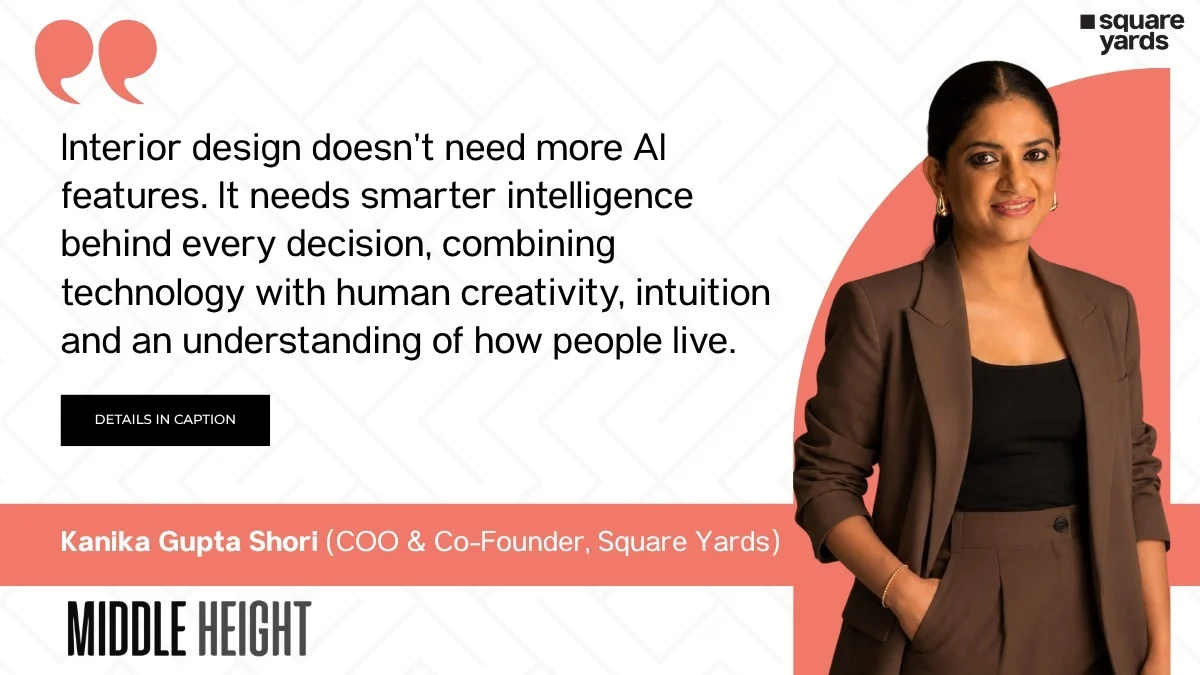
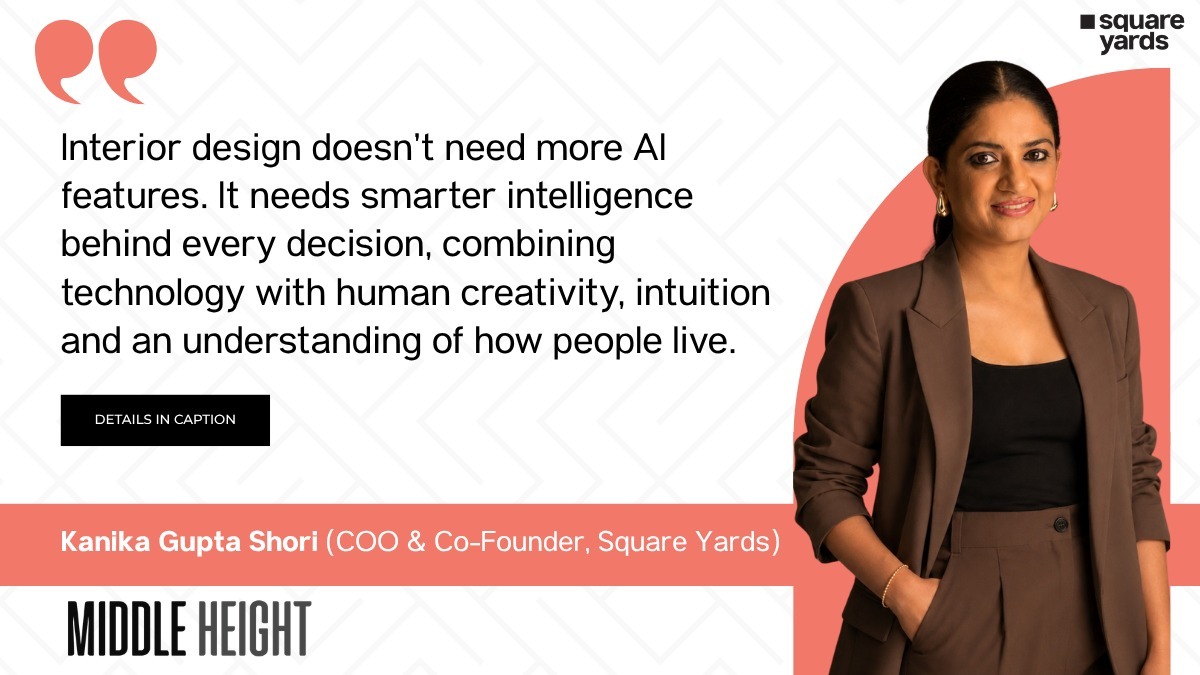
Tanmay, Project Operations Specialist, notes that the real opportunity lies in the intersection of disciplines. "The future of interior design is not about AI alone," he states. "It is about connecting design, technology, manufacturing, and execution into one seamless workflow. Homeowners are not simply buying designs; they are investing in confidence."
Industry Analysts suggest that the "Square Yards" model—integrating real estate, finance, and interiors—is becoming the blueprint for the industry. By controlling the entire value chain, firms can eliminate the "middleman friction" that has plagued the sector for decades.
Manufacturing Leaders have also weighed in, noting that the "Production-Ready Drawing" is the most important document in the modern era. When a designer hits ‘save’ on a cloud-based platform, the manufacturing plant should theoretically receive the exact specifications for the CNC machines without manual intervention. This level of automation is what will separate the market leaders from the laggards by 2027.
5. Implications: What This Means for the Future
The shift toward an integrated, tech-heavy execution model has profound implications for all stakeholders in the Indian ecosystem.
For the Homeowner: From Anxiety to Assurance
The "home interiors journey" has historically been one of the most stressful experiences for Indian families. The move toward integrated platforms changes the homeowner’s role from a "project manager" to a "validated spectator." Real-time tracking, transparent budgeting, and the guarantee that "what you see is what you get" will democratize high-quality design, making it accessible beyond just the luxury segment.
For the Workforce: Upskilling and Precision
The traditional carpenter is not being replaced but is being transformed into an "installer." This requires a shift in skill sets. The workforce must now be adept at reading digital technical drawings and working with precision-engineered modular components. This professionalization of the labor force could lead to better wages and more stable employment in the construction and finishing sectors.
For the Economy: Scaling the Unorganized Sector
As technology makes it easier to manage complex projects at scale, the organized interior design market in India is expected to swallow a larger share of the unorganized sector. This leads to better tax compliance, standardized quality, and a more robust supply chain, contributing significantly to the national GDP.
Sustainability and Waste Reduction
Integrated technology allows for "precision manufacturing." By calculating exactly how much material is needed for a project, companies can drastically reduce timber and laminate waste. In an era where ESG (Environmental, Social, and Governance) goals are becoming mandatory, the connected workflow is the industry’s best tool for achieving a circular economy.
Conclusion: The Era of "Digital Ideas, Physical Precision"
As we look toward 2027 and beyond, the interior design industry in India will no longer be judged by the creativity of its renders, but by the precision of its execution. Artificial Intelligence will continue to evolve, providing faster and smarter design solutions, but its value will always be capped by the physical reality of the home.
The businesses that thrive will be those that view themselves not just as design firms, but as technology and logistics powerhouses. By bridging the gap between the digital screen and the physical wall, the industry is finally moving toward a future where "home" is exactly what it was promised to be.
The future of interior design has arrived, and it is built on a foundation of integrated data, seamless workflows, and, above all, the restoration of consumer trust.
About the Author:
Tanmay is a specialist in project management and operations with a focus on turning complex technological ideas into impactful physical outcomes. A keen observer of the PropTech space, he combines his passion for technology with a commitment to streamlining the execution of large-scale design projects.
