By Tanmay
Last Updated: August 27, 2026
The Indian housing finance market, long characterized by its labyrinthine processes and formidable paperwork, is undergoing a radical metamorphosis. At the forefront of this shift is Urban Money, a tech-enabled platform that is effectively bridging the gap between aspiring homeowners and financial institutions. As the Indian economy continues its robust growth trajectory in mid-2026, the demand for transparent, accessible, and efficient home financing has never been higher.
Amit Prakash, the Chief Business Officer at Urban Money, has recently articulated a vision that places technology, financial expertise, and consumer trust at the heart of the homebuying journey. This strategic focus comes at a time when the "Digital India" initiative has matured, and the real estate sector is increasingly reliant on fintech innovations to sustain its momentum.
Main Facts: The Vision for a Seamless Borrowing Experience
Urban Money’s primary objective is to deconstruct the complexities of home financing. Traditionally, a home loan in India was a multi-step hurdle race involving physical visits to multiple banks, opaque eligibility criteria, and a mountain of physical documentation. Urban Money has disrupted this model by creating a centralized digital ecosystem.
The company’s approach is predicated on three core pillars:
- Technological Integration: Leveraging AI-driven algorithms to match borrowers with the most suitable lenders based on real-time financial profiles.
- Transparency: Providing clear, comparative data on interest rates, processing fees, and hidden charges that historically plagued the mortgage industry.
- Accessibility: Extending the reach of institutional credit to not just Tier 1 metropolises, but also to burgeoning Tier 2 and Tier 3 cities where the next wave of real estate growth is concentrated.
According to the latest internal reports, Urban Money has successfully streamlined the lead-to-disbursement cycle by nearly 40%, a feat achieved through the automation of preliminary credit checks and digital document verification.
Chronology: The Evolution of Housing Finance in India
To understand the significance of Urban Money’s impact in 2026, one must look at the timeline of the Indian mortgage industry’s evolution:
The Era of Physical Banking (Pre-2010s)
Before the digital boom, getting a home loan was a localized affair. Borrowers were limited to the banks where they held savings accounts. Information asymmetry was high, and the "agent" culture often led to mis-selling and inflated commission costs.
The Rise of Aggregators (2010–2018)
The first wave of digital intervention saw the rise of lead-generation websites. While these platforms allowed for price comparison, the "last mile" of the loan—the actual documentation and processing—remained stubbornly manual.
The Pandemic Catalyst (2020–2022)
The COVID-19 pandemic acted as a forced accelerator for digital adoption. Banks were forced to accept digital signatures and video-KYC (Know Your Customer). This period saw the birth of "Phygital" models, where technology assisted the physical process of loan procurement.
The Tech-Enabled Consolidation (2023–2026)
This is the current era where Urban Money has solidified its position. The industry has moved beyond mere lead generation into full-stack fulfillment. In 2026, the integration of the Account Aggregator (AA) framework and the Unified Lending Interface (ULI) has allowed platforms like Urban Money to offer "one-click" eligibility checks, transforming a weeks-long process into a matter of minutes.
Supporting Data: The Economic Backdrop of 2026
The push for simplified home financing is supported by staggering economic data. As of the third quarter of 2026, the Indian real estate sector is projected to contribute approximately 13% to the nation’s GDP.
Key Statistics:
- Housing Credit Growth: The Indian housing credit market has maintained a Compound Annual Growth Rate (CAGR) of 15-18% over the last three years.
- Urbanization Rates: With nearly 37% of the Indian population now residing in urban areas, the demand for affordable and mid-range housing has surged.
- Digital Penetration: Over 90% of home loan seekers in 2026 begin their journey online, compared to just 55% in 2019.
- Approval Rates: Tech-enabled platforms have reported a 25% higher approval rate for loans due to better "pre-filtering" of candidates through AI credit scoring, reducing the burden on bank underwriters.
Furthermore, the Reserve Bank of India’s (RBI) stable repo rate environment in early 2026 has encouraged a surge in first-time homebuyers. Urban Money has capitalized on this by offering a "Best Price Guarantee," utilizing its massive scale to negotiate preferential rates from over 100+ partner banks and Non-Banking Financial Companies (NBFCs).
Official Responses: Insights from Leadership
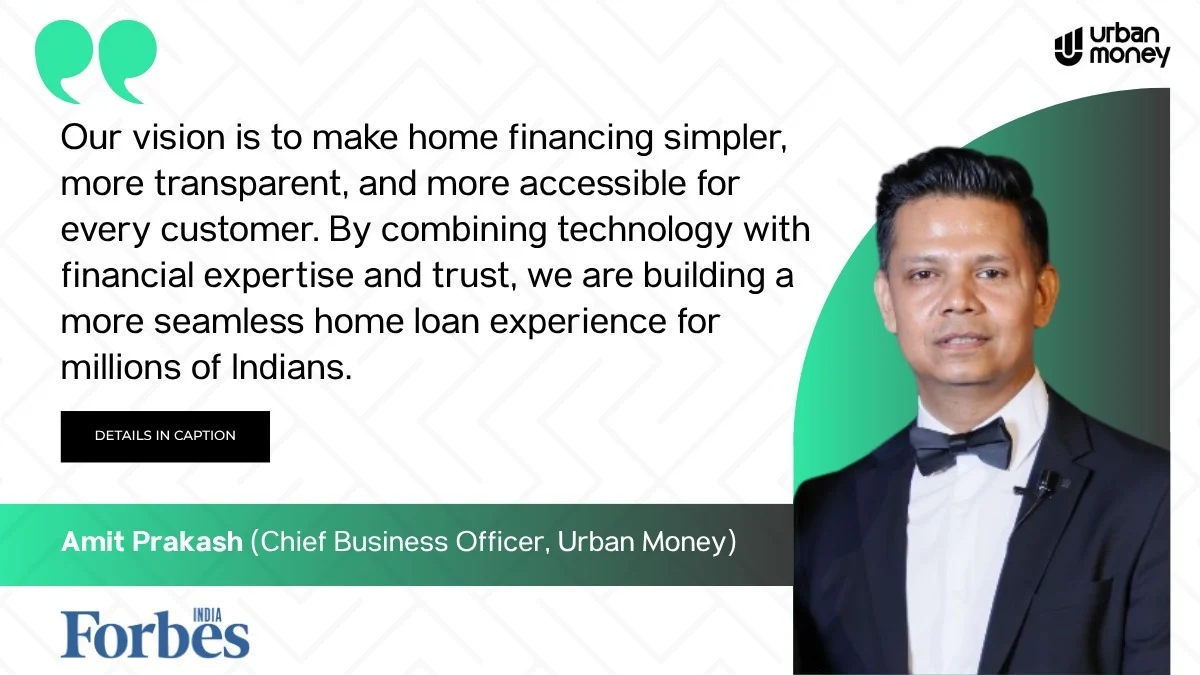
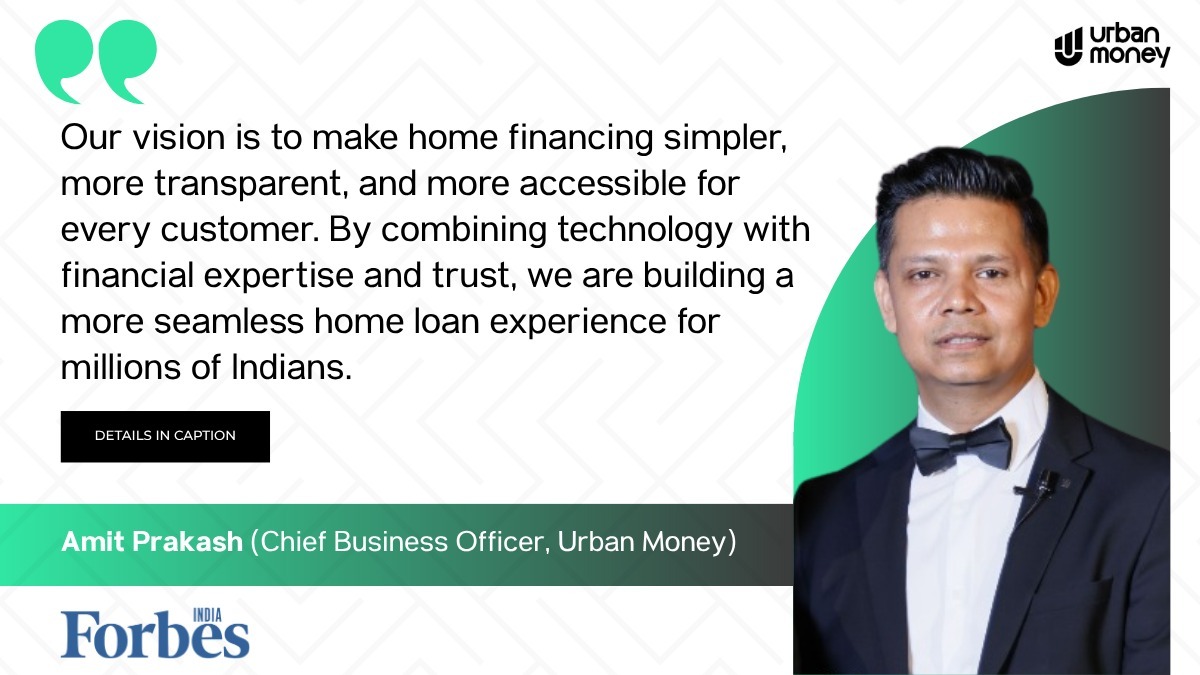
Amit Prakash, Chief Business Officer at Urban Money, emphasizes that technology is a means to an end, not the end itself. "Our vision is to combine technology, financial expertise, and trust to create a more seamless home loan experience for millions of Indians," Prakash stated.
In a recent industry forum, Prakash expanded on this, noting that the "human element" remains irreplaceable in high-value transactions like home loans. "While the backend is powered by sophisticated code, the frontend must be powered by empathy and expertise. We aren’t just selling a financial product; we are facilitating a milestone in a family’s life. Transparency isn’t just a feature; it’s our foundation."
Other stakeholders within the Square Yards ecosystem (Urban Money’s parent company) have echoed this sentiment, suggesting that the integration of real estate search and financial fulfillment is the logical conclusion of the PropTech revolution. By having the financing solution embedded within the home discovery process, the "friction" of buying a home is significantly reduced.
Implications: How This Shapes the Future of Indian Real Estate
The advancements led by Urban Money have far-reaching implications for the Indian economy and the social fabric of the country.
1. Democratization of Credit
Historically, the "informal" sector—small business owners and freelancers—struggled to secure home loans due to a lack of traditional salary slips. Urban Money’s use of alternative data (transactional history, utility payments, and GST filings) to assess creditworthiness is bringing millions of previously excluded Indians into the formal credit fold.
2. Efficiency Gains for Financial Institutions
Banks and NBFCs are no longer burdened with the high cost of customer acquisition. By partnering with Urban Money, financial institutions receive "credit-ready" files, allowing them to focus on capital management rather than administrative paperwork. This efficiency is often passed back to the consumer in the form of lower processing fees.
3. Market Transparency and RERA Synergy
The Real Estate (Regulation and Development) Act (RERA) brought transparency to construction; Urban Money is bringing similar transparency to financing. When borrowers can clearly see the "Total Cost of Loan" (including insurance, legal fees, and valuation charges), it forces the entire industry to remain competitive and honest.
4. The Rise of the ‘Phygital’ Specialist
The role of the traditional loan agent is evolving. We are seeing the rise of "Financial Consultants" who use Urban Money’s proprietary tools to provide bespoke advice. This professionalization of the intermediary layer ensures that consumers are not just getting a loan, but the right loan for their specific financial health.
5. Impact on Secondary Markets
As financing becomes easier, the liquidity of the real estate market increases. Homeowners can upgrade to larger properties more frequently when the friction of refinancing or securing a new mortgage is minimized. This keeps the housing market vibrant and prevents stagnation.
Conclusion: The Road Ahead
As we look toward the final quarters of 2026 and into 2027, the trajectory for Urban Money and the broader housing finance sector remains upward. The convergence of 5G connectivity, the maturation of the India Stack, and an increasingly financially literate population has created a "perfect storm" for fintech innovation.
The mission articulated by Amit Prakash is a testament to the changing expectations of the modern Indian consumer. They no longer accept opacity or inefficiency as the "status quo." By placing the customer at the center of the technological roadmap, Urban Money is not just facilitating loans; it is building the infrastructure for a more prosperous, home-owning India.
The future of home financing will undoubtedly be shaped by three words: Accessibility, Transparency, and Convenience. As Urban Money continues to scale, its role as a bridge between the dreams of homebuyers and the capital of financial institutions will be pivotal in defining the next decade of Indian real estate.
About the Author: Tanmay is a project management specialist with a passion for streamlining complex operations. A keen observer of the FinTech and PropTech sectors, he follows the intersection of technology and consumer behavior closely. When not analyzing market trends, he is an avid Manchester United supporter and a technology enthusiast.