The Indian automotive landscape witnessed a landmark moment in September 2026 as the domestic scooter segment surged toward the million-unit milestone. According to the latest industry data, total domestic scooter sales reached an unprecedented 9,95,576 units, marking the highest monthly volume in the history of the Indian two-wheeler industry. This performance represents a staggering 34.07% year-on-year (YoY) growth compared to the 7,42,602 units recorded in September 2025.
As the market undergoes a profound transformation—driven by the dual engines of premiumization in the internal combustion engine (ICE) category and the rapid adoption of Electric Vehicles (EVs)—the "Top 10" scooter models have solidified their dominance, accounting for nearly 85% of total domestic volumes.
Main Facts: The "Big Two" and the Rise of the Electric Guard
The September 2026 sales report highlights a market characterized by the continued hegemony of established legacy brands and the aggressive ascent of electric nameplates.
1. The Activa Phenomenon
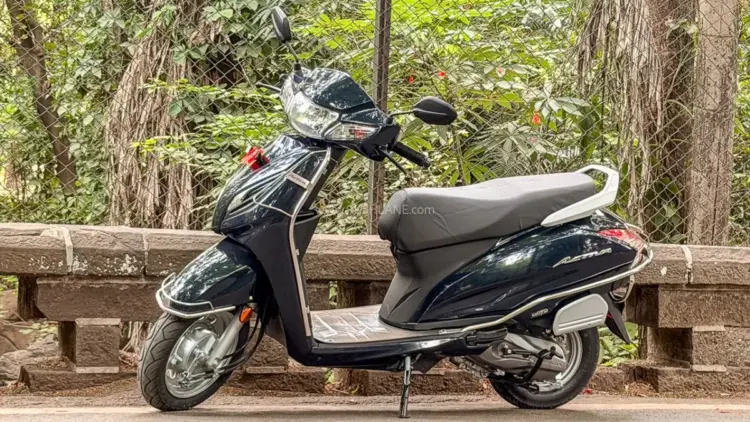
The Honda Activa remains the undisputed titan of the Indian roads. In September 2026, the Activa recorded sales of 3,52,271 units, a massive leap from the 2,37,716 units sold in the same month previous year. This 48.19% growth is significant not just for its volume, but for its impact on the industry at large; the Activa alone contributed more than half of the total net growth seen across the top 10 scooter models.
2. TVS Jupiter’s Steady Ascent
Holding the second position, the TVS Jupiter continues to be a formidable challenger. With 1,54,725 units sold (up 8.87% YoY), the Jupiter, combined with the Activa, accounts for approximately 60% of the top 10 group’s total sales. The Jupiter’s success is largely attributed to its "more-for-less" value proposition and its appeal across both urban and semi-urban demographics.
3. The EV Disruptors
Perhaps the most significant trend is the collective performance of the "Electric Trio"—the TVS iQube, Bajaj Chetak, and Hero Vida. These three models recorded combined sales of 1,16,576 units.

- TVS iQube: Ranked 4th with 45,320 units (47.05% growth).
- Bajaj Chetak: Ranked 5th with 42,394 units (38.73% growth).
- Hero Vida: Ranked 9th but posted a massive 88.28% growth with 28,862 units.
Chronology: The Road to a Million Units
To understand the magnitude of the September 2026 results, one must look at the trajectory of the market over the last twelve months.
- Q3 2025 – Early 2026: The market saw a period of stabilization following post-pandemic supply chain corrections. Manufacturers began focusing heavily on 125cc "premium" scooters, anticipating a shift in consumer preference away from entry-level 110cc models.
- August 2026: The industry set a strong foundation with 8,55,715 domestic units. This month served as a precursor to the festive season surge, with manufacturers ramping up inventory.
- September 2026: The "Perfect Storm." A combination of early festive season buying, improved rural sentiment following a favorable monsoon, and aggressive government subsidies for electric two-wheelers pushed the domestic volume to 9.95 lakh units. This represents a 16.34% month-on-month (MoM) increase from August.
Supporting Data: A Deep Dive into the Top 10
The performance of the top 10 models provides a granular view of shifting consumer loyalties.
The Growth Leaders
While the Activa led in absolute volume, the title for the fastest-growing model went to the Hero Destini 125. It registered 41,839 units, a nearly twofold increase (92.33%) from the 21,754 units sold in September 2025. This indicates that Hero MotoCorp’s strategy to reposition the Destini as a premium, feature-rich 125cc offering is yielding high dividends.
Stability vs. Volatility
The Suzuki Access maintained its 3rd place ranking with 71,928 units, though its growth remained relatively flat compared to the previous year’s 72,238 units. In contrast, the TVS Ntorq (available in 125 and 150cc variants) saw a robust 44.24% growth, reaching 47,955 units. This suggests that the youth-centric, performance-oriented segment is expanding faster than the traditional family-scooter segment represented by the Access.
The Performance Table: September 2026 vs. September 2025
| Rank | Model | Sep-26 Units | Sep-25 Units | YoY Growth (%) |
|---|---|---|---|---|
| 1 | Honda Activa | 3,52,271 | 2,37,716 | 48.19% |
| 2 | TVS Jupiter | 1,54,725 | 1,42,116 | 8.87% |
| 3 | Suzuki Access | 71,928 | 72,238 | -0.43% |
| 4 | TVS Ntorq | 47,955 | 33,246 | 44.24% |
| 5 | TVS iQube (EV) | 45,320 | 30,820 | 47.05% |
| 6 | Bajaj Chetak (EV) | 42,394 | 30,558 | 38.73% |
| 7 | Hero Destini 125 | 41,839 | 21,754 | 92.33% |
| 8 | Honda Dio | 29,160 | 23,829 | 22.37% |
| 9 | Hero Vida (EV) | 28,862 | 15,329 | 88.28% |
| 10 | Suzuki Burgman | 27,839 | 28,254 | -1.47% |
| – | Total Top 10 | 8,42,293 | 6,35,860 | 32.47% |
Quarterly Analysis (Q3 2026)
The July–September quarter (Q3) of 2026 showcased the sustained momentum of the segment. Domestic sales for the quarter stood at 26,49,481 units, a 27.44% increase over the 20,79,054 units in Q3 2025. When including exports (2,17,620 units), the total quarterly volume reached 28,67,101 units.
Official Context and Industry Responses
Industry analysts and manufacturer spokespeople point toward several key drivers for this historic performance.

1. Urban Congestion and the "Second Vehicle" Trend
Honda Motorcycle & Scooter India (HMSI) officials have previously noted that the Activa’s growth is increasingly driven by urban households purchasing a second or third vehicle for short-distance errands. The ease of "twist-and-go" riding remains a primary factor in the scooter’s edge over entry-level motorcycles in metropolitan areas.
2. The EV Infrastructure Maturation
TVS and Bajaj have both attributed the success of the iQube and Chetak to the rapid expansion of charging infrastructure and the narrowing price gap between ICE and EV scooters. As petrol prices remain volatile, the lower "Total Cost of Ownership" (TCO) of electric scooters has become the deciding factor for the middle-class Indian consumer.
3. Rural Market Recovery
Hero MotoCorp has highlighted that the recovery in rural demand—traditionally a stronghold for motorcycles—is now spilling over into the scooter segment. The Destini 125’s growth is a testament to rural consumers seeking more "prestige" and convenience in their daily commuters.
Implications: Scooters as the New Growth Engine
The most striking takeaway from the Q3 2026 data is that scooters are now outperforming motorcycles in domestic growth rates.
Scooters vs. Motorcycles
While motorcycles still hold a larger share of the total market in terms of absolute volume (36.19 lakh domestic units in Q3), their growth rate was a modest 7.40%. In contrast, scooters grew at 27.44% during the same period. Scooters added over 5.70 lakh units to the domestic market in Q3, whereas motorcycles added only 2.49 lakh units.
This paradigm shift suggests that the Indian market is maturing. Urbanization is a key catalyst; as cities become more congested, the practicality of a scooter outweighs the ruggedness of a motorcycle for the average commuter.

Global Hub for Exports
India is also cementing its position as a global export hub for scooters. September 2026 saw exports reach 76,370 units, a 41.27% YoY increase. While motorcycles still dominate the export market (1.43 million units in Q3), the rapid growth in scooter exports indicates that Indian-made scooters—both ICE and EV—are finding increasing acceptance in Southeast Asian, Latin American, and African markets.
The Future of the "Million-Unit" Month
As the industry nears the 1-million-unit-per-month domestic threshold, the focus is likely to shift toward software-driven features. Future growth will not just be about "wheels and engines" but about digital clusters, navigation integration, and fleet management for the burgeoning gig economy.
Conclusion
The September 2026 sales figures represent more than just a successful month for manufacturers; they signal a fundamental shift in Indian mobility. The dominance of the Honda Activa proves that brand trust is paramount, while the explosive growth of the Hero Destini and the electric trio (iQube, Chetak, Vida) shows a market that is hungry for innovation and sustainability. With a 34% growth rate, the scooter segment is no longer the "alternative" to motorcycles—it is the primary driver of India’s two-wheeler future.