The Indian two-wheeler landscape is undergoing a seismic shift, with the scooter segment emerging as the primary engine of growth. In September 2026, the domestic scooter market achieved a historic milestone, recording its highest-ever monthly sales. Driven by a potent mix of legendary internal combustion engine (ICE) models and a rapidly maturing electric vehicle (EV) ecosystem, the segment is now outpacing the traditional motorcycle market in terms of domestic growth rate.
Main Facts: A Landmark Month for Personal Mobility
September 2026 will be remembered as the month the Indian scooter market neared the elusive 1-million-unit mark in domestic sales. Total domestic scooter volumes reached 9,95,576 units, representing a staggering 34.07% year-on-year (YoY) growth compared to the 7,42,602 units sold in September 2025.
The "Top 10" scooter nameplates continue to dominate the landscape, accounting for 8,42,293 units—roughly 84.6% of the total domestic volume. Leading this charge is the perennial market leader, the Honda Activa, which alone crossed the 3.52-lakh unit mark. However, the narrative of the month isn’t just about volume; it is about the extraordinary pace of growth seen in specific models. The Hero Destini 125 and the Vida (Hero’s electric sub-brand) emerged as the fastest-growing nameplates, with the former nearly doubling its sales figures within a year.
Furthermore, the electric revolution is no longer a niche trend. Three of the top 10 scooters in the country—the TVS iQube, Bajaj Chetak, and Vida—are fully electric, collectively contributing over 1.16 lakh units to the top 10’s tally.
Chronology of Market Performance: September 2026
The surge in September sales can be traced through several key developmental phases over the last quarter:
- The Pre-Festive Build-up (August 2026): Manufacturers began aggressive inventory loading in anticipation of the festive season. August domestic sales stood at 8,55,715 units, setting a high base for the following month.
- The September Surge: Domestic sales jumped by 16.34% month-on-month (MoM), fueled by new launches, particularly in the 125cc and electric segments.
- The Export Rebound: Alongside domestic success, overseas shipments saw a significant uptick, reaching 76,370 units, a 41.27% increase YoY, indicating growing global demand for Indian-made scooters.
- Quarterly Consolidation (Q3 2026): The July–September quarter concluded with a total of 26.49 lakh units sold domestically, cementing 2026 as a breakout year for the segment with 27.44% quarterly growth.
Supporting Data: Dissecting the Top 10 Performers
The performance of the top 10 models provides a granular look at consumer preferences and brand strengths.

The Volume Kings: Activa and Jupiter
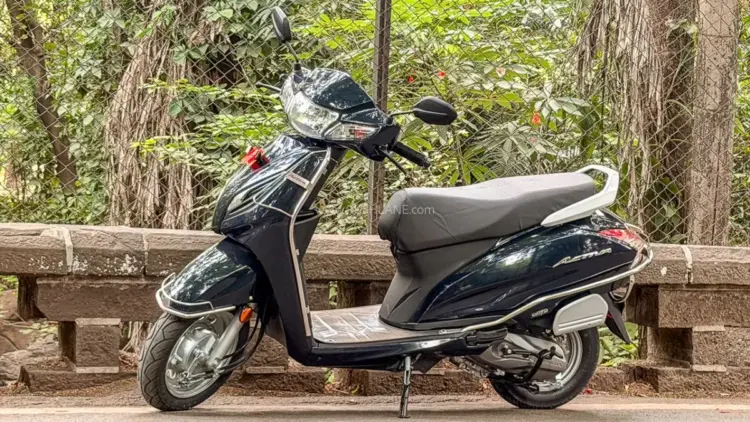
The Honda Activa remains the undisputed "King of Scooters." With 3,52,271 units sold in September 2026 (up from 2,37,716 in Sept-25), it recorded a volume growth of 1,14,555 units. This single model accounted for more than half of the total net growth of the top 10 list.
The TVS Jupiter maintained its second-place standing with 1,54,725 units. While its 8.87% growth was modest compared to the market average, the Jupiter continues to be a vital pillar for TVS, especially with its recent 110cc and 125cc refreshes. Together, the Activa and Jupiter control approximately 60% of the top 10 market share.
The Growth Disruptors: Destini 125 and Vida
Hero MotoCorp has made significant strides in the scooter space, a segment where it historically trailed behind Honda and TVS. The Hero Destini 125 recorded a phenomenal 92.33% growth, moving from 21,754 units in 2025 to 41,839 units in 2026. This surge is attributed to a successful design overhaul and aggressive marketing targeting the family-scooter demographic.
Similarly, the Vida electric scooter saw an 88.28% jump in sales, reaching 28,862 units. As the second-fastest-growing nameplate in the group, Vida’s success highlights the increasing acceptance of Hero’s premium electric offerings.
The EV Powerhouses: iQube and Chetak
The transition to green energy is being led by the TVS iQube and Bajaj Chetak.
- TVS iQube: Sold 45,320 units, growing 47.05%.
- Bajaj Chetak: Recorded 42,394 units, a 38.73% increase.
These two models have successfully bridged the gap between traditional reliability and modern technology, consistently ranking in the top 10 and proving that established OEMs can dominate the EV space.

The 125cc Lifestyle Segment
The Suzuki Access (71,928 units) and TVS Ntorq (47,955 units) continue to perform strongly. The Ntorq, in particular, grew by 44.24%, appealing to younger buyers looking for performance and connectivity features. Interestingly, the Suzuki Burgman was the only model in the top 10 to see a slight decline (-1.47%), suggesting a potential saturation in the premium maxi-scooter sub-segment or increased competition from electric rivals.
Industry Observations and Market Dynamics
While official company spokespersons often wait for quarterly earnings calls to provide detailed commentary, industry analysts and market observers point to three primary drivers for this record-breaking performance:
- Urban Congestion and "Scooterization": As Indian cities face increasing traffic density, consumers are shifting away from motorcycles toward the convenience of "twist-and-go" automatic scooters. The ease of use and storage capacity makes them the preferred choice for urban commuting.
- Infrastructure and Subsidies: Continued government support for electric mobility, combined with an expanding charging infrastructure, has reduced "range anxiety" for EV buyers. This is evident in the fact that combined EV sales in the top 10 reached 1,16,576 units.
- The 125cc Premiumization: There is a clear migration from the 110cc entry-level segment to the more powerful 125cc segment. Models like the Destini 125, Access, and Ntorq are benefiting from this "trading up" phenomenon.
Comparative Analysis: Scooters vs. Motorcycles
One of the most striking revelations of the Q3 2026 data is the divergent growth paths of scooters and motorcycles.
- Domestic Growth: Domestic scooter sales grew by 27.44% in Q3 2026, while motorcycles grew by a much leaner 7.40%.
- Volume Addition: In absolute terms, the scooter segment added 5,70,427 domestic units during the quarter, compared to an increase of 2,49,358 units for motorcycles.
- Export Strength: Motorcycles still hold the crown in the export market, shipping 14.31 lakh units in Q3 compared to the scooter segment’s 2.17 lakh units.
This data suggests that while motorcycles remain the preferred choice for rural markets and international exports (due to their ruggedness and fuel efficiency over long distances), scooters have become the definitive choice for the domestic urban and semi-urban Indian consumer.
Future Implications: What Lies Ahead?
The record-breaking performance of September 2026 sets a high bar for the remainder of the fiscal year. Several implications arise from these trends:
1. The 1-Million Milestone
The domestic market is now on the verge of consistently hitting 1 million scooter sales per month. If the current growth trajectory continues, 2027 could see the scooter segment rivaling motorcycles in total domestic volume, a feat once thought impossible in a motorcycle-dominant country like India.

2. Deepening EV Penetration
With three electric models already in the top 10, the "tipping point" for EVs appears to have arrived. As battery costs continue to stabilize and more models enter the market, we can expect EVs to occupy 50% of the top 10 list within the next 24 to 36 months.
3. Competitive Realignment
Hero MotoCorp’s resurgence in the scooter segment with the Destini and Vida indicates a narrowing gap between the "Big Three" (Honda, TVS, and Hero). This competition is likely to result in more feature-rich scooters and competitive pricing for the end consumer.
4. Global Ambitions
While domestic sales are the primary driver, the 41.27% growth in scooter exports in September 2026 suggests that Indian-made scooters are gaining traction in Southeast Asia, Latin America, and Africa. India is well on its way to becoming a global hub for scooter manufacturing, particularly for electric models.
Conclusion
The September 2026 sales data is a testament to the resilience and evolving nature of the Indian two-wheeler industry. Led by the unstoppable Honda Activa and propelled by a new wave of electric and 125cc models, the scooter segment has redefined its role in the Indian economy. As the country moves toward smarter, cleaner, and more efficient urban mobility, the scooter—in both its petrol and electric avatars—stands at the forefront of this transformation.