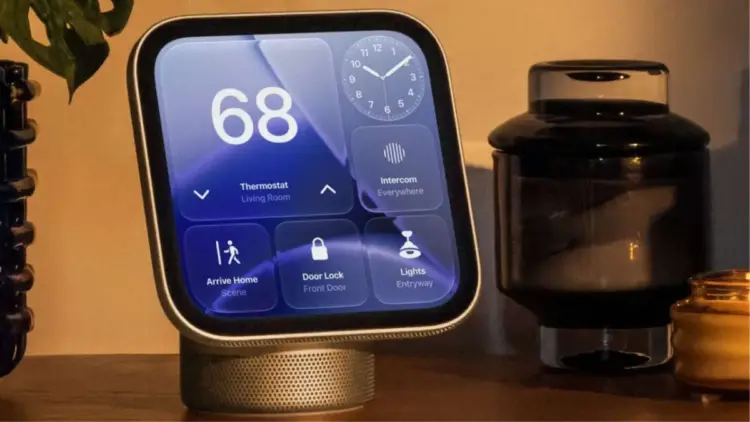
CUPERTINO, CA / NEW YORK, NY – October 14, 2026 – Apple, the global technology titan renowned for its revolutionary iPhone and expansive ecosystem, has once again set its sights on the burgeoning smart home market with the official unveiling of HomeView. Priced at USD 299 and slated for a November launch, this simple yet sophisticated 7-inch smart home screen positions itself not as a standalone marvel, but as an elegant extension of the iPhone, powered by a personalised Siri AI. This move signals Apple’s renewed and strategic intent to carve out a significant share in a sector currently dominated by tech behemoths Amazon and Google, promising a user experience rooted in trust, privacy, and unparalleled integration.
The HomeView represents Apple’s second concerted effort to penetrate the residential technology landscape, following the 2018 debut of the HomePod, which, despite its audiophile-grade sound, struggled to gain significant traction, capturing an estimated 6 per cent market share. Learning from past ventures, Apple appears to have meticulously re-evaluated its strategy, focusing on a visual interface, seamless ecosystem integration, and a clear emphasis on data privacy – elements that could prove to be the "secret weapon" against its established competitors.
Main Facts: Apple Unveils HomeView – A Strategic Play in the Smart Home Arena
Apple’s HomeView is a compact, 7-inch touchscreen device designed to be a central hub for the modern smart home. Revealed at a dedicated event in New York, the device aims to simplify the often-complex smart home experience, offering a personalised interface through advanced camera and voice recognition technologies. At its core, HomeView functions as an intelligent extension of a user’s iPhone, leveraging the vast capabilities and data context of the smartphone without directly storing sensitive personal information on the device itself.
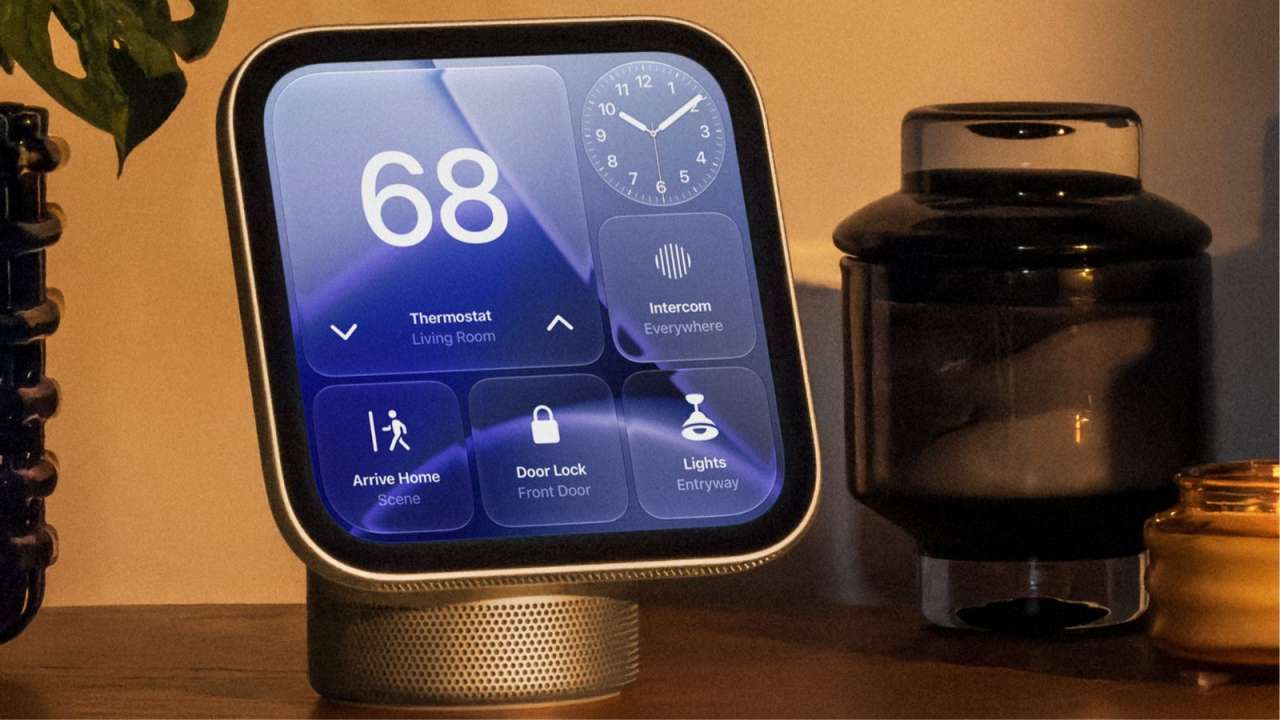
The USD 299 price point places HomeView squarely in the premium segment of the smart display market, positioning it against more affordable offerings from Amazon and Google. However, Apple’s long-standing success in the high-end market, exemplified by the iPhone’s consistent dominance despite higher price tags, suggests a calculated gamble. The company believes there is a significant appetite for a device that prioritises simplicity, elegance, and, crucially, data privacy – a growing concern among consumers in an increasingly connected world.
HomeView integrates deeply with Apple’s ecosystem, allowing for personalised home screens that display relevant apps, calendar appointments, and notifications. Siri AI serves as the primary control mechanism, responding to individual users with tailored information and services. While core Apple applications like FaceTime and Apple Music are built-in, the device’s reliance on a nearby iPhone for context extends to third-party services such as Spotify, ensuring a consistent and secure user experience across devices. This strategy underpins what Apple refers to as its "boring" approach – a deliberate move away from overly complex AI solutions towards a trustworthy, intuitive, and seamlessly integrated smart home companion.
A Chronological Look: Apple’s Journey into the Smart Home
Apple’s engagement with the smart home market has been a journey of evolution, marked by initial ambitious ventures and subsequent strategic refinements. Understanding this trajectory is crucial to appreciating the significance of HomeView.
)
The HomePod Era (2018): Ambition Meets Market Reality
In 2018, Apple introduced the HomePod, a high-fidelity smart speaker designed to deliver an unparalleled audio experience while integrating Siri into the home. Priced at USD 349, it was positioned as a premium device, emphasizing sound quality over broad smart home functionality, a stark contrast to Amazon’s Echo and Google’s Home devices which prioritized utility and affordability. The HomePod boasted impressive acoustics, leveraging spatial awareness to adapt sound to its environment, but its appeal was ultimately niche.
Its primary limitation was Siri. While capable on iPhone, Siri on HomePod was often perceived as less versatile and intelligent than Amazon’s Alexa or Google Assistant, struggling with complex queries, third-party integrations, and general knowledge. Furthermore, the lack of a visual interface became a significant drawback as competitors began rolling out smart displays. Users found themselves wishing for a screen to view recipes, video calls, or security camera feeds, functionalities the HomePod simply couldn’t offer. Its high price, coupled with these limitations and Apple’s closed ecosystem approach (initially limiting music services to Apple Music), restricted its market penetration. The estimated 6 per cent market share it eventually garnered underscored the challenge of entering an already competitive space with a differentiated, yet functionally limited, offering. Apple later released the more affordable HomePod mini, addressing some price concerns but not the fundamental lack of a screen or Siri’s perceived shortcomings relative to rivals.
The Evolving Smart Home Landscape (2018-Present)
While Apple navigated the HomePod’s reception, the smart home market continued its rapid expansion, largely driven by Amazon and Google. These companies aggressively pushed their smart displays – the Amazon Echo Show and Google Nest Hub lines – which combined voice assistance with visual feedback. These devices quickly became popular for their versatility, offering features like video calling, recipe guides, photo displays, streaming video, and seamless integration with smart home accessories. The visual element proved transformative, enhancing user interaction and opening up new possibilities for smart home control and entertainment.

During this period, consumer expectations shifted. A smart home device was no longer just about voice commands; it needed to be a central visual hub. Simultaneously, public discourse around data privacy intensified. Reports of smart speakers inadvertently recording conversations, and concerns about how personal data was collected and utilized by large tech companies, led to a growing demand for transparency and control over personal information. This created a fertile ground for a new entrant that could address these evolving needs.
The Genesis of HomeView: Learning from the Past
The development of HomeView can be seen as a direct response to these market dynamics and a clear lesson learned from the HomePod experience. Apple understood that a screen was no longer optional but essential for a competitive smart home device. They also recognized the need for deeper integration with their existing, highly successful product – the iPhone – to leverage its processing power, data security, and user familiarity.
The HomeView project likely began with a mandate to address the HomePod’s weaknesses while playing to Apple’s strengths: design excellence, user-friendly software, and a strong commitment to privacy. The decision to make HomeView an "iPhone extension" rather than a fully independent device is a crucial strategic pivot. It offloads complex data processing and storage to the user’s iPhone, alleviating some privacy concerns and simplifying the device’s internal architecture. The choice to unveil HomeView at a New York event, away from the typical iPhone or Mac launches, underscores its importance as a dedicated initiative within Apple’s broader ecosystem strategy. It marks a moment where Apple is not just dipping its toes but making a more decisive, albeit carefully calculated, splash back into the smart home.
)
Supporting Data and Technical Deep Dive: Deconstructing HomeView’s Proposition
HomeView is more than just a smart screen; it’s a meticulously engineered device designed to seamlessly integrate into the Apple ecosystem, offering a unique value proposition that prioritizes user experience, privacy, and simplicity.
Hardware and Design: Simplicity Meets Apple Aesthetics
The HomeView’s physical design embodies Apple’s signature minimalist aesthetic. Featuring a crisp 7-inch touchscreen, the device is designed to be unobtrusive yet elegant, fitting naturally into various home environments. It offers flexible placement options, capable of resting on an aluminium base – a material choice reflecting Apple’s premium build quality and tactile appeal – or mounted discreetly on a wall, enhancing its versatility as a fixed smart home controller or a dynamic digital photo frame.
The 7-inch display size is a pragmatic choice, offering sufficient screen real estate for video calls, recipe viewing, calendar glanceability, and smart home controls, without dominating a room. This size positions it well against common smart displays like the Google Nest Hub (7-inch) and Amazon Echo Show 8 (8-inch), striking a balance between visibility and footprint. Apple’s commitment to "simplicity and elegance" in design is evident, ensuring the device blends into modern interiors rather than standing out as a purely utilitarian gadget. The robust build quality and thoughtful design choices are intended to differentiate HomeView in a market often saturated with plastic, less aesthetically refined devices.
)
Software and User Experience: The iPhone Ecosystem at its Core
The true innovation of HomeView lies in its software architecture and user experience, which is deeply intertwined with the iPhone. Unlike its competitors that strive for full independence, HomeView proudly operates as an "iPhone extension." This means it leverages the processing power, security features, and stored context of a nearby iPhone.
The personalised Siri AI is central to this experience. Utilising a combination of camera and voice recognition technologies, HomeView can identify individual users, automatically tailoring the home screen with their specific apps, calendar appointments, and reminders. For instance, when a family member approaches, HomeView might display their work schedule and preferred news updates, while for another, it could show their fitness goals and family photos. This level of personalisation, driven by Siri’s enhanced contextual awareness, aims to make the device feel truly intuitive and responsive to each household member.
Crucially, Apple emphasizes that HomeView "does not store personal data directly but relies on a nearby iPhone for context." This architectural decision is a direct response to growing privacy concerns. By acting as a secure conduit to the iPhone, HomeView avoids becoming a central repository of sensitive user information, enhancing trust. When a user interacts with HomeView, the request is processed, often securely transmitted to the iPhone for deeper context (e.g., accessing specific health data or highly personal messages), and then the relevant information is displayed or actioned.
)
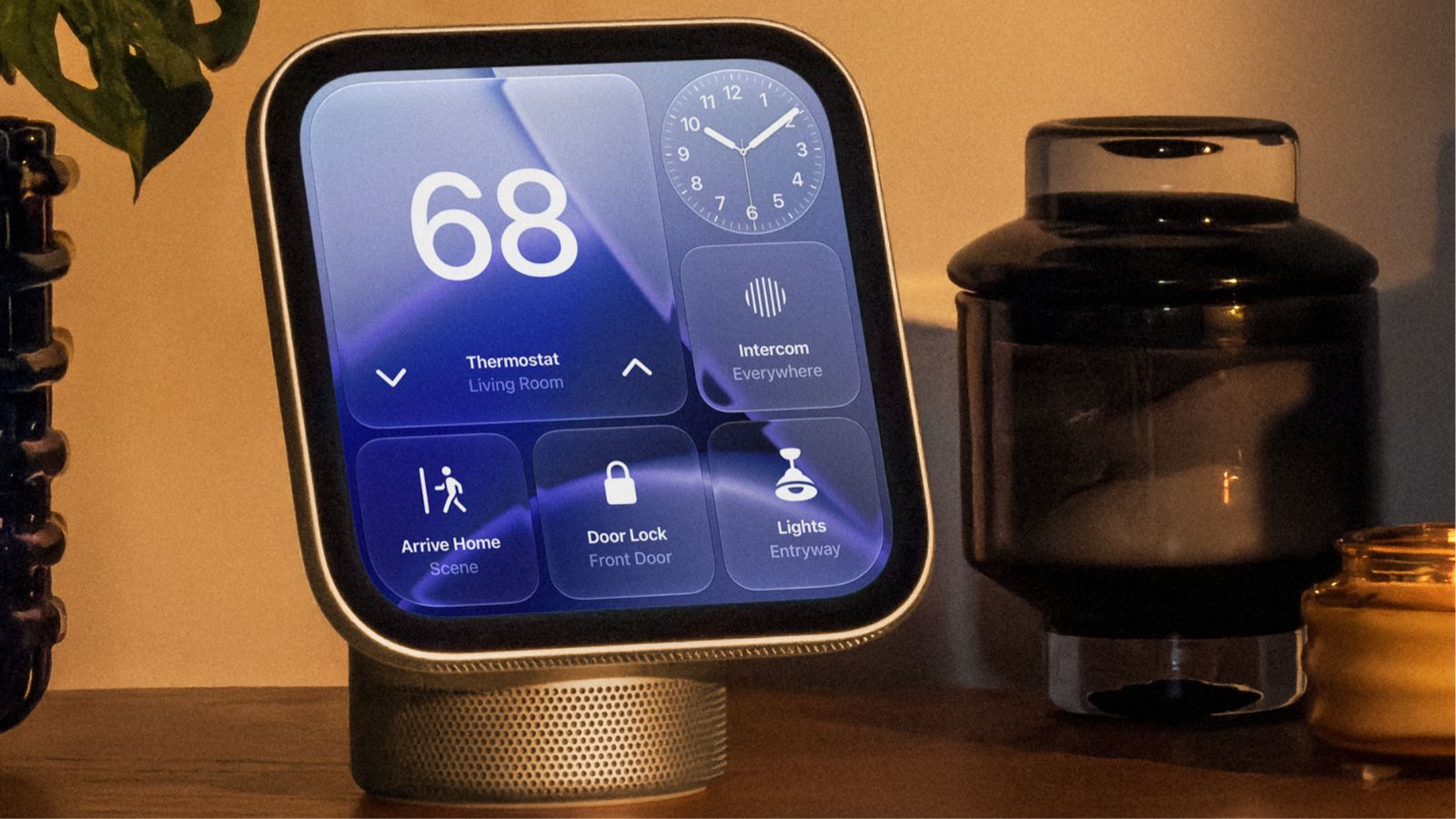
This integration extends to application support. Built-in Apple apps like FaceTime and Apple Music are natively available, offering seamless communication and entertainment. However, for third-party applications such as Spotify, or even for sending iMessages or making phone calls, HomeView requires the presence and support of an authenticated iPhone. This ensures that user permissions and data access are managed through the iPhone’s robust security framework, further reinforcing the privacy-centric design. While some might see this reliance as a limitation, Apple frames it as a feature, ensuring consistency, security, and a unified experience across its ecosystem. Furthermore, HomeView is expected to be a central control point for Apple’s HomeKit ecosystem, allowing users to manage smart lights, thermostats, locks, and other compatible accessories with simple voice commands or touch gestures.
The "Boring" Strategy: Trust and Privacy as Differentiators
Apple’s candid admission that HomeView might appear "boring" is a calculated strategic statement. In a market increasingly saturated with AI products that are often perceived as complex, intrusive, or even unsettling, Apple is deliberately pivoting towards simplicity and trustworthiness. This "boring" strategy contrasts sharply with the "move fast and break things" ethos sometimes associated with cutting-edge AI, instead promising reliability and predictability.
The company believes that fostering user confidence in data privacy is paramount. By designing HomeView to be simple, with transparent data handling protocols (i.e., relying on the iPhone for sensitive data), Apple aims to alleviate the anxieties many consumers have about smart devices listening in or collecting excessive personal information. This focus on privacy is not just a feature; it’s a core tenet of HomeView’s appeal.
)
The deep integration with the iPhone ecosystem further reinforces this trust. Users already have a relationship of trust with their iPhones and Apple’s privacy policies. Extending this trusted environment to a home screen ensures that personalised features, such as individual Spotify accounts (leveraging a user’s logged-in status on their iPhone), secure iMessages, and private FaceTime calls, operate within a familiar and secure framework. This approach attempts to differentiate Apple by offering a secure haven in a smart home landscape often criticized for its data vulnerabilities.
Market Positioning and Competitive Analysis
The USD 299 price tag for HomeView places it at the higher end of the smart display market. For comparison, Amazon’s Echo Show 8 typically retails for around USD 130-150, and Google’s Nest Hub for around USD 100-150, with their larger, more premium models reaching similar price points to HomeView or slightly above. This pricing strategy is not new for Apple; it mirrors their success with the iPhone, which consistently outsells Android phones in the premium segment despite being more expensive.
Apple’s confidence stems from its established brand loyalty and a user base willing to pay a premium for seamless integration, superior design, and a strong emphasis on privacy. While Google and Amazon have been in the smart home industry for almost a decade, launching numerous devices and building extensive ecosystems, Apple argues they "have not created a clear lead." This suggests Apple sees an opportunity to disrupt the market by offering a differentiated experience rather than just competing on features or price.
)
The target audience for HomeView is likely existing Apple users who are already invested in the ecosystem and prioritize a unified, secure experience. These users may have been hesitant to adopt smart displays from Amazon or Google due to privacy concerns or a desire for deeper integration with their Apple devices. By directly addressing these concerns and offering a device that acts as a true extension of their iPhone, Apple aims to capture this affluent and loyal segment. HomeView is not just another smart display; it’s a statement about Apple’s vision for the future of the connected home, where simplicity, trust, and the power of the iPhone reign supreme.
Official Responses and Industry Reactions
The announcement of HomeView has elicited a range of responses, from Apple’s confident narrative to cautious optimism and skepticism from industry analysts.
Apple’s Narrative: Simplicity, Privacy, and Personalization
During the New York unveiling, Apple executives consistently reiterated their core messaging for HomeView. They emphasized the device’s "simplicity and elegance" in design, highlighting its ability to blend seamlessly into any home environment. A key focus was the concept of HomeView as an "iPhone extension," underscoring how it leverages the security and personalization capabilities of the user’s primary device.
)
"We believe the smart home should be intuitive, personal, and above all, private," stated an Apple spokesperson. "HomeView is engineered from the ground up to reflect these values. It’s not about overwhelming users with features, but about providing a trustworthy, simple, and deeply integrated experience that truly enhances daily life, all while respecting your privacy." The company stressed the role of personalised Siri AI, enabled by on-device camera and voice recognition, to deliver tailored content and interactions for each family member, ensuring that the device feels uniquely theirs without compromising data security. The narrative consistently positioned HomeView as the answer for Apple users seeking a reliable smart display that integrates perfectly with their existing ecosystem.
Analyst and Expert Commentary: A Mixed Outlook
Industry analysts have offered a varied perspective on HomeView’s potential impact.
Optimistic View: Many analysts acknowledge Apple’s strategic prowess and ecosystem strength. "Apple has a remarkable ability to enter established markets late and still dominate the premium segment," commented Sarah Chen, a senior tech analyst at Global Insight Partners. "HomeView’s emphasis on privacy and its deep integration with the iPhone ecosystem could be a potent combination. For Apple users who value privacy and a seamless experience, the USD 299 price won’t be a deterrent. It’s less about competing on price and more about offering a differentiated, premium experience that only Apple can provide." These experts believe that Apple’s loyal user base, combined with growing privacy concerns, creates a significant niche for HomeView, potentially forcing competitors to re-evaluate their own privacy strategies.
)
Skeptical View: Conversely, some experts expressed reservations. "While Apple’s privacy message is compelling, HomeView is entering a very mature market with deeply entrenched competitors," argued David Kim, a technology commentator for TechPulse Magazine. "The USD 299 price is significantly higher than many entry-level smart displays from Amazon and Google, which offer a broader range of third-party integrations. Moreover, its reliance on an iPhone for full functionality might be seen as a limitation by users who want a truly independent smart home hub. Apple calls it ‘boring,’ but the market might interpret that as lacking innovative features or compelling reasons to switch." These skeptics question if Apple’s "boring" strategy is truly innovative enough to capture significant market share beyond its most ardent fans, especially given Siri’s historical performance challenges against Alexa and Google Assistant.
Neutral Stance: A third group adopted a wait-and-see approach. "Apple has a history of refining products over time, and HomeView could be the foundation for future, more advanced smart home devices," noted Maria Rodriguez, an independent tech consultant. "Its initial success will depend heavily on the real-world performance of personalised Siri and how effectively Apple communicates its privacy advantages. It’s a bold move, and whether ‘boring’ can truly be brilliant in this competitive space remains to be seen."
Competitor Silence (or subtle jabs): Google and Amazon’s Stance
As is common in the fiercely competitive tech industry, neither Amazon nor Google issued direct official responses immediately following HomeView’s announcement. Their typical strategy involves allowing their existing product lines and broader ecosystems to speak for themselves.
)
However, industry observers anticipate that both companies will subtly (or not-so-subtly) emphasize their own strengths in upcoming product updates or marketing campaigns. Amazon might highlight the sheer breadth of Alexa’s capabilities, its vast ecosystem of third-party skills, and the affordability of its Echo Show devices. Google, on the other hand, could underscore the power of Google Assistant, its deep integration with Google services, and the versatility of its Nest Hub devices, perhaps even implicitly or explicitly referencing their longer tenure and extensive developer support in the smart home arena. Any future price adjustments or feature additions to their smart displays could also be interpreted as a competitive response to Apple’s premium entry.
Implications for the Smart Home Market and Apple’s Future
HomeView’s launch carries significant implications, not only for Apple’s trajectory but also for the broader smart home industry, potentially reshaping market dynamics and consumer expectations.
Reshaping the Smart Display Landscape?
Apple’s entry with HomeView could act as a powerful catalyst for change within the smart display market. By explicitly foregrounding privacy and simplicity, Apple may force Amazon and Google to re-evaluate their own approaches to data handling and user experience. While these companies have made strides in privacy, Apple’s reputation and explicit design philosophy could set a new benchmark, potentially leading competitors to adopt more stringent privacy controls or offer more transparent data policies.
)
Furthermore, HomeView’s deep integration with the iPhone ecosystem could inspire other device manufacturers to explore tighter integration with their respective smartphone platforms (e.g., Android devices with Google’s smart home offerings). This could lead to a more fragmented but also more tailored smart home experience, where device choices are increasingly dictated by a user’s smartphone allegiance. The premium pricing could also accelerate a trend towards the premiumization of smart home devices, demonstrating that a segment of consumers is willing to pay more for quality, design, and privacy.
Strengthening the Apple Ecosystem Lock-in
HomeView is a crucial piece in Apple’s ongoing strategy to strengthen its ecosystem lock-in. By providing a compelling reason for iPhone users to invest further in Apple hardware for their homes, it makes the prospect of switching to a different platform even more daunting. The seamless integration of HomeView with existing Apple services, from FaceTime to Apple Music and HomeKit, reinforces the value proposition of staying within the Apple fold.
This device is not just about selling a smart screen; it’s about expanding the reach of Apple’s services and solidifying its presence in the daily lives of its users. As more devices become interconnected, each new Apple product serves to enhance the utility and perceived value of the entire ecosystem, creating a powerful network effect that benefits the company’s hardware and burgeoning services revenue streams.
)
The Privacy Paradigm Shift
Apple’s explicit "trustworthy" and "privacy-first" approach for HomeView represents a potential paradigm shift in the smart home industry. For years, the convenience of smart devices often came with unspoken trade-offs regarding data collection. HomeView challenges this norm by making privacy a central, advertised feature. The decision not to store personal data directly on the device, relying instead on the iPhone’s secure environment, could become a new industry standard or a key battleground for market differentiation.
This emphasis on privacy could resonate deeply with consumers who are increasingly wary of how their personal information is used. If HomeView succeeds in building a reputation as the most secure and private smart home display, it could force competitors to innovate not just on features, but also on their privacy frameworks, ultimately benefiting consumers across the board.
Challenges and Opportunities Ahead
Despite its promising debut, HomeView faces several challenges. Overcoming consumer price sensitivity in a market accustomed to lower-cost alternatives will be crucial. Apple will also need to effectively educate consumers on HomeView’s unique value proposition – why its "boring" simplicity and iPhone reliance are strengths, not weaknesses. Expanding third-party app support beyond just relying on the iPhone will also be vital for long-term appeal. Finally, the true capabilities of personalised Siri AI will be under intense scrutiny; it must deliver a genuinely competitive and intelligent experience to stand out against established rivals.
)
However, the opportunities are substantial. HomeView can tap into Apple’s massive, loyal, and affluent user base, a segment that often prioritizes quality and privacy. It has the potential to set new standards for privacy in the smart home, differentiating Apple in a crowded market. Furthermore, HomeView could serve as a foundational device for future, more sophisticated home technologies, paving the way for Apple to expand its smart home ecosystem even further.
A Test of Apple’s "Boring" Brilliance
In conclusion, Apple HomeView is a significant, albeit understated, move by the tech giant. It represents a pivot from past smart home endeavors, leveraging Apple’s core strengths: design, ecosystem integration, and a steadfast commitment to privacy. Its success will not be measured by flashiness or a revolutionary new AI, but by whether its promise of simplicity, trustworthiness, and seamless integration truly resonates with consumers. In a world increasingly saturated with complex and data-hungry technologies, HomeView is Apple’s quiet bet that sometimes, "boring" can indeed be brilliant, offering a refreshing and much-needed alternative in the evolving smart home landscape.