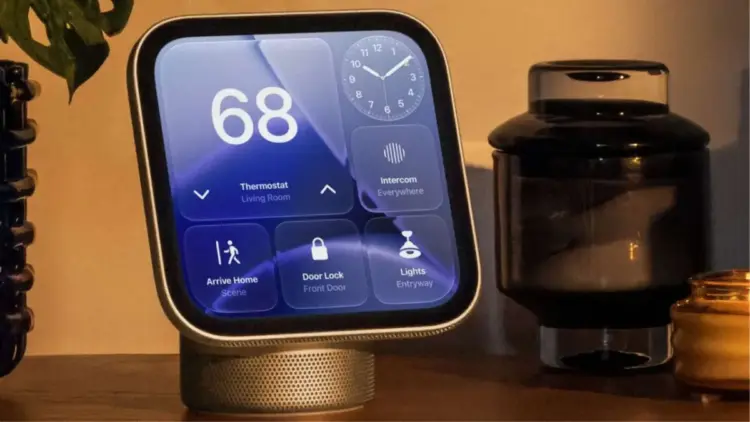
CUPERTINO, CA (October 14, 2026) – In a highly anticipated move, Apple Inc. has officially entered the smart home display market with its new device, the HomeView. Priced at USD 299 and slated for a November launch, the HomeView is positioned not as a revolutionary standalone gadget, but rather as a sophisticated extension of the iPhone, leveraging personalized Siri AI to carve out a distinct niche against established giants like Amazon and Google. This strategic pivot marks Apple’s second significant attempt to capture a meaningful share of the burgeoning smart home market, promising a user experience rooted in simplicity, trust, and unparalleled ecosystem integration.
Main Facts: Apple’s HomeView – A New Vision for the Connected Home
Apple’s HomeView emerges as a sleek, 7-inch smart home screen designed to seamlessly integrate into daily life without overwhelming users with complexity. Unveiled at a dedicated event in New York, the device embodies Apple’s philosophy of elegant design married with intuitive functionality, a hallmark of its premium product ecosystem.
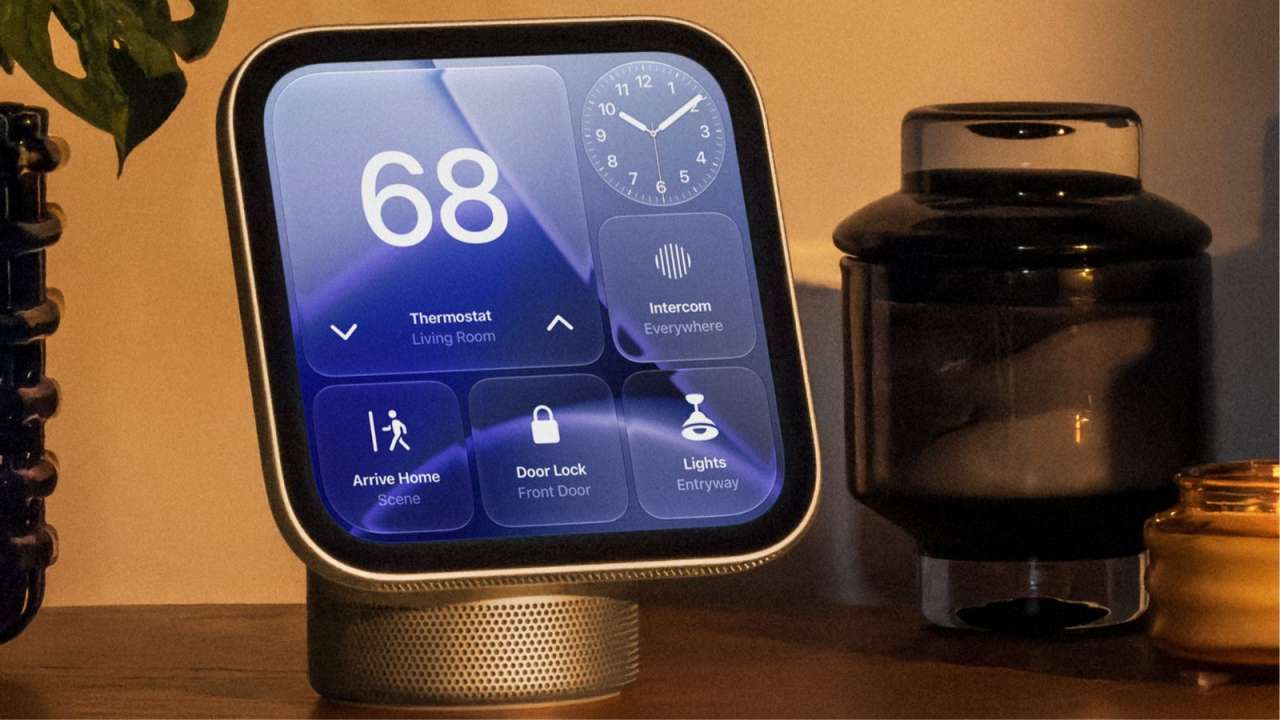
At its core, HomeView is conceived as a personalized hub for the home, designed to be interacted with primarily through voice commands via an enhanced Siri AI and its responsive touchscreen interface. The device’s 7-inch display offers a clear, vibrant portal for a multitude of functions, from managing smart home devices to making video calls and accessing personalized information. Its physical design is quintessential Apple – minimalist, with options for placement on an elegant aluminum base or discreet wall mounting, ensuring it blends effortlessly into modern interiors.
The strategic intent behind HomeView is clear: to extend the personalized experience of the iPhone into the communal spaces of the home. Unlike many smart displays that function as independent computational units, HomeView deeply relies on a nearby iPhone for contextual data and processing, especially for sensitive personal information. This unique architecture underpins Apple’s bold claim of prioritizing user privacy, a critical differentiator in an era increasingly wary of data collection.
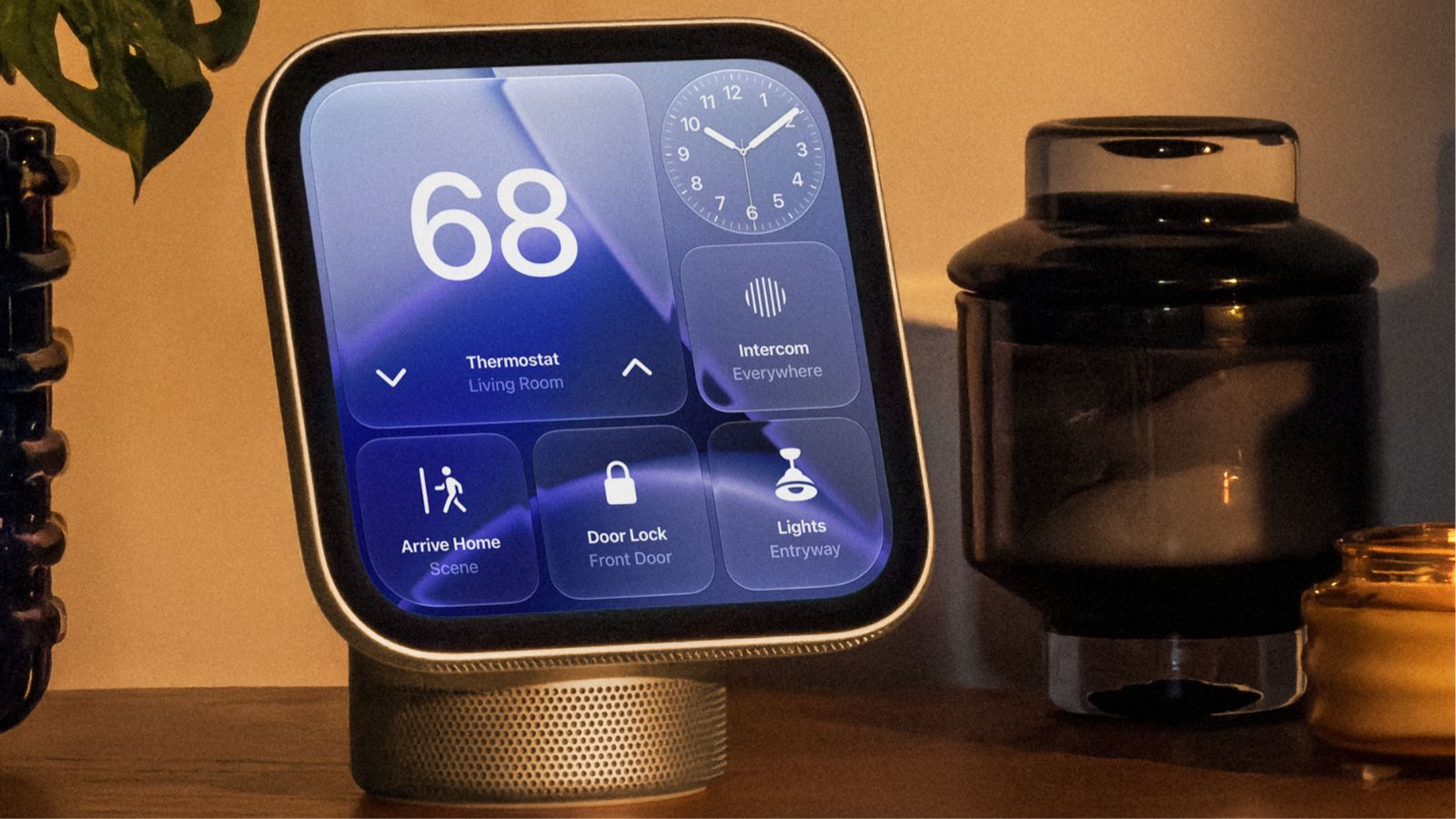)
Key functionalities include personalized home screens that adapt based on camera and voice recognition, displaying relevant apps, calendar appointments, and reminders for individual household members. For instance, upon recognizing a specific user, HomeView could instantly display their personal Spotify queue, upcoming meetings, or relevant iMessages, all controlled through Siri. Built-in Apple applications like FaceTime and Apple Music are natively supported, offering a rich, integrated experience. However, a crucial aspect of its design is that for certain third-party services, such as streaming music from Spotify or accessing specific content, the HomeView intelligently leverages the nearby iPhone, effectively using it as a secure data conduit rather than storing sensitive user data directly on the device itself.
This approach is central to what Apple executives have subtly termed their "boring is a strategy" narrative. In a market saturated with increasingly complex AI-driven devices that often raise questions about data handling and privacy, Apple aims to offer a refreshingly straightforward, trustworthy alternative. By simplifying the user interface and ensuring robust privacy safeguards, HomeView seeks to build user confidence, contrasting sharply with the often-opaque data practices of its competitors. The USD 299 price point, while higher than many entry-level smart displays from Amazon and Google, positions HomeView firmly within Apple’s premium segment, targeting consumers who value design, ecosystem coherence, and privacy above raw affordability.

Chronology: Apple’s Journey in the Smart Home Landscape
Apple’s foray into the smart home market has been a journey marked by innovation, learning, and strategic re-evaluation. The launch of HomeView is not an isolated event but rather the culmination of years of development and insights gleaned from previous ventures.
The company’s initial exploration into home entertainment and connectivity began indirectly with products like the Apple TV, which, while primarily a media consumption device, laid some groundwork for a unified home experience. The introduction of HomeKit in 2014 was Apple’s first dedicated framework for smart home accessories, allowing users to control lights, thermostats, and other devices through the Home app and Siri on their iOS devices. HomeKit established Apple’s commitment to security and ease of use in the smart home, but it lacked a central, dedicated Apple-branded hub.
)
This gap led to the highly anticipated launch of the original HomePod in 2018. Positioned as a premium smart speaker with unparalleled audio fidelity, the HomePod aimed to redefine the smart speaker category. Apple emphasized its sophisticated acoustic design and spatial awareness capabilities, promising an immersive music listening experience. However, despite its audio prowess, the HomePod faced significant challenges. Its high price point (initially USD 349), coupled with a relatively nascent Siri that lagged behind Amazon’s Alexa and Google Assistant in terms of versatility and third-party integrations, limited its appeal. The device struggled to gain traction, achieving only an estimated 6 percent market share in the smart speaker segment, a stark contrast to the dominance of Amazon Echo and Google Home devices. Critics often pointed to Siri’s limitations in understanding complex commands and its restricted ecosystem compared to competitors.
Learning from the HomePod’s reception, Apple introduced the HomePod mini in 2020. This more affordable (USD 99) and compact smart speaker aimed to address the price barrier and offer improved Siri capabilities, along with new features like Intercom for whole-home communication. The HomePod mini saw greater success, demonstrating Apple’s willingness to adapt and iterate in the smart home space. It also solidified the idea that for Apple to truly succeed, its smart home devices needed to be more than just speakers; they needed to be intelligent hubs that extended the iOS experience.
)
The concept of HomeView likely evolved from these experiences. Apple recognized that while audio quality was important, a visual interface could unlock a new dimension of utility for smart home interaction. The limitations of a voice-only interface became apparent in scenarios requiring visual information, such as checking a calendar, viewing a security camera feed, or making a video call. The market had already validated the smart display category through the success of Amazon’s Echo Show and Google’s Nest Hub devices.
The development of HomeView, therefore, represents a strategic pivot, integrating lessons learned from the HomePod’s audio excellence and the HomePod mini’s broader appeal, while directly addressing the need for a visual interface. The decision to rely heavily on the iPhone for contextual data and processing is a direct response to past criticisms regarding Siri’s capabilities and, more importantly, a proactive measure to reinforce Apple’s commitment to user privacy.
)
The official unveiling of HomeView at a New York event was carefully orchestrated. Apple executives highlighted the device’s elegant design, its seamless integration with the iPhone, and its "privacy-first" architecture. The narrative focused on creating a trustworthy and unobtrusive presence in the home, a stark contrast to what Apple implicitly suggests are more intrusive or complex competitive offerings. With its anticipated November launch, HomeView is set to test Apple’s refined strategy in a competitive market that has seen significant evolution since the original HomePod’s debut.
Supporting Data: The Smart Home Ecosystem and Apple’s Position
The global smart home market is a rapidly expanding sector, projected to reach hundreds of billions of dollars in valuation within the next few years. Driven by increasing adoption of IoT devices, advancements in AI, and growing consumer demand for convenience and automation, it presents a lucrative, albeit fiercely competitive, landscape.
)
Current market data indicates a clear duopoly at the forefront of the smart display segment: Amazon and Google. Amazon, with its extensive Echo Show lineup, and Google, with its Nest Hub series, have dominated the market for nearly a decade. These companies have leveraged their vast ecosystems, aggressive pricing strategies, and broad third-party integrations to establish a significant installed base. Their devices typically offer a wide array of functionalities, from streaming video and displaying recipes to controlling an extensive range of smart home accessories and acting as communication hubs. Many of their smart displays are available at price points significantly lower than HomeView’s USD 299, with entry-level models often retailing for under USD 100, making them highly accessible to a broad consumer base.
Despite the entrenched positions of these two tech giants, Apple believes there remains a substantial underserved market segment. Apple’s historical strategy across all its product categories – from iPhones to Apple Watches and Macs – has consistently targeted the high-end, premium market. While iPhones are often more expensive than their Android counterparts, they continue to command a dominant share of the premium smartphone market, demonstrating consumers’ willingness to pay more for Apple’s perceived superior design, user experience, and ecosystem. This strategy is precisely what Apple is applying to HomeView.
)
Consumer trends are increasingly pointing towards a demand for more integrated and personalized experiences within the home. Users are no longer content with disparate smart devices; they seek a cohesive ecosystem that understands their routines and preferences. Crucially, alongside this demand for advanced functionality, there is a burgeoning concern about data privacy. With numerous reports of data breaches, privacy invasions, and the sometimes-unclear data handling practices of various tech companies, consumers are becoming more selective about which devices they invite into their private spaces. This growing privacy awareness is a key differentiator Apple aims to capitalize on with HomeView’s architecture, which emphasizes on-device processing and reliance on the iPhone for sensitive personal data rather than storing it directly on the display.
Historically, Siri’s performance has been a point of contention for Apple’s smart home ambitions. While capable, it has often been criticized for lacking the conversational fluency, vast knowledge base, and extensive third-party integration of Alexa and Google Assistant. However, Apple is actively investing in improving Siri’s AI capabilities, and with HomeView, the focus is on personalized AI. By leveraging the context provided by a user’s iPhone, HomeView’s Siri can offer a more tailored and relevant experience, potentially overcoming some of its past limitations. This personalized approach could transform Siri from a general-purpose assistant into a truly intelligent home companion.
)
The strength of Apple’s existing ecosystem cannot be overstated. Millions of users are deeply embedded in the Apple universe, owning iPhones, iPads, Macs, Apple Watches, and AirPods. HomeView is designed to be a natural extension of this ecosystem, offering seamless continuity across devices. This ‘lock-in’ effect is a powerful asset, as existing Apple users are often more inclined to purchase new Apple products that enhance their current experience. Analysts project that while HomeView may not immediately capture a large overall market share due to its premium pricing, it is likely to resonate strongly with the loyal Apple user base, who prioritize brand trust, design consistency, and privacy. This targeted approach aims for profitability and user satisfaction within its niche rather than volume-based market dominance.
Official Responses: Apple’s Narrative and Strategic Messaging
Apple’s official communication surrounding the HomeView launch has been meticulously crafted to underscore the device’s unique positioning within the smart home market. During the New York unveiling event, Apple executives articulated a clear vision that prioritizes simplicity, trust, and deep integration with the existing Apple ecosystem.
)
Tim Cook, Apple’s CEO, likely emphasized the company’s unwavering commitment to user experience and privacy. While not directly quoting him, the underlying message would align with Apple’s long-standing philosophy: "At Apple, we believe technology should enrich your life without compromising your privacy. HomeView embodies this principle, offering a simple, elegant, and profoundly personal way to interact with your home, all while keeping your data secure and in your control."
The Senior Vice President of Home & AI, or a similar executive, would have delved into the technical and design philosophy behind HomeView. They would have highlighted the device’s user-centric design, focusing on how the personalized Siri AI and the secure reliance on the iPhone create a fundamentally different, more trustworthy experience. "We looked at the current smart home landscape and saw an opportunity to create something different – something that puts you, the user, at the center, not your data being shared indiscriminately. HomeView isn’t about complexity; it’s about clarity, simplicity, and building a foundation of trust in your most personal space," an executive might have stated. This narrative directly addresses the "boring is a strategy" mantra, reframing simplicity and security as powerful advantages in a world often overwhelmed by overly complex or data-hungry AI products.
)
Press releases and subsequent interviews would have further elaborated on the specific features designed to foster user confidence. The emphasis on HomeView not storing personal data directly, but rather intelligently leveraging a nearby iPhone for context, would be a recurring theme. This architectural choice is presented as a crucial privacy safeguard, giving users peace of mind that their most sensitive information remains within their secure personal device.
Apple’s messaging also heavily stresses the seamless integration with the broader Apple ecosystem. HomeView is not just another smart display; it is an extension of the iPhone, an additional interface for Apple Music, FaceTime, iMessage, and HomeKit-enabled accessories. This integration is portrayed as a natural evolution, offering a consistent and familiar user experience that loyal Apple customers have come to expect. Executives would have highlighted how HomeView enhances existing Apple services, making them more accessible and pervasive throughout the home.
)
When addressing the USD 299 price point, Apple’s official stance would likely avoid direct comparisons to lower-priced competitors. Instead, the justification would center on the premium quality of the hardware, the sophisticated software experience, the unparalleled privacy features, and the inherent value of being part of the Apple ecosystem. The implication is that HomeView offers a superior, more secure, and more integrated experience that justifies its higher cost, aligning with Apple’s established premium market positioning across all its product lines. The narrative consistently frames HomeView as a carefully considered, high-quality product designed for discerning users who value a cohesive, private, and elegant smart home experience.
Implications: Reshaping the Smart Home and Apple’s Future
The launch of Apple’s HomeView carries significant implications for the smart home market, the broader tech industry, and Apple’s own strategic trajectory. While it may not instantly unseat Amazon and Google from their dominant positions, HomeView is poised to introduce new dynamics and potentially redefine consumer expectations.
)
For the smart home market, HomeView represents a critical challenge to the existing duopoly. While Amazon and Google have enjoyed relative freedom to innovate and capture market share with less direct competition from Apple in the smart display segment, HomeView’s entry forces them to re-evaluate their strategies. Competitors might respond by emphasizing their own privacy features, improving their AI assistants, or perhaps even introducing new premium-tier devices that attempt to mimic Apple’s design and integration. Price wars are also a possibility, particularly in the mid-range segment, as companies vie for consumer attention. HomeView could also inspire other manufacturers to explore more tightly integrated, ecosystem-dependent devices, shifting the industry away from purely standalone smart gadgets.
The device’s strong emphasis on privacy and its unique architecture – relying on a nearby iPhone for personal data context rather than storing it locally – could set a new standard for data handling in smart home devices. In an era where trust in AI and data privacy is paramount, Apple’s approach might resonate strongly with consumers, pushing the entire industry towards more transparent and secure data practices. This could lead to greater consumer scrutiny of how other smart home devices collect and utilize personal information.
)
For Apple’s ecosystem, HomeView is a crucial piece of the puzzle, designed to further strengthen user lock-in. By seamlessly extending the iPhone experience into the home, it makes the Apple ecosystem even more sticky and indispensable. Users who invest in HomeView will find their Apple devices working even more cohesively, enhancing the value proposition of owning multiple Apple products. This strategy is vital for Apple’s continued growth, particularly as smartphone market saturation increases. HomeView also signals a significant evolution for Siri. If the personalized AI proves effective and genuinely enhances the user experience, it could mark a turning point for Siri, helping it shed its reputation for being less capable than its rivals. This could pave the way for more sophisticated Siri integrations across future Apple products and services.
Looking ahead, HomeView might be the precursor to a broader range of dedicated smart home devices from Apple. The company could explore larger screens, different form factors, or even modular systems that cater to various room sizes and functions. It underscores Apple’s long-term vision for ambient computing – a future where technology seamlessly fades into the background, proactively assisting users without being overtly intrusive. HomeView fits into this vision by providing a subtle yet powerful interface for home interaction.
)
However, implications also come with challenges for Apple. The USD 299 price point remains a potential barrier for mass adoption, especially when compared to the much cheaper alternatives available. The reliance on a nearby iPhone, while a privacy advantage, could also be perceived as a limitation for households where not everyone uses an iPhone or where an iPhone isn’t always readily available. Furthermore, the success of HomeView will heavily depend on the maturity and versatility of its third-party app support, which historically has been an area where Apple’s smart home devices have lagged behind competitors. If HomeView fails to attract a robust ecosystem of compatible apps and services, its utility might be constrained.
Ultimately, HomeView represents Apple’s refined, patient, and strategically "boring" bet on the smart home market. It’s a move that prioritizes depth over breadth, aiming to capture the high-value segment of users who demand premium design, seamless integration, and, most importantly, uncompromised privacy. Its success will not only be measured in market share but also in its ability to set new industry standards and solidify Apple’s position as a leader in creating trusted, intuitive technology for the modern home.
)
Find your daily dose of All Latest News including Sports News, Entertainment News, Lifestyle News, explainers & more. Stay updated, Stay informed- Follow DNA on WhatsApp.