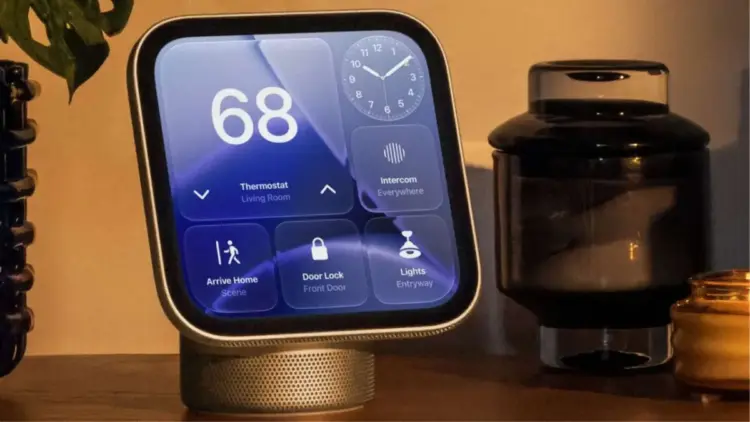
New York, NY – Apple, the Cupertino-based technology giant, has once again cast its gaze upon the burgeoning smart home market, unveiling a new device poised to challenge established players like Amazon and Google. Dubbed "HomeView," this sleek, 7-inch smart home screen, priced at USD 299, represents a significant pivot in Apple’s strategy, emphasizing simplicity, deep iPhone integration, and an unwavering commitment to user privacy. Slated for a November launch, HomeView is not merely another smart display; it’s an extension of the iPhone experience, powered by a personalized Siri AI, designed to instill trust and elegance in the connected home.
This launch marks Apple’s second significant foray into the home device segment, following the HomePod’s debut in 2018. While the HomePod gained acclaim for its audio fidelity, its limited smart home capabilities and premium price point restricted its market penetration, securing only an estimated 6% market share. HomeView, however, arrives with a refined purpose, aiming to carve out a distinct niche by addressing consumer fatigue with overly complex AI and lingering privacy concerns prevalent in the current smart home ecosystem.
Main Facts: Introducing Apple HomeView
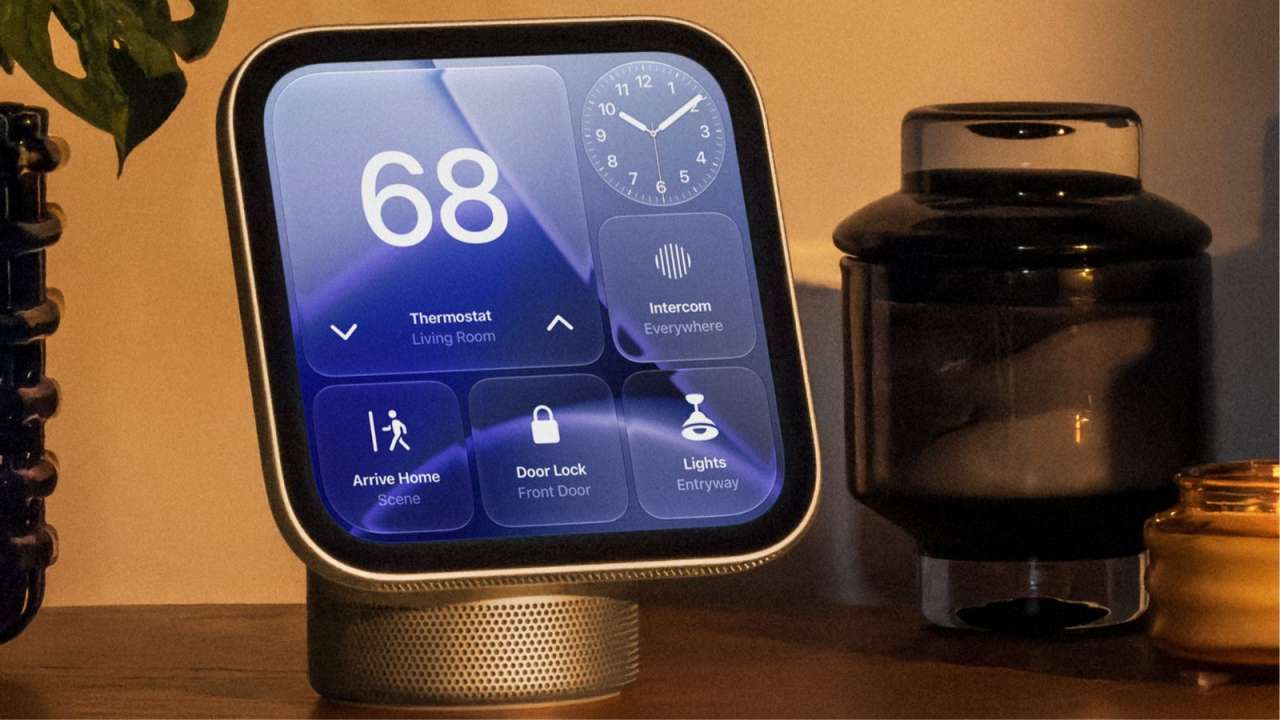
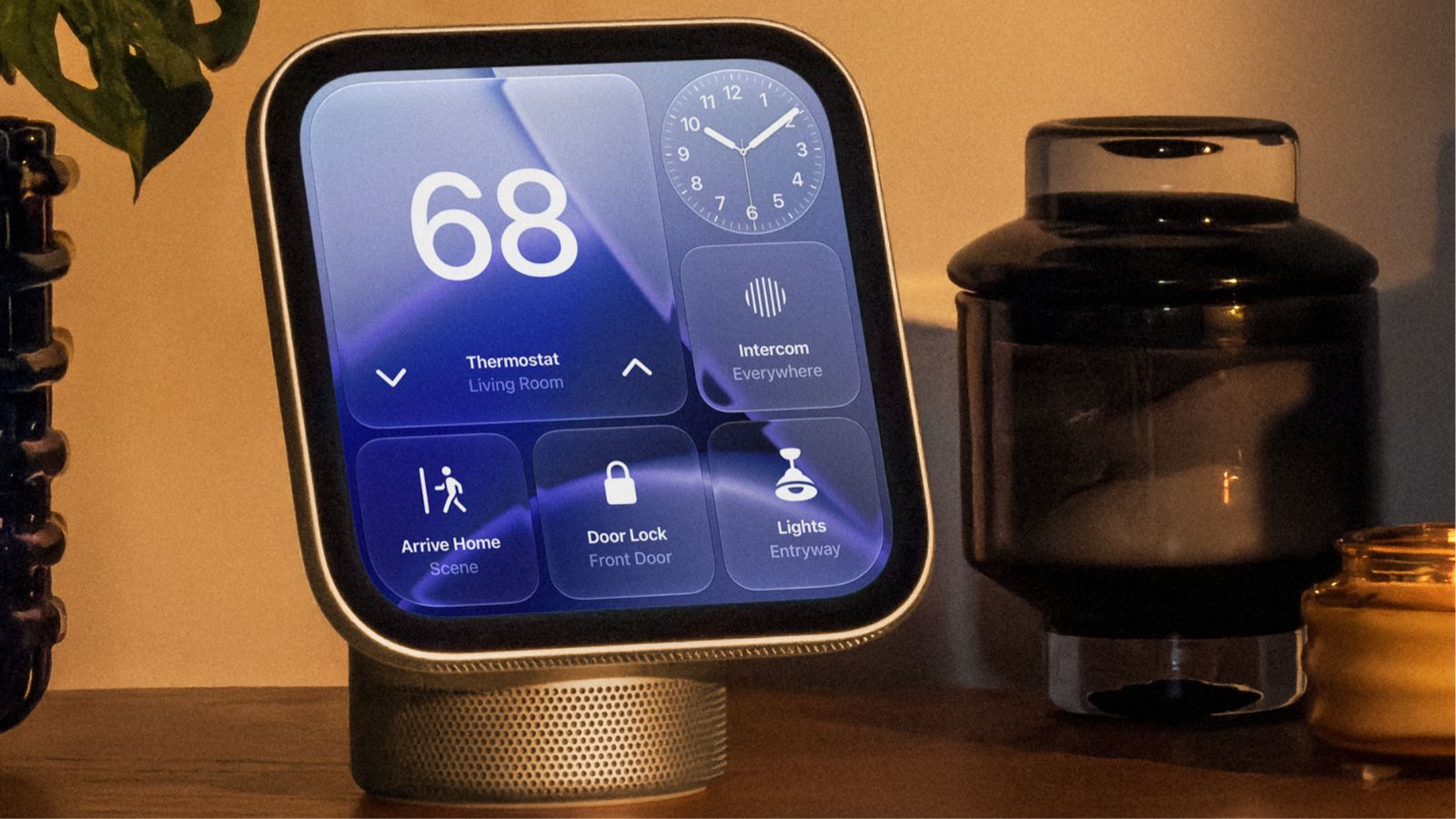
The Apple HomeView is a compact yet powerful 7-inch touchscreen device engineered to serve as a central hub for the modern smart home. Designed with Apple’s signature minimalist aesthetic, it can be elegantly placed on an aluminium base or seamlessly mounted on a wall, blending effortlessly into any home décor. At its core, HomeView functions as a sophisticated extension of the user’s iPhone, leveraging the vast capabilities and secure environment of Apple’s flagship smartphone.
Priced at USD 299, HomeView is positioned as a premium offering in a market segment often characterized by more budget-friendly alternatives from competitors. Its primary launch window is set for November, strategically placing it in time for the crucial holiday shopping season. The device’s most compelling feature lies in its intelligent personalization capabilities, driven by an advanced Siri AI. Utilizing integrated camera and voice recognition technologies, HomeView can dynamically adapt its home screen, displaying relevant apps, calendar appointments, and notifications tailored to the specific user interacting with it.
)
Crucially, HomeView’s architecture prioritizes privacy. Unlike many smart displays that process and store personal data directly on the device or in the cloud, HomeView largely relies on a nearby iPhone for context and data processing. This design philosophy means that sensitive personal information is not stored directly on the HomeView itself, reinforcing Apple’s long-standing commitment to user data security. While native Apple applications such as FaceTime and Apple Music are deeply integrated and function seamlessly, third-party applications like Spotify require the presence and support of an iPhone to fully unlock their capabilities. This strategic reliance on the iPhone underscores HomeView’s identity not as a standalone, all-encompassing smart hub, but as an indispensable companion device designed to enhance and extend the existing Apple ecosystem within the home. Apple introduced HomeView at a dedicated event in New York, where executives emphasized its core tenets of simplicity, elegance, and trustworthiness, presenting it as a deliberate counterpoint to the increasingly complex and often privacy-intrusive landscape of modern AI products.
Chronology: Apple’s Journey in the Smart Home Arena
Apple’s venture into the smart home market has been a journey marked by both ambitious innovation and a learning curve. The path leading to HomeView is best understood by tracing the evolution of its previous attempts and observing the competitive landscape that has shaped its current strategy.

The HomePod Era (2018-Present): Apple’s initial significant foray into the smart home segment arrived in February 2018 with the launch of the original HomePod. Positioned primarily as a premium smart speaker, the HomePod was lauded for its exceptional audio quality, spatial awareness technology, and elegant design. However, its high launch price of USD 349, coupled with Siri’s then-limited smart home capabilities compared to Amazon’s Alexa and Google Assistant, proved to be significant hurdles. The HomePod struggled to gain widespread traction, achieving only an estimated 6% market share in the smart speaker category. Its focus was largely on music playback, rather than serving as a comprehensive smart home hub with a visual interface.
Recognizing the limitations, Apple introduced the HomePod mini in 2020, a more affordable and compact version, and later a second-generation full-size HomePod in 2023. While these iterations improved Siri’s functionality and offered better integration with Apple’s ecosystem, they remained primarily audio-centric devices. The critical gap identified was the absence of a visual interface – a screen – which had become increasingly essential for smart home interaction, video calls, and visual information display.
)
The Rise of Smart Displays: Concurrently, Amazon and Google had been aggressively building their smart home ecosystems for nearly a decade. Amazon launched its first Echo Show in 2017, effectively pioneering the smart display category, followed closely by Google’s Nest Hub. These devices rapidly evolved, offering a blend of voice control, visual information, video communication, and smart home control, establishing a strong foothold in millions of homes worldwide. They integrated deeply with their respective services, offering features like video streaming, recipe guides, and visual security camera feeds. This long head start allowed Amazon and Google to refine their offerings, build extensive third-party developer support, and offer a wide range of price points, effectively dominating the smart display market.
HomeView’s Genesis: Addressing the Gap: The development of HomeView represents Apple’s acknowledgement of the crucial role a visual interface plays in the modern smart home. It signifies a strategic shift from an audio-first approach to a screen-first one, directly targeting the segment dominated by its rivals. The HomeView’s unveiling at a dedicated New York event wasn’t merely a product launch; it was a declaration of Apple’s renewed and refined intent to capture a meaningful share of the home market. By focusing on a 7-inch screen and personalized Siri AI, Apple is attempting to leverage its core strengths – design, user experience, and privacy – to re-enter a market it previously struggled to penetrate effectively. The timing suggests Apple believes the market is now ripe for a more premium, secure, and seamlessly integrated smart display experience, particularly for its loyal iPhone user base.
)
Supporting Data: Market Dynamics and Competitive Landscape
The smart home market is a rapidly expanding sector, projected to reach hundreds of billions of dollars in value in the coming years. This growth is fueled by increasing consumer interest in connected devices that enhance convenience, security, and entertainment within the home. Within this expansive market, smart displays have emerged as a particularly influential category, acting as central command centers for various smart devices, communication tools, and information portals.
Current Smart Display Market Share: For nearly a decade, Amazon and Google have been the undisputed leaders in the smart display segment. Amazon, with its diverse range of Echo Show devices (from the compact Echo Show 5 to the larger Echo Show 15), holds a dominant share, estimated to be well over 50%. Google, with its Nest Hub and Nest Hub Max, occupies a significant second position, typically holding around 20-30% of the market. These companies have benefited from early entry, aggressive pricing strategies, extensive device ecosystems, and continuous innovation in AI assistants. Their devices often retail for significantly less than HomeView’s $299 price point, particularly for their smaller 7-inch models, which can frequently be found for under $100, especially during sales events.
)
Apple’s Niche Strategy and Pricing: Apple has historically positioned itself as a premium brand, successfully dominating the high-end smartphone market despite offering devices that are often more expensive than their Android counterparts. This strategy is clearly evident with HomeView’s $299 price tag. While this price is considerably higher than comparable 7-inch smart displays from Amazon and Google, Apple is betting on its brand loyalty, superior design, and unique value proposition to justify the cost. The company’s belief is that there is an underserved segment of consumers willing to pay a premium for a product that offers a more refined experience, deeper ecosystem integration, and enhanced privacy safeguards.
Privacy as a Differentiator: The "Boring is a Strategy" Deep Dive: One of HomeView’s most significant differentiating factors, and a cornerstone of Apple’s marketing, is its emphasis on privacy. In an era where consumer trust in technology companies is often strained due to data breaches and concerns over surveillance, Apple’s approach is designed to be a calming counter-narrative. The company explicitly states that HomeView "does not store personal data directly but relies on a nearby iPhone for context." This means that the heavy lifting of processing sensitive personal information – such as voice commands, facial recognition data, and calendar appointments – is offloaded to the user’s iPhone, which is designed with robust, on-device privacy protections. This contrasts with some competitor models that might process more data in the cloud or store it on the device itself, leading to potential vulnerabilities.
)
Apple’s philosophy, encapsulated by the phrase "boring is a strategy," is a deliberate move to counteract the perception of AI as complex, unpredictable, or even intrusive. By "boring," Apple implies reliability, predictability, and an intuitive user experience that prioritizes trust over flashy, experimental features. In a world where AI products are rapidly evolving, sometimes with unforeseen ethical or privacy implications, Apple aims for HomeView to be a bastion of simplicity and trustworthiness. This approach is intended to foster deep user confidence, assuring consumers that their data is handled securely and that the device will function reliably without unexpected behaviors. This focus on privacy and reliability aims to resonate with users who might be wary of inviting more "smart" but potentially data-hungry devices into their homes.
Ecosystem Lock-in and Technical Aspects: HomeView’s strength is inextricably linked to the Apple ecosystem. Its reliance on the iPhone for context, third-party app support (e.g., Spotify), and deeper personalized features (like individual Spotify accounts and iMessages/FaceTime calls tied to an Apple ID) creates a powerful "lock-in" effect. For existing iPhone users, HomeView offers a seamless extension of their digital life, minimizing setup friction and maximizing utility. The personalized Siri AI, leveraging camera and voice recognition, is designed to offer a truly individualized experience, adapting dynamically to who is in front of the screen. This deep integration means HomeView isn’t just a smart display; it’s a personalized interface to your Apple identity and services within the home environment, reinforcing Apple’s strategy of creating a tightly integrated suite of hardware, software, and services.
)
Official Responses and Industry Reactions
The unveiling of Apple HomeView at the New York event was met with a mix of anticipated enthusiasm from Apple loyalists and cautious scrutiny from industry analysts and competitors. Apple’s official stance, articulated by its executives, centered on the device’s unique value proposition.
Apple’s Official Stance: During the launch presentation, Apple executives underscored HomeView’s commitment to "simplicity and elegance in its design," reiterating that the device is a deliberate effort to offer a streamlined, intuitive smart home experience. They emphasized the personalized Siri AI, highlighting its ability to adapt to individual users through camera and voice recognition, and crucially, its privacy-centric architecture that "does not store personal data directly but relies on a nearby iPhone for context." This messaging clearly positions HomeView as a premium, secure, and deeply integrated extension of the Apple ecosystem, rather than a generic smart display. The company framed HomeView as a trustworthy companion, designed to enhance daily life without compromising user data. The narrative was one of deliberate, thoughtful innovation, contrasting with what Apple perceives as the often-overly complex and privacy-ambiguous offerings of its competitors.
)
Analyst Commentary: Initial reactions from tech analysts have been varied, reflecting both the potential and the challenges facing HomeView.
- Skepticism: Some analysts voiced concerns regarding HomeView’s USD 299 price point, noting its significant premium over similarly sized smart displays from Google and Amazon, which often retail for under $100. Questions were raised about its perceived "limited standalone functionality" due to its reliance on a nearby iPhone for certain features and data context. Critics also pointed to Apple’s "late entry" into an already saturated market, questioning whether the company could truly disrupt the established dominance of Amazon and Google, who have had a decade to refine their offerings and build extensive third-party ecosystems. Comparisons to the original HomePod’s struggles were inevitable, with some wondering if HomeView would face similar uphill battles in gaining significant market share.
- Optimism: Conversely, a strong contingent of analysts expressed optimism, citing Apple’s formidable brand loyalty and the inherent strength of its vast ecosystem. They believe that for the hundreds of millions of existing iPhone users, HomeView offers an unparalleled level of seamless integration and a consistent user experience that competitors cannot replicate. The "privacy-first" approach was widely lauded as a potentially powerful differentiator, especially as consumer awareness and concerns about data security continue to grow. Analysts suggested that HomeView could effectively carve out a new "premium segment" within the smart display market, appealing to users who prioritize design, security, and a cohesive Apple experience over the lowest possible price point. Many saw HomeView as a strategic move to solidify Apple’s presence in the home, learning from the HomePod’s shortcomings by offering a much-needed visual interface.
- Comparison with HomePod: A consensus emerged that HomeView directly addresses a key failing of the original HomePod – the lack of a visual interface. By integrating a 7-inch screen, Apple is now directly competing in the smart display category, a segment where it previously had no direct offering. This shift indicates a more comprehensive understanding of consumer needs in the smart home.
Competitor Responses: While Amazon and Google have yet to issue official statements directly addressing HomeView, their likely response will be to continue emphasizing their existing strengths. They will likely highlight their broader range of devices at various price points, their extensive ecosystem of third-party integrations, and their continuous innovation in AI and smart home features. Expect them to subtly reinforce their long-standing market presence and the value they offer through their established platforms, perhaps without directly naming Apple. Both companies are likely to accelerate their own efforts in privacy features and user experience, recognizing Apple’s new challenge in the premium segment.
)
Consumer Sentiment: Early consumer sentiment, particularly within the Apple community, appears largely positive, driven by anticipation for a dedicated Apple smart display. However, the $299 price point remains a point of discussion, with some acknowledging it’s a premium, but many Apple users accustomed to paying more for the brand’s quality and ecosystem benefits. The privacy angle is resonating well with a segment of users concerned about data, positioning HomeView as a potentially more trustworthy option for their homes.
Implications: Reshaping the Smart Home Landscape?
The launch of Apple HomeView carries significant implications, not only for Apple’s strategic trajectory but also for the broader smart home market and the expectations of consumers.
)
For Apple:
- Ecosystem Expansion and Reinforcement: HomeView represents a critical expansion of the Apple ecosystem into a visual smart home hub. It provides another tangible touchpoint for users within their homes, deepening their engagement with Apple services like FaceTime, Apple Music, and HomeKit. This further solidifies the "walled garden" effect, making it even more appealing for existing Apple users to remain within the ecosystem and potentially drawing new users seeking a cohesive experience.
- New Revenue Stream and Service Engagement: Beyond device sales, HomeView has the potential to drive increased subscriptions to Apple Services and encourage the purchase of other HomeKit-enabled accessories. It offers a fresh avenue for revenue generation and enhances the overall value proposition of Apple’s service offerings.
- Reinforcing the Privacy-First Brand Image: By making privacy a central pillar of HomeView’s design and marketing, Apple is doubling down on its long-standing commitment to user data protection. This strategy strengthens Apple’s brand image as a responsible and trustworthy technology company, distinguishing it from competitors who have faced more scrutiny regarding data handling.
- Addressing Past Failures and Proving Adaptability: HomeView is a crucial second chance for Apple in the home market. Its success or failure will dictate how the company approaches future home-centric devices and will be a testament to its ability to learn from past missteps (like the original HomePod’s limited impact) and adapt to evolving market demands.
For the Smart Home Market:
)
- Increased Competition and Innovation: Apple’s entry, even if initially niche, will undoubtedly intensify competition. Amazon and Google will be forced to innovate further, particularly in areas like privacy, premium design, and seamless integration, to maintain their market leadership. This could lead to a new wave of advancements across the industry.
- Segment Specialization: HomeView could solidify the emergence of a clearer high-end, privacy-focused segment within the smart display market. While budget-friendly options will always exist, Apple’s presence might legitimize and expand the demand for premium, design-centric smart home devices that prioritize data security.
- Impact on Pricing and Features: While HomeView’s price is high, the increased competition could eventually lead to better features and more competitive pricing across the board, benefiting consumers in the long run. Competitors might introduce more premium-tier devices to directly counter Apple’s offering.
For Consumers:
- More Choice, Especially for iPhone Users: For the vast installed base of iPhone users, HomeView offers a compelling and deeply integrated option that previously didn’t exist. This provides a level of choice and synergy that generic smart displays could not match.
- Heightened Privacy Awareness: Apple’s explicit focus on data privacy with HomeView could elevate consumer expectations and awareness regarding how their personal data is handled by smart home devices. This might pressure all manufacturers to be more transparent and proactive in their privacy practices.
- Potential for Enhanced User Experience: The competitive pressure spurred by HomeView could lead to better products and more refined user experiences across the entire smart home ecosystem, as companies strive to differentiate themselves.
The "Boring" Bet and Future Outlook:
Apple’s "boring is a strategy" gamble is a high-stakes one. In an industry often captivated by groundbreaking AI and novel features, Apple is banking on the fundamental human need for simplicity, reliability, and trust. Will consumers prioritize this over lower prices and a wider array of (potentially more complex) features offered by competitors? The answer will unfold in the coming months and years.
)
Looking ahead, the HomeView could be just the beginning. Future iterations might see deeper integration with Apple TV, potential interoperability with the Apple Vision Pro for augmented reality experiences within the home, and expanded HomeKit capabilities. As Apple continues to build out its services ecosystem, HomeView could become an even more central portal for entertainment, productivity, and health within the smart home. Its success will not only be measured in market share but also in its ability to redefine what a smart home device can be: not just intelligent, but also inherently trustworthy and seamlessly integrated into our digital lives. The HomeView stands as a testament to Apple’s enduring belief that thoughtful design, user experience, and privacy can still be powerful differentiators, even in a crowded and mature market.