

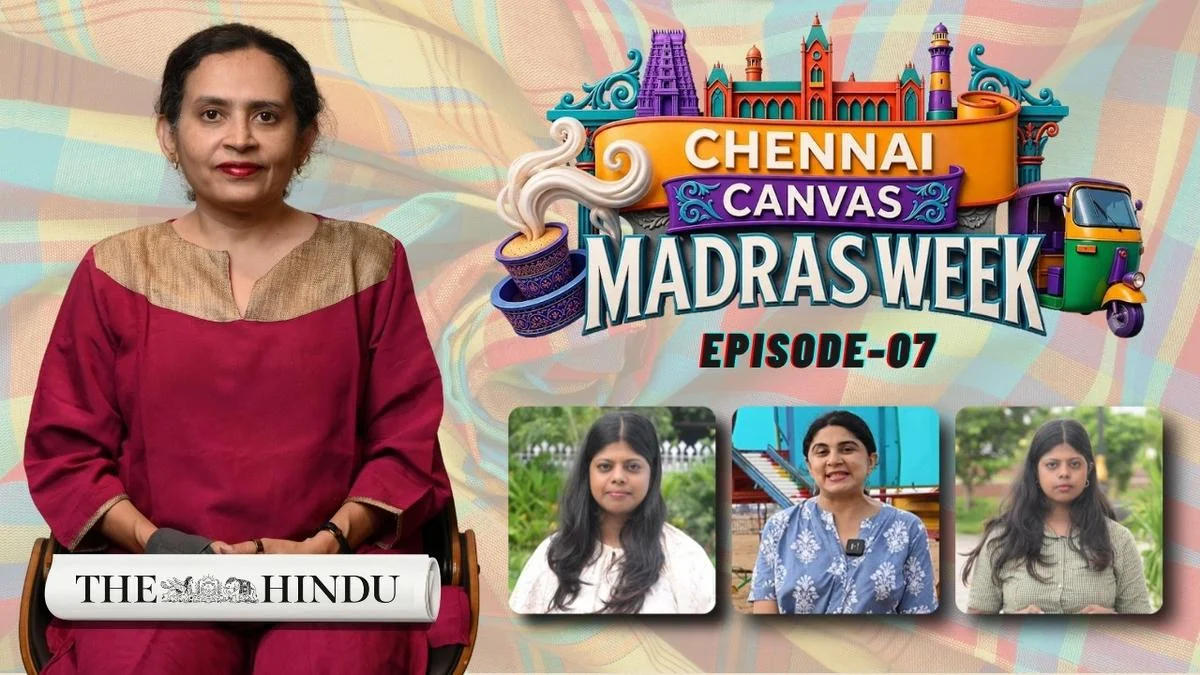
Chennai, India – August 28, 2026 – As Madras Week 2026 unfurls, a captivating seventh episode of "Chennai Canvas" delves into the very essence of this sprawling metropolis, weaving together the vibrant tapestry of its linguistic heritage, the enduring allure of its coastline, and the poignant nostalgia associated with its cinematic past. This immersive exploration, released today, offers a profound understanding of the elements that coalesce to define Chennai’s unique character and enduring spirit. Through the lens of Madras Bashai, the diverse languages that enrich its daily discourse, the coastal expanse that serves as its communal heart, and the hallowed grounds of the Anand Theatre, this episode transcends mere historical recounting to present a living portrait of a city constantly evolving yet deeply rooted in its traditions.
H2: The Linguistic Mosaic: From Madras Bashai to a Symphony of Tongues
The episode’s exploration of Chennai’s linguistic landscape is a testament to the city’s remarkable ability to absorb and adapt. At its forefront is the fascinating evolution of Madras Bashai, often referred to as Chennai Tamil. This unique dialect, a vibrant blend of Tamil, English, and even influences from other Indian languages, is not merely a colloquialism but a living embodiment of Chennai’s cosmopolitan history and its ability to foster a distinct identity.
H3: The Genesis and Growth of Madras Bashai
While the precise origins of Madras Bashai are as fluid as the city’s evolving demographics, its roots can be traced back to the early to mid-20th century. The influx of people from various linguistic backgrounds to the burgeoning port city, driven by economic opportunities and administrative roles, naturally led to a linguistic fusion. Early settlers, traders, and labourers from different parts of Tamil Nadu and beyond, interacting with the established Tamil-speaking population, began to forge a common tongue. English, as the language of administration and commerce, also played a significant role, with many English words and phrases seamlessly integrated into the Tamil lexicon.
The episode highlights how Madras Bashai became the language of the common man, the street vendor, the auto-rickshaw driver, and the neighbourhood grocer. It is a language that thrives on its informality, its wit, and its ability to convey a wealth of meaning with a unique cadence. Linguists and cultural commentators featured in the episode point out that Madras Bashai is not a corrupted form of Tamil but rather an innovative and dynamic evolution, reflecting the city’s ability to embrace change while retaining its core identity. The slang, the idiomatic expressions, and the playful interjections are all hallmarks of this distinctive dialect, making it instantly recognizable and deeply cherished by its speakers.
H3: Beyond Bashai: A Multilingual Metropolis
However, the linguistic richness of Chennai extends far beyond Madras Bashai. The episode underscores the presence and influence of a multitude of languages that contribute to the city’s vibrant auditory landscape. Telugu, Kannada, Malayalam, Hindi, and Urdu speakers, among others, have established significant communities in Chennai over the decades, drawn by its economic opportunities, educational institutions, and cultural attractions.
The episode provides anecdotal evidence and expert opinions on how these languages coexist and often intertwine. Children growing up in Chennai are exposed to a variety of linguistic influences from their neighbours, classmates, and the wider urban environment. This multilingual upbringing fosters a sense of inclusivity and broadens the communicative abilities of Chennai’s residents. The presence of various language-based associations and cultural groups further strengthens these linguistic communities, ensuring the preservation and propagation of their respective mother tongues. This linguistic diversity is not seen as a fragmentation but rather as a testament to Chennai’s enduring appeal as a melting pot of cultures and people. The ability to navigate and appreciate multiple languages is presented as a badge of honour, a symbol of Chennai’s cosmopolitan character.
H2: The Coastal Embrace: Chennai’s Open-Air Living Room
The Chennai coastline, stretching for miles along the Bay of Bengal, is more than just a geographical feature; it is an integral part of the city’s social fabric and a vital arena for communal life. The episode dedicates a significant segment to exploring how this vast expanse of sand and sea serves as Chennai’s "open-air living room," a place where people from all walks of life converge to connect, unwind, and celebrate.
H3: Marina Beach: A Chronicle of Social Interaction
The iconic Marina Beach, one of the longest urban beaches in the world, is presented as a microcosm of Chennai’s social dynamics. From the early morning joggers and yoga enthusiasts to the evening strollers and kite flyers, the beach is a constant hive of activity. Families gather for picnics, friends share conversations, and vendors hawk their wares, creating a vibrant and dynamic atmosphere.
The episode emphasizes how the beach acts as a great equalizer, where socio-economic distinctions blur. Regardless of background, everyone can find solace and enjoyment along its shores. The presence of numerous stalls selling local delicacies like sundal and bajjis, along with the ubiquitous ice cream vendors, adds to the sensory experience. The sounds of children playing, the rhythmic crashing of waves, and the cheerful banter of beachgoers all contribute to the unique ambiance of this beloved public space. Historical photographs and archival footage might be used to illustrate how the beach has been a focal point for social gatherings and public events for generations.
H3: Beyond Marina: The Diverse Coastal Experience
While Marina Beach often takes center stage, the episode also acknowledges the importance of other stretches of the coastline, such as Elliot’s Beach (Besant Nagar Beach) and the stretch near Palavakkam. These areas offer slightly different experiences, catering to varied preferences. Elliot’s Beach, for instance, is often perceived as a more tranquil and family-friendly option, with its pleasant promenade and numerous eateries.
The episode touches upon how the coast also serves as a venue for cultural celebrations and religious festivals. During important occasions, the beaches transform into vibrant spaces filled with music, dance, and a sense of collective joy. The sea itself holds a deep spiritual significance for many, and the coastline provides a space for reflection and prayer. The episode might also touch upon the challenges faced by the coast, such as environmental concerns and the need for sustainable management, highlighting the ongoing efforts to preserve this invaluable urban asset. The enduring connection between Chennai and its coast is portrayed as a symbiotic relationship, where the city finds its breath and its soul in the rhythm of the tides.
H2: Echoes of the Silver Screen: Nostalgia at Anand Theatre
The third pillar of this exploration is the profound nostalgia associated with the Anand Theatre, a once-iconic landmark that holds a special place in the hearts of generations of Chennai film enthusiasts. The episode revisits the golden era of cinema and the role of theatres like Anand in shaping the cultural landscape of the city.
H3: A Temple of Cinema: The Legacy of Anand Theatre
Anand Theatre, established in the mid-20th century, was more than just a place to watch movies; it was a cultural institution. The episode likely features interviews with individuals who have fond memories of visiting the theatre, sharing stories of first dates, family outings, and the sheer magic of experiencing films on its grand screen. The architecture of such theatres, often grand and ornate, contributed to the overall experience, transporting audiences to a different world.
The episode delves into the types of films that were popular during Anand Theatre’s heyday – the melodramatic family dramas, the action-packed thrillers, and the musical extravaganzas that defined Tamil cinema for decades. The excitement of queuing up for tickets, the anticipation of the lights dimming, and the collective experience of laughter and tears shared with a packed auditorium are all vividly recalled. The theatre served as a social hub, a place where people from diverse backgrounds could come together to be entertained and transported.
H3: The Shifting Tides of Cinema Consumption
The episode implicitly, and perhaps explicitly, addresses the changing landscape of cinema consumption. The rise of multiplexes, the proliferation of home entertainment systems, and the advent of streaming platforms have undoubtedly impacted the traditional theatre-going experience. The decline or closure of many single-screen theatres, including potentially Anand Theatre itself (depending on its current status), represents a shift in how audiences engage with films.
However, the episode frames this shift not just as a loss but also as a testament to the enduring power of cinematic memories. The nostalgia for Anand Theatre and similar establishments speaks to a yearning for a simpler, more communal form of entertainment. It highlights the emotional connection people have with these spaces, which served as more than just venues but as repositories of shared experiences and cherished memories. The episode might conclude this segment by reflecting on the evolving definition of a "cinematic experience" in the digital age, while still celebrating the indelible mark left by these classic theatres on the city’s cultural consciousness.
H2: The Interconnected Threads: Weaving Chennai’s Unique Identity
The true power of the "Chennai Canvas" episode lies in its ability to demonstrate how these seemingly disparate elements – language, coast, and cinema – are not isolated components but rather interconnected threads that collectively weave the intricate and vibrant tapestry of Chennai’s identity.
The episode argues that the linguistic diversity of Chennai, including the unique flavor of Madras Bashai, has shaped the way its people interact and express themselves, both in everyday conversations and in the dialogues of its films. The coastal environment has provided the city with a vital public space for social interaction, a backdrop for countless stories, and a source of inspiration for artists and filmmakers alike. And the legacy of its cinemas, like Anand Theatre, has not only entertained generations but has also contributed to the collective memory and cultural narratives that define Chennai.
By exploring these three facets, the episode offers a profound and nuanced understanding of what makes Chennai, Chennai. It is a city that embraces its past while confidently stepping into the future, a place where tradition and modernity coexist, and where the spirit of its people is as enduring as the ebb and flow of its iconic coastline. This exploration serves as a compelling reminder of the rich cultural heritage that continues to shape and define this dynamic South Indian metropolis. The episode, released on the eve of the peak celebrations of Madras Week, is a timely and insightful contribution to understanding the soul of Chennai.
