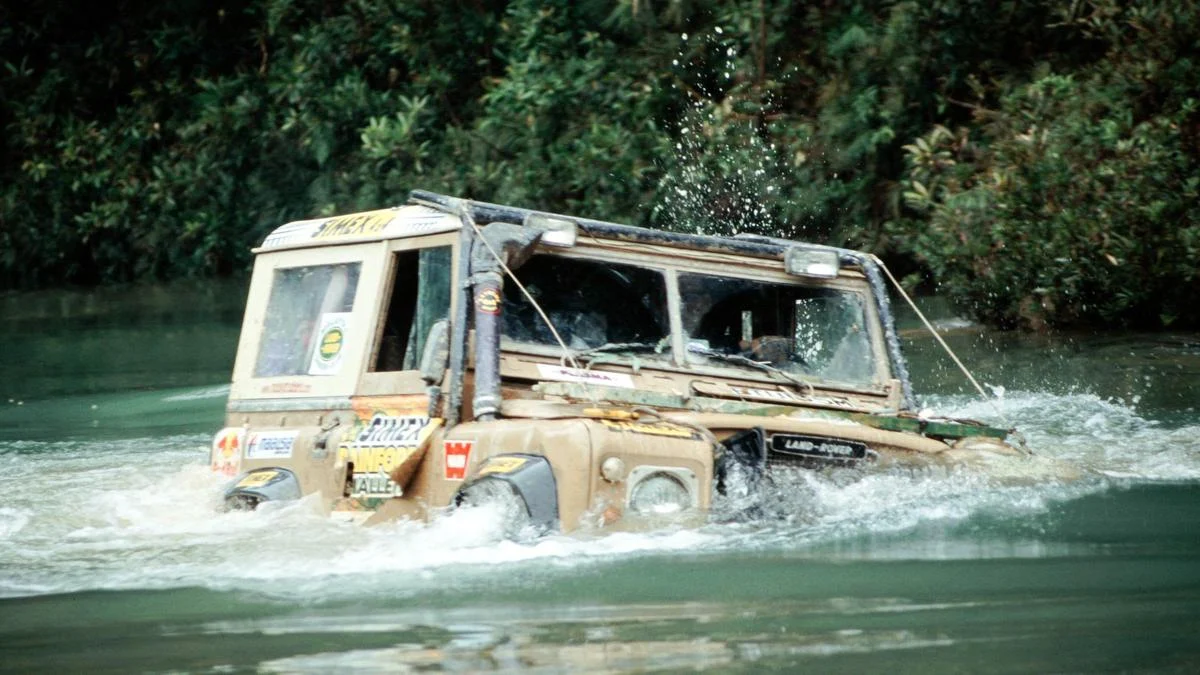
GOA – In the heart of the Goan jungle, where the relentless monsoon rains turn the earth into a treacherous slurry of mud and the dense canopy obscures the midday sun, a new chapter in Indian motorsports history was written this August. Athul Thomas and Binil Babu, representing the Kerala-based team "Killerbull," emerged victorious in the 4X4 Stock class of the Rainforest Challenge (RFC) India.
The victory marks a significant milestone: for the first time in the history of the Indian edition of this global extreme off-road event, a team from Kerala has secured the top spot in the Stock category. Driving a Maruti Jimny, the duo navigated 14 grueling stages over four days to claim the title, finishing with a commanding score of 1,247 points out of a possible 1,400.
The Global Legacy of the Rainforest Challenge
The Rainforest Challenge is not merely a race; it is an international phenomenon. Founded in 1997 by Luis J.A. Wee in Malaysia, the RFC was designed to test the limits of man and machine in the most inhospitable environments on Earth. It has since expanded into a global series with chapters in over 30 countries, but the Indian edition, held annually in Goa, remains one of the most prestigious and difficult legs of the world tour.
Ranked among the top 10 toughest motor races globally and recognized as one of the top five toughest off-road races, RFC India is a test of endurance, mechanical ingenuity, and psychological fortitude. Unlike traditional circuit racing where speed is the primary metric, RFC emphasizes technical skill, recovery techniques, and the ability to navigate "Special Stages" (SS) that often lack any semblance of a road.
The event is strategically held during the height of the Indian monsoon. This ensures that the terrain—already comprised of steep inclines, deep gullies, and thick forest—is further complicated by torrential rain and deep slush, making every meter of progress a hard-fought battle.
Chronology of a Champion’s Journey
The path to the podium for Athul Thomas and Binil Babu was paved with years of preparation and a high-stakes four-day campaign in the Goan wilderness.
Pre-Race: The Assembly of Team Killerbull
Athul Thomas is no stranger to the dust and mud of the Indian racing circuit. With a decade of experience and over 300 motorsports events under his belt, he provided the veteran leadership necessary for the RFC. However, the partnership with Binil Babu was a novel experiment. Babu, a manager at Ducati Kochi, is a seasoned motorbike racer but had never competed in a four-wheeled event.
"I brought my experience as a bike racer to the cockpit," Babu noted, highlighting how the spatial awareness and split-second decision-making of two-wheeled racing translated to the role of a co-driver in a 4X4.
Days 1-2: The Opening Salvos
The competition commenced with 25 teams in the 4X4 Stock category. The early stages were designed to weed out the unprepared. Using a Maruti Jimny—a vehicle praised for its lightweight frame and off-road agility—the duo focused on precision. In the Stock class, modifications are strictly limited, meaning the drivers must rely on the vehicle’s factory engineering and their own technical prowess to clear obstacles that would challenge even "Extreme" class custom builds.

Days 3-4: The Grueling Finale
As the event progressed toward its August 1 conclusion, the "Special Stages" grew increasingly complex. The course was marked only by cones; deviating from the path or hitting a marker resulted in heavy point penalties. The terrain required constant communication between Thomas at the wheel and Babu as the co-driver, who often had to exit the vehicle to scout paths or assist with winching operations in waist-deep mud.
By the final stage, Team Killerbull had maintained a consistent lead, ultimately securing 1,247 points—a testament to their near-flawless execution across 14 stages of varied terrain.
Supporting Data: The Mechanics of Victory
The 4X4 Stock class is often considered the purest form of off-roading. While the "Modified" and "Extreme" categories allow for massive tires, custom suspensions, and high-output engines, the Stock class forces participants to maximize the potential of a standard consumer vehicle.
Performance Metrics of Team Killerbull:
- Total Points Earned: 1,247
- Maximum Possible Points: 1,400
- Efficiency Rating: 89.07%
- Vehicle: Maruti Jimny (Stock Specification)
- Category Rivals: 24 other teams
The duo’s success was underpinned by their ability to avoid "DNFs" (Did Not Finish) and major penalties. In a race where mechanical failure is a common occurrence due to the "grueling and intense" nature of the forest paths, the reliability of their Jimny and their careful management of the vehicle’s stress points were decisive factors.
Official Responses and State Support
The RFC India is an event of national significance, supported by the State Government of Goa. The government views the event as a way to promote adventure tourism and showcase the state’s natural landscape as a hub for international-standard motorsports.
However, the victory has sparked a conversation regarding the disparity in support for motorsports across different Indian states. While Thomas and Babu celebrated their win, they pointed to the "hero’s treatment" received by winners from other regions, such as the 4X4 Extreme class winners from Arunachal Pradesh, who often receive significant state backing and public recognition.
"We are not looking for that level of fanfare necessarily," Binil Babu explained. "But local sponsorship and state recognition would be a massive boost for motorsports in Kerala."
The Kerala racing community has long been a powerhouse of talent, often producing top-tier riders and drivers who compete on national and international stages. Yet, the lack of a formal support structure often leaves athletes to fund their own ambitions.

Implications: The High Cost of Passion
The victory of Team Killerbull brings to light the economic realities of professional off-roading in India. The duo revealed that preparing for the four-day event cost approximately ₹6 lakh—a sum they covered entirely through personal savings.
The Financial Burden
The costs of competing in RFC India include:
- Vehicle Acquisition and Maintenance: Even in the Stock class, ensuring a vehicle can survive the RFC requires meticulous servicing and high-quality consumables.
- Entry Fees and Logistics: Transporting a 4X4 from Kerala to Goa, along with support crews and equipment, incurs significant overhead.
- Safety Gear: High-standard helmets, racing suits, and recovery gear are mandatory and expensive.
"Kerala has many talented drivers and riders, but unfortunately, they cannot follow their passion because of how expensive the sport is," Babu stated. He emphasized that the lack of corporate and local government sponsorship acts as a barrier to entry for younger enthusiasts who might otherwise excel.
A Shift in Perspective: "Healthy Speed"
Beyond the trophies and the financial challenges, Thomas and Babu view their victory as a platform to promote a safer racing culture. In a country where illegal street racing remains a concern, organized motorsports like the RFC provide a controlled, professional environment for speed enthusiasts.
"This is a great outlet for youngsters who love speed," Babu added. "It changes your perspective. Your entire attitude towards speed becomes healthy and disciplined. It’s about technical skill and safety, not just pushing a pedal."
Conclusion: A Milestone for Kerala Motorsports
The triumph of Athul Thomas and Binil Babu at the Rainforest Challenge India 2024 (or 2026 as per the report) is more than a personal achievement; it is a proof of concept for Kerala’s off-roading community. By winning the 4X4 Stock class, they have demonstrated that with technical expertise and resilience, a relatively standard vehicle can conquer one of the world’s most unforgiving landscapes.
As the dust—and mud—settles on this year’s edition, the "Killerbull" team hopes their success will serve as a catalyst for greater investment in the sport. For now, they return to Kerala as pioneers, having proved that even in the deepest slush of the Goan monsoon, the spirit of adventure and the drive for excellence can lead to historic heights.