

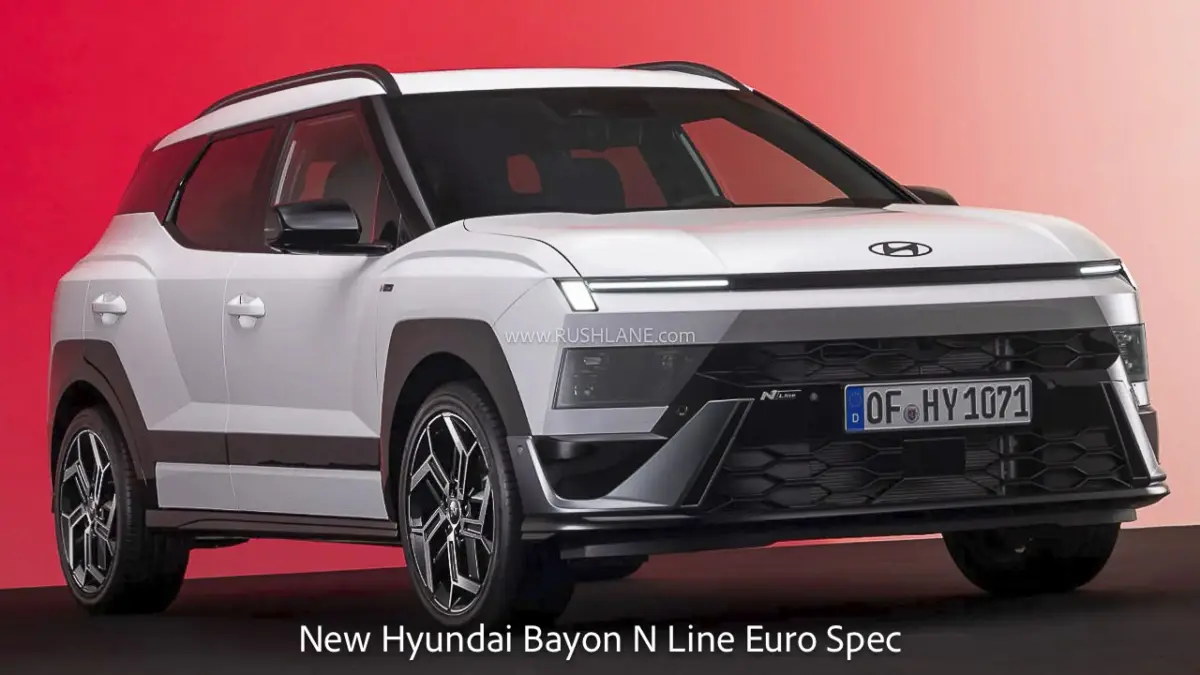
The global automotive landscape is currently witnessing a paradigm shift in the B-SUV segment, where the lines between subcompact hatchbacks and rugged crossovers are increasingly blurred. Leading this charge is the South Korean giant, Hyundai Motor Company, which recently pulled the silk off its second-generation Bayon at the prestigious Paris Motor Show. Designed specifically to capture the European imagination while simultaneously preparing for a high-stakes entry into the Indian market, the new Bayon represents more than just a seasonal facelift. It is a fundamental reimagining of what a compact urban SUV can provide in terms of aesthetics, technology, and electrified performance.
Main Facts: The "Art of Steel" Transformation
The headline of the second-generation Bayon is undoubtedly its visual transformation. Moving away from the softer, more fluid lines of its predecessor, the new model adopts Hyundai’s "Art of Steel" design philosophy. This aesthetic direction—previously hinted at in larger models like the Tucson and the upcoming Creta updates—prioritizes geometric precision, sharp creases, and an almost architectural sense of volume.
Aesthetic Overhaul
The front fascia is dominated by a new H-style LED Daytime Running Light (DRL) signature that spans the width of the hood, creating a futuristic "Horizon" look. This is complemented by trapezoidal headlight enclosures positioned lower on the bumper, a design choice that adds visual width and a planted stance. The side profile has been significantly hardened, featuring squared-off wheel arches and thick door side moldings that emphasize its "go-anywhere" aspirations, even if its primary habitat remains the urban jungle.

The N Line Pedigree
For the first time, Hyundai is giving the Bayon a full N Line treatment from the outset. This isn’t merely a badge exercise. The Bayon N Line features a bespoke mesh grille pattern, high-gloss black cladding, and aerodynamic winglets on the lower bumper. It sits on exclusive 18-inch N Line alloy wheels and features a functional rear diffuser with dual chrome-tipped exhausts. Inside, the N Line variant elevates the cabin with sport seats upholstered in a mix of cloth and suede, accented by contrast red stitching and a dedicated N-branded steering wheel.
Chronology: From Paris to New Delhi
The rollout of the second-generation Bayon follows a meticulously planned international schedule aimed at maximizing market impact across two different continents.
- October 2024 (Paris Motor Show): The world premiere of the Euro-spec Bayon. Hyundai utilized this platform to showcase the vehicle’s readiness for stringent European emission standards and the demand for premium tech in small packages.
- Mid-October 2024: Production commencement for European markets, featuring the 1.0-litre Turbo-GDi engines.
- October 26, 2024: The scheduled debut and launch of the India-spec Bayon. This version is expected to differ significantly in its powertrain and specific feature list to cater to local preferences and price sensitivity.
- Early 2025: The anticipated rollout of the Full Hybrid (HEV) variant in Europe, marking the transition away from the older 48V mild-hybrid technology.
Supporting Data: Dimensions and Engineering
One of the most critical updates to the second-generation Bayon is its physical growth. The vehicle has expanded in almost every dimension to address one of the primary criticisms of the first generation: interior roominess.

Dimensional Growth
- Length: 4,245 mm (an increase of 65 mm over the first gen).
- Width: 1,810 mm (an increase of 35 mm).
- Wheelbase: 2,600 mm.
- Cargo Capacity: The internal combustion engine (ICE) versions offer a substantial 440 litres of boot space. However, due to battery placement, the upcoming Full Hybrid version will see this reduced slightly to 397 litres.
Powertrain Specifications
The European market will initially see the 1.0-litre three-cylinder turbocharged petrol engine. This unit is tuned to provide two outputs: a 90 hp version for efficiency-minded buyers and a 115 hp version for those seeking more spirited performance. Transmission duties are handled by either a 6-speed manual or a 7-speed Dual Clutch Transmission (DCT).
In contrast, the Indian specification will pivot toward the 1.5-litre MPi four-cylinder petrol engine. This engine, a staple of the Hyundai-Kia portfolio in Asia, produces 115 PS and 144 Nm of torque. It will be paired with either a 6-speed manual or an Intelligent Variable Transmission (IVT), prioritizing smoothness and fuel economy in heavy traffic.
Official Responses and Strategic Positioning
While Hyundai executives at the Paris Motor Show emphasized the "democratization of luxury," the strategic positioning of the Bayon reveals a dual-track approach.

In Europe, the Bayon is positioned as the sophisticated entry-point SUV, sitting just below the Kona. By introducing a Full Hybrid (HEV) system—combining a 1.6-litre petrol engine with an electric motor for a total of 136 hp—Hyundai is responding directly to the Euro 7 emission pressures and the consumer shift away from diesel.
In India, the Bayon is set to bridge the gap between the Venue and the Creta. Industry analysts suggest that the India-spec Bayon will focus heavily on "connected living." Hyundai has confirmed that the Indian model will feature the NVIDIA-powered Connected Car Navigation Cockpit (ccNC). This system is significantly more powerful than previous iterations, allowing for a more fluid user interface, advanced AI voice assistants (utilizing Perplexity and SoundHound AI), and seamless Over-the-Air (OTA) updates for the life of the vehicle.
Implications: A New Benchmark for the B-SUV Segment
The introduction of the second-gen Bayon has several wide-ranging implications for the automotive market and for Hyundai’s competitors.

Tech Leadership in Small Packages
The inclusion of dual 12.3-inch curved panoramic screens in a vehicle of this size is a bold move. It signals to competitors like Volkswagen (T-Cross/Taigun) and Renault (Captur) that the "budget" feel of compact SUVs is no longer acceptable. The integration of a Digital Key (compatible with smartphones and smartwatches) and a premium 8-speaker Bose audio system further cements the Bayon as a premium alternative in a value-driven segment.
The Hybrid Pivot
The move to a Full Hybrid system in Europe is a calculated risk. While it increases the base price of the vehicle, it offers a tangible "EV-lite" experience without the range anxiety. For the Indian market, while the hybrid isn’t confirmed for the immediate launch, the Bayon’s platform is "hybrid-ready," suggesting that Hyundai could pivot if the Indian government provides further incentives for non-plug-in electrified vehicles.
Market Disruption in India
In India, the Bayon will enter a fiercely contested arena, facing off against the Maruti Suzuki Fronx and the Toyota Taisor. By opting for a larger 1.5L engine compared to the 1.0L or 1.2L units often found in this class, Hyundai is betting that Indian consumers still value the "big engine feel" and the refinement of a four-cylinder unit over the buzzy nature of smaller three-cylinder turbos.

Design as a Differentiator
The "Art of Steel" philosophy is a polarizing but necessary step. In a market flooded with rounded, "me-too" crossovers, the Bayon’s boxy, aggressive, and angular silhouette ensures it stands out in a crowded parking lot. This design-led approach is intended to attract younger, tech-savvy buyers who view their vehicle as an extension of their personal style.
Conclusion
The second-generation Hyundai Bayon is a testament to the brand’s rapid evolution. By blending high-concept design with practical growth and cutting-edge silicon-valley technology, Hyundai is not just updating a model; they are attempting to set a new standard for the global compact SUV. Whether it is navigating the narrow streets of Paris or the bustling highways of Mumbai, the Bayon is equipped to handle the diverse demands of the modern driver. As the October 26th launch date in India approaches, all eyes will be on how this "Art of Steel" creation performs in one of the world’s most competitive automotive theaters.
