

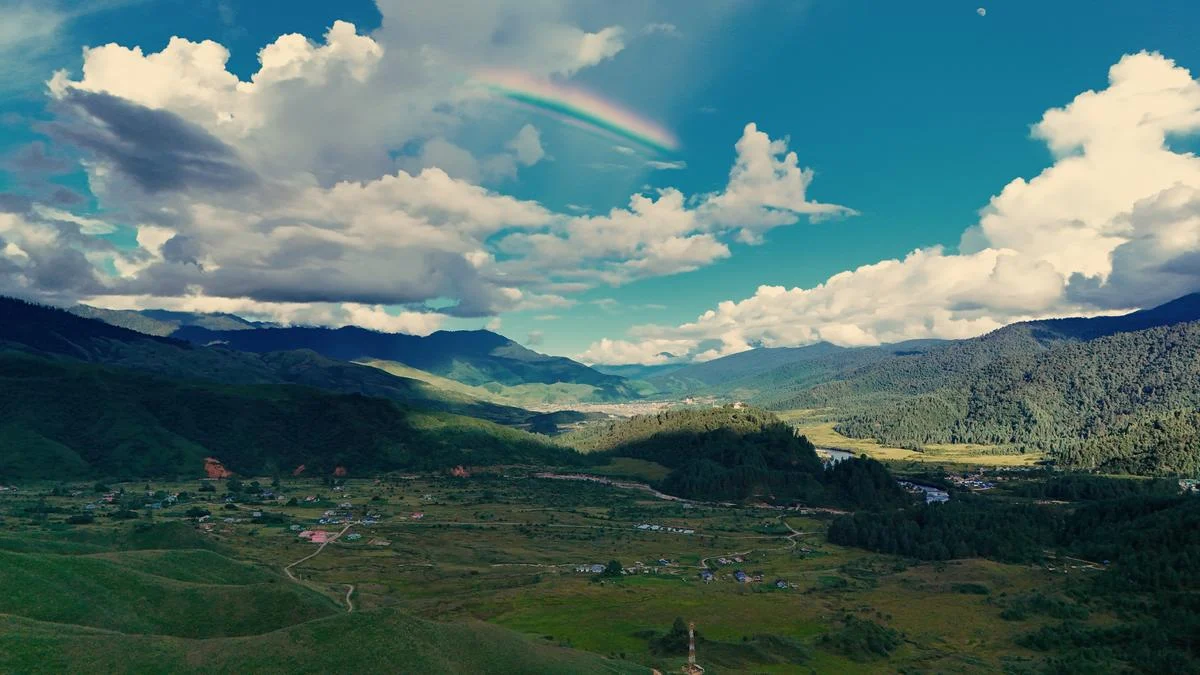
Deep in the mist-shrouded valleys of the Eastern Himalayas, where the Yargyap Chu River carves its way through the emerald landscape of Arunachal Pradesh, a quiet revolution is taking place. It is a revolution not of industry or mass urbanization, but of patience, precision, and the rhythmic arc of a fly-fishing line.
Neega Ngurang, a sports angler, river guide, and content creator from Sagalee, embodies this transformation. His journey began with the "local style"—a humble bamboo pole, a single monoline, and a solitary hook. Today, he is a vanguard of a burgeoning international movement that seeks to position Arunachal Pradesh as a premier global destination for high-value, low-impact eco-tourism.
The second edition of the Mechuka Trout Quest, held between July 25 and 26, 2024, served as a definitive milestone in this journey. Bringing together 56 elite competitors from across the globe, the event signaled a shift in how India’s "Land of the Rising Sun" perceives its natural resources: not merely as a source of sustenance, but as a sustainable engine for economic and environmental prestige.
Main Facts: The Mechuka Trout Quest 2024
The Mechuka Trout Quest is more than a mere fishing competition; it is a strategic branding exercise by the Arunachal Pradesh Department of Tourism. The 2024 edition saw a significant escalation in both participation and professional stature. Among the competitors were figures such as Bobby Satpal, widely regarded as India’s premier fly angler, and Tup Meesupwatana, a professional angler and influential YouTuber from Thailand.
The tournament focused on two primary species: the brown trout and the rainbow trout. These cold-water species, introduced to India by the British during the 19th and 20th centuries, have found a perfect sanctuary in the frigid, oxygen-rich waters of the Mechuka valley.
Central to the event was the "catch-and-release" philosophy. Unlike traditional fishing, where the catch is destined for the hearth, sport fishing in Mechuka treats the fish as a temporary partner in a game of skill. Once caught, measured, and photographed, the trout is carefully revived and returned to the river, ensuring the ecosystem remains intact for future generations.
Chronology: From Bamboo Poles to International Platforms
The evolution of angling in Arunachal Pradesh reflects a broader shift in Indian recreational habits. For Neega Ngurang, the turning point came in 2013.

"I did not know what sport fishing was," Neega recalls. "But when I saw a spinning rod on television, I realized that I also wanted to buy it and learn how to use it."
Between 2013 and 2015, Neega spent his days practicing on the rivers near his home in Sagalee, transitioning from the subsistence methods of his childhood to the technical nuances of modern angling. By 2016, he was participating in national competitions. Today, he runs "Neega Fishing Adventures," a YouTube channel dedicated to educating the youth of the Northeast about the sport.
On a historical scale, the chronology of fishing is as old as humanity itself. Evidence of line fishing dates back 23,000 years to the Jerimalai Cave in East Timor. However, the concept of fishing as a "sport"—an endeavor of leisure and skill rather than survival—was first popularized in the 15th century by Juliana Berners in her seminal work, A Treatyse of Fysshynge wyth an Angle.
In India, the sport was introduced by British officials who sought to recreate the fly-fishing experiences of the Scottish Highlands in the Himalayas and the Nilgiris. For decades, it remained an elite, colonial pastime. It is only in the last ten to fifteen years that a homegrown community of Indian anglers has emerged, driven by a desire to reconnect with nature and escape the "chaotic, urban lives" mentioned by Gauhati-based musician and angler Nasreen Sultana Naaz.
Supporting Data: The Economics of the Angle
To understand why the Arunachal government is investing in angling, one must look at the data surrounding the sport’s economic footprint. Derek Dsouza, the Tournament Director and India representative of the International Game Fishing Association (IGFA), compares angling to golf in terms of its tiered spending and tourism potential.
The Cost of Entry
- Starter Kits: A basic, unbranded fishing kit can be acquired for under ₹3,000. Branded entry-level kits start at approximately ₹5,000.
- Professional Gear: For elite anglers, specialized rods, reels, and fly-tying equipment can run into several lakhs of rupees.
- Lures and Consumables: High-quality lures typically cost between ₹250 and ₹800 each.
Licensing and Participation
- Indian Nationals: Fishing licenses for rivers range from ₹1,500 per angler.
- Foreign Nationals: Licenses are priced at approximately ₹3,000.
- Competition Costs: For an Indian angler traveling from outside the state, a trip to an event like the Mechuka Trout Quest involves a spend of ₹20,000 to ₹50,000 on travel, food, and lodging, plus registration fees ranging from ₹500 to ₹15,000.
- International Travel: Anglers traveling abroad for competitions can spend between ₹2 lakh and ₹5 lakh per trip.
These figures highlight a "high-value" demographic. Anglers are often willing to pay a premium for access to pristine, well-managed waters. Unlike mass tourists who require large hotels and extensive urban infrastructure, anglers prioritize the health of the river and the solitude of the landscape.
Official Responses: A Vision for Sustainable Growth
The Arunachal Pradesh government is acutely aware of the state’s ecological fragility. Pasang Dorjee Sona, the local MLA and the State’s Tourism Minister (who also oversees Education, Rural Works, and Parliamentary Affairs), is the primary architect of the "niche tourism" strategy.

"We want to have niche tourism only," Minister Sona stated during the event. "I’ve been very vocal about saying that, and the best part is our people are also aware of this."
The government’s goal is to attract "adventure seekers" rather than mass-market tourists. By focusing on sports like angling, kayaking, and mountain biking, the state can generate significant revenue while minimizing the carbon footprint and environmental degradation associated with traditional tourism.
Fisheries Minister Gabriel Denwang echoed this sentiment, noting that the climatic conditions of Mechuka are uniquely conducive to trout farming. "Mechuka is one of the few places in Arunachal Pradesh where we have trout," Denwang explained. He revealed that the state plans to invest heavily in trout farming, which will serve a dual purpose: providing high-quality protein for local consumption and stocking the rivers to maintain a world-class angling experience.
Implications: The Future of the Yargyap Chu
The success of the Mechuka Trout Quest has profound implications for the future of the region. As the event becomes a permanent fixture on the international angling calendar, several key developments are expected:
1. Environmental Stewardship
Angling creates a direct economic incentive for local communities to protect their rivers. When a live trout in the water is worth more to the local economy (via guiding fees, homestays, and permits) than a dead fish in a net, conservation becomes a community-led initiative. Derek Dsouza points out that anglers are "largely fairly responsible tourists" who respect nature and advocate for clean waterways.
2. Economic Upliftment of Remote Villages
The logistics of reaching Mechuka—a 370 km road journey from Dibrugarh or a bi-weekly chopper service from Itanagar—ensure that the economic benefits are distributed among local homestays. Establishments like the Hornbill, Owa, and Mae homestays provide an authentic experience that keeps tourism revenue within the village rather than siphoning it off to large, external hotel chains.
3. Cultural Exchange and Global Branding
The presence of international anglers like Bhutan’s Sonam Tshering (winner of the fly-fishing category) and Thailand’s Tup Meesupwatana puts Mechuka on the global map. Sonam’s victory highlights the shared Himalayan heritage and the potential for a regional "trout circuit" that could include Bhutan, Jammu and Kashmir, and Arunachal Pradesh.

4. Infrastructure Development
Minister Sona’s focus on "adventure sports infrastructure" suggests that the government will prioritize improving road connectivity and telecommunications in a way that serves both tourists and local residents, without compromising the "off-beat" appeal of the destination.
Conclusion: The Final Cast
As the early morning sun gleams off the tawny, speckled body of a brown trout being released back into the Yargyap Chu, the vision for Arunachal Pradesh becomes clear. The state is not merely looking for visitors; it is looking for partners in conservation.
For Neega Ngurang, the transition from a bamboo pole to a professional guide is complete, but his mission continues. Through his training programs and digital content, he is ensuring that the next generation of Arunachalis sees their rivers not just as water, but as a world-class stage for sport, science, and sustainable prosperity.
If the current trajectory holds, and the government continues to balance development with ecological sensitivity, Mechuka is well on its way to becoming, in the words of Derek Dsouza, "one of the best trout destinations in the world." For the anglers who have already "hooked" into this experience, the call of the Yargyap Chu is one they will answer for years to come.
