

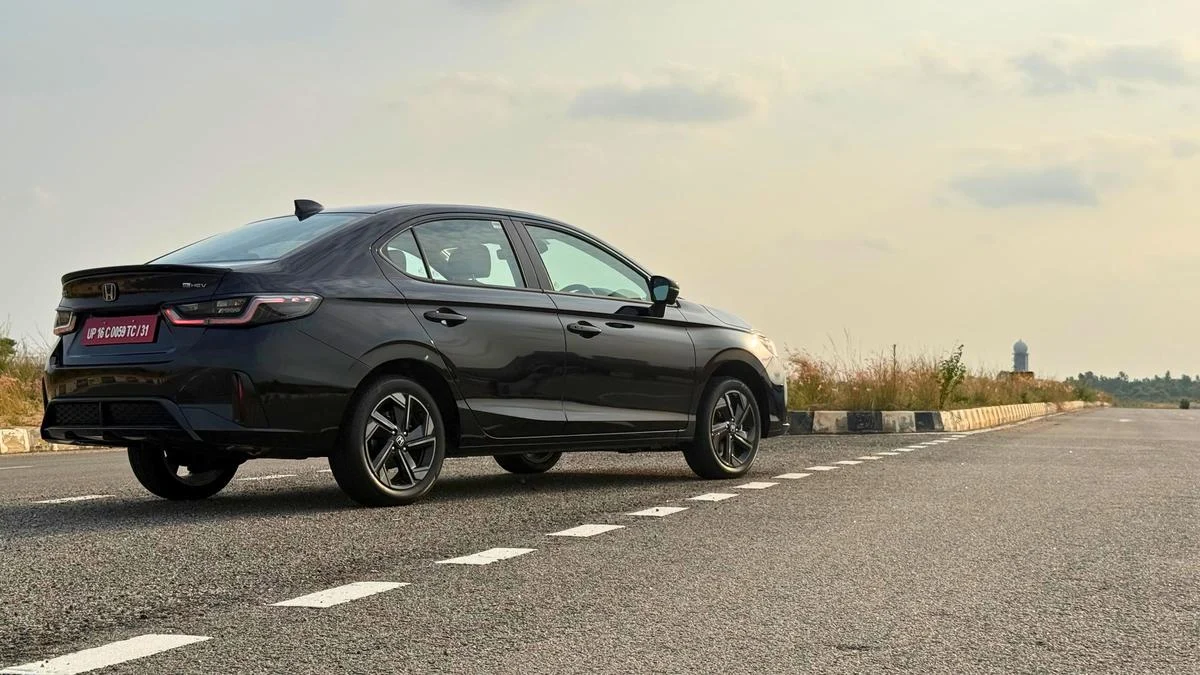
The midsize sedan segment in India, once the undisputed crown jewel of the automotive market, has undergone a radical transformation over the last half-decade. For a significant period, the narrative was dominated by a "European invasion," as the Volkswagen Virtus and Skoda Slavia redefined expectations with their punchy turbocharged engines and taut driving dynamics. These machines became the default choice for the enthusiast, leaving the traditional stalwarts to reconsider their positions.
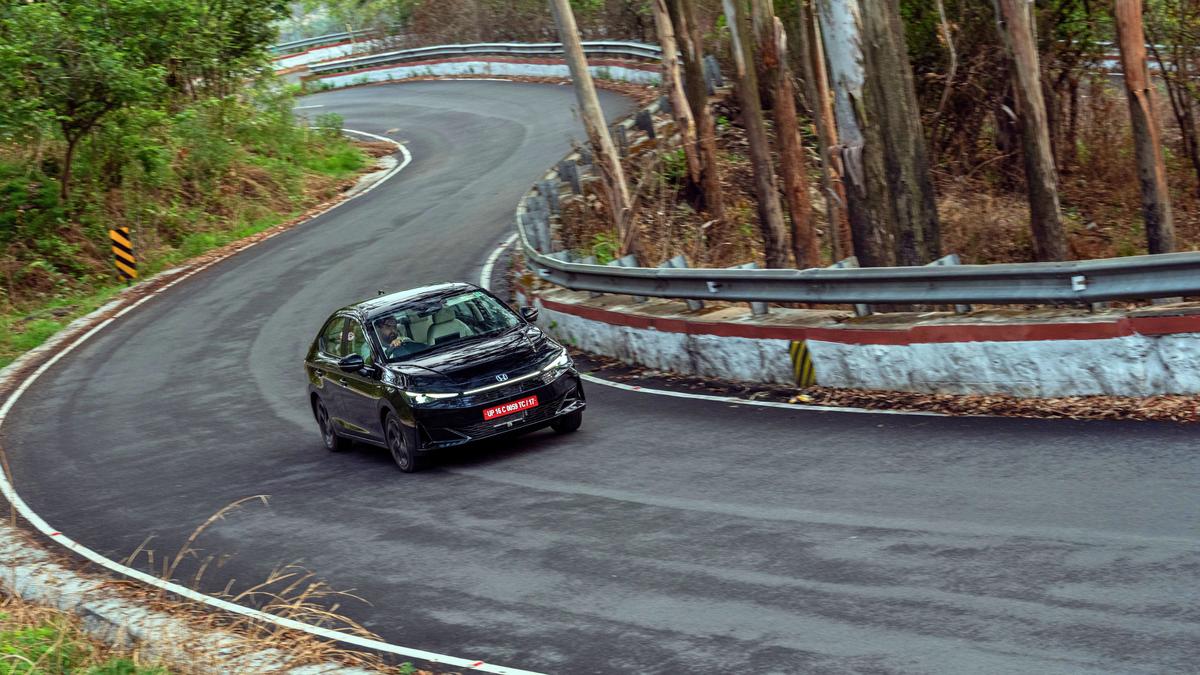
However, the tide appears to be turning. With the launch of the 2026 Honda City, the Japanese automaker is not merely participating in the segment; it is attempting to reclaim it. By blending its legendary reputation for reliability and space with a cutting-edge strong-hybrid powertrain, Honda has delivered a vehicle that prioritizes "smart performance" over raw aggression. After an extensive test drive through the diverse terrains of Bengaluru—stretching from congested urban corridors to the winding ascents of Nandi Hills—it is evident that the City remains a formidable contender that understands the evolving needs of the modern Indian professional.
Main Facts: The 2026 Proposition
The 2026 Honda City arrives with a clear mission: to offer the most well-rounded package in a segment that has become increasingly polarized between "performance" and "budget."
Key Specifications and Pricing:
- Price Range: ₹11.99 lakh to ₹20 lakh (ex-showroom).
- Powertrain: 1.5-litre Atkinson-cycle i-VTEC petrol engine paired with a dual-motor self-charging hybrid system.
- Combined Output: 126 PS of power and a substantial 253 Nm of peak torque.
- Efficiency: A segment-leading real-world fuel economy reaching up to 23.5 km/l.
- Safety: Standardized six airbags and the comprehensive "Honda Sensing" ADAS suite.
While the Virtus and Slavia cater to those seeking the "explosive" mid-range of a 1.5 TSI engine, the Honda City Hybrid targets the buyer who values seamless transitions, silent urban crawling, and long-distance composure.
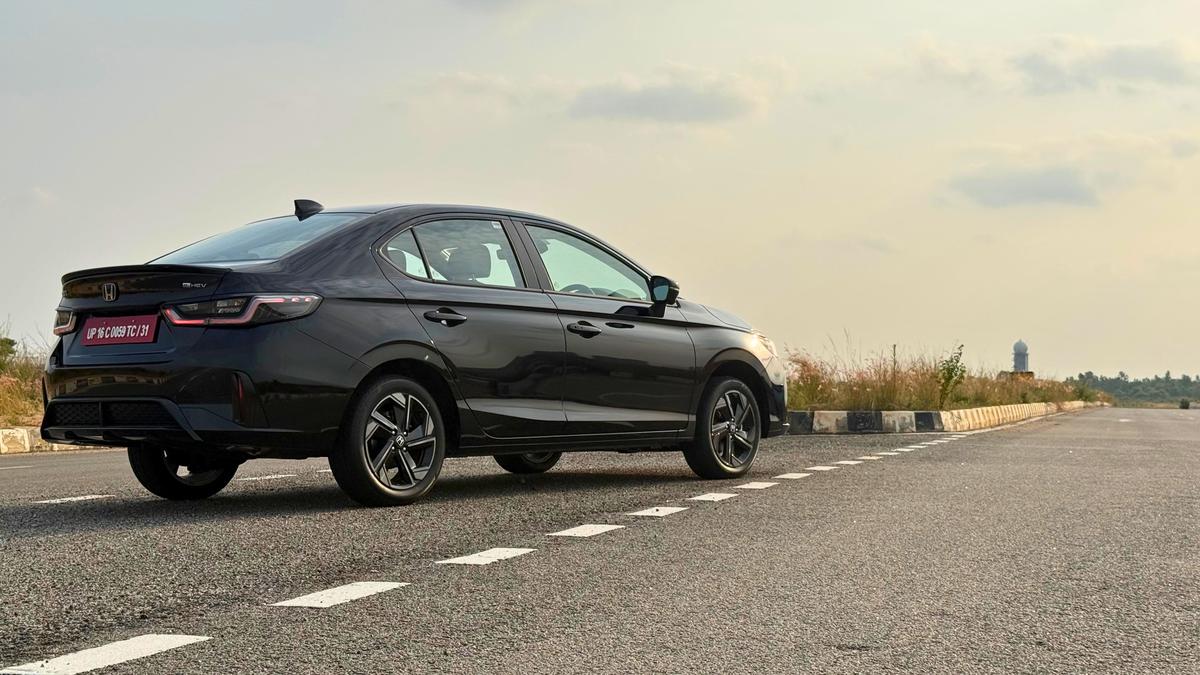
Chronology: The Evolution of an Icon
To understand the 2026 model, one must look at the City’s quarter-century journey in India. Since its introduction in the late 1990s, the City has survived the onslaught of the SUV craze by evolving through five distinct generations.
The current iteration represents a strategic pivot. A few years ago, the City was perceived as the "conservative" choice. However, the introduction of the e:HEV (hybrid) technology marked a turning point. The 2026 refresh is the culmination of this transition.
Our evaluation began on the outskirts of Bengaluru, a city known for its punishing stop-and-go traffic and expansive peripheral highways. The route was chosen specifically to test the hybrid system’s adaptability. From the low-speed EV mode required in Devanahalli’s morning congestion to the high-speed demands of the Hyderabad highway, the City was subjected to a rigorous "day-in-the-life" cycle. The ascent to Nandi Hills provided the final piece of the puzzle: testing the chassis balance and the instant torque delivery of the electric motors under load.
Design and Aesthetics: Refinement Over Reinvention
Honda has opted for a philosophy of "admirable restraint" with the 2026 aesthetic updates. In an era where some competitors are adopting increasingly busy and polarizing design languages, the City remains a bastion of understated elegance.
Exterior Enhancements
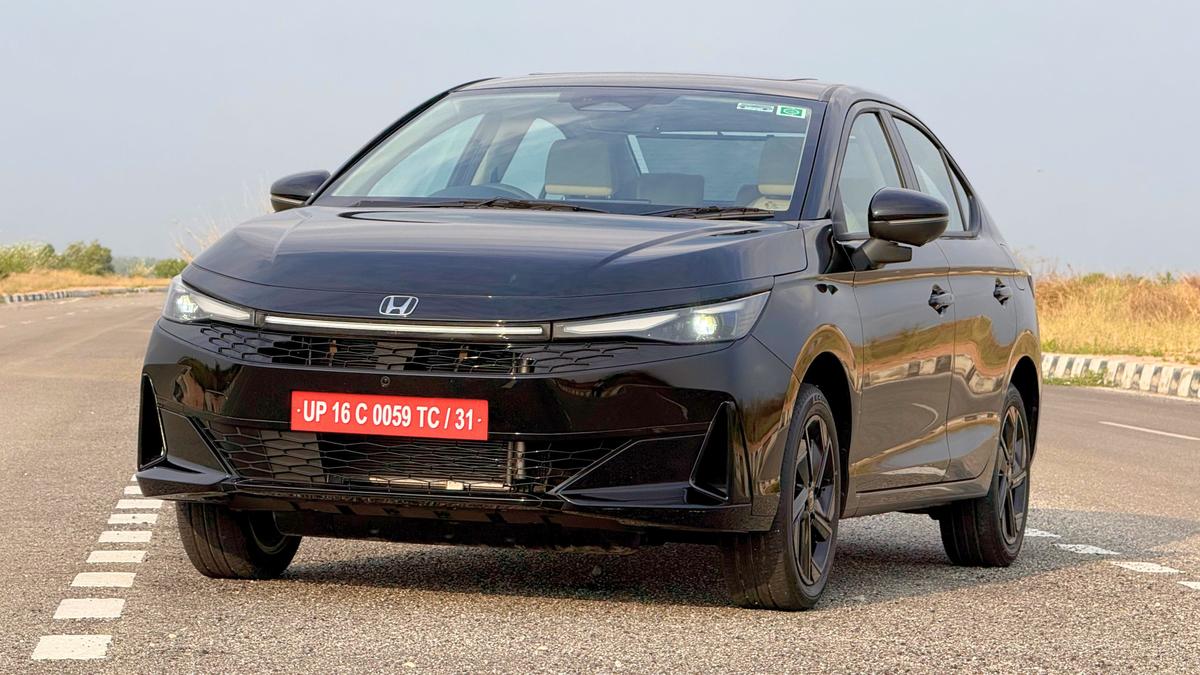
The most striking changes are found at the front. The new "Blade-Eye" LED headlamps are slimmer and more technical in appearance, connected by a refined light bar that widens the car’s visual stance. The grille has been cleaned up, moving away from excessive chrome toward a more integrated, contemporary look influenced by Honda’s larger global sedans like the Accord.
At 4,594 mm, the City maintains its status as one of the largest cars in its class. The proportions remain classic "three-box" sedan, but the redesigned diamond-cut alloy wheels and subtle character lines along the flanks inject a necessary sense of youthfulness. It is a design that is likely to age better than its more aggressive rivals.
Interior Sanctum
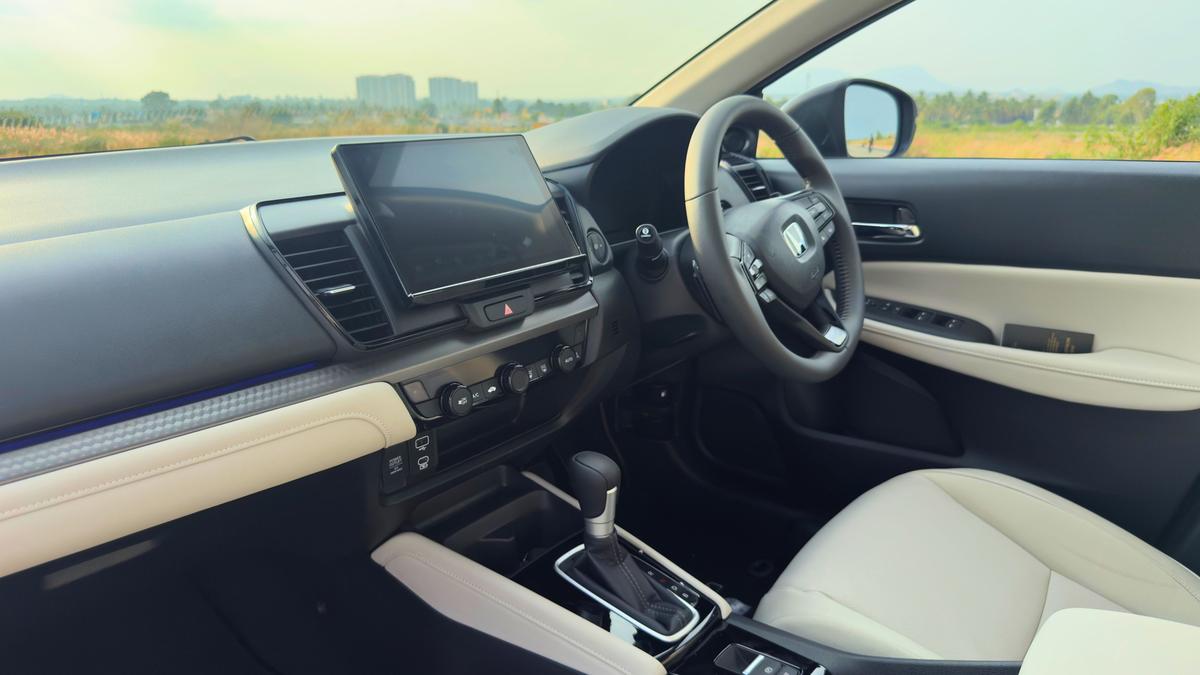
Stepping inside reveals why the City has maintained such a loyal following. The "Man Maximum, Machine Minimum" philosophy is on full display. The cabin is an exercise in ergonomic excellence. The ivory-and-black color palette enhances the sense of airiness, while the quality of materials—particularly on the touchpoints—feels premium.
While the 2026 model introduces ventilated seats, wireless charging, and a 360-degree camera, it does not abandon the fundamentals. The rear seat remains the gold standard for the segment, offering legroom and thigh support that rivals entry-level luxury cars from brands like BMW or Audi.
Supporting Data: Engineering the Hybrid Advantage
The heart of the 2026 City is its sophisticated i-MMD (Intelligent Multi-Mode Drive) hybrid system. Unlike "mild hybrids" that merely assist the engine, this is a "strong hybrid" capable of driving on pure electric power.
Performance Metrics
The system utilizes two electric motors. One acts as a generator, while the other handles propulsion.
- 0-100 km/h: 7.9 seconds.
- Torque: 253 Nm (Available almost instantly from 0 RPM).
- Transmission: e-CVT (Electric Continuous Variable Transmission), which eliminates the traditional "rubber-band" effect often associated with older CVTs.
In our testing, the transition between EV mode (pure electric), Hybrid mode (engine as a generator), and Engine Drive (direct mechanical connection to the wheels) was virtually undetectable. This level of mechanical refinement is something the turbocharged competitors, with their occasional dual-clutch transmission (DSG) hesitations in traffic, cannot quite match.
Real-World Efficiency
The most compelling data point remains the fuel economy. During our mixed-cycle test (60% highway, 20% hill climb, 20% urban traffic), the City Hybrid returned a staggering 23.5 km/l. For a sedan of this size and weight, these figures change the ownership proposition entirely, making it an economically viable alternative to both diesel cars (which are exiting the segment) and pure EVs (which still face charging infrastructure hurdles).
Official Strategy and Market Positioning
While Honda officials have remained focused on "customer-centric innovation," the market strategy for the 2026 City is clear: Positioning the sedan as the "Smart Choice" for the mature professional.
The pricing structure, ranging from ₹11.99 lakh for the base petrol to ₹20 lakh for the top-end hybrid, allows Honda to capture a wide net. However, the push is clearly toward the hybrid. By standardizing "Honda Sensing" (ADAS) across higher trims, Honda is responding to the growing consumer demand for active safety.
The ADAS Suite includes:
- Collision Mitigation Braking System (CMBS): To prevent frontal impacts.
- Adaptive Cruise Control with Low-Speed Follow: A godsend in Bengaluru traffic.
- Lane Keep Assist and Road Departure Mitigation: Ensuring highway stability.
Honda’s approach suggests they are not interested in winning a "spec sheet war" regarding horsepower. Instead, they are winning the "usability war," focusing on how the car feels during the 90% of the time it is spent in traffic or cruising at legal speeds.
Implications: The Future of the Midsize Sedan
The arrival of the 2026 Honda City has significant implications for the Indian automotive landscape.
- The Hybrid vs. Turbo-Petrol Debate: The City proves that hybrids can be just as engaging as turbo-petrols. While it may lack the "explosive" kick of a Virtus GT, its "instant-on" electric torque makes it feel more responsive in real-world overtaking maneuvers.
- The Survival of the Sedan: As SUVs continue to dominate, the City’s focus on ride quality and rear-seat comfort serves as a reminder of why sedans were favored in the first place. The City’s suspension tuning—which absorbs highway expansion joints and broken country roads with remarkable composure—is superior to many high-riding SUVs that suffer from side-to-side body roll.
- The Safety Benchmark: By making high-end safety tech accessible in a mainstream sedan, Honda is forcing competitors to rethink their safety packages. The inclusion of six airbags as standard is a major step forward for the segment.
Conclusion
The 2026 Honda City is a testament to the power of refinement. It does not shout; it performs. It does not rely on gimmicks; it relies on engineering. In a market that often confuses "features" with "quality," the City stands out by offering a deeply polished driving experience.
The Volkswagen Virtus and Skoda Slavia will undoubtedly remain the darlings of the enthusiast community for their raw mechanical connection. However, for the buyer who wants a car that is "effortless" to live with—a car that is as efficient as a small hatchback but as comfortable as a luxury lounge—the Honda City Hybrid is arguably the most intelligent purchase in the sub-₹20 lakh bracket. It is a car that understands the assignment: to be the most sophisticated, reliable, and efficient version of the classic Indian sedan.
