

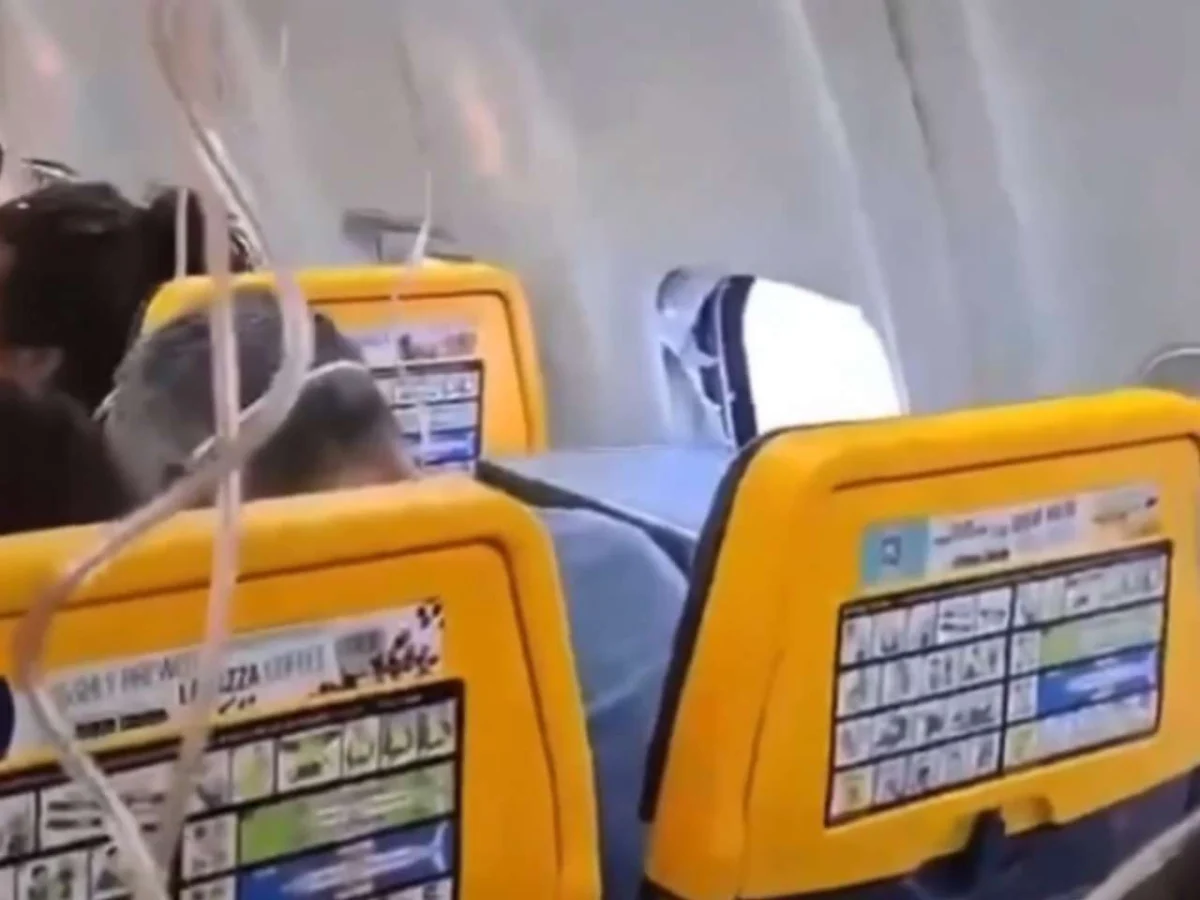
THESSALONIKI, GREECE – July 11, 2026 – A harrowing incident unfolded aboard a Malta Air flight, operated for Ryanair, on Friday, July 10, 2026, when a cabin window catastrophically failed shortly after take-off from Thessaloniki, Greece. The sudden decompression and breach in the aircraft’s fuselage led to a terrifying scenario where a passenger was partially sucked out of the plane, only to be heroically pulled back in by fellow travelers. The flight, bound for Memmingen, Germany, was forced to execute an immediate emergency return to its departure airport, marking a chilling reminder of the critical importance of aircraft integrity and cabin safety.
The 61-year-old male passenger, whose identity has not been released, sustained significant injuries, including friction burns and trauma to his neck and shoulders, underscoring the extreme forces at play during the incident. The near-catastrophe has prompted an urgent investigation by international aviation authorities, seeking to understand the precise cause of the window’s failure and to prevent any recurrence of such a terrifying event.
The Immediate Aftermath: A Struggle for Survival at 15,000 Feet
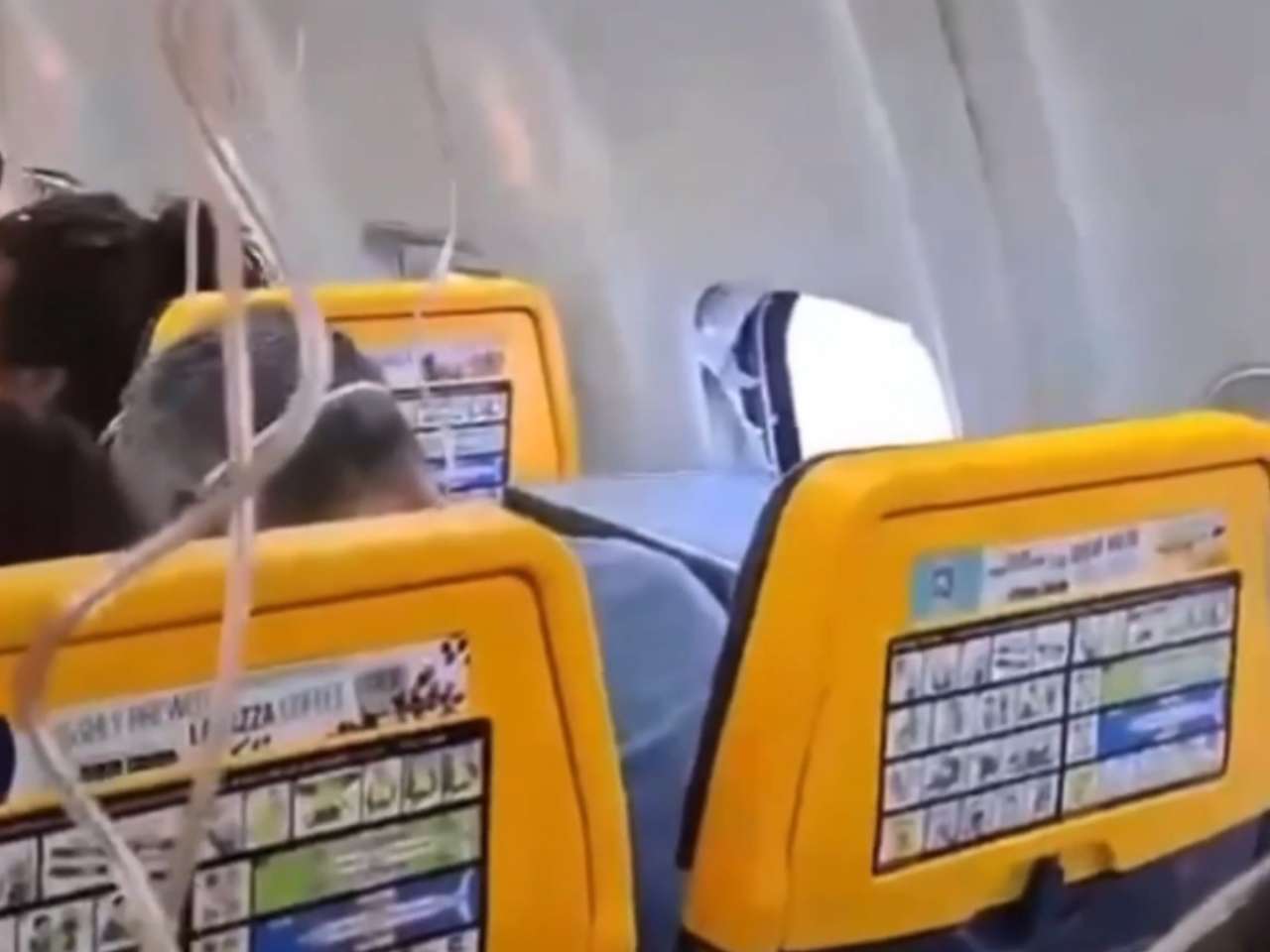
The ordeal began moments after Ryanair flight FR1879, a Boeing 737-800, departed Thessaloniki’s Makedonia Airport (SKG) for Memmingen Airport (FMM) in Germany. As the aircraft ascended and reached an altitude exceeding 15,000 feet, passengers reported hearing a "loud bang," which many likened to a tire bursting, but far more intense. This deafening sound was instantly followed by the rapid deployment of oxygen masks from the ceiling, a universal signal of a sudden loss of cabin pressure.
One passenger, identified only as Christina, recounted the terrifying moments to local radio, describing an immediate descent into chaos. "Most people had fallen asleep, we had closed our eyes. We heard a sound… but very loud," she said. "We knew straight away we lost pressure because we lost altitude. Screams, shrieks, shouting."
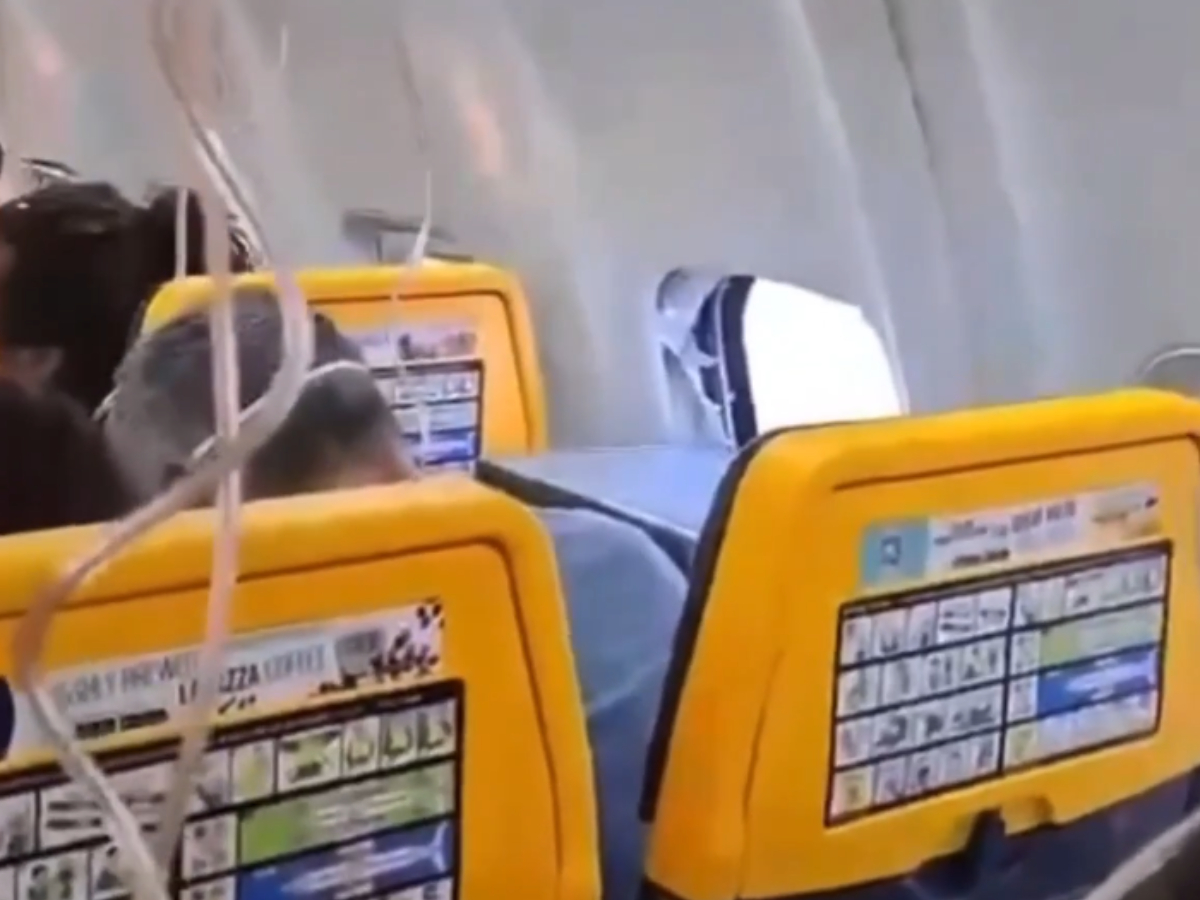)
In the midst of this sudden and violent decompression, the cabin window next to the 61-year-old passenger dislodged, creating a gaping hole in the aircraft’s side. The physics of differential pressure immediately took hold, with the higher pressure inside the cabin attempting to equalize with the lower atmospheric pressure outside. This powerful force, akin to a vacuum, began to pull the passenger out of the aircraft. Christina vividly described the terrifying sight: "His whole head, neck, shoulders were pulled out of the window."
It was the quick thinking and remarkable bravery of nearby passengers that averted a potential tragedy. Reacting instinctively, they managed to grab hold of the man, struggling against the immense suction to pull him back into the relative safety of the cabin. Their collective efforts were crucial in saving his life, highlighting the extraordinary human response in moments of extreme peril.

The flight crew, trained for such emergencies, initiated an immediate descent and declared an emergency, turning the aircraft back towards Thessaloniki. Flight tracking data confirmed the dramatic loss of altitude, showing the plane rapidly descending from above 15,000 feet to approximately 6,000 feet before stabilizing and heading back to the Greek airport. Roughly an hour after its initial take-off, the damaged Boeing 737-800 made a safe, albeit tense, emergency landing in Thessaloniki.
Upon landing, emergency services were on standby. The injured passenger received immediate medical attention on the tarmac before being transported to a local hospital for further treatment. His injuries, confirmed by a Greek hospital official, included significant trauma to his neck and shoulders, alongside severe friction burns, indicative of the violent forces he endured. The remaining passengers, shaken but safe, were disembarked and returned to the terminal, grappling with the shock of their near-death experience. Ryanair subsequently arranged a replacement aircraft to transport the unaffected passengers to their original destination in Memmingen.
)
A Detailed Chronology of the Crisis
The sequence of events on July 10, 2026, paints a stark picture of how quickly a routine flight can transform into a life-threatening emergency:
- Pre-Flight (Morning, July 10, 2026): Malta Air flight FR1879, operated by Ryanair, a Boeing 737-800 aircraft (registered in 2008), prepares for departure from Thessaloniki’s Makedonia Airport (SKG), Greece, bound for Memmingen Airport (FMM), Germany.
- Take-off (Early afternoon, July 10, 2026): The aircraft successfully departs Thessaloniki.
- Ascent and Initial Climb (Minutes after take-off): The plane begins its standard ascent, climbing above 15,000 feet.
- The "Loud Bang" and Window Failure (Approximately 15,000+ feet): Passengers report hearing a sudden, extremely loud noise. Simultaneously, a cabin window dislodges or shatters.
- Rapid Decompression and Oxygen Mask Deployment: The integrity of the cabin is breached, leading to a sudden and severe loss of cabin pressure. Oxygen masks automatically drop from the overhead compartments.
- Passenger Partially Sucked Out: The 61-year-old passenger seated near the failed window is partially pulled out of the aircraft due to the differential pressure, with his head, neck, and shoulders exposed to the outside environment.
- Heroic Intervention: Fellow passengers immediately react, grabbing hold of the man and, with immense effort, manage to pull him back inside the cabin, preventing him from being fully ejected.
- Emergency Descent and Turnaround: The flight crew declares an emergency and initiates a rapid, controlled descent, simultaneously turning the aircraft back towards Thessaloniki. Flight tracking data shows the plane descending to approximately 6,000 feet.
- Emergency Landing (Approximately one hour after take-off): The damaged Boeing 737-800 makes a safe emergency landing back at Thessaloniki’s Makedonia Airport.
- Post-Landing Medical Attention: Emergency services meet the aircraft. The injured 61-year-old passenger receives immediate medical care and is transported to a local hospital for treatment of neck and shoulder injuries and friction burns.
- Passenger Disembarkation and Support: Other passengers disembark, many in shock, and are escorted to the terminal. Ryanair provides support and arranges a replacement aircraft.
- Investigation Initiated: Aviation authorities are notified, and an investigation into the incident begins.
Supporting Data and Technical Context
The aircraft involved in this incident was a Boeing 737-800, a workhorse of the aviation industry, which entered service with Ryanair in 2008. These aircraft are designed for robust and reliable operation, making such a structural failure highly unusual and a cause for significant concern.
)
Cabin pressurization is a fundamental aspect of modern air travel. At cruising altitudes, the atmospheric pressure outside the aircraft is too low to sustain human life without supplemental oxygen, and temperatures are dangerously cold. Aircraft cabins are therefore sealed and pressurized to an equivalent of an altitude between 6,000 and 8,000 feet, creating a breathable and comfortable environment for passengers and crew. When this seal is breached, as occurred with the window failure, the sudden and violent equalization of pressure is known as rapid decompression. The forces involved are immense, capable of pulling unsecured objects and even people out of the aircraft.
The mention of "engine debris shattered a cabin window" in one social media report from "Open Source Intel" adds another layer of complexity to the initial understanding of the incident. While Ryanair’s official statement referred only to a "passenger window dislodged," the possibility of foreign object damage (FOD) from an engine component, or indeed an engine issue causing structural damage, would shift the focus of the investigation considerably. The US National Transportation Safety Board (NTSB) was informed of the incident, noting "a right engine issue and cabin decompression," further suggesting a potential link between an engine malfunction and the window failure. This detail implies that the window failure might not have been a standalone structural defect, but rather a consequence of a more complex mechanical problem originating from the aircraft’s propulsion system.
)
Passenger accounts, particularly Christina’s, provide invaluable qualitative data, painting a vivid picture of the terror inside the cabin. Her description of the passenger being pulled out – "His whole head, neck, shoulders" – underscores the sheer force of the decompression and the immediate danger to life. The prompt deployment of oxygen masks is a critical safety feature designed to provide passengers with breathable air in such emergencies, giving the crew time to execute an emergency descent to an altitude where ambient air pressure is sufficient.
Official Responses and the Road Ahead for the Investigation
Immediately following the incident, Ryanair, through its operating airline Malta Air, confirmed the emergency return of flight FR1879 due to a "passenger window dislodged in-flight." The airline also confirmed that one passenger received medical treatment on the ground and that a replacement aircraft was arranged for the disrupted passengers. Such incidents invariably trigger a swift and comprehensive response from aviation authorities.
)
The primary investigation into this serious incident will be led by the Aircraft Accident and Incident Investigation Committee (AAIIC) of the Republic of North Macedonia, given the flight’s origin from a Greek airport and its intended destination. The US National Transportation Safety Board (NTSB), representing the country of the aircraft’s manufacturer (Boeing), has been informed and has offered its assistance. The NTSB’s early assessment, noting "a right engine issue and cabin decompression," will likely guide initial investigative efforts, focusing on a potential correlation between the engine and the window failure.
Investigators will meticulously examine several critical areas:
)
- Structural Integrity of the Window and Fuselage: A detailed metallurgical analysis of the failed window frame, seals, and surrounding fuselage structure will be conducted to identify any material fatigue, manufacturing defects, or pre-existing damage.
- Maintenance Records: The aircraft’s complete maintenance history will be scrutinized to ensure all inspections, repairs, and scheduled maintenance procedures were performed correctly and on time.
- Engine Examination: Given the NTSB’s initial information, the right engine will undergo a thorough examination for any signs of failure, foreign object damage (FOD), or component liberation that could have struck the fuselage or window.
- Flight Data Recorder (FDR) and Cockpit Voice Recorder (CVR): These "black boxes" will provide crucial data on the aircraft’s performance parameters (speed, altitude, engine thrust, control inputs) and cockpit conversations leading up to and during the incident, offering insights into the crew’s actions and the precise timing of events.
- Witness Testimonies: Accounts from passengers and crew will be vital in reconstructing the incident from a human perspective.
The investigation will aim to provide a definitive cause, which could range from a manufacturing defect, maintenance oversight, foreign object damage, or a combination of factors. The findings will be critical in formulating safety recommendations to prevent similar incidents in the future, potentially leading to revised inspection protocols or design modifications across the global aviation fleet.
Implications: Safety, Psychology, and Industry Scrutiny
This harrowing incident carries significant implications for aviation safety, passenger psychology, and the airline industry at large.
)
Renewed Focus on Aircraft Integrity: While extremely rare, incidents involving fuselage breaches or window failures are among the most terrifying in aviation. They underscore the critical importance of maintaining the structural integrity of every component of an aircraft. This event will undoubtedly lead to renewed scrutiny on the inspection and maintenance protocols for aircraft windows and the surrounding fuselage structure, particularly for the Boeing 737-800 fleet.
Historical Precedent and Lessons Learned: The aviation industry has a history of learning from such catastrophic failures. Notable past incidents, such as Aloha Airlines Flight 243 in 1988, where a large section of the fuselage ripped open mid-flight, or more recently, the Southwest Airlines Flight 1380 incident in 2018, where an uncontained engine failure led to a window being shattered and a passenger partially sucked out, serve as stark reminders of the potential consequences. In the Southwest incident, a passenger tragically died. The fact that the passenger in the Ryanair incident survived is a testament to the swift actions of fellow passengers and the crew, and the rapid emergency descent. These historical events demonstrate that while modern aircraft are incredibly safe, even minor structural flaws or uncontained engine failures can have catastrophic outcomes. The current incident will likely draw comparisons to these cases, reinforcing the need for continuous vigilance in maintenance and operational procedures.
)
Passenger Psychology and Heroism: The incident highlights the extraordinary courage and quick thinking of ordinary passengers. Their ability to react effectively under extreme duress, fighting against immense physical forces to save a life, is a powerful testament to human resilience. However, such an event leaves an indelible psychological mark on all involved, potentially leading to post-traumatic stress. Airlines often provide psychological support to passengers and crew who experience such traumatic events.
Industry Scrutiny and Boeing: Boeing, the manufacturer of the 737-800, has faced heightened scrutiny regarding its manufacturing processes and safety standards in recent years, particularly following incidents involving other aircraft types. While the 737-800 is a different generation, any structural failure or engine issue will inevitably add to this ongoing examination. The detailed investigation will be crucial in determining whether this was an isolated event, a maintenance issue, or indicative of a broader systemic concern.
)
Cross-Border Cooperation: The involvement of Greek, North Macedonian, and US authorities underscores the international nature of aviation safety investigations. The collaboration between these agencies will be essential in ensuring a thorough and unbiased inquiry, leading to findings that can be universally applied to enhance global aviation safety standards.
In conclusion, the partial ejection of a passenger from a Ryanair-operated flight due to a window failure is a profoundly disturbing incident that could have resulted in a far greater tragedy. The swift actions of the cabin crew and the heroic intervention of fellow passengers prevented a fatality. As the investigation unfolds, the aviation world will be watching closely, seeking answers to prevent such a terrifying ordeal from ever happening again, reinforcing the relentless pursuit of safety in the skies.
